Omega-3 and Heart Health: Benefits, Evidence and Safety
A heart on a fish-oil label can mean several things. Understand where omega-3 fits into food choices, everyday supplementation and prescribed treatment before choosing a product.
Quick Answer
Omega-3-rich fish can be part of a heart-healthy diet. Ordinary fish-oil supplements have not consistently prevented major cardiovascular events in trials. Specific prescription omega-3 treatment benefits some high-risk patients, but those findings do not apply to every bottle. Your diagnosis, medicines and actual EPA+DHA intake matter.
Key Takeaways
- Start with your cardiovascular risk and diet before selecting a supplement.
- Evidence for a specific prescription formulation cannot establish the same benefit for a retail fish-oil product.
- A higher concentration needs a clear purpose and an appropriate safety review.
Buying fish oil for a parent often begins with a simple wish: help protect their heart. The difficult part is deciding what a bottle can realistically contribute when that parent already takes blood-pressure tablets, a statin or several other medicines.

The useful question is specific: are you improving dietary intake, treating a high triglyceride result, or trying to reduce the chance of another cardiovascular event? Each leads to a different conversation. This guide explains the evidence so that shoppers in Bangladesh can make that conversation more productive.
Three different roles for omega-3
| Option | Its place in heart care | What to check |
|---|---|---|
| Fish and other foods | Part of a broader dietary pattern | Regular meals, fish type and cooking method |
| Nonprescription fish oil | May help provide EPA and DHA when dietary intake is inadequate | Actual ingredients, daily amount and suitability |
| Prescription omega-3 | A clinician-selected treatment for particular lipid or cardiovascular indications | Exact medicine, treatment goal and monitoring plan |
The categories overlap in ingredients but differ in evidence and intended use. A product described as “high strength” does not automatically belong in the treatment category.
What do the major heart trials show?
In VITAL, 25,871 adults received a daily marine omega-3 supplement or placebo. Supplementation did not significantly reduce the trial's primary combined outcome of heart attack, stroke or cardiovascular death. Some individual and subgroup findings were encouraging, but the main result does not support promising broad prevention to every healthy customer.
REDUCE-IT asked a different question. It studied prescription icosapent ethyl in statin-treated people with raised triglycerides and established cardiovascular disease or diabetes with additional risk factors. The medicine reduced cardiovascular events in that selected population. Participants were receiving ongoing medical care; this was not a test of ordinary retail fish oil.
In STRENGTH, a different high-dose EPA+DHA formulation did not significantly reduce major cardiovascular events compared with corn oil in high-risk patients. Taken together, these trials show why the formulation and patient group must stay attached to a research claim.
When reading an advertisement, ask whether the study tested the exact product being sold, a prescription medicine, or merely a related ingredient. A shared phrase such as “omega-3” is insufficient to transfer the result.
Start with the food pattern you can maintain
The American Heart Association recommends two fish servings weekly, particularly fatty fish, within a healthy dietary pattern. Fish also contributes protein and other nutrients. A capsule cannot reproduce the whole meal.
For a household in Bangladesh, begin with the meals you actually cook and the fish you can buy regularly. Do not assume every species or portion supplies the same omega-3 amount. An expensive imported fish is not a prerequisite for improving the overall quality of a diet.
Look at the whole plate and cooking routine too. A fish meal with vegetables and sensible portions is a different dietary choice from relying on a supplement while leaving the rest of the routine unchanged. If you need help adapting familiar meals to a medical condition, a dietitian can make the plan practical.
High triglycerides require a separate decision
If a report says “high cholesterol,” find out which measurement is elevated. LDL cholesterol and triglycerides are different treatment targets. Fish oil should not become a reason to stop a prescribed statin.
The ACC hypertriglyceridemia pathway places lifestyle, underlying causes and LDL-based treatment within the clinical assessment. For the specific lipid question, continue to our omega-3, triglycerides and cholesterol guide.
What does “high strength” actually tell you?
It describes concentration only when you can see the numbers behind it. Check the separate EPA and DHA amounts and whether they are listed per capsule or per serving. Then compare the full daily amount recommended on the pack or by your clinician.
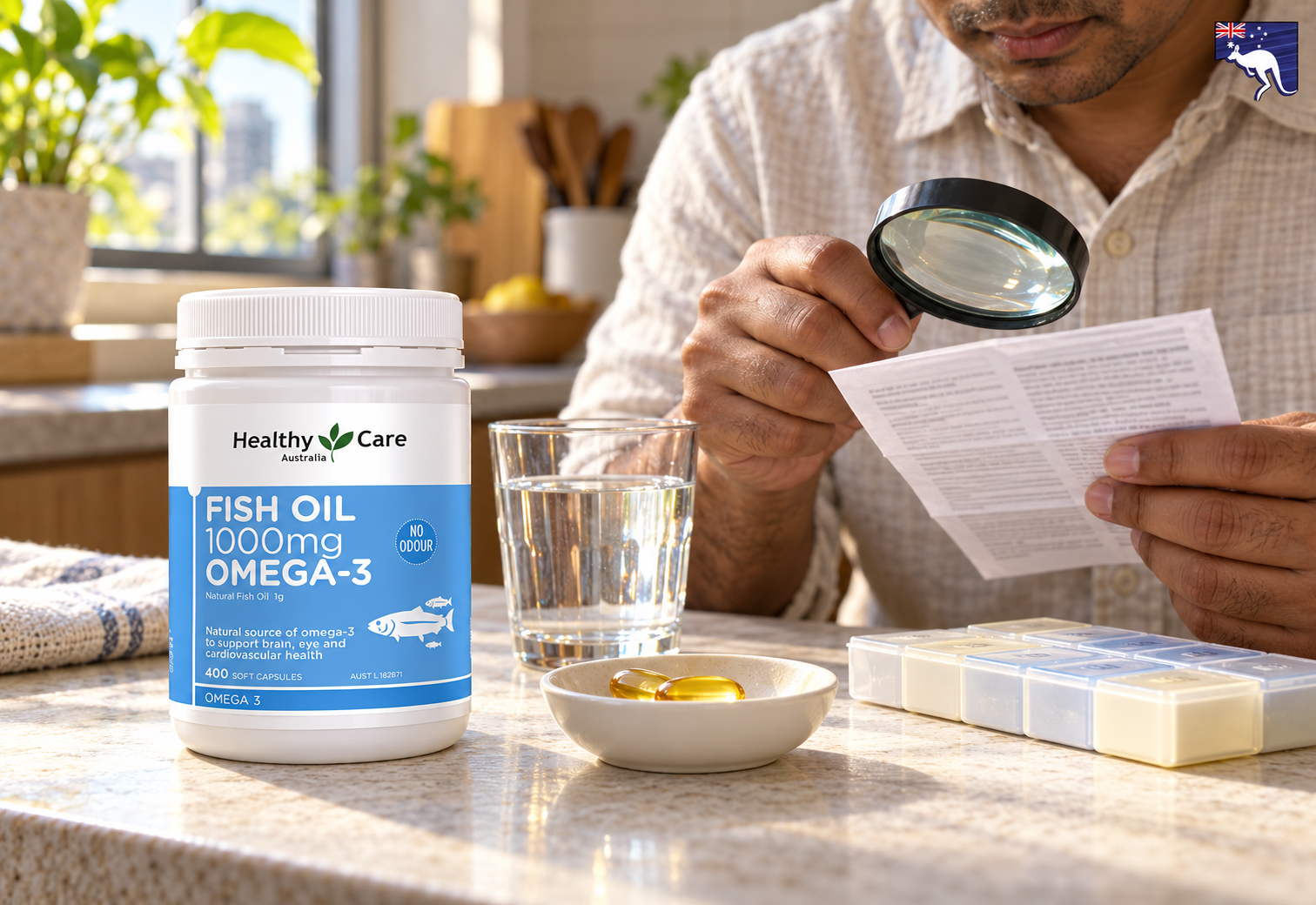
Take a photograph of the ingredient panel rather than remembering the largest front-label number. This is especially useful when comparing similarly named versions from the same brand. Our omega-3 selection guide explains those label checks.
Safety belongs in the heart-health conversation
The NHLBI review of benefits and risks highlights uncertainty around routine prevention and concerns including atrial fibrillation with higher-dose use. People with an existing rhythm disorder should discuss supplementation with their clinician.
Bring all medicines to that review, including aspirin, anticoagulants and over-the-counter products. Mention bleeding problems, seafood allergy and planned procedures. Changing a supplement does not justify changing a prescribed heart medicine yourself.
Record any new persistent palpitations or troublesome effects. Chest pain, fainting or severe breathing difficulty needs urgent medical assessment; shopping for another supplement is not the next step.

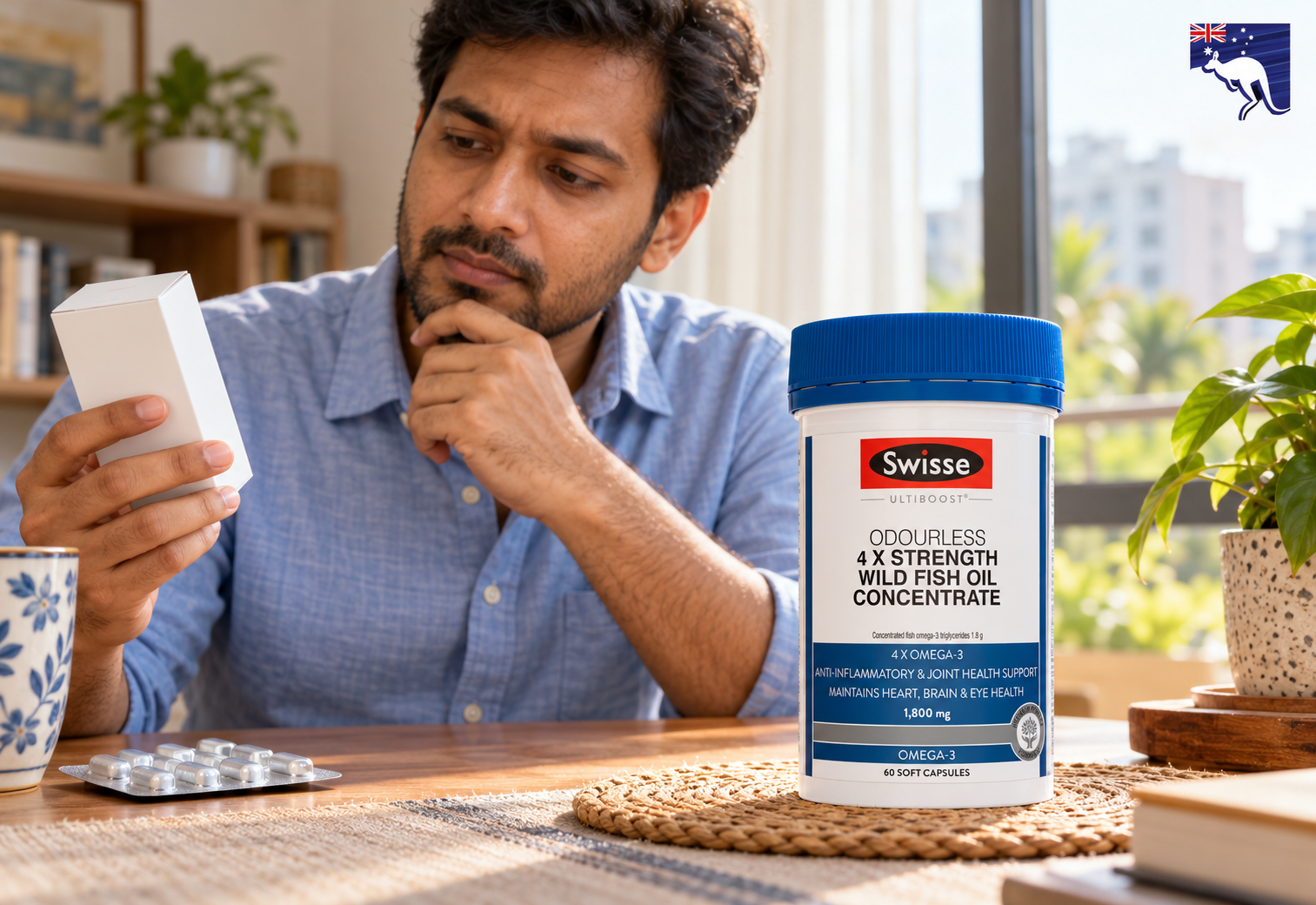
Swisse Ultiboost Odourless High Strength Wild Fish Oil
Swisse Ultiboost Odourless High Strength Wild Fish Oil is a premium Omega-3 supplement that supports heart health, brain function, healthy vision, and nervous system health. Its hi...
A useful checklist before ordering
- Write down the purpose: dietary intake, a lab result or a clinician's specific recommendation.
- Check the exact formulation against that purpose.
- Confirm the pack size, seal, expiry and seller documentation.
- Choose a storage place that meets the bottle's temperature instructions.
- If treatment is involved, confirm when the clinician wants to review the result.
The related products let you inspect available labels and pack options. Choose only after the purpose is clear. A well-matched product and an understandable plan are more useful than the boldest heart-health claim.