Omega-3 Medicines vs Fish-Oil Supplements in Bangladesh
A pharmacy blister and an imported fish-oil bottle can both contain omega-3, yet serve different purposes. Learn how to compare the exact formulation, understand the Bangladesh medicine OMG-3, and avoid replacing prescribed treatment with a retail supplement.
Quick Answer
Omega-3 medicine and fish-oil supplements are not automatically interchangeable. Medical treatment depends on the specific formulation, dose, indication and monitoring. Retail products vary in EPA and DHA content. If a doctor prescribed omega-3 for high triglycerides, ask before changing brands or substituting a supplement, even when both packs say 1,000 mg.
Key Takeaways
- Compare the prescribed ingredient and EPA/DHA amounts; total fish-oil milligrams alone do not establish an equivalent dose.
- Evidence for a specific prescription omega-3 formulation does not prove that every fish-oil supplement prevents cardiovascular events.
- Buying a product from a pharmacy, or seeing an Australian AUST number, does not by itself make it a substitute for your prescribed treatment.
Start with the purpose of the purchase
Imagine being given an omega-3 prescription after a blood test, then finding a larger imported bottle online at a lower price per capsule. The bottles may look similar, but the comparison is incomplete until you know what was prescribed and why.
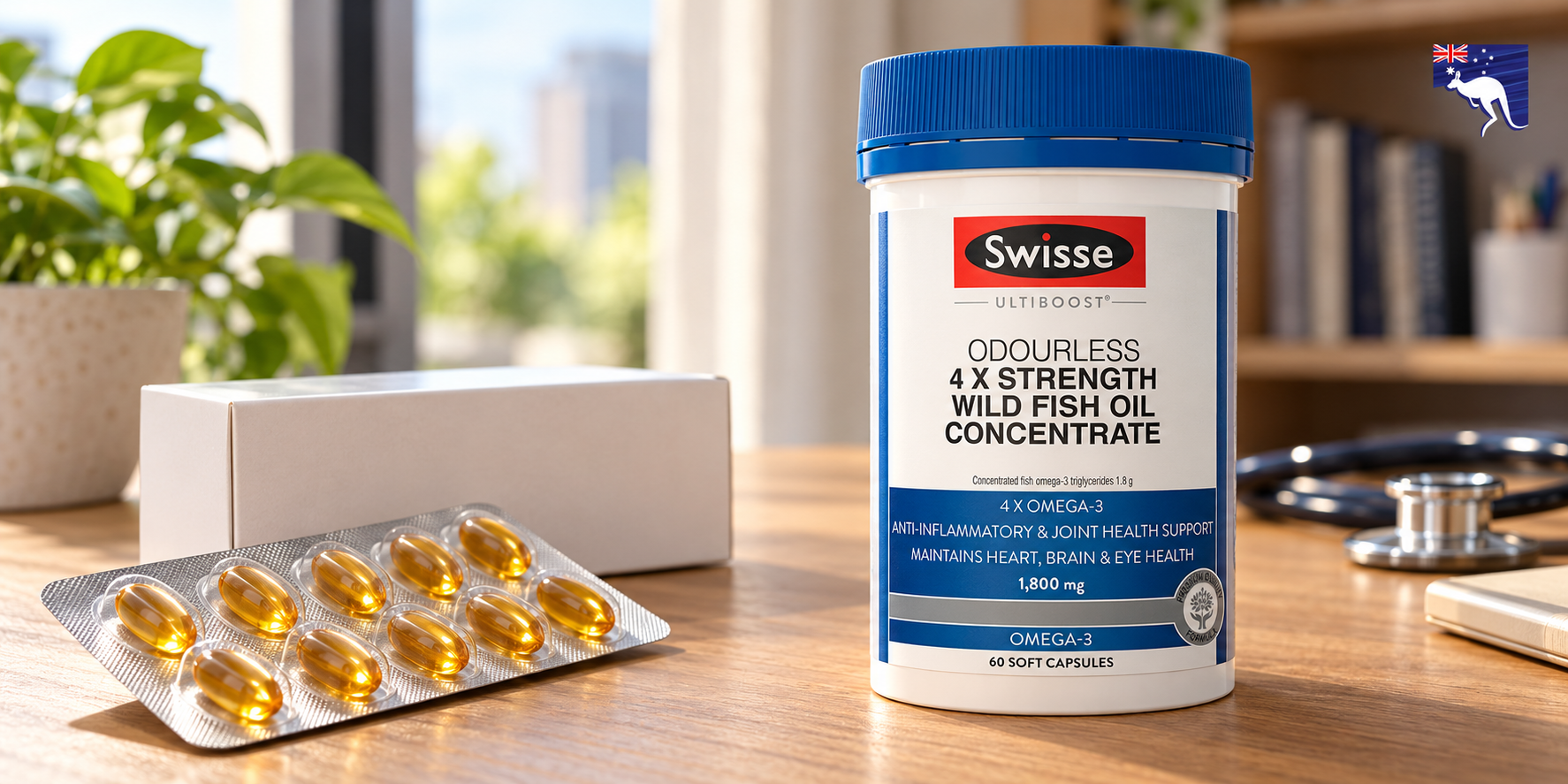
For nutritional use, the question is whether a product suits your diet and supplies the intended EPA and DHA. For treatment of a medical condition, the question is whether it matches the clinician's chosen formulation, indication and dose. These are different buying decisions.
This distinction also avoids a language trap: an Australian product commonly called a supplement may legally be a complementary medicine. In this article, “supplement” describes a retail nutritional product; it does not mean every country classifies it outside medicines regulation.
Medicine and supplement: what actually differs?
| Check | Prescribed omega-3 treatment | Retail fish-oil supplement |
|---|---|---|
| Reason for use | A defined clinical purpose chosen for the patient | Nutritional intake or the product's permitted label uses |
| What must match | Exact active ingredient, formulation and prescribed regimen | EPA, DHA, serving size and suitable directions |
| Evidence | Relevant studies and prescribing information for that formulation | Claims must be assessed against evidence; fish oil is not one uniform product |
| Follow-up | Clinical review and tests where required | Review suitability and interactions; do not self-escalate to a treatment dose |
The American Heart Association's triglyceride advisory distinguishes prescription omega-3 therapy from dietary supplements. Its evidence for triglyceride lowering concerns prescribed treatment. It also emphasises addressing contributors such as poorly controlled diabetes and dietary factors. A capsule does not replace that assessment.
OMG-3 in Bangladesh: what the manufacturer confirms
Drug International's OMG-3 prescribing leaflet identifies a 1 g omega-3-acid ethyl esters capsule containing a combination of EPA and DHA. It describes use alongside diet for adults with very high triglycerides, referring to 500 mg/dL. This is a specific clinical use, not a general recommendation for everybody seeking omega-3.
The leaflet does not give separate EPA and DHA quantities in the composition statement. Do not fill that gap with numbers copied from an unrelated 1,000 mg fish-oil bottle. A pharmacist or the manufacturer can clarify the exact supplied formulation.
This manufacturer information verifies the example discussed here; it is not an independent confirmation of current DGDA registration or a claim about every omega-3 medicine sold in Bangladesh. Use the current pack and leaflet when checking your own prescription.
Why 1,000 mg does not tell the whole story
Front labels may state total oil, a concentrated ingredient, or another quantity. The detailed panel tells you which. Also check whether the figures apply to one capsule or several capsules per serving.
For example, the current Swisse 4 x Strength manufacturer page lists 1.8 g of concentrated fish omega-3 triglycerides per capsule, including 720 mg EPA and 486 mg DHA. Those two named fatty acids total 1,206 mg. This illustrates label arithmetic; it does not establish equivalence to OMG-3 or another prescribed medicine.
Likewise, “triple strength” or “4x” cannot tell you whether a product is the right medical replacement. For everyday comparison, our omega-3 dosage and label guide explains why the serving size matters. Treatment substitutions still require the prescriber or pharmacist.
Why prescription trial results cannot be shared across brands
The REDUCE-IT trial found fewer cardiovascular events with icosapent ethyl, a purified EPA medicine, in selected high-risk patients already receiving statin therapy. That finding belongs to the studied treatment and patient group.
In contrast, the STRENGTH trial, which studied a different high-dose EPA/DHA formulation in high-risk patients, did not find a significant cardiovascular-event benefit compared with its control. Different formulations, study populations and comparisons matter.
Consequently, “a prescription omega-3 helped in a trial” is insufficient evidence that an imported fish-oil bottle will produce the same result. Lowering triglycerides and preventing heart attacks are also separate outcomes. Do not stop a statin or another prescribed treatment because a supplement advertises heart support.
What an Australian AUST number means
According to the Therapeutic Goods Administration, AUST L identifies listed medicines whose efficacy has not been assessed before sale; AUST L(A) identifies assessed listed medicines, and AUST R identifies registered medicines. The categories have different assessment requirements.
These Australian identifiers are useful regulatory information, but they do not demonstrate equivalence to your prescription or establish Bangladesh registration. Nor does every product carrying AUST R require a prescription. Read the actual category and product details rather than treating any number as a universal approval badge.
A practical buying check in Bangladesh
- Bring the prescription: ask a pharmacist to check the exact ingredient and formulation, not just the brand name.
- Request both label panels: online, obtain clear photographs of the front and composition panel for the actual pack being supplied.
- Calculate the relevant amount: record EPA, DHA and capsules per serving separately from total oil. Do not calculate your own replacement treatment dose.
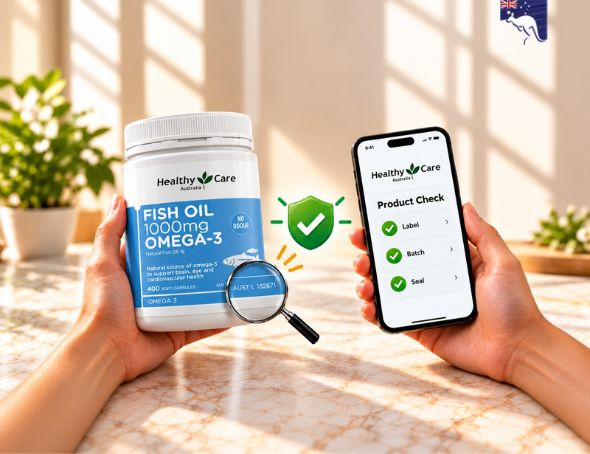
- Check the supplied pack: match the manufacturer, strength, batch, expiry and leaflet. Keep the receipt and seller details.
- Compare cost appropriately: a large bottle's low capsule price says little about the cost of the prescribed regimen. Ask about an appropriate alternative if affordability is a concern.
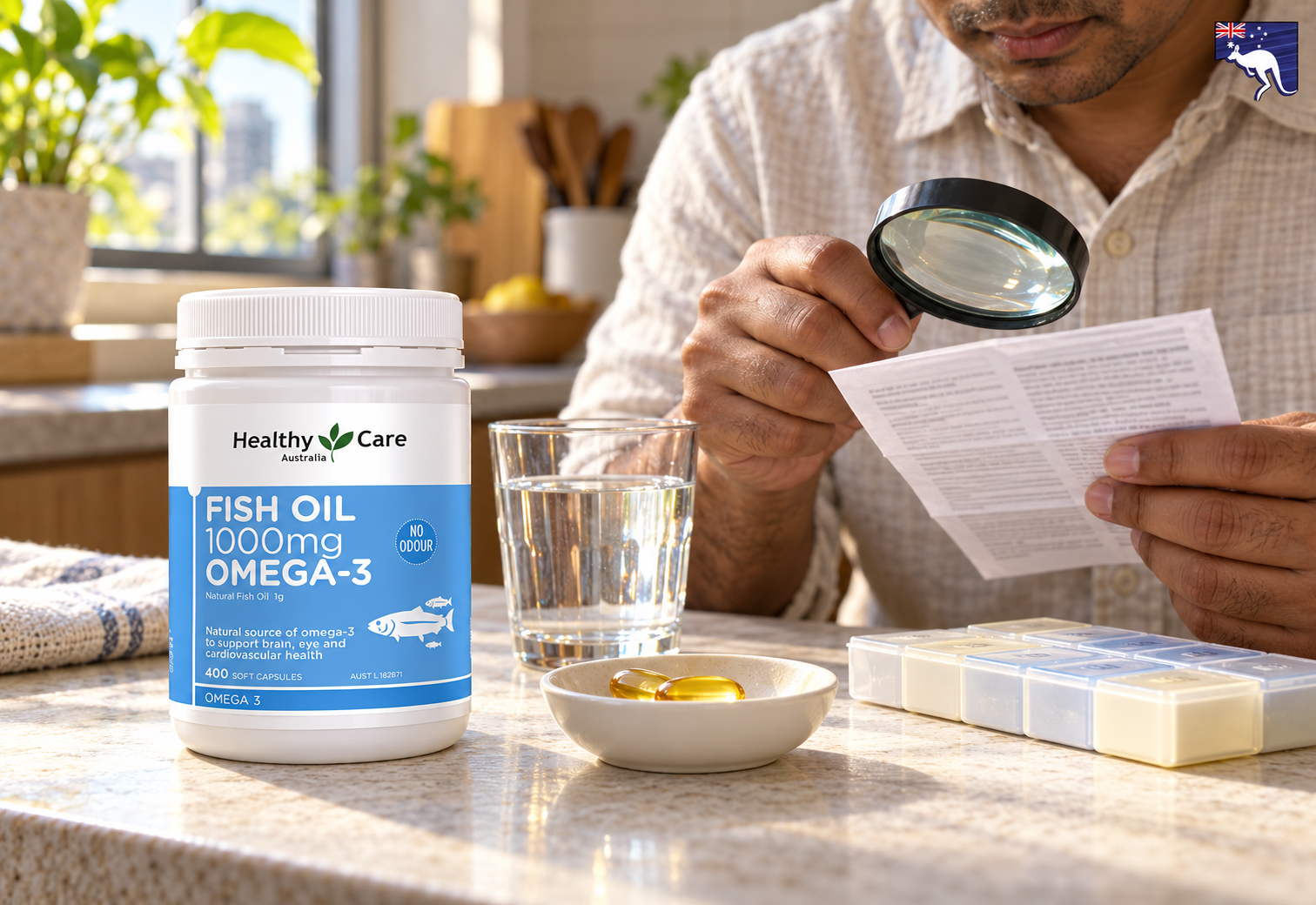
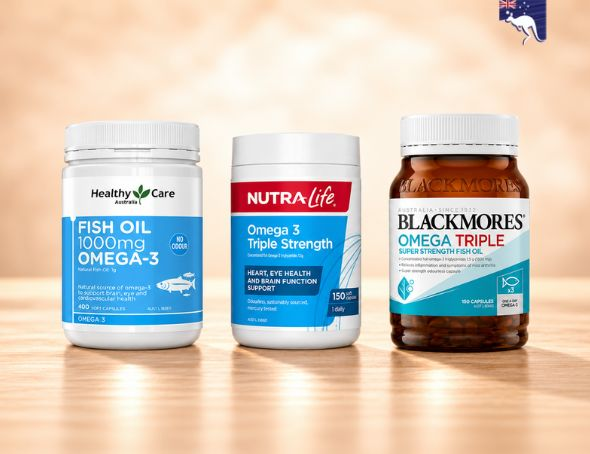
For a nutritional purchase, compare the options after clarifying your goal. For a treatment purchase, resolve substitutions before ordering. The product photographs and catalogue suggestions accompanying this article are examples of retail fish oil, not endorsements as replacements for prescribed medicines.

Swisse Ultiboost Odourless 4 x Strength Wild Fish Oil Concentrate
Swisse Ultiboost Odourless 4 x Strength Wild Fish Oil Concentrate is a high-strength omega-3 supplement formulated to support heart, brain, eye and joint health. Each capsule provi...
When follow-up is particularly important
The US LOVAZA prescribing information illustrates why medical supervision matters: it includes lipid monitoring, precautions for fish allergy and recurrent atrial fibrillation, and monitoring when used with medicines affecting clotting. This is a US label example, not a statement about that brand's Bangladesh availability.
Tell your clinician about all supplements and medicines, particularly blood thinners, and any history of irregular heartbeat. If treatment was started after abnormal blood tests, agree on when results and tolerability will be reviewed. Choosing the right follow-up is part of choosing the treatment.