How to Eat Honey: Daily Amounts, Warm Water and Practical Uses
A spoonful, a breakfast topping or a warm drink: honey can be simple to enjoy. This practical guide explains portions, timing and everyday food ideas while separating useful habits from unsupported morning rituals and health promises.
Quick Answer
Eat honey as a sweet food, using a modest amount with a meal, on toast or in a comfortably warm drink. There is no universal daily dose or proven best time that everyone needs to follow. Count it among your free sugars, especially if you manage blood glucose. Honey water is not a detox or weight-loss treatment, and no honey is suitable for babies under 12 months.
Key Takeaways
- Honey is optional food, not a supplement that everyone needs to take daily.
- A measured small portion is easier to judge than a free pour or a heaped spoon.
- Morning, evening and empty-stomach routines have no established universal advantage.
- Warm water changes how honey is served; it does not remove its sugar or create a detox treatment.
Your breakfast is ready, the honey jar is open, and one small question becomes several: a teaspoon or a tablespoon, before food or after, straight from the spoon or mixed with water? Online routines can make this ordinary food feel surprisingly demanding.
Learning how to eat honey does not require a ritual. Start with a food or drink you enjoy, use a deliberate portion and decide whether the flavour improves it. There is no need to invent an extra daily serving just to keep up with a wellness trend.
How much honey per day makes sense?
There is no universal daily honey allowance that fits everyone. Your overall diet, other sources of sugar and any medical nutrition advice matter more than a number printed in a generic routine.
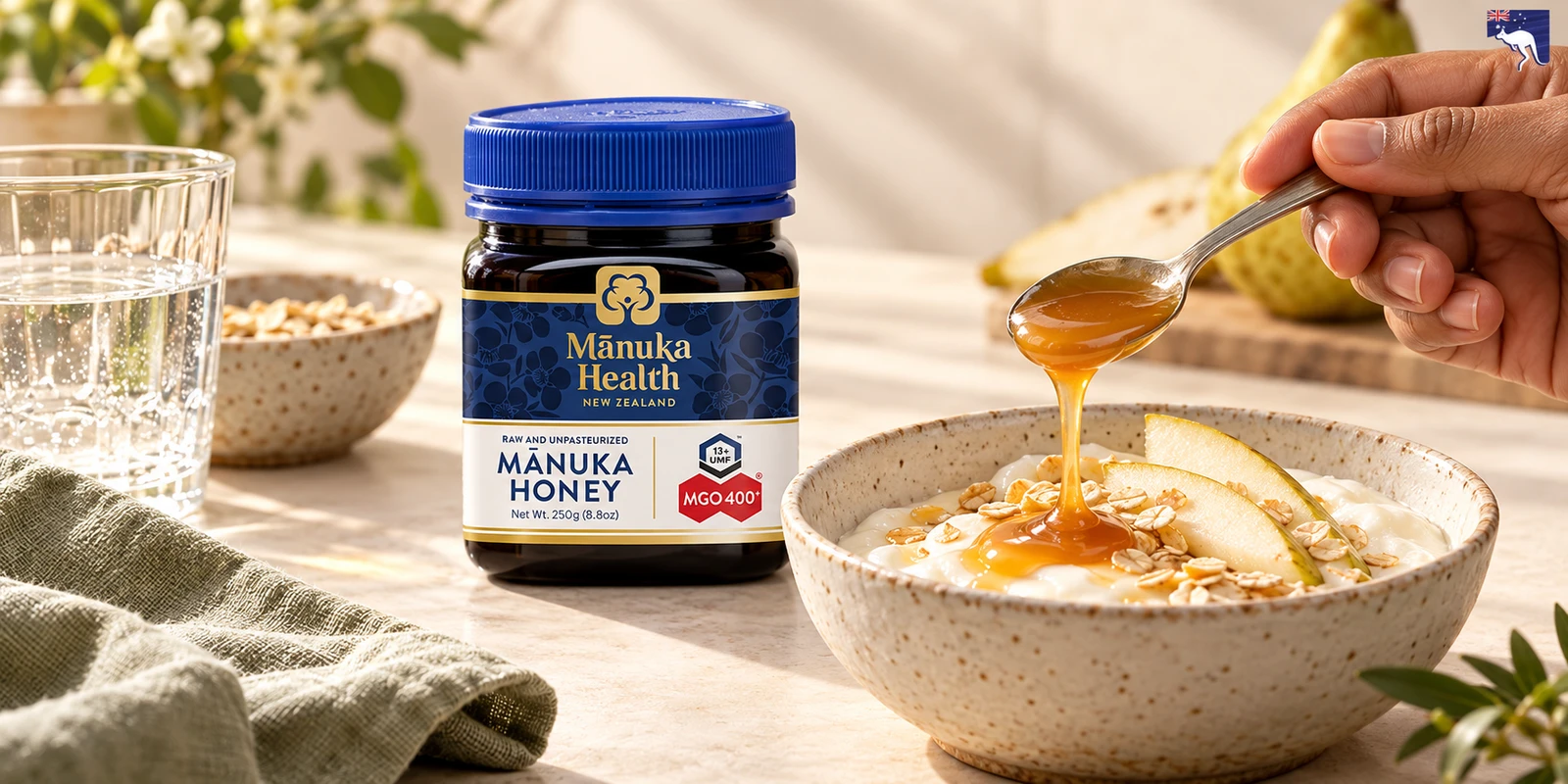
For a simple food idea, try half to one level teaspoon in a serving of plain yoghurt or oats, then decide whether you actually want more sweetness. This is a starting point for taste, not a health dose or an instruction to eat honey every day. A level measuring spoon also gives you a clearer idea of the amount than a generous pour.
The WHO sugars guideline includes sugars naturally present in honey among free sugars. Its limits concern the whole diet, not a separate honey budget on top of sweetened tea, desserts and packaged foods. If those already feature often in your day, consider replacing some sweetness rather than adding another source.
Five easy ways to use honey
| Food or drink | A practical way to use it | What to watch |
|---|---|---|
| Plain yoghurt | Add a little honey with fruit or nuts you normally eat | Check whether the yoghurt is already sweetened |
| Oats or porridge | Stir in a small amount after cooking | Taste before adding sugar as well |
| Toast | Spread a thin layer where you can enjoy the flavour | A thick pour can hide a large serving |
| Warm water or tea | Stir into a comfortably warm cup | Honey remains sugar when dissolved |
| Salad dressing | Use a little to balance the acidity in a dressing made for the meal | The whole recipe determines storage needs |
You can also enjoy a small amount straight from a clean spoon. That lets you notice the aroma and texture, but it does not make honey medicinal. Choose the method you like rather than the one marketed as the only correct way.
Honey in warm water: useful drink or special remedy?
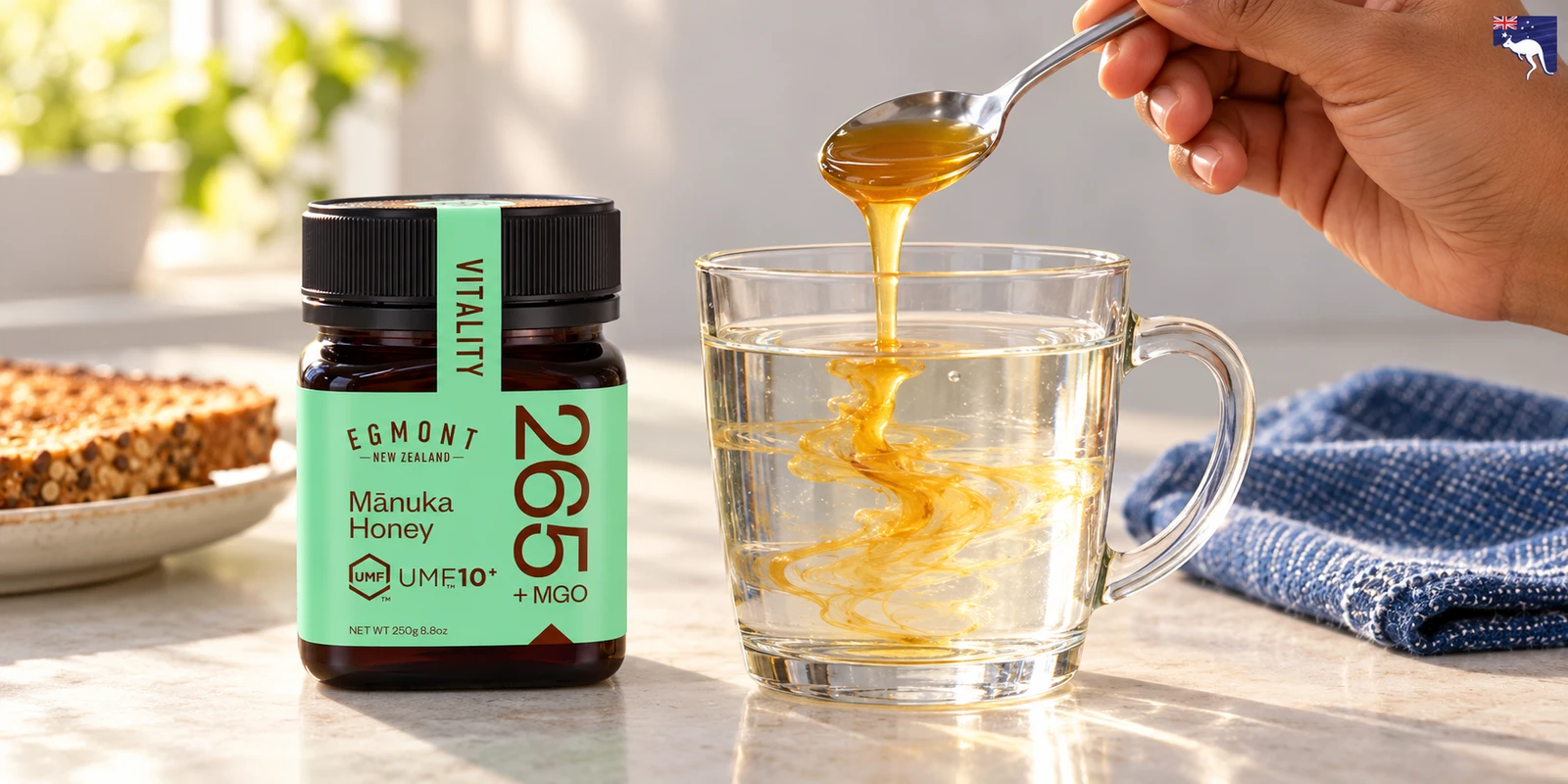
Warm water makes honey easier to disperse and can be pleasant to sip. Lemon changes the flavour. Neither combination removes the sugars or turns the drink into a reliable treatment for weight loss, “detox” or digestive disease.
Make the drink comfortably warm rather than scalding. You do not need to boil the honey. If you have paid for a particular flavour or texture, adding it after the water has cooled enough to drink is also a straightforward way to enjoy those characteristics.
A honey drink used occasionally for throat comfort is a separate question from drinking it daily for supposed hidden benefits. Our honey for cough and sore throat guide explains the evidence, age restrictions and symptoms that need medical attention.
Is morning or bedtime the best time to eat honey?
Pick the time that fits your food preferences. There is no established universal advantage to taking honey on an empty stomach, and you do not have to swallow a spoonful before breakfast to get value from the jar.
The same applies at night. If you enjoy a little honey with an evening food or drink, account for it like any other sweetener. Do not add a bedtime serving simply because a routine promises overnight fat burning or a guaranteed improvement in sleep.
Keep normal dental care and avoid continually sipping sweetened drinks through the day. The NHS guidance on sugar is a useful reminder that frequency and the overall pattern of sweet foods and drinks deserve attention too.
How to use Manuka honey without overcomplicating it
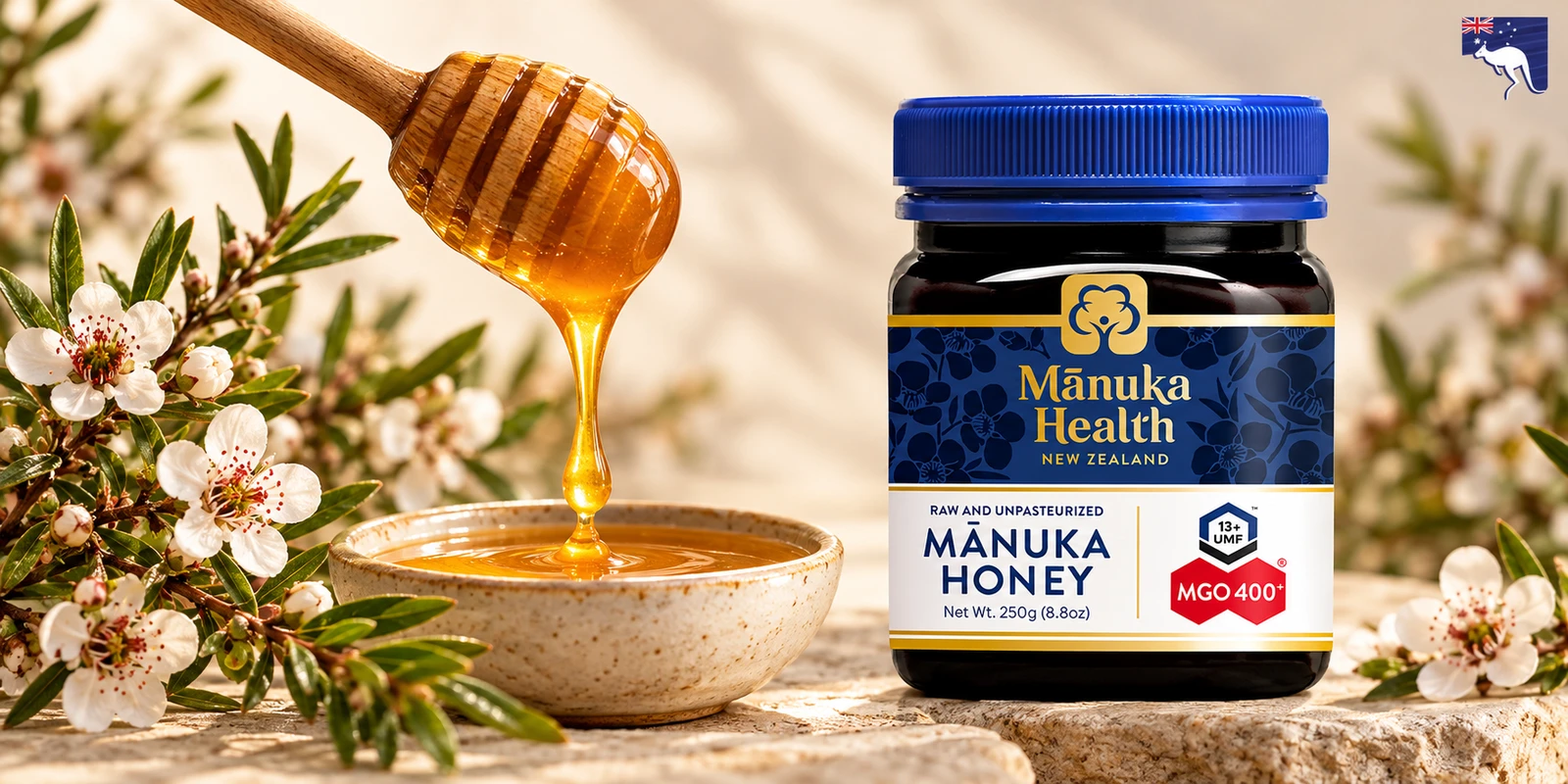
Manuka can be used as food in the same practical ways. An MGO number does not create a personalised serving schedule, and a higher grade does not mean you should take a larger amount.
If you like its distinctive flavour, try it in a simple food where you can taste it. A strongly flavoured recipe may make subtle differences less noticeable. You can choose the jar according to flavour preference, traceability, pack size and budget, rather than feeling obliged to buy the highest grade.
Egmont Multifloral MGO 50+ is one food option in our range. The card below lets you inspect its selected pack and current price; it is not a recommended daily treatment.

Egmont Premium Multifloral Manuka Honey MGO 50+ (New Zealand)
Egmont MGO 50+ Manuka honey in Bangladesh: compare jar weight, labelled grade, batch traceability, food-use guidance and current price.
Three habits that make portions easier to judge
- Measure once before pouring freely. Seeing what a level teaspoon looks like helps you recognise a serving. A household spoon or honey dipper can carry a very different amount.
- Count the whole meal. Honey on sweetened cereal is an addition. Honey used instead of another sweetener is a different choice. Read the ingredients rather than relying on a healthy-looking breakfast label.
- Keep enjoyment separate from obligation. If a drink already tastes good unsweetened, you do not need to add honey. If you enjoy a small amount, use it without inventing a medical promise.
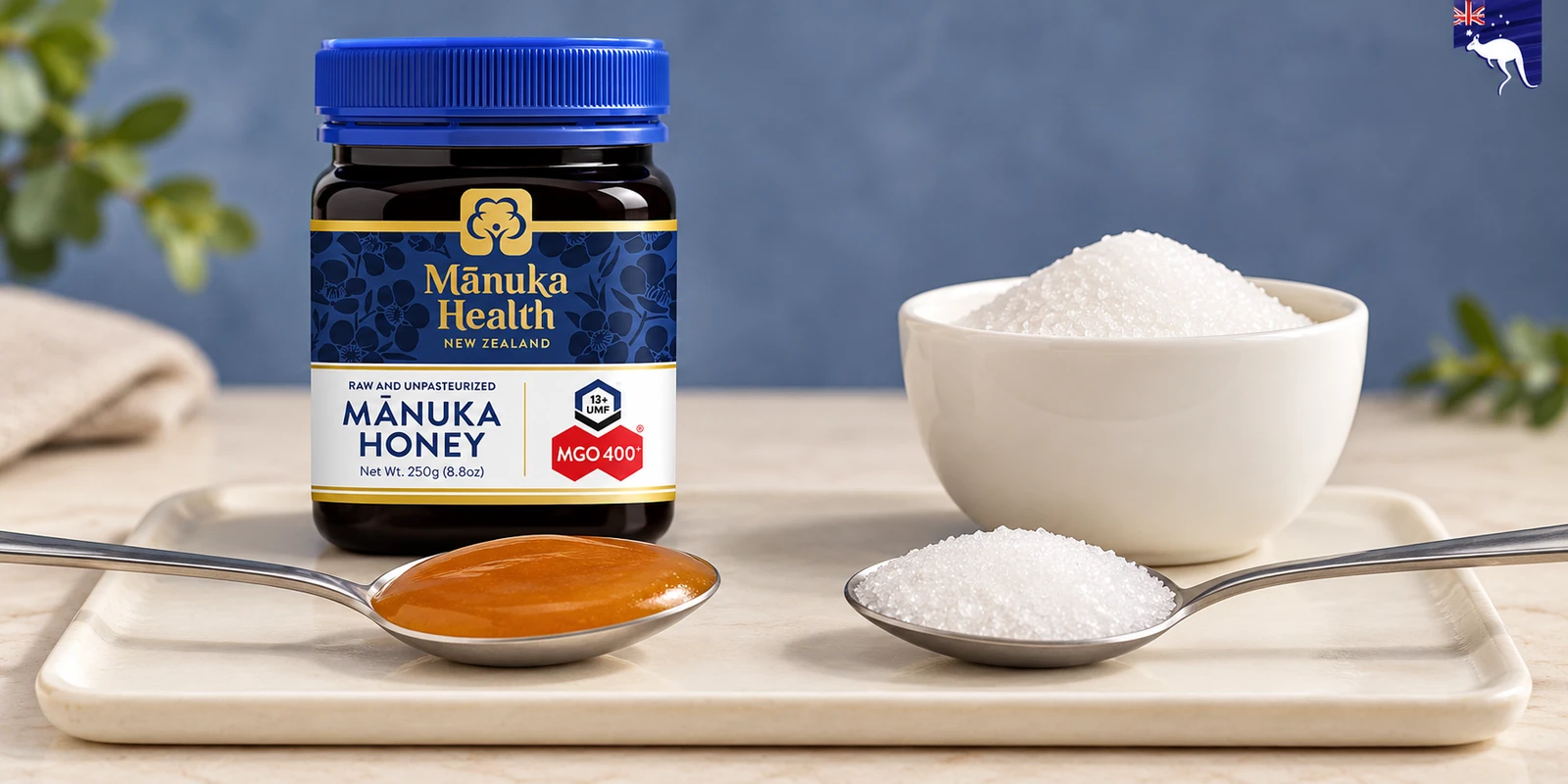
For a closer look at sugar, carbohydrate and diabetes questions, read the comparison below.
Who needs extra care?
Never give honey to a baby under 12 months. This includes honey added to drinks, porridge or home remedies. The NHS infant feeding guidance explains the infant botulism concern.
If you manage diabetes, use your individual meal plan to decide whether honey fits. The Mayo Clinic advises counting its carbohydrate; natural origin does not make it a free substitute for sugar. If a product causes a suspected allergic reaction, stop using it and seek appropriate advice.
Keep the jar easy to use and clean
Use a clean, dry spoon and close the lid after serving. A food-grade metal spoon is fine for brief contact; Manuka Health’s product guidance addresses that common concern. A wooden dipper is a preference, not a requirement.
Do not return a spoon that has been in your mouth or stirred a drink to the main jar. Once honey is mixed with yoghurt, water or other ingredients, follow the storage needs of that food rather than assuming the mixture keeps like plain honey. Our honey storage guide covers the jar itself.
A useful routine should make breakfast simpler. Choose a modest amount, put it where you enjoy the flavour and let the rest of your diet do the larger job.