Honey vs Sugar: Nutrition, Blood Sugar and Diabetes Questions
Replacing sugar with honey changes the flavour, but it does not make a drink sugar-free. This comparison explains serving sizes, carbohydrate labels, diabetes questions and how to make an informed choice without treating premium honey as a medical solution.
Quick Answer
Honey and table sugar both contribute sugars and can raise blood glucose. Honey is not a free substitute for sugar in a diabetes eating plan; per teaspoon, it generally provides slightly more carbohydrate and energy. Choose it for flavour if it fits your diet, measure the amount and consider the whole meal. Raw, organic and Manuka labels do not remove these considerations.
Key Takeaways
- Both honey and table sugar contribute carbohydrate; natural origin does not make honey sugar-free.
- A teaspoon comparison and a gram-for-gram comparison are different because the foods have different densities.
- Use the total carbohydrate information and your actual serving when following a diabetes meal plan.
- MGO and UMF describe Manuka characteristics, not permission to eat more or evidence of diabetes treatment.
You stop adding sugar to your tea and reach for honey instead. It feels like a clear improvement: a familiar food from a jar, a richer flavour and a label that may say pure or natural. But has the nutritional change been as large as it feels?
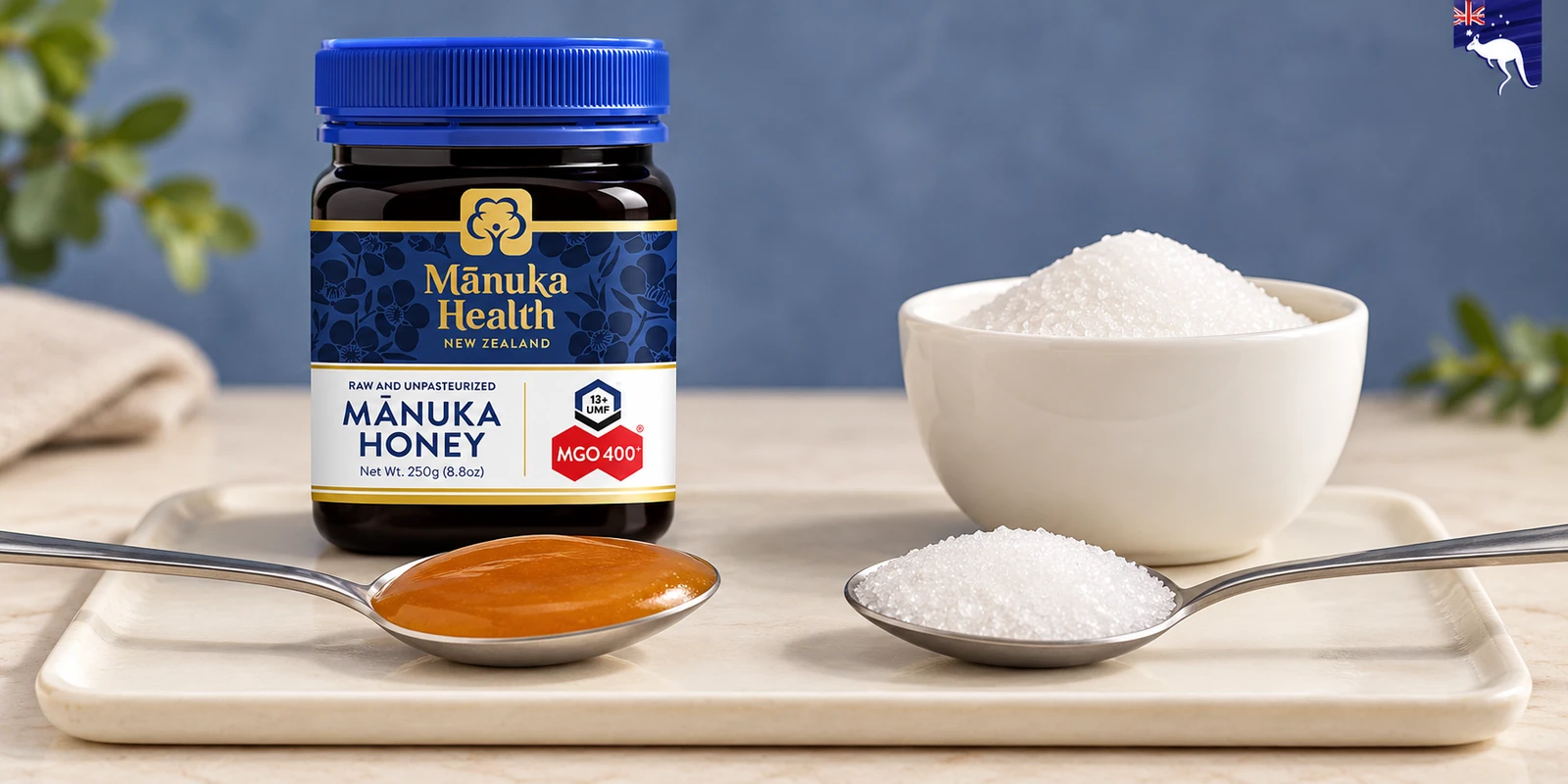
In a honey vs sugar comparison, the amount and the reason for the swap matter. Honey can be a flavour preference. It does not make sweetened tea sugar-free, and it is not a shortcut to controlling diabetes.
Honey vs sugar: the useful differences
| Question | Honey | Granulated table sugar |
|---|---|---|
| What are you adding? | A concentrated sweet food containing sugars and water | A concentrated sweetener, mainly sucrose |
| Does it contribute carbohydrate? | Yes | Yes |
| Can it affect blood glucose? | Yes | Yes |
| Is a teaspoon nutritionally identical? | No; honey is denser and a teaspoon generally provides more carbohydrate and energy | A teaspoon weighs differently from a teaspoon of honey |
| Why might someone choose it? | Flavour, texture, origin or a particular food preference | Neutral sweetness, recipe function or cost |
The Mayo Clinic comparison is direct: replacing sugar with honey generally offers no advantage in a diabetes eating plan. If you use less because you prefer honey’s sweetness, judge the amount actually used rather than assuming the ingredient name creates a large saving.
Why teaspoon and gram comparisons give different impressions
A teaspoon measures volume. A gram measures weight. Honey and granulated sugar do not have the same density, so equal spoonfuls are not equal weights. A heaped household spoon adds another source of uncertainty.
That is why a nutrition chart per 100 g cannot be read as if it describes the same teaspoon of each food. Check the units first, then calculate the serving you intend to eat. Neither an oversized portion nor a tiny manufacturer serving should be allowed to hide the practical comparison.
For a recipe, also notice how many servings the recipe makes. One spoonful in an entire dressing is different from one spoonful on each plate. The useful number belongs to your portion, not just the mixing bowl.
How to read a honey nutrition label
When carbohydrate intake matters, look at total carbohydrate and the serving size, not only the front-of-pack wording. The CDC carbohydrate-counting guidance explains that packaged-food labels can help you account for the amount you eat.
Here is a deliberately hypothetical example. If a label states 80 g carbohydrate per 100 g and you use a 5 g portion:
80 × 5 ÷ 100 = 4 g carbohydrate.
This is arithmetic practice, not the nutrition value of a featured jar and not a recommended daily serving. Use the actual label of your product and the amount you measure. If a label already lists carbohydrate per serving, confirm that its serving matches yours.
Also distinguish “no added sugar” from “no sugar.” A single-ingredient food can contain naturally occurring sugars without having another sweetener added. The phrase does not mean the carbohydrate disappears when you stir the honey into a drink.
Can people with diabetes eat honey?
Some people can include a small amount within an individual meal plan, but there is no universal serving that is safe or suitable for everyone. Diabetes type, medicines, glucose targets, the rest of the meal and professional dietary advice all affect the decision.
NIDDK’s diabetes guidance describes individual meal-planning approaches such as carbohydrate counting and the plate method. The aim is a workable eating pattern, not a list of supposedly magical ingredients.
If your care team has given you a plan, use that plan rather than an online “one spoon every morning” rule. Do not alter insulin or other medicines to accommodate a honey routine without appropriate advice. A high reading is not a reason to switch brands and expect the problem to resolve.
What about low-GI, raw or organic honey claims?
An isolated glycaemic-index number does not tell you how a specific portion fits your whole meal or personal plan. Ask which product was assessed and what evidence supports the claim. Avoid treating a general number found online as a guarantee for every jar.
Raw and organic describe other features of a product. They do not mean sugar-free. Nor does a dark colour, thick texture or foreign origin establish a diabetes benefit. These details may matter to your preferences, but they answer different questions.
For a broader look at what honey can and cannot offer nutritionally, read our honey benefits and side effects guide.
Is Manuka honey different for blood sugar?
Manuka remains a sugar-containing food. MGO measures methylglyoxal, and UMF is a quality framework for certified products. Neither gives you a carbohydrate allowance or establishes that a higher grade treats diabetes.
A buyer may value a particular Manuka flavour, origin or documented grade. Those are food preferences, not evidence that its sugars can be ignored. Our Manuka evidence guide keeps measured product characteristics separate from medical claims.
Be particularly cautious with advertisements that pair a diabetes question with a recommendation to buy a stronger honey. The appropriate first step is understanding your dietary plan, not increasing the MGO number.
Three everyday swaps to assess honestly
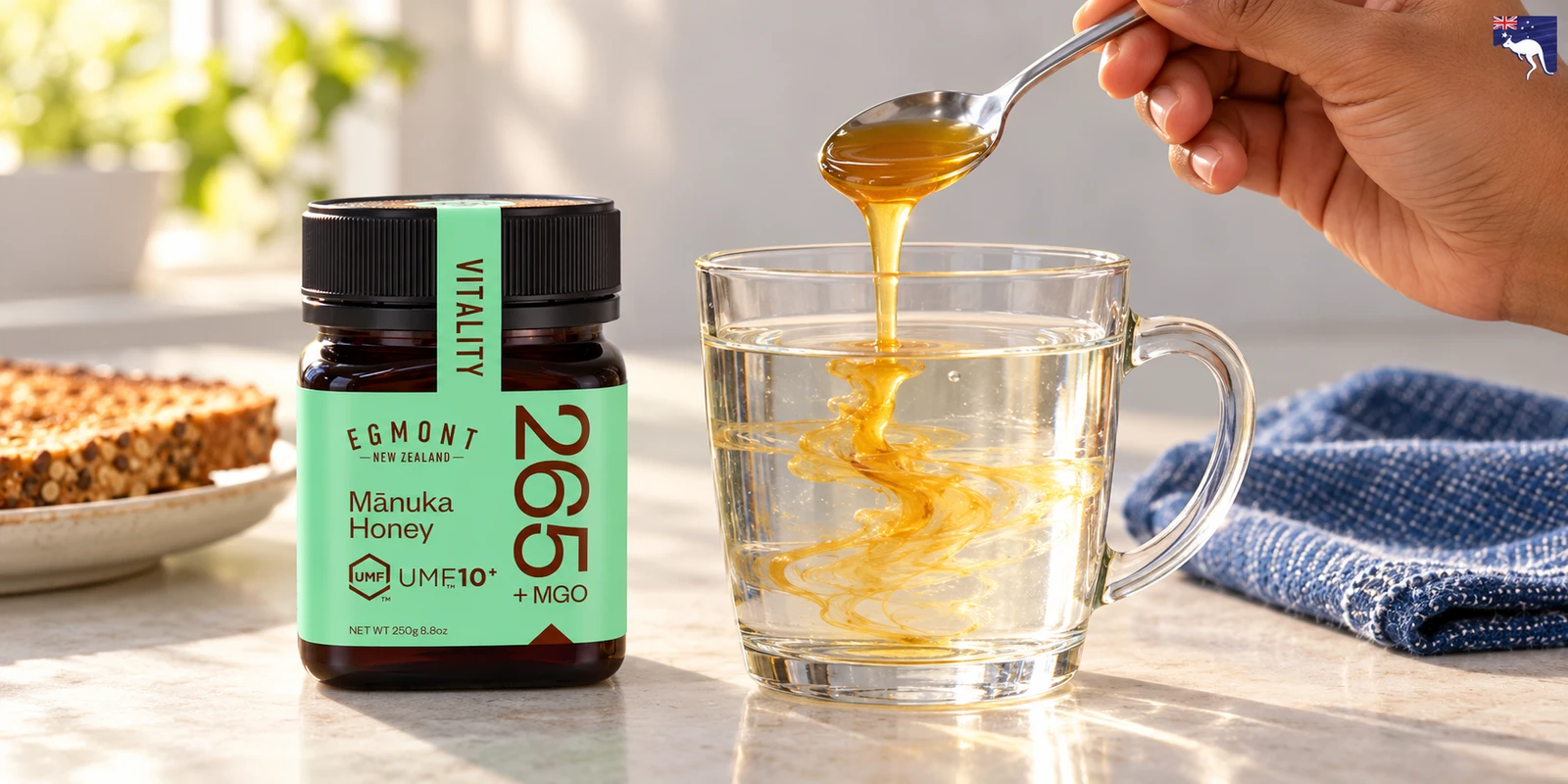
Tea with sugar becomes tea with honey
Compare the actual amounts. If the taste allows you to use less sweetness overall, that may suit your preference. If you add honey while keeping sugar or sweetened milk, you have added another sweetener rather than replaced one.
Plain yoghurt gets a drizzle
A little honey changes the flavour of plain yoghurt. A sweetened yoghurt with added honey is a different meal. Read the full label before assuming the bowl is low in sugar because it looks like a wholesome breakfast.
A recipe is described as naturally sweetened
Check what replaces the sugar and how much is used. Honey, syrups and fruit juice concentrates can still contribute free sugars. The CDC’s guide to hidden sugars shows why foods such as cereals, sauces and flavoured dairy products deserve a closer look.
The practical serving guide below offers food ideas without turning honey into a compulsory daily supplement.
Do the small amounts of other compounds change the decision?
Honey contains more than a single purified sugar, and different honeys can have distinctive characteristics. That does not make a normal serving a substitute for varied meals or justify eating larger amounts to chase a health claim.
The WHO definition of free sugars includes honey. For everyday eating, consider the overall pattern of sweet foods and drinks alongside foods that provide fibre and other nutrients. You do not need to replace foods you already enjoy unsweetened with a honey version.
If you choose honey, buy it for the right reasons
Choose a clear label, traceable origin, a flavour you enjoy and an appropriate pack size. Manuka Health MGO 115+ below is a food-product example you can inspect; it is not labelled here as a diabetes-friendly treatment or a substitute for sugar control.

Manuka Health MGO 115+ Manuka Honey (New Zealand)
Manuka Health MGO 115+ honey in Bangladesh: compare jar weight, UMF 6+ label, food-use guidance, expiry and current selected-pack price.
If honey fits your diet, there is no requirement to buy the highest grade. If it does not fit your current plan, choosing not to use it is also a reasonable decision. The Bangladesh honey buying guide can help compare products when the food choice itself has already been made.
The most useful question is not whether honey sounds more natural than sugar. It is whether the amount, flavour and overall meal work for you.