Does Honey Expire? Best-Before Dates and Storage in Bangladesh
An old date or a grainy texture does not answer every question about a honey jar. Learn how to read its date, recognise storage problems and protect plain honey from heat, moisture and contamination in a Bangladesh kitchen.
Quick Answer
Properly stored plain honey can keep for a long time, but it is not indestructible. A best-before date usually concerns quality, while a use-by date has a different safety meaning. Follow the supplied label and consider the jar’s condition and storage history. Crystals alone are not spoilage; unexpected fermentation, contamination or damaged packaging needs a different response.
Key Takeaways
- Read the exact date wording and storage directions instead of assuming every date means the same thing.
- Keep plain honey tightly closed, dry and away from prolonged heat and direct sunlight.
- Crystallisation alone is not a reason to discard honey or proof of purity.
- Do not taste-test honey that appears contaminated or fermented, and do not apply plain-honey storage rules to homemade mixtures.
You find a half-used honey jar at the back of the cupboard. The date has passed, the honey looks darker, and part of it has turned grainy. Should it go in the bin, or is this the famously long-lasting food people say never spoils?
Does honey expire? Plain honey can keep remarkably well when stored properly, but “never goes bad” is too broad a promise for every opened jar. The useful answer depends on the date wording, storage history and what has actually changed.
Start with the date on the label
A best-before date and a use-by date are not interchangeable. Food Standards Scotland explains that best-before concerns quality, whereas use-by concerns safety. Both need to be read alongside the storage instructions.
If a honey jar carries a best-before date, passing it does not automatically mean the contents became unsafe that day. It also does not guarantee that an old, poorly stored jar is fine. If the wording is “expiry,” “EXP” or otherwise unclear, ask the brand or seller what it means for that product rather than making an assumption.
This distinction explains date terminology; it is not advice to ignore a manufacturer’s directions or a statement of Bangladesh labelling law. For a new purchase, check the date before ordering, especially if you plan to use the jar slowly.
Why can honey keep for so long?
Honey’s concentrated sugars and relatively low available moisture make it difficult for many microorganisms to grow. Utah State University Extension’s storage guidance describes its long keeping quality, while also noting that flavour, colour and texture can change.
That resistance is not the same as sterility. Water introduced by poor handling can change the conditions, and a food jar can still become contaminated. Honey also remains unsuitable for infants under 12 months because of the botulism risk, however fresh or carefully stored it appears.
Quality change or a reason to stop using it?
| What you notice | What it may mean | A sensible response |
|---|---|---|
| Grains or crystals | A common natural texture change | Check that there are no separate spoilage or contamination concerns |
| Gradual darkening | Age or storage can affect appearance and flavour | Review the label and storage history; colour alone cannot certify safety |
| Unexpected sour or alcoholic smell with persistent bubbling | Possible fermentation | Stop using it; do not taste it to test safety |
| Damaged seal, leakage or foreign material | Packaging failure or contamination | Keep the packaging and contact the seller or manufacturer |
A few air bubbles after stirring are not automatically fermentation. Look at the whole situation rather than diagnosing a jar from one photograph. Oregon State University’s honey-handling guidance identifies fermentation signs such as bubbling and sour odours; suspect spoiled honey should not be rescued by warming it.
How to store honey in a warm, humid Bangladesh home
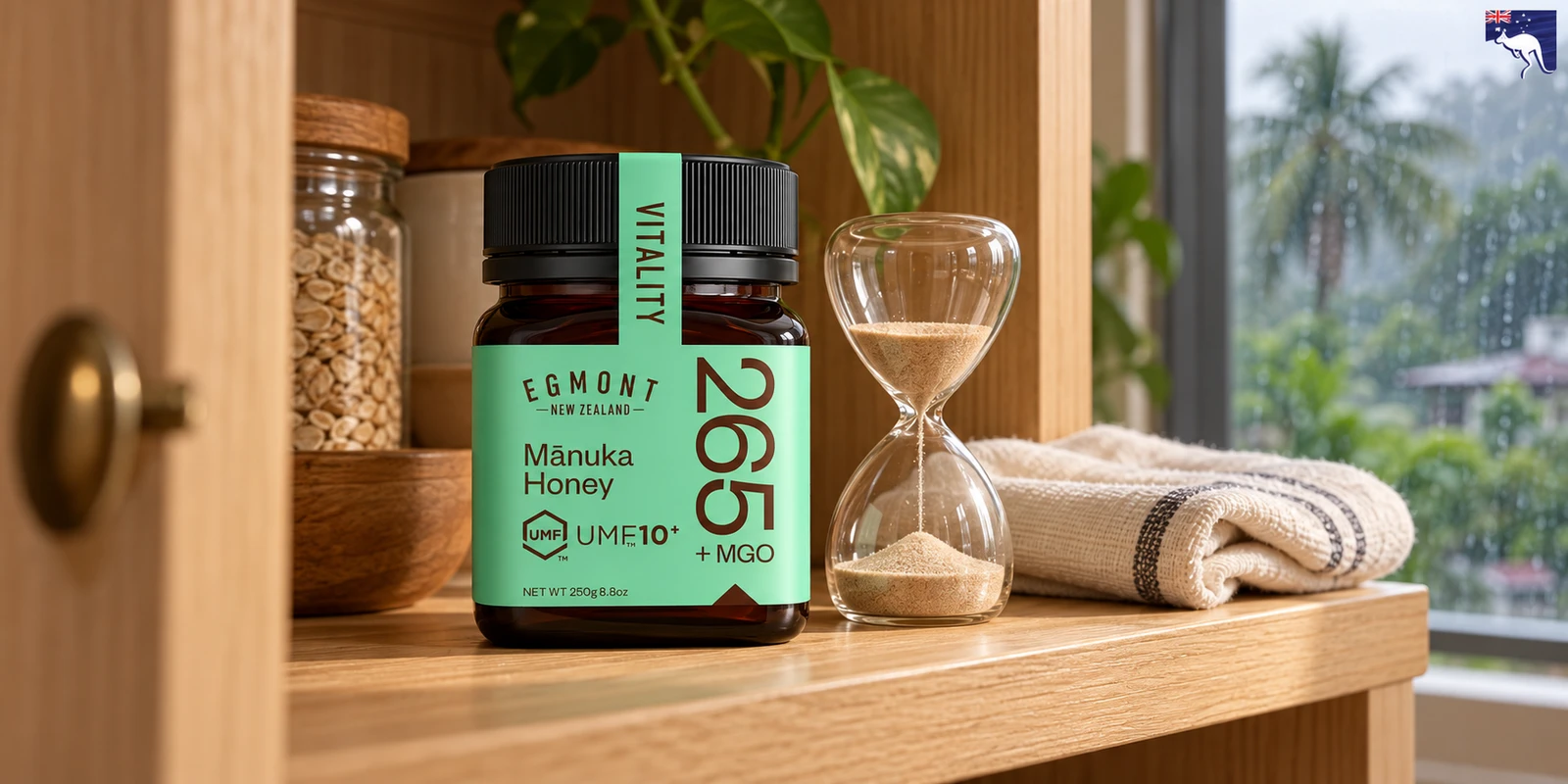
The most useful storage improvement may be moving the jar a short distance. A shelf beside the hob or a sunny window exposes it to conditions you can avoid. Choose a dry cupboard away from cooking heat and direct sunlight, within the manufacturer’s storage directions.
- Close the lid after every use. Do not leave the jar open throughout breakfast or beside a steaming kettle.
- Use a clean, dry spoon. Keep tea, water, crumbs and other foods out of the main jar.
- Keep the original label. The batch, date and instructions are useful if a question arises later.
- Choose a practical pack size. A large jar makes sense only if its price and your normal use justify it.
If your storage area stays hotter than the label permits, ask the manufacturer for advice about that pack. Do not assume that a vague “room temperature” instruction means every hot cupboard is suitable. Equally, there is no need to invent a precise shelf-life countdown from the local weather.
Should honey go in the fridge?
Plain honey generally does not need refrigeration unless the supplied instructions say otherwise. A colder texture is not a sign of improved quality, and typical refrigerator conditions can encourage crystallisation. Follow the product-specific guidance rather than trying to keep every honey permanently runny.
Once honey is diluted or mixed into another food, the situation changes. Honey water, yoghurt with honey and jars containing fresh ingredients are not the same as plain honey. Use the storage requirements of the mixture; do not assume honey preserves everything added to it.
Crystallised honey needs a separate question
If the only concern is a grainy texture, read the guide below before throwing the jar away. It explains why crystals form, why they do not prove adulteration and how gentle warming differs from trying to salvage spoiled food.
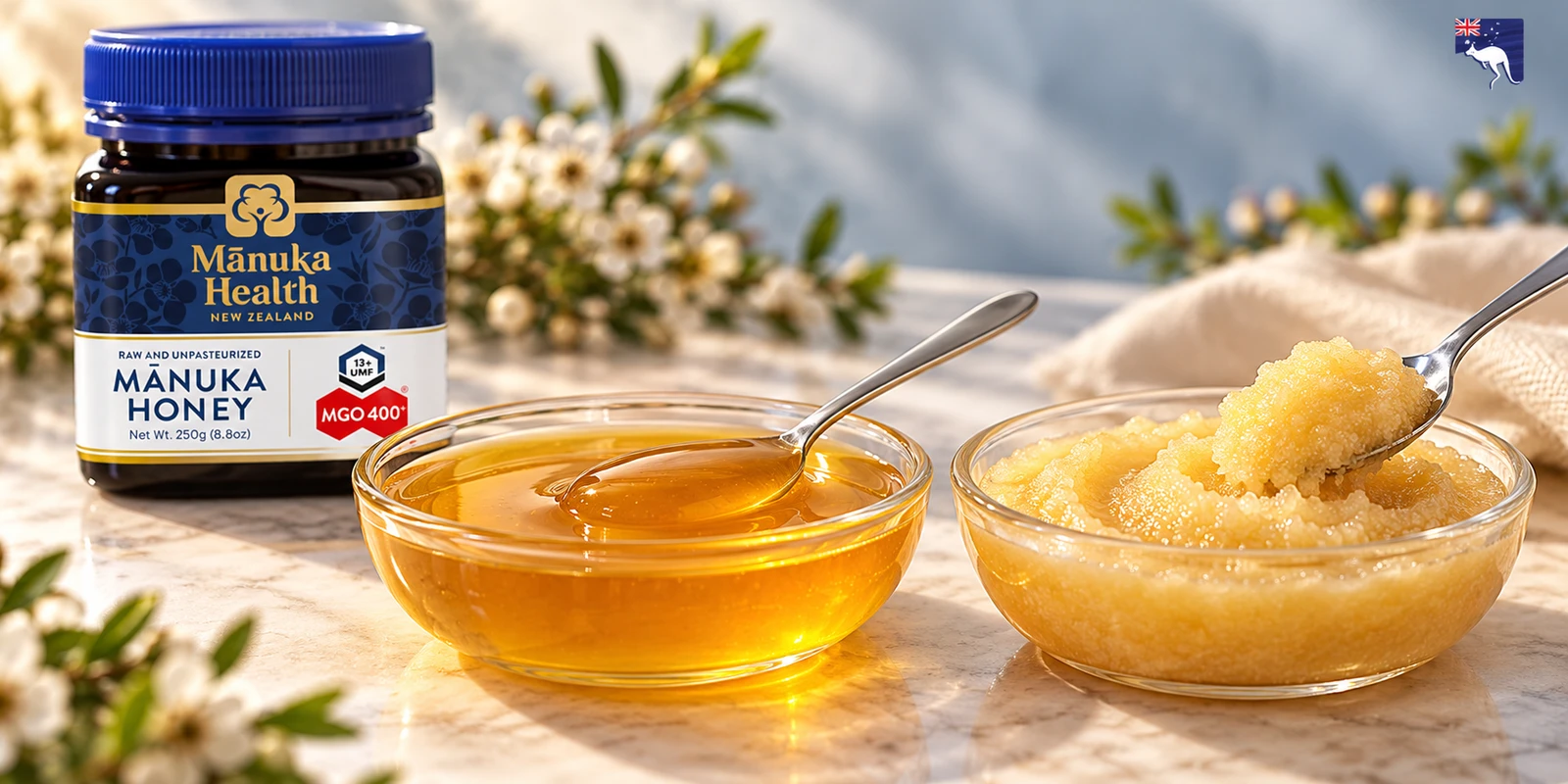
Does Manuka honey keep improving as it ages?
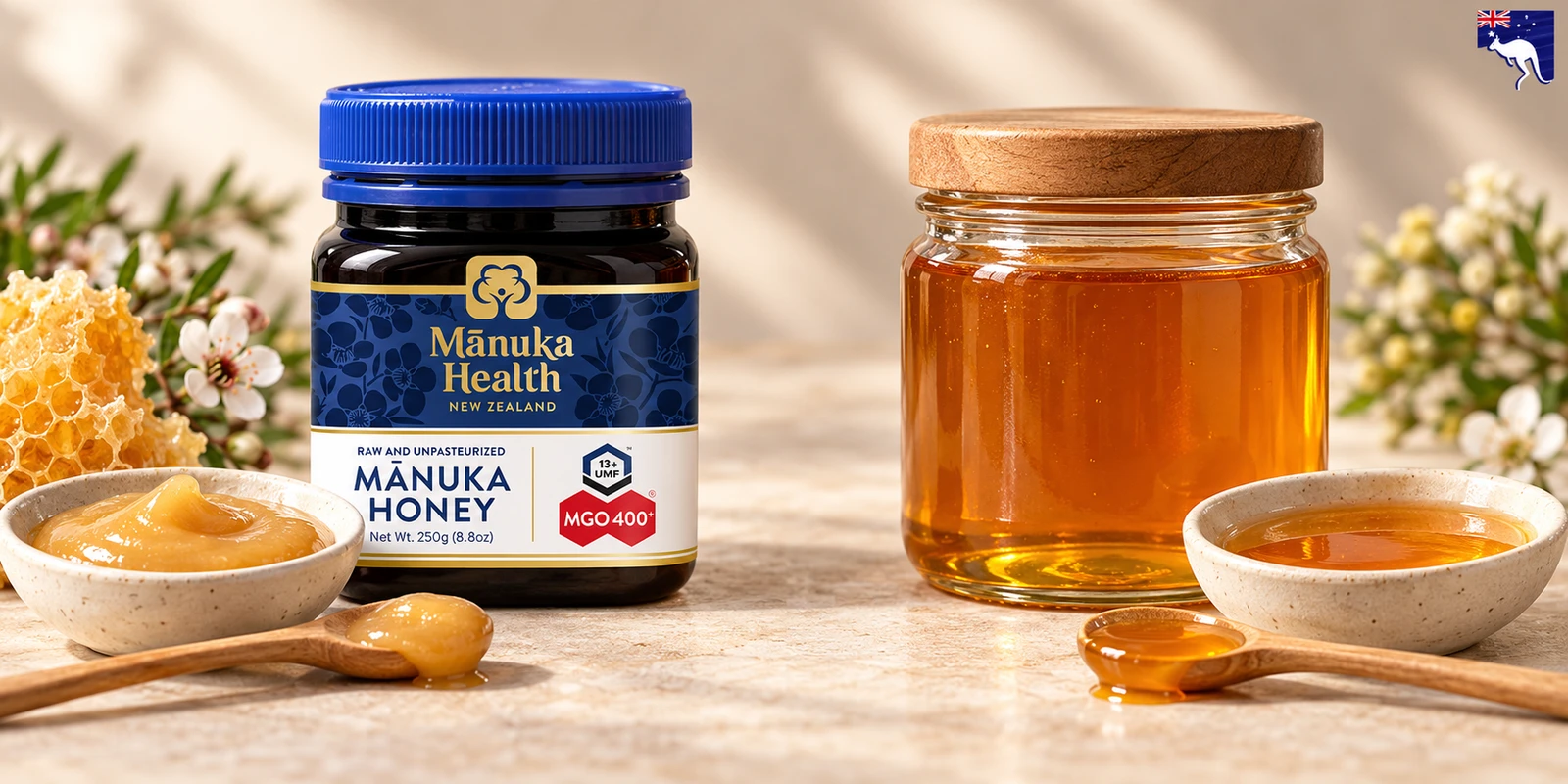
No simple rule says that an older Manuka jar is better. Its measured characteristics can change over time and with storage. Manuka Health provides product-specific keeping information, but general ranges should not replace the date and instructions on your own jar.
Do not buy an unusually old jar because someone suggests its MGO must have risen, or deliberately age a household jar to seek a higher grade. The labelled product and documented batch information are the appropriate starting points.
Buy a size that fits your household
Before replacing a jar, consider how quickly you normally use honey. A smaller pack can be convenient for occasional use, while a larger one may offer better unit value for a household that already enjoys the product. Compare price per 100 g after matching honey type and grade.
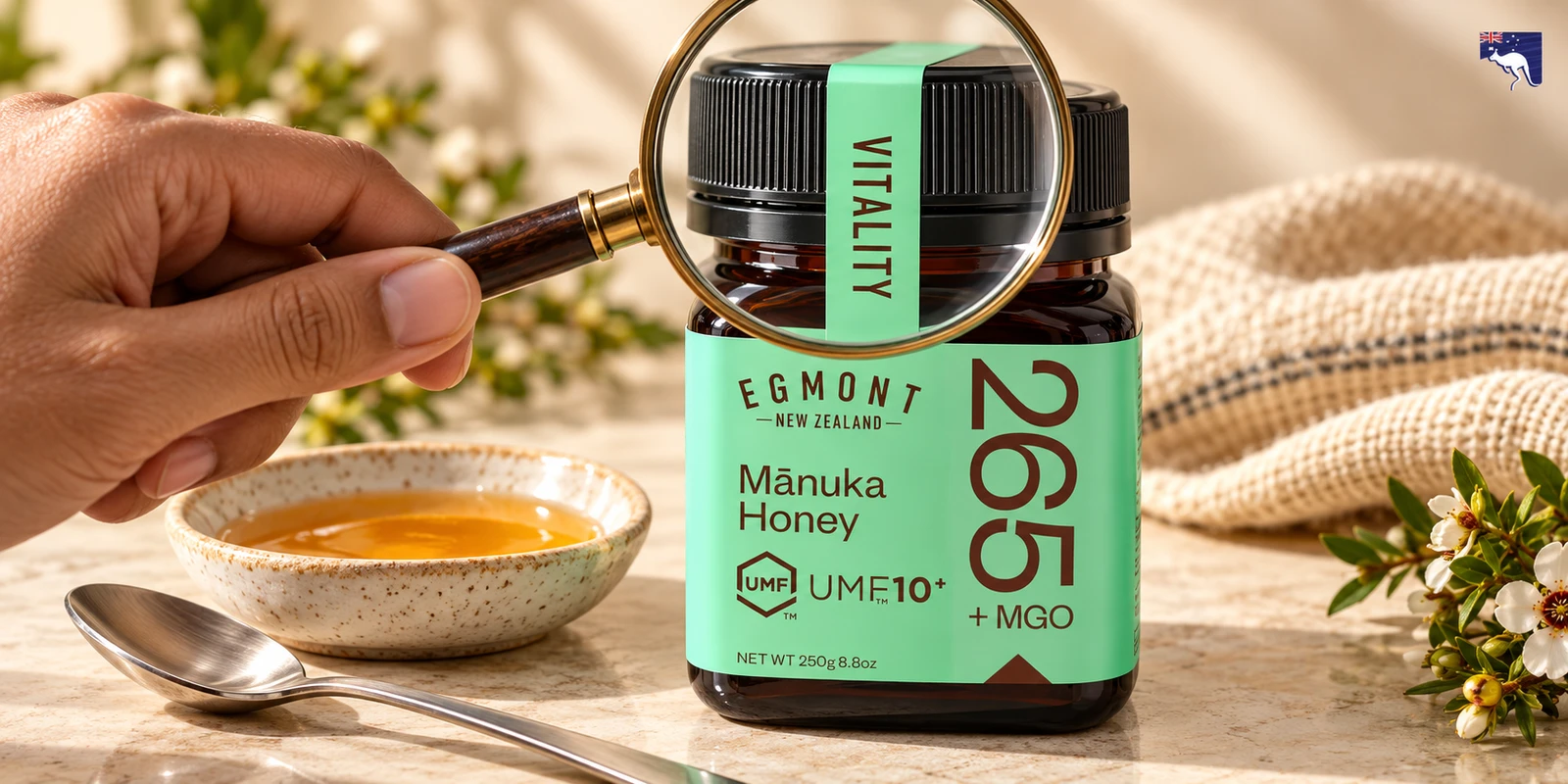
The Egmont MGO 265+ page below is one example where you can inspect the available pack options. Check the current label and storage instructions when the order arrives.

Egmont Premium Manuka Honey MGO 265+ (New Zealand)
Egmont MGO 265+ Manuka honey in Bangladesh: compare jar weight, labelled grade, batch traceability, food-use guidance and current price.
If you are unsure about an older jar
Keep it aside while you check the date, seal and storage history. Photograph the label and any unusual change, and contact the seller or manufacturer with the batch code. Do not taste questionable honey to settle the issue or disguise it in a recipe.
For future purchases, our honey authenticity checklist helps you record the right details from the start. Good storage is mostly a set of small habits: a closed lid, a dry spoon, a suitable cupboard and clear product information.