Honey for Cough and Sore Throat: Evidence, Limits and Safe Use
A warm honey drink may offer comfort, but symptom relief is different from treating an illness. This guide explains the cough evidence, age restrictions, sensible use and warning signs, including why a premium Manuka grade is not required.
Quick Answer
Honey may ease some short-term cough symptoms in adults and children old enough to have it, but the evidence is limited and it does not treat every cause of cough. A comfortably warm honey drink may soothe the throat. Never give honey to babies under 12 months, and seek care for breathing difficulty, trouble swallowing, blood, persistent symptoms or other concerning changes. Higher MGO is not an established cough-treatment dose.
Key Takeaways
- Honey may offer short-term comfort; it is not a cure for the illness causing a cough.
- Evidence about honey does not establish that a particular Manuka brand or high MGO grade is necessary.
- Never give honey to a baby under 12 months, and avoid scalding drinks for anyone.
- Persistent or worsening symptoms need assessment, especially with fever, weight loss, night sweats or breathing problems.
It is late, your throat feels scratchy, and every few minutes a cough interrupts the quiet. A warm drink with honey is a familiar suggestion. It may provide some comfort—but it helps to know what that comfort can and cannot tell you.
Using honey for cough is a short-term self-care option for some people, not a diagnosis or a cure. The first checks are simple: the person must be old enough to have honey, able to swallow safely and free of symptoms that need urgent assessment.
Before trying honey: when to get medical help
Get urgent medical help for difficulty breathing, inability to swallow, drooling because swallowing is difficult, or severe symptoms that are worsening quickly. The NHS inform sore-throat guidance identifies these as warning signs. Do not keep offering a drink to someone struggling to breathe or swallow.
Chest pain, coughing up blood, dehydration, persistent fever or a cough that is not going away also deserve assessment. In Bangladesh, a lingering cough with weight loss or night sweats should not be dismissed as something a different honey might fix. The National Tuberculosis Control Programme explains symptoms that need a doctor’s assessment. Such symptoms can have several causes; they do not diagnose TB on their own.
What does the research on honey for cough show?
A 2018 Cochrane review included six small trials involving 899 children aged at least 12 months. Honey probably improved some cough outcomes compared with no treatment or placebo. The evidence was low to moderate in certainty, and many children were assessed after only one night.
That is a reason for a modest expectation: possible short-term relief. It is not proof that honey cures respiratory infections, prevents complications or works equally well for every age and cause of cough.
NICE guidance on acute cough also describes limited evidence of benefit from honey for people old enough to have it. Neither source establishes a particular retail brand or high MGO number as the necessary choice.
| Reasonable expectation | Expectation to avoid |
|---|---|
| A little temporary comfort or reduced coughing for some people | A guaranteed cure or complete suppression of every cough |
| A warm drink that feels pleasant on a scratchy throat | Proof that an infection has cleared |
| One optional part of simple self-care | A replacement for prescribed treatment or medical assessment |
Honey for a sore throat: soothing is not the same as healing
A comfortably warm drink can be easier to sip when your throat feels irritated. Honey may make it more pleasant. The cough studies, however, should not be stretched into proof that honey treats every sore throat or eliminates the organism causing it.
Notice how the person is doing overall: are they drinking normally, breathing comfortably and improving? Brief relief after a sweet drink does not answer those wider questions. If symptoms persist, worsen or recur, ask a clinician or pharmacist for appropriate advice.
A simple warm honey drink for adults
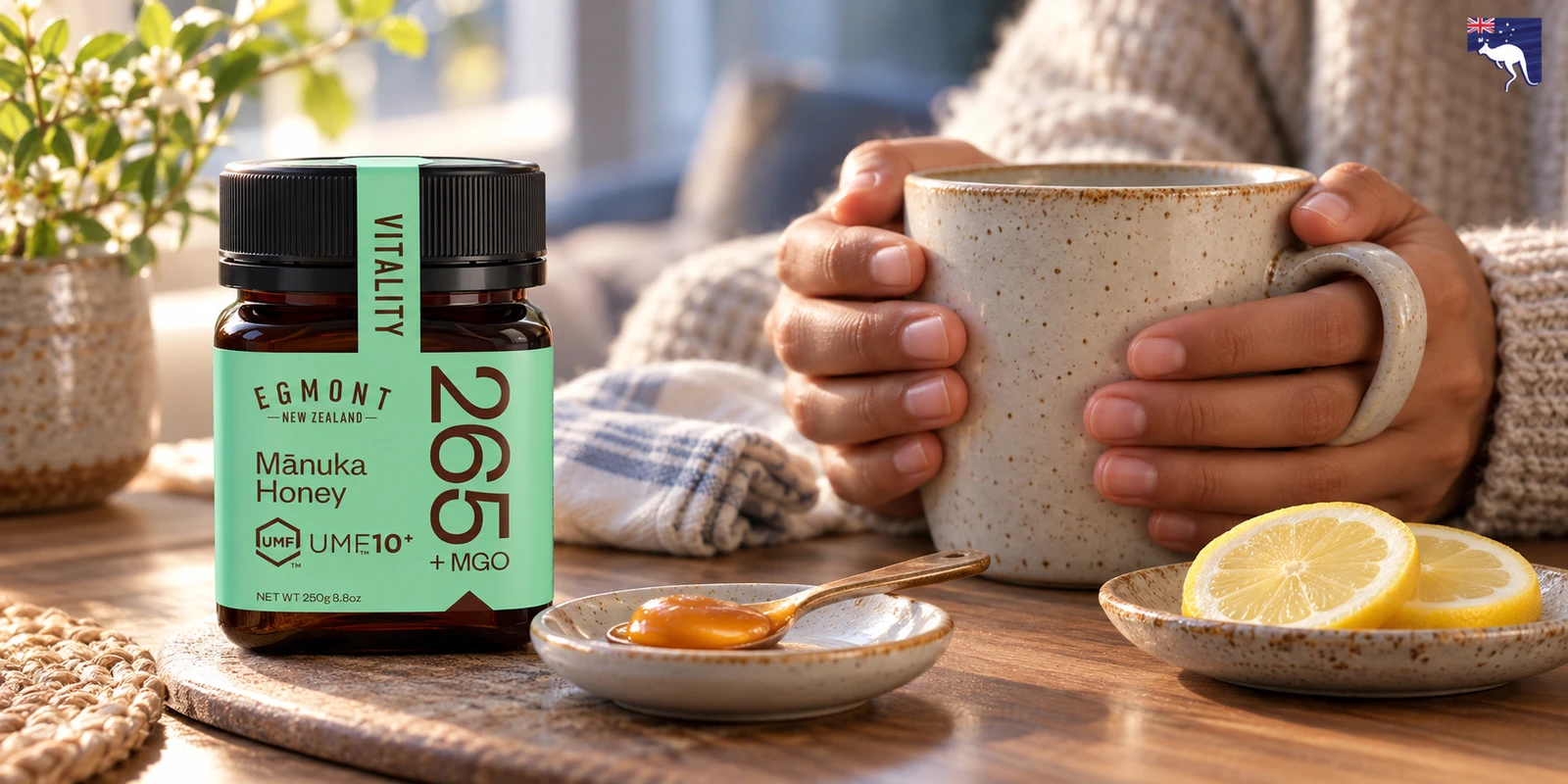
The NHS cough page includes a honey-and-lemon drink as an option while acknowledging limited evidence. For a modest adult version:
- Prepare a mug of drinking water and let it cool until comfortably warm.
- Stir in a level teaspoon of honey.
- Add a little lemon juice if you enjoy it, then sip slowly.
This is a drink recipe, not a prescribed treatment dose. Lemon is optional, and extra honey is not automatically more effective. If the drink irritates your throat or is unpleasant, there is no need to force it.
Keep the drink warm rather than hot enough to burn. Avoid repeated sugary drinks throughout the day, and remember that the honey still contributes to your sugar intake.
Can children have honey for a cough?
Never give honey to a child under 12 months. Do not add it to milk, water, food or a home remedy for an infant. This applies to raw, organic, Manuka and ordinary honey.
For children over one, NHS guidance describes a warm honey-and-lemon drink as an option. Avoid hot drinks, supervise appropriately and do not assume an adult serving or a branded “wellness dose” is suitable for every child.
A child who is having trouble breathing, cannot swallow, is unusually unwell or is not drinking adequately needs medical advice rather than another home remedy. Parents of very young children or children with existing conditions should seek advice early if concerned.
Do you need Manuka honey or a high MGO grade?
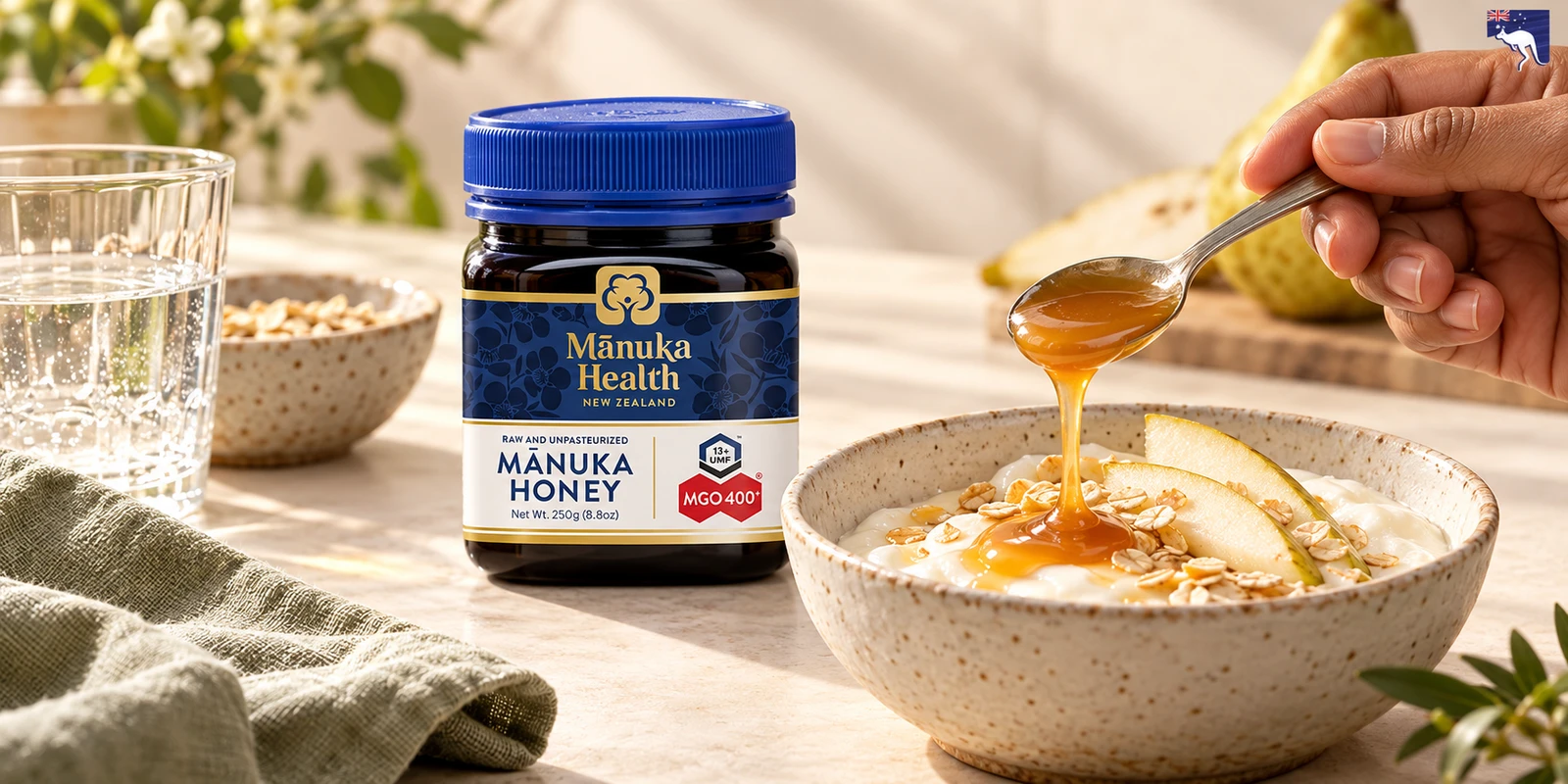
No evidence discussed here establishes that you must buy premium Manuka to obtain cough comfort. MGO is a measured characteristic of the honey, not a dosage scale for respiratory illness.
If you already enjoy Manuka, you can choose it as a food preference. Do not feel pressure to buy a stronger or more expensive jar because symptoms have lasted longer. That is a reason to reassess the symptoms, not escalate the honey grade.
For the wider distinction between laboratory findings and benefits from eating Manuka, see our Manuka evidence and limitations guide.
Diabetes, allergies and other precautions
Honey can affect blood glucose. If you follow a diabetes meal plan, include it within that plan rather than treating a cough remedy as exempt. Mayo Clinic explains why substituting honey for sugar does not remove that concern.
Avoid honey that has caused a suspected allergic reaction. If you are using medicines or managing a condition that makes respiratory symptoms more concerning, seek individual advice. Do not stop prescribed treatment because a drink provides temporary relief.
The broader food and safety questions are covered here:
Keep self-care simple and watch the direction of symptoms
Rest, fluids and paying attention to how symptoms change are more useful than building an increasingly complicated mixture. You do not need several jars, multiple sweeteners or a sequence of “stronger” home recipes. If you are worried, get advice.
Before speaking to a clinician, note when the cough started, whether it is improving, whether there is fever or breathlessness, and any relevant medicines or conditions. That information is more helpful than the MGO number of the honey you tried.
Honey should fit around an appropriate care decision. It should never become the reason that decision is delayed.
If you want honey as a food, choose it on food criteria
Look for a clear label, traceability, an intact seal and a pack that suits your normal use. The Egmont Multifloral MGO 50+ card below is one catalogue example to inspect for food use. It is not presented as a clinically tested cough product.

Egmont Premium Multifloral Manuka Honey MGO 50+ (New Zealand)
Egmont MGO 50+ Manuka honey in Bangladesh: compare jar weight, labelled grade, batch traceability, food-use guidance and current price.
Our practical guide to eating honey covers serving ideas. Whether you choose that jar or another, keep the expectation proportionate: possible comfort, sensible portions and timely care when needed.