Vitamin E Capsules: Benefits, Side Effects and Safety
Vitamin E capsules are often bought for skin, hair or general wellness, but the reason for taking them matters more than the number on the bottle. This guide explains established uses, important safety concerns, label strengths and practical buying checks for readers in Bangladesh.
Quick Answer
Vitamin E is an essential nutrient. Capsules can help treat a diagnosed deficiency or meet a specific clinical need, but extra vitamin E is not automatically helpful when your intake is already adequate. High-dose supplements can increase bleeding risk and interact with medicines. Check the ingredient form, amount and serving size before choosing a capsule.
Key Takeaways
- A vitamin E capsule is most useful when it addresses a defined nutritional or clinical need.
- IU and milligrams are different units; the natural or synthetic form changes their conversion.
- High-dose vitamin E needs extra caution with blood-thinning medicines and before surgery.
A bottle of vitamin E can look like a simple purchase: choose a strength, take a capsule and wait for healthier skin or hair. The useful question comes earlier: what problem are you trying to solve?
Vitamin E capsules have a place in care, but the nutrient’s normal role in the body does not prove every benefit advertised for a high-dose supplement. Understanding that difference helps you compare products in Bangladesh without paying for a promise the label cannot establish.
What does vitamin E do?
Vitamin E is a group of fat-soluble compounds. Alpha-tocopherol is the form used to meet human vitamin E requirements. It acts as an antioxidant and contributes to normal immune function. “Antioxidant” describes a biological role; it does not mean a capsule prevents every illness associated with oxidative stress.
Nuts, seeds and plant oils contribute vitamin E to meals. Our vitamin E food guide for Bangladesh explains the everyday options. The NHS guidance on vitamin E places a varied diet first. For a Bangladeshi household, that is a reason to review ordinary meals before assuming that an imported capsule is the missing ingredient.
Which vitamin E capsule benefits are established?
The clearest use is correcting a deficiency when it has been identified. Some people have difficulty absorbing fat and therefore absorbing vitamin E. Treatment needs to address that underlying problem as well as the nutrient itself. The Merck Manual’s clinical guidance describes supplementation in this context.
There are also specialist uses of vitamin-containing formulas. A recommendation made for a particular diagnosis does not establish that the same capsule is useful for every healthy person. If a clinician has recommended vitamin E, ask what the intended benefit is, how long to take it and how the result will be assessed.
For general prevention, stronger is not necessarily better. The US Preventive Services Task Force recommends against vitamin E supplements for preventing cardiovascular disease or cancer in community-dwelling, nonpregnant adults. That recommendation does not cover treatment of a known deficiency.
What about vitamin E for skin and hair?
Skin and hair claims deserve the same evidence check as any other claim. Ask whether the research tested an oral vitamin E capsule, a cream or a combination of ingredients. Those are different interventions. A result from a topical formula cannot establish what swallowing a capsule will do.
“Supports healthy skin” also does not tell you whether a product has been shown to improve your particular concern. For pigmentation, acne scars or continuing hair loss, start by identifying the cause and a suitable treatment. A capsule bought on the strength of a testimonial does not provide that assessment.
Keep oral and topical products separate. An oral soft capsule is not a ready-made facial treatment: its formulation and instructions are for swallowing. If you want a skin product, choose one intended for that use and follow its directions.
How to read IU, mg and the ingredient form
The large number on the front is only part of the label. Read the amount per capsule or serving and the full ingredient name. Naturally sourced vitamin E is commonly labelled d-alpha-tocopherol; the synthetic form commonly appears as dl-alpha-tocopherol.
For nutritional activity, the NIH Office of Dietary Supplements gives these conversions: 1 IU of natural vitamin E equals 0.67 mg alpha-tocopherol; 1 IU of synthetic vitamin E equals 0.45 mg. Its adult recommended dietary allowance is 15 mg daily. These are US reference values, not a personal capsule prescription.
An imported pack may also list the weight of an ingredient compound. Do not assume that this is directly interchangeable with a nutrient-equivalent amount on another country’s label. If a milligram figure and an IU figure seem inconsistent, ask a pharmacist to interpret the complete declaration.
A search for “vitamin E 400 IU benefits” therefore needs more than a product with 400 printed on it. Check the form, serving directions and intended use. Neither 400 IU nor 500 IU is a universal daily requirement.
An Australian label example
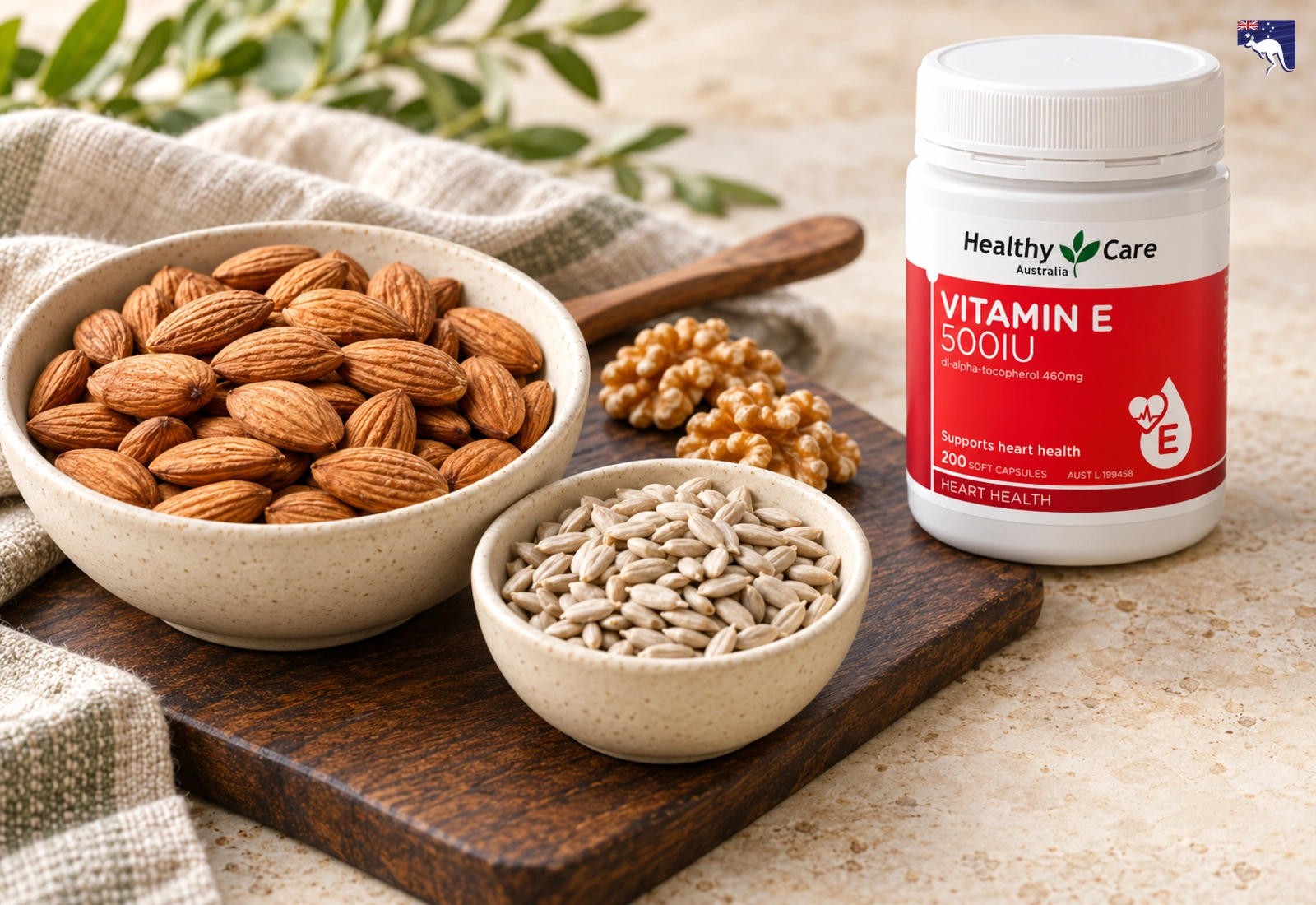
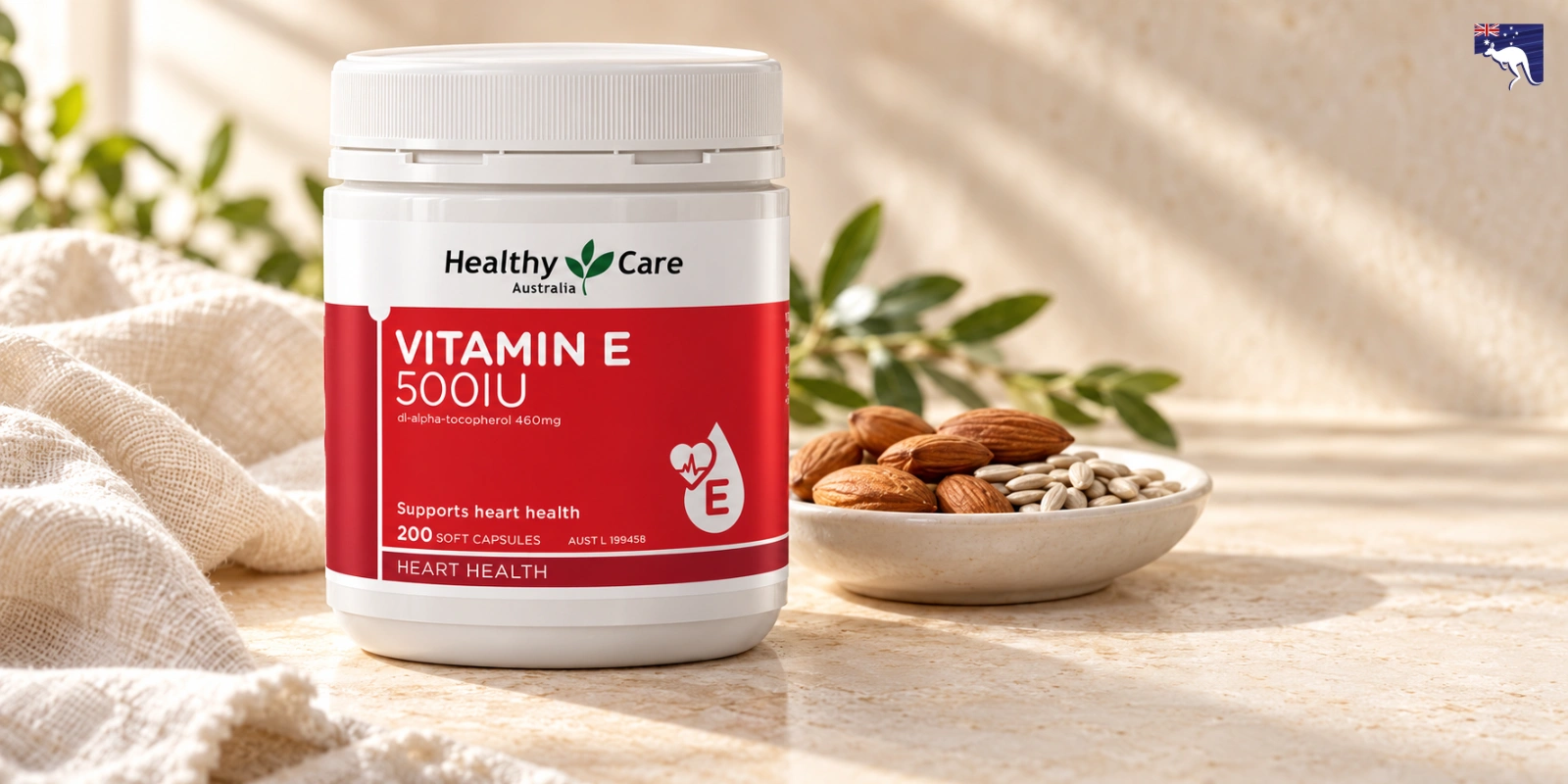
The manufacturer of Healthy Care Vitamin E 500IU, 200 capsules declares 460 mg dl-alpha-tocopherol per capsule, equivalent to 500 IU vitamin E. The ingredient weight and the IU amount describe the same capsule; they are not amounts to add together. Nor should the 460 mg ingredient-weight figure be compared directly with the 15 mg nutritional reference above.
This is a high-strength capsule, well above an ordinary daily dietary requirement. Its availability does not make it the default choice for everyone. Use the current manufacturer label and individual advice when comparing it with another 500 IU or 1000 IU product.
The product below is a high-strength label example. The sidebar offers other vitamin E formulations for comparison; a higher strength is not a reason to take it, and these are not products to combine.

Healthy Care Vitamin E 500IU
Healthy Care Vitamin E 500IU in Bangladesh. Compare pack prices, tocopherol form, declared IU, daily serving and label suitability.
Vitamin E side effects and medicine interactions
Possible adverse effects include digestive upset, headache and fatigue. Of greater concern, supplements can increase bleeding risk, especially alongside medicines or other products that reduce clotting. Mayo Clinic’s vitamin E guidance advises checking interactions and discussing use before surgery.
Tell your doctor or pharmacist if you take warfarin, another anticoagulant, an antiplatelet medicine or several supplements together. Show the actual labels; “a multivitamin and a beauty supplement” does not reveal the total vitamin E amount. Also check with your treatment team before adding antioxidants during cancer treatment.
Long-term trial findings are another reason to avoid casual high-dose use. In SELECT, older men assigned 400 IU daily of synthetic vitamin E alone had a higher prostate-cancer incidence than the placebo group. The National Cancer Institute reports 76 versus 65 diagnoses per 1,000 men over about seven years. This is a specific trial finding, not proof that ordinary vitamin E-containing foods are harmful.
Can you take a capsule every day?
Daily use should follow a clear reason, the product directions and any advice from your clinician. Do not work backwards from the size of the bottle: a large pack does not establish how many months you personally need it.
If a capsule has been recommended, ask whether to take it with a meal and what to do if you miss a dose. Avoid adding extra capsules to “catch up”. Before buying again, review whether the original reason still applies. Pregnancy, breastfeeding, childhood and an upcoming operation are situations in which a routine adult supplement choice needs individual advice.
Buying vitamin E capsules in Bangladesh
Compare the exact product rather than the brand name alone. Two bottles from one brand can contain different strengths, ingredient forms and capsule counts. A lower price per bottle is not necessarily a lower price for the same amount or number of servings.
- Check the front and back label, not just a promotional photograph.
- Confirm whether the stated amount is per capsule or per serving.
- Read the other ingredients, including the capsule shell, for dietary or allergy requirements.
- Check the seal, batch and expiry information, and follow the pack’s storage directions.
- Compare the current price and availability on the exact product page.
If halal certification matters to you, look for evidence for that exact product and formulation; an Australian brand name alone does not establish it. In warm, humid conditions, follow the labelled storage instructions rather than keeping capsules in a hot car or damp bathroom.
A useful purchase starts with the right strength for a clear need. If that need is uncertain, bring the label to a pharmacist before checkout. There is little value in a larger bottle or higher IU number when it does not fit the reason for taking vitamin E.