Resveratrol: Benefits, Side Effects and Supplement Labels
Resveratrol attracts attention for healthy ageing, skin and metabolic health, yet laboratory findings do not always translate into benefits for people. This guide separates the evidence from the promises and explains how to compare resveratrol amounts, plant extracts and combination supplements available in Bangladesh.
Quick Answer
Resveratrol is a plant compound studied for effects on ageing and metabolic health. Human evidence is mixed, and it has not been shown to extend human lifespan. Before choosing a supplement, check the actual resveratrol amount per serving: a large plant-extract figure is not the same as that amount. Digestive side effects and medicine interactions also matter.
Key Takeaways
- Human studies do not establish resveratrol as a proven way to extend life or replace treatment for diabetes or heart disease.
- Compare the declared resveratrol amount, not the largest extract or plant-equivalent number on the pack.
- Capsules, liquids and grape seed products can have different formulas, directions and precautions.
Resveratrol is often marketed for healthy ageing, leaving a practical question: what has actually been shown in people? Research has examined metabolic health and other outcomes, but findings vary.
This guide connects that evidence with the details you need to compare resveratrol supplements in Bangladesh, including the difference between an active ingredient amount and a much larger plant-extract number.
What is resveratrol?
Resveratrol is a polyphenol, a plant compound found in foods including grapes, some berries and peanuts. It is studied for antioxidant activity and effects on cell-signalling pathways. It is not a vitamin that everyone needs to obtain from a capsule.
Food sources and concentrated supplements are different exposures. Eating grapes does not reproduce a clinical trial using a measured extract. Equally, a trial result from a particular supplement does not show that every grape-derived product has the same effect. These distinctions matter when you read headlines about resveratrol benefits. Our plain-English antioxidant guide explains the broader biology.
What benefits does the human research support?
Healthy ageing and longevity
Some of the interest comes from laboratory and animal research. Those findings can suggest questions for human trials, but they cannot establish that a person will live longer by taking a capsule. Memorial Sloan Kettering’s evidence review notes that lifespan extension has not been demonstrated in humans.
“Anti-ageing” is also an imprecise goal. A change in a laboratory marker, an improvement on one test and a longer healthy life are different outcomes. When a claim uses that term, look for the actual result measured and the people studied.
Blood sugar, weight and heart health
Human metabolic studies have produced mixed findings. In a six-month randomised trial in overweight adults, 150 mg daily did not improve the primary measure of insulin sensitivity. HbA1c was lower in the resveratrol group, but there were no differences in several other outcomes, including body composition and blood pressure. A single favourable measurement is not a complete treatment result.
A 2020 Cochrane review found insufficient evidence to determine resveratrol’s safety and effectiveness as treatment for type 2 diabetes. Its included studies were small and short. Research continues, but this does not support replacing prescribed diabetes care with a resveratrol supplement.
If your concern is raised blood glucose, cholesterol or blood pressure, keep the conversation focused on that condition. Ask how a supplement would fit with your existing care, rather than assuming that the word “antioxidant” answers the treatment question.
Skin and appearance
Read skin claims according to the product tested. A cream, an oral combination and a single-ingredient capsule are not interchangeable. A skin-related statement on a supplement label does not establish that it will fade your pigmentation, remove wrinkles or produce a particular result within a set number of weeks.
For a persistent skin concern, deciding what is causing it is more useful than collecting several products with overlapping “beauty” claims. Any proposed benefit should be specific enough that you can decide whether it has actually occurred.
Read the active amount, not just the extract number
A botanical label can contain several valid numbers describing different things:
- Extract weight: the amount of concentrated plant extract in a capsule.
- Plant equivalent: the quantity of starting plant material that the extract represents.
- Resveratrol amount: the declared quantity of the specific compound.
- Serving size: the number of capsules, tablets or millilitres to which the figures apply.
Do not add these figures together. A 5 g plant equivalent does not mean 5 g of resveratrol. If a label only states the weight of an extract, that is not enough information to calculate its resveratrol content.
A real capsule-label example
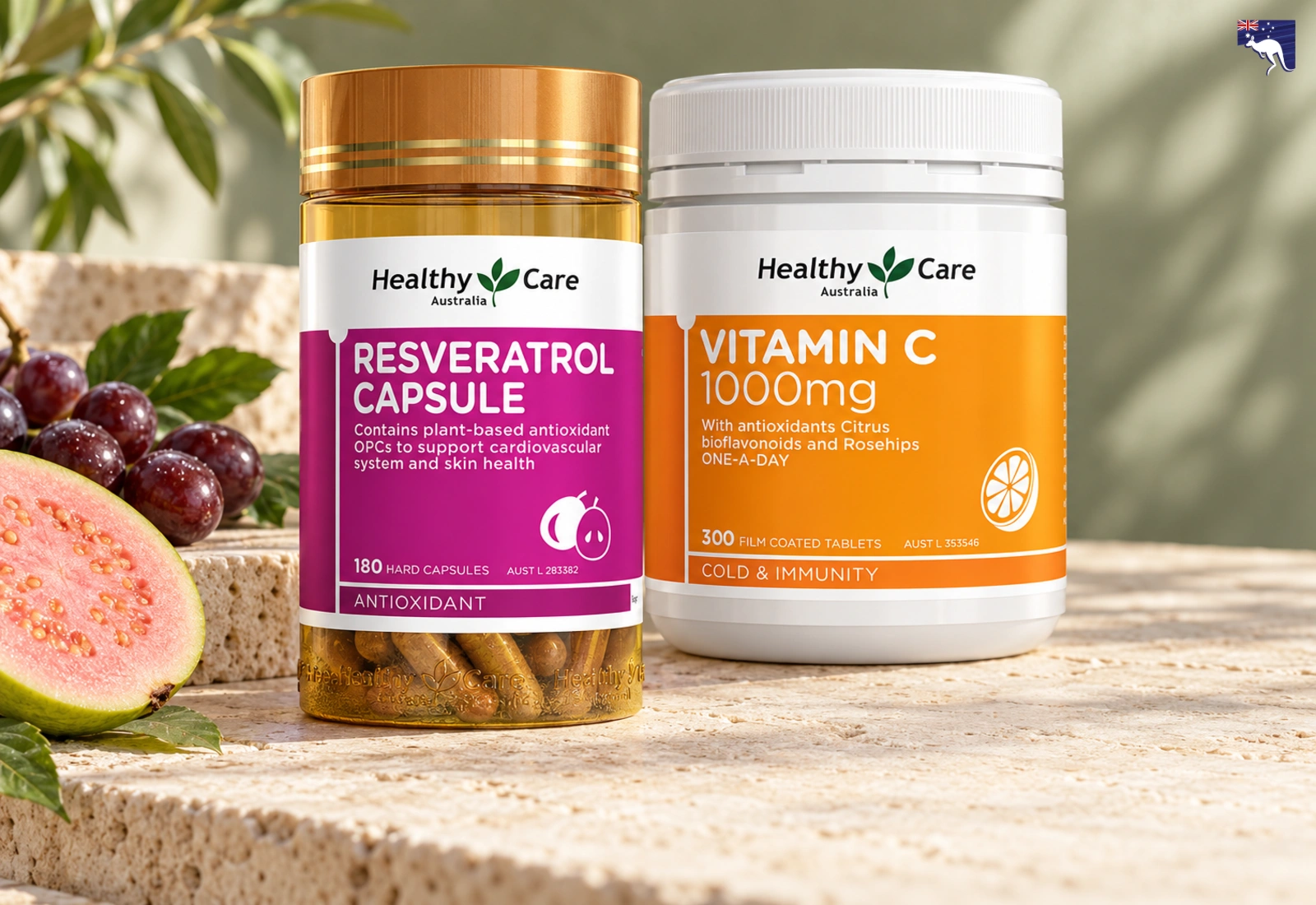
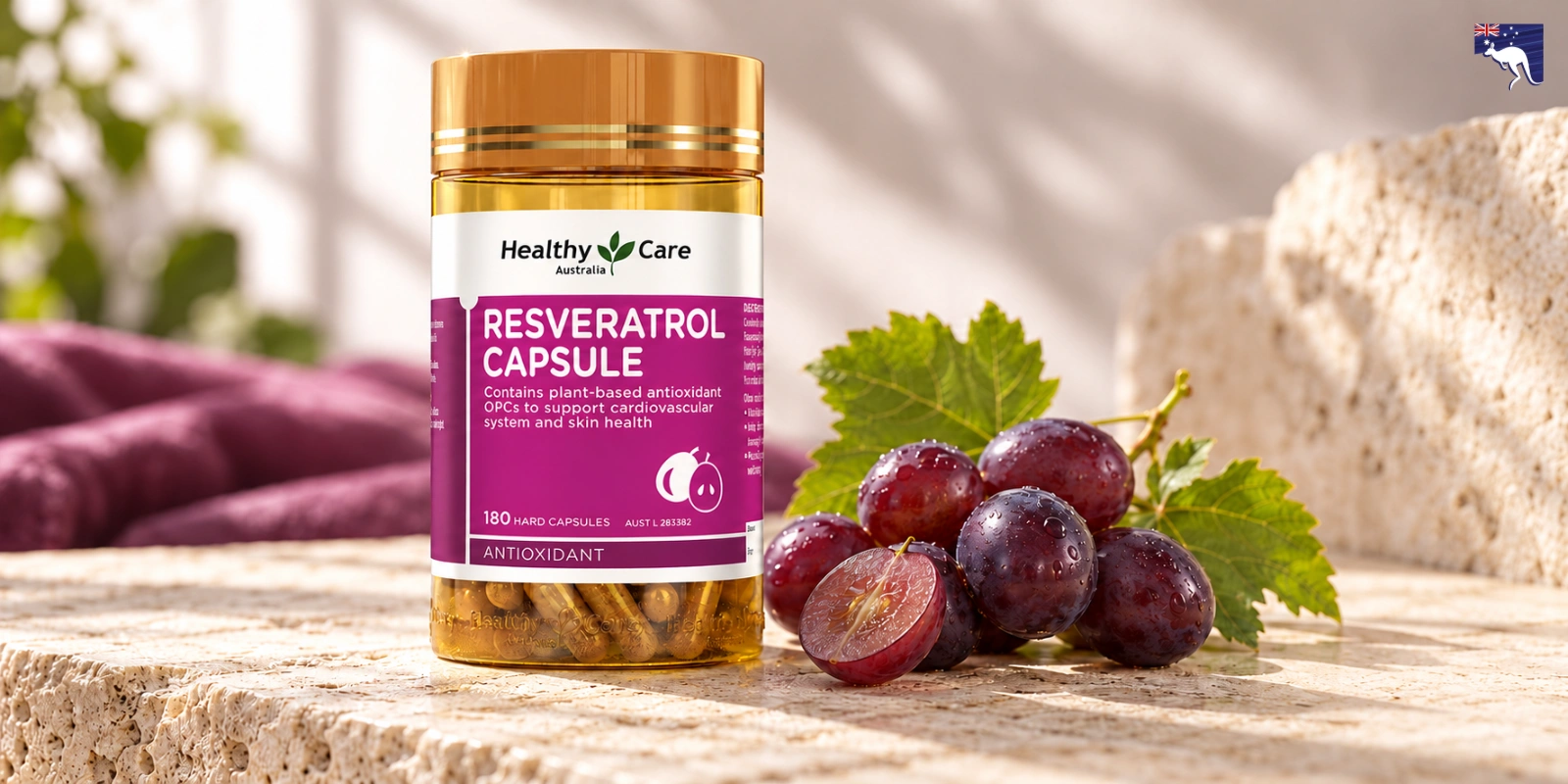
The manufacturer’s label for Healthy Care Resveratrol Capsule, 180 capsules lists the following per capsule:
- Reynoutria japonica root extract: 50 mg, equivalent to 5 g fresh root and providing 25 mg resveratrol.
- Grape seed extract: 41.67 mg, equivalent to 5 g dry seed.
- Vitamin C: 100 mg.
The resveratrol amount here is 25 mg per capsule. The two 5 g figures describe plant equivalents; neither is a resveratrol dose. This is also a combination product, so its vitamin C needs to be counted if you take another vitamin C supplement.
The manufacturer lists gluten and sulfites and directs storage below 30°C, dry and away from heat and sunlight. Check the current pack for directions and warnings. This example explains the label; it is not a recommendation that every reader should use the product.
You can inspect the current capsule listing below. The sidebar also shows a liquid formulation and grape seed extract for label comparison; their formulas and amounts are different.

Healthy Care Resveratrol Capsule
Healthy Care Resveratrol Capsule. Compare ingredients, daily serving, pack duration and current price in Bangladesh.
Are liquid resveratrol and grape seed extract the same?
No. A liquid may have a different ingredient blend and an amount expressed per measured millilitre serving. Check its own label instead of carrying over the capsule formula or assuming that liquid automatically works better.
Grape seed extract is another ingredient, often discussed for its proanthocyanidins. The NCCIH grape seed extract guidance discusses it separately. A product called “Grape Seed 12000”, for example, should not be read as a 12,000 mg resveratrol supplement. The full ingredient declaration is what resolves the comparison.
Resveratrol side effects and precautions
Digestive symptoms can include nausea, gas, abdominal discomfort and diarrhoea. A 29-day study in healthy volunteers found more gastrointestinal symptoms at its higher, multi-gram doses. That short trial does not establish long-term safety or make its doses suitable for self-prescribing.
Memorial Sloan Kettering also advises caution with blood-thinning medicines such as warfarin and notes potential interactions with drug-metabolising enzymes. Resveratrol has estrogen-like activity, so people with hormone-sensitive conditions should discuss it with their treating clinician.
Check before use if you take regular medicines, have an upcoming operation or are receiving cancer treatment. Do not stop a prescribed medicine to make room for a supplement. Give your clinician the complete ingredient panel, because combinations need to be assessed as combinations.
Safety data are also incomplete for children and during pregnancy. Health Canada’s assessment of resveratrol in supplemented foods identifies gaps in reproductive and developmental safety information. Do not treat ordinary dietary exposure as evidence that a concentrated supplement is suitable in these circumstances.
How to compare resveratrol supplements in Bangladesh
Begin with three questions: what outcome am I hoping for, does the human evidence support it, and is this exact formula appropriate with my medicines? Only then compare pack sizes and prices.
Searches for “resveratrol 500mg” can mix actual resveratrol amounts with extract strengths. Check the back label before treating two listings as equivalent. Also check capsule count or liquid volume, serving directions, other active ingredients, allergens, seal, expiry and storage instructions.
Use the current product page for the Bangladesh price and stock status; those details change. For a broader comparison, see our antioxidant supplement buying guide. If the front-label photograph and the written ingredients disagree, ask for confirmation before ordering. A clear ingredient panel and realistic expectation are more useful than a dramatic number or an anti-ageing slogan.