Vitamin C Foods in Bangladesh: Fruits, Vegetables and Everyday Meals
A Bangladesh-focused vitamin C food guide with clearly labelled composition values, practical fruit portions and advice on using vegetables without confusing raw and cooked amounts.
Quick Answer
Guava, amla, papaya and citrus are useful vitamin C fruits for meals in Bangladesh. Sweet capsicum and other vegetables also contribute. Compare the edible portion you eat, not just a per-100-gram ranking, and remember that storage and cooking can reduce vitamin C. Whole fruit and vegetables are a practical starting point for most people.
Key Takeaways
- Guava, amla, papaya and citrus can help provide vitamin C without requiring imported specialty fruit.
- Food-composition values are reference estimates; variety, edible portion, storage and cooking affect the amount you eat.
- Regular food choices matter more than chasing the highest figure, and a squeeze of lemon is not equivalent to a full fruit serving.
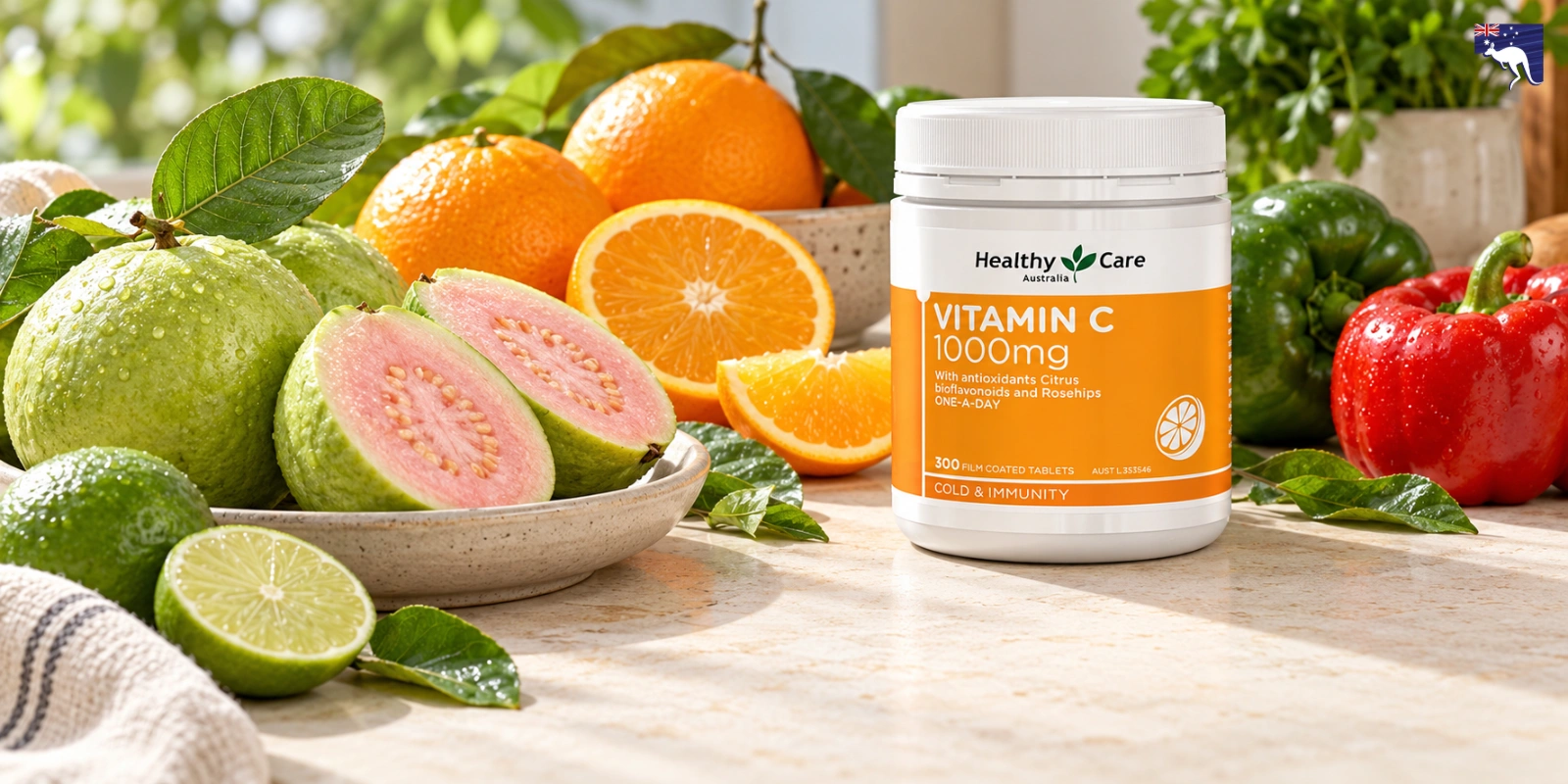
Vitamin C foods in Bangladesh include much more than oranges. Guava, amla and papaya can also fit easily into meals and snacks in Bangladesh. Vegetables contribute too, so the answer does not have to be a daily glass of juice.
The most useful comparison combines two questions: how much vitamin C does a food contain, and how much of that food will you actually eat? A large per-100-gram figure can be misleading when the usual portion is only a small spoonful or squeeze.
What vitamin C does, and how much is needed
Vitamin C is an essential nutrient: the body cannot make it. It supports normal collagen formation, immune function and antioxidant activity, and helps the absorption of iron from plant foods. These normal functions do not mean that eating extra vitamin C guarantees protection from infections.
For context, the U.S. reference intakes reported by NIH are 90 mg daily for adult men and 75 mg for adult women. Requirements differ with age and life stage, and people who smoke require an additional 35 mg. These figures are reference guidance, not a personalised prescription or a Bangladesh-specific national standard.
Familiar vitamin C fruits: compare like with like
The table below uses the Food Composition Table for Bangladesh, published in 2013 by the University of Dhaka with FAO support. All four entries describe raw fruit. Amounts are rounded, and the smaller-portion figures are calculations from the per-100-gram values.
| Fruit and reference entry | Vitamin C per 100 g edible portion | Illustrative edible portion | Approximate vitamin C in that portion |
|---|---|---|---|
| Guava, green, raw (peyara) | 228 mg | 50 g | 114 mg |
| Emblic, raw (amla or amalaki) | 453 mg | 20 g | 91 mg |
| Papaya, ripe, raw (pepe) | 62 mg | 100 g | 62 mg |
| Orange, raw | 54 mg | 100 g | 54 mg |
These are compiled reference values, not a laboratory result for the fruit in your kitchen. Cultivar, ripeness, storage and other factors can change composition. The sample portions illustrate the arithmetic; they are not compulsory serving sizes. Weigh the part you eat, excluding discarded peel, stones or other waste.
Guava: an easy option to plan around
Guava can be eaten in slices as a snack or shared after a meal. Its size varies considerably, which is why “one guava” is less precise than an edible weight when comparing nutrients. You do not need to weigh every snack; measuring once can help you recognise a practical portion.
If firm guava is uncomfortable to chew, choose another suitable fruit rather than forcing the same choice every day. The point is a workable habit, not reaching a particular number from one food.
Amla: compare the fresh fruit with the product you buy
Amla is listed as emblic in the Bangladesh table. The raw-fruit value does not automatically apply to dried amla, candy, jam, pickle or a bottled drink. Processing, the amount of fruit and other ingredients all change the comparison.
If you enjoy fresh amla, it can be one option in a varied routine. If you prefer papaya or citrus, those remain useful choices. Amla's higher reference figure does not make it compulsory or establish that it gives better health outcomes.
Papaya and citrus: useful portions without a complicated recipe
A small bowl of ripe papaya can accompany breakfast or become an afternoon snack. Orange segments are another simple choice. Choose a quantity you will eat, and plan how a larger fruit will be shared or stored before buying it.
Lemon or lime can add flavour to dal, vegetables or a salad. However, the vitamin C supplied by a small squeeze depends on the amount used. Do not count it as equivalent to eating a whole portion of fruit simply because it tastes sour.
Vegetable sources matter too
Sweet capsicum is a useful example. The NIH food table lists about 95 mg of vitamin C in half a cup of raw red sweet pepper and 60 mg in the same stated portion of raw green sweet pepper. These are separate U.S. reference examples, not values measured for every capsicum sold locally.
Tomatoes, broccoli and other vegetables can also contribute. Use capsicum in a salad prepared with safe water, add it to an omelette, or cook it in a vegetable dish you enjoy. Do not transfer the raw value unchanged to the cooked dish.
There is also a practical difference between a garnish and a serving. A few thin strips of capsicum or a little chopped tomato add something to the meal, but they are not the same quantity as the full portion used in a nutrient table.
Cooking and storage: retain what you reasonably can
Vitamin C is water-soluble and sensitive to heat. Prolonged storage and cooking can reduce the amount in food; steaming or microwaving may reduce cooking losses. This does not make cooked vegetables nutritionally pointless.
- Buy quantities you expect to use rather than keeping produce for a long time.
- Include some safely prepared fresh fruit alongside your cooked meals.
- Choose shorter cooking methods when suitable for the vegetable and recipe, while still cooking food adequately.
- Use the cooked-food entry when comparing a cooked portion with a food table.
Wash produce with safe running water before preparing it, including fruit that will be peeled. Use clean hands, knives and cutting surfaces. Soap and detergent are not recommended for washing fruit and vegetables.
Three ways to fit vitamin C into an ordinary day
- Keep breakfast familiar. Have your usual roti, egg or other breakfast, and plan papaya or another fruit alongside it or later in the morning.
- Pair a plant-based meal with a vitamin C food. Dal or chickpeas can be accompanied by a suitable vegetable or fruit. Vitamin C helps the absorption of non-heme iron, although a meal idea does not replace treatment for iron deficiency.
- Plan the afternoon snack before shopping. Buy guava, citrus or another fruit you enjoy instead of relying on an unplanned sweet drink.
These are flexible examples, not a menu with a guaranteed nutrient total. If a food is expensive this week, compare other options. Use the portion you will eat and the amount that may be wasted when deciding what offers good value.
Whole fruit, juice or a supplement?
Whole fruit is a useful default. Juice can supply vitamin C, but WHO notes that sugars in fruit juice count as free sugars, even without added sugar. A drink's vitamin content does not make unlimited portions a good idea.
A supplement is a separate decision, especially if your food choices are severely restricted or you have an absorption problem. High supplemental doses can cause digestive symptoms. If you have a medical condition or need a tailored intake, discuss the reason and amount with a clinician rather than choosing a dose from a food ranking.
For readers who have been advised to use a supplement, the listing below provides a label and current price to check. Most of this guide can be put into practice at the food market.

Healthy Care Vitamin C 250–1000mg Tablets
Healthy Care Vitamin C 250–1000 mg in Bangladesh. Compare selected strength, tablet format, pack price, matching directions and supply duration.