Raw Honey vs Regular Honey: Pure, Organic and Processed Labels Explained
Raw, pure, organic and Manuka describe different features of honey. This guide explains processing and crystallisation, separates label claims from health assumptions, and gives Bangladesh shoppers a practical way to compare jars.
Quick Answer
Raw honey generally describes honey with limited processing, although sellers may use the term differently. Regular honey may be warmed or filtered for texture and clarity. Pure refers to composition, organic to a certified production standard, and Manuka to honey identity. These labels can overlap. None means sugar-free, safe for babies under one year or automatically better for every buyer.
Key Takeaways
- Raw, pure, organic and Manuka answer different questions; they are not competing grades.
- Warming and filtration can change texture and some characteristics without proving adulteration.
- Crystallisation is common in genuine honey and does not prove that sugar was added.
- Choose by specific product information, traceability, taste and price rather than one attractive word.
A jar says “raw.” The next says “pure.” Another adds “organic,” and a Manuka jar displays an MGO number. It is tempting to arrange them from ordinary to healthiest, but the labels are answering different questions.
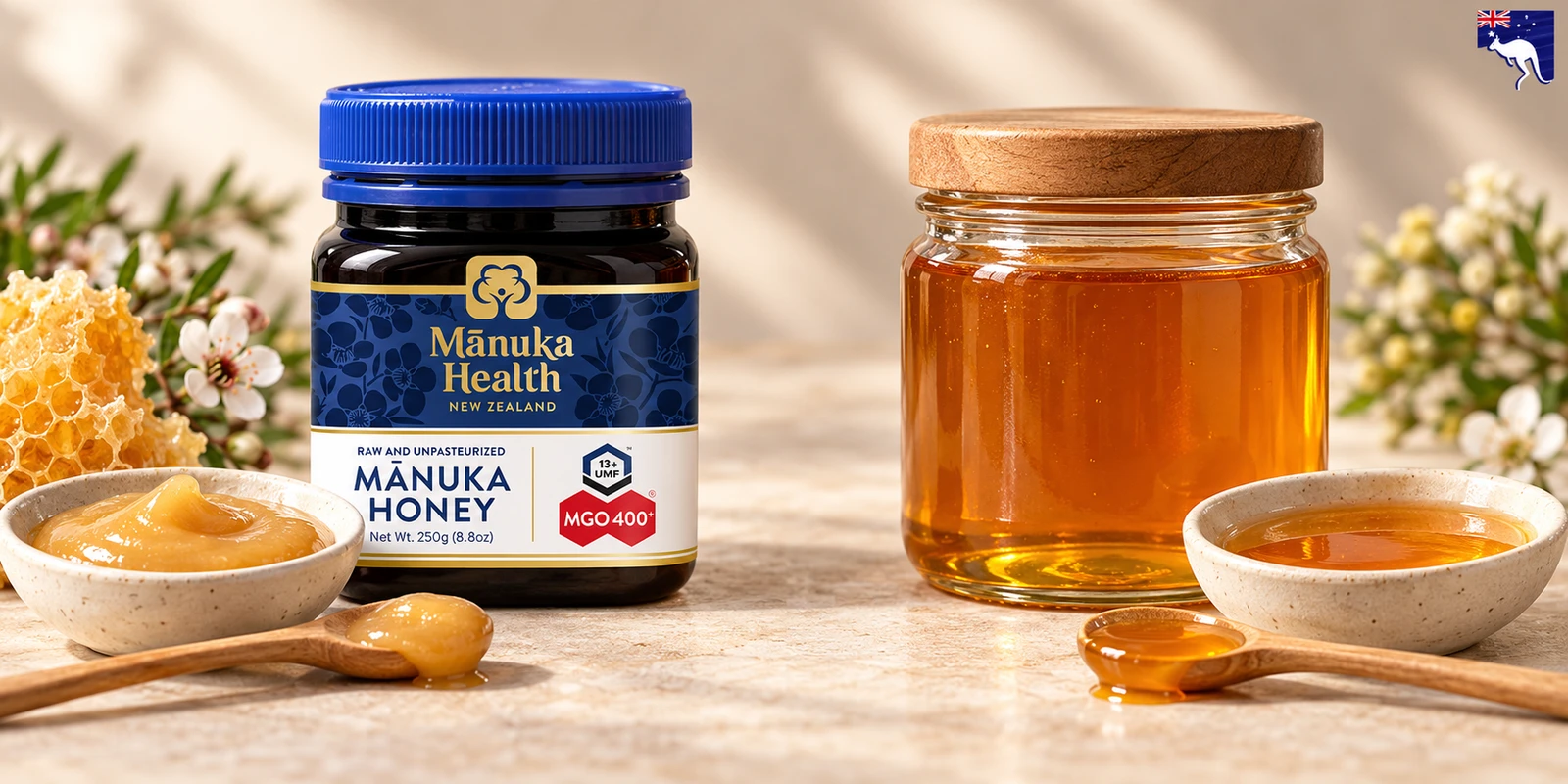
The useful comparison in raw honey vs regular honey is about handling and what you want from the food. It is not a shortcut to deciding which jar is authentic, sugar-free or medically superior. Once the terms are separated, choosing becomes much easier.
Raw, regular, pure and organic honey at a glance
| Term | What it generally describes | What it does not automatically mean |
|---|---|---|
| Raw | Limited processing; ask for the producer’s specific explanation | Certified organic, sterile or proven more beneficial |
| Regular or processed | A broad retail description; honey may be warmed or filtered | Fake or mixed with syrup |
| Pure | Composition represented as honey without added ingredients | Unheated, organic or independently verified |
| Organic | Production under a particular organic standard | Raw, sugar-free or a specific floral type |
| Manuka | A honey identity associated with particular floral sources | Automatically raw or organic |
A single jar can carry more than one of these descriptions. Each claim still needs its own explanation and supporting information.
What is raw honey?
In everyday retail use, raw honey usually means honey that has undergone limited processing. However, the word alone does not tell you the precise temperatures, filtration method or handling history. Ask the producer what the claim means for that product.
Raw does not necessarily mean there has been no straining or other handling at all. It also does not mean a jar is sterile. If those details matter to you, choose a brand that explains its process rather than relying on the word in large print.
What happens to regular or processed honey?
Honey may be warmed to make handling and packing easier, or filtered to improve clarity and remove particles. Processing can affect texture and some characteristics, including heat-sensitive components. The effect depends on the method, temperature and duration, not simply whether a jar is described as “processed.”
The European Commission’s CORDIS research summary discusses crystallisation and processing trade-offs. Those changes do not justify treating all warmed honey as adulterated or nutritionally worthless.
For a buyer, a clearly described process is more useful than a dramatic claim that one category is completely untouched and another is ruined. Both can still be honey; the ingredient list and authenticity questions must be assessed separately.
Does pure honey mean raw honey?
No. “Pure” concerns what the product contains, while “raw” concerns how it has been handled. Honey can be pure even after warming or filtration. A product with added syrup should not be treated as equivalent to plain honey simply because its colour and consistency look convincing.
The US FDA’s honey labelling guidance illustrates this composition distinction. It is a useful explanation of the concept, not a statement of Bangladesh-specific legal requirements. Always read the actual product name and ingredients.
If authenticity is your main concern, the next guide explains why home water and flame tests are unreliable and which checks are more useful.
What does organic honey mean?
Organic is a production and certification claim under a particular standard. The New Zealand MPI organic information explains the role of production requirements and assurance. Look for the named standard or certification rather than accepting a green label design as proof.
Organic does not automatically mean unheated, and it does not remove naturally occurring sugars. It also says nothing by itself about whether the honey is Manuka or what its MGO concentration might be. If a jar makes several claims, check each one.
Is raw honey better for your health?
Limited heating may preserve some characteristics, but that does not establish a meaningful clinical advantage from an ordinary serving. The presence of enzymes, pollen or antioxidant compounds should not be turned into an unsupported promise about immunity or disease prevention.
Raw and regular honey both contribute free sugars. For blood-glucose management, “raw” is not a permission slip to use honey freely. The Mayo Clinic’s honey and diabetes guidance explains why carbohydrate intake still matters.
Most importantly, no honey is suitable for babies under 12 months. Raw, organic, premium and Manuka labels do not change that precaution. For a broader discussion, read our honey benefits and side effects guide.
Does crystallisation tell you which honey is better?
Crystallisation is a natural change in many honeys. Its timing depends on composition and storage, and a grainy texture does not prove added sugar. Equally, a honey that remains runny is not automatically processed, fake or pure.
If you prefer a particular texture, check the product description and storage directions. Follow the manufacturer’s advice rather than repeatedly overheating the jar to chase a perfectly liquid appearance. Texture is a preference, not a complete quality certificate.
Where does Manuka fit into the comparison?
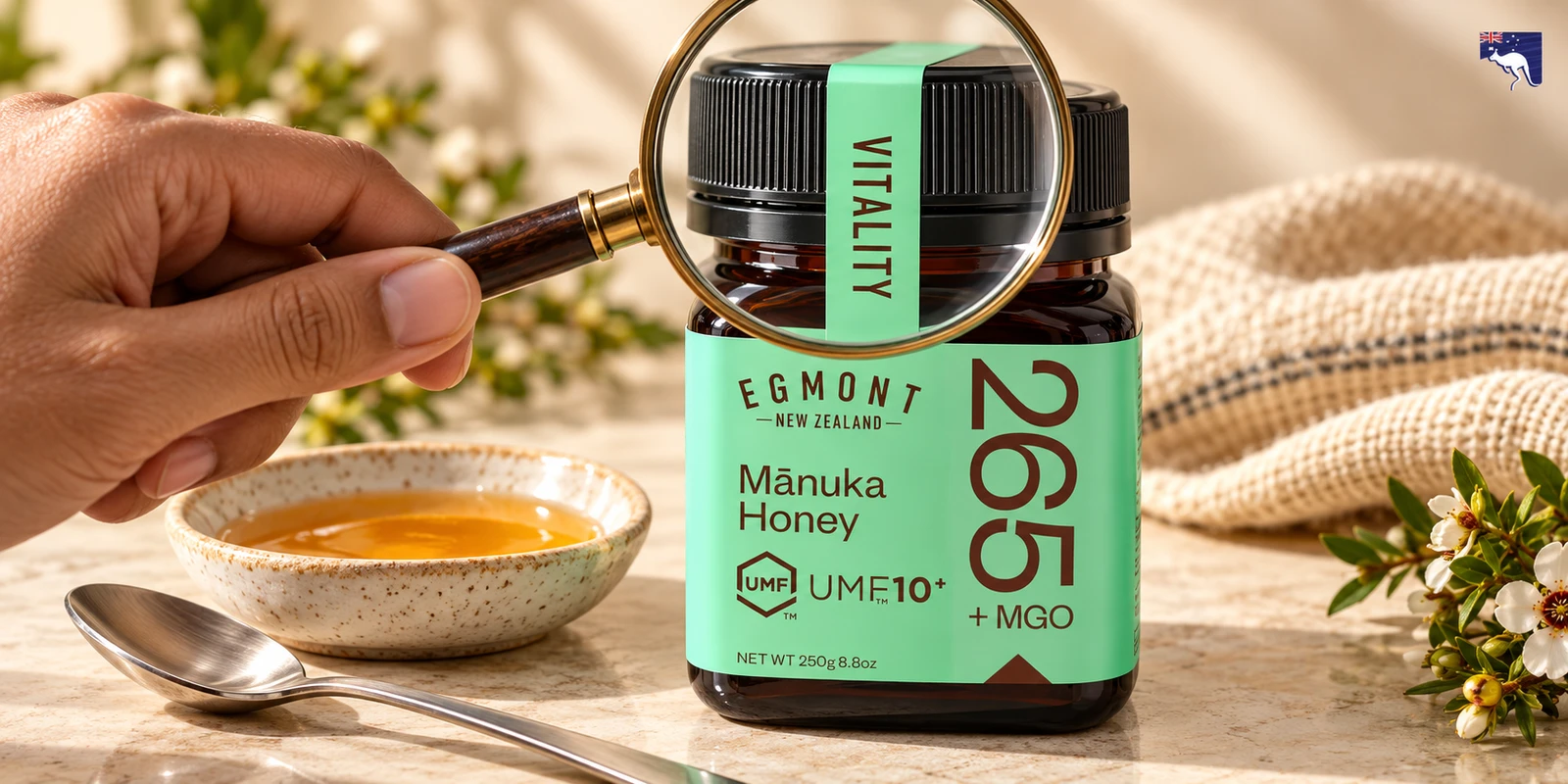
Manuka describes honey identity; MGO and UMF describe measured or certified characteristics. Processing claims are another layer. Do not infer raw or organic status from an MGO number.
For example, the Manuka Health MGO 263+ product below is a labelled Manuka option to examine. Check its current pack information for processing claims, weight and storage instructions. Its grade alone does not answer every question in this article.

Manuka Health MGO 263+ Manuka Honey (New Zealand)
Manuka Health MGO 263+ honey in Bangladesh: compare jar weight, UMF 10+ label, food-use guidance, expiry and current selected-pack price.
Our Manuka grading guide explains how to read those numbers before comparing prices.
How to choose honey in Bangladesh without label overload
- Decide what matters. Is your priority flavour, texture, a specific processing method, certified production or a particular Manuka grade?
- Check the evidence for that claim. Ask for an ingredient list, producer explanation or relevant certification rather than assuming one label proves another.
- Compare equivalent jars. Match honey type, grade and net weight, then calculate price per 100 g.
- Confirm the purchase details. Check the seal, batch information, delivery timing and seller support.
You do not have to collect every premium word on one label. Choose a traceable jar with the characteristics you value and a price that makes sense. The Bangladesh honey buying guide brings those practical choices together.