How to Identify Pure Honey: A Practical Buying Guide for Bangladesh
Home honey tests can feel convincing without proving very much. Learn which label, batch, packaging and seller checks help when buying pure honey in Bangladesh, and how to investigate a questionable jar without relying on viral tricks.
Quick Answer
You cannot reliably identify pure honey by colour, thickness or a home water, flame or thumb test. Check the ingredient list, manufacturer, origin, batch details, seal and seller instead. For Manuka, verify the stated grade and any certification through the relevant official source. Laboratory assessment can investigate adulteration, but no single test resolves every authenticity question.
Key Takeaways
- Water, flame, thumb and ant tests do not certify honey purity.
- Crystallisation, colour and thickness can vary naturally and are not proof of adulteration.
- Match the supplied jar to the exact brand, origin, grade, weight and batch information.
- Use traceability and relevant verification together; a QR code or premium price alone is not proof.
A spoonful of honey sinks to the bottom of a glass. Someone says that proves it is pure. Another person points to a grainy jar and says the crystals mean sugar has been added. Both explanations sound simple. Neither gives you a dependable answer.
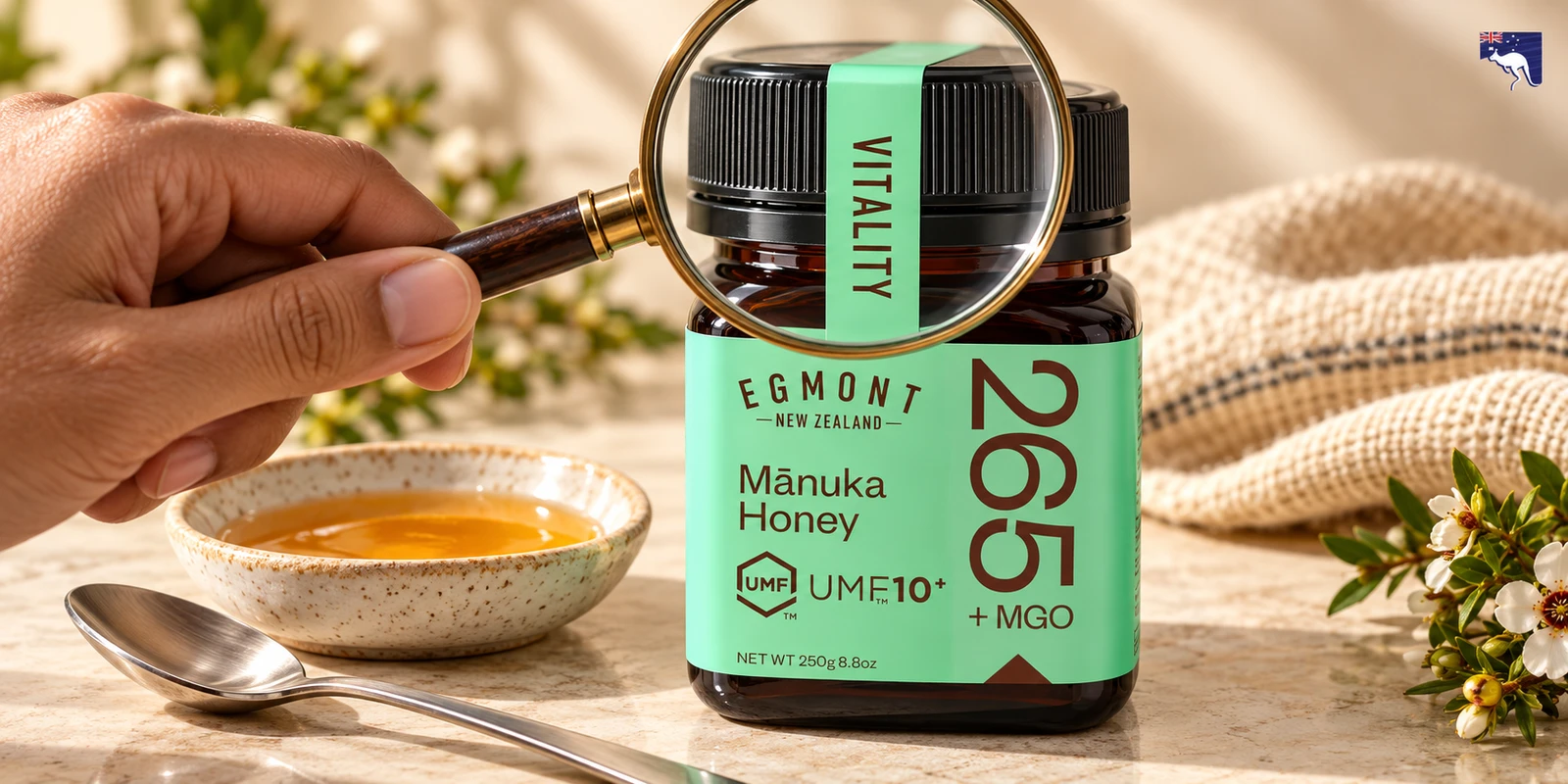
If you want to know how to identify pure honey, begin with the jar’s identity and traceability. You can make several useful checks before buying, but you cannot turn your kitchen into an authenticity laboratory with a glass of water or a matchstick.
What does “pure honey” actually tell you?
For a plain honey product, you should expect honey rather than a mixture of honey and added syrup. But the word “pure” on the front is a claim to examine, not independent proof. Read the ingredient list and the product description together.
Purity is also different from origin, floral identity and processing. A jar might contain honey yet have a misleading country or flower claim. “Raw” describes handling, while “organic” concerns a production standard. None of those words, by itself, verifies all the others.
The Food Standards Agency’s honey authenticity overview describes several forms of fraud, including added syrups and misleading origin information. This is why a useful buying check looks beyond whether the contents appear thick and golden.
Why popular honey purity tests are unreliable
| Popular test | What people often conclude | Why the conclusion is unsafe |
|---|---|---|
| Water test | Honey that sinks or stays together is pure | Temperature, moisture and mixing affect how it behaves |
| Thumb or paper test | A drop that stays in place is genuine | Flow and absorption are not specific tests for added syrup |
| Flame test | Honey that burns is pure | Moisture and the wick affect burning; it also introduces a fire risk |
| Ant test | Ants avoid genuine honey | Insect behaviour cannot establish product composition |
| Crystal test | Crystals prove added sugar | Many genuine honeys crystallise naturally |
These observations cannot reliably separate every genuine honey from every adulterated one. The FSA explains that even professional authenticity assessment needs careful interpretation because honeys vary and no single analytical method answers every question. A home demonstration is much weaker evidence.
There is no need to burn, dilute or repeatedly taste a questionable jar. Spend that effort obtaining information that can actually be checked.
A practical checklist for buying pure honey in Bangladesh
1. Match the exact product
Record the brand, full product name, country of origin, net weight and any stated grade. Compare those details with the option you selected online. A 250 g jar and a 500 g jar are not interchangeable simply because the photographs look similar.
For imported honey, distinguish the manufacturer from the importer or retailer. Ask who can answer a batch question and how to contact them. “Imported” is less useful than a named producer and a clear origin.
2. Read the ingredients and claims
Look for honey as the ingredient when buying plain honey. If the product contains flavourings, herbs or other sweeteners, it should be described accurately as that type of product. A honey blend is not automatically fraudulent, but it should not be sold to you as something different.
Be cautious when the main sales message is a promise to cure several unrelated conditions. A disease claim does not verify purity. It can distract you from missing basic information such as weight, origin or the producer’s identity.
3. Check batch details, dates and packaging
Look for a readable lot or batch identifier and date information where provided. Examine the lid, seal and container for damage or leakage. Keep the delivery packaging until you have checked that the supplied item matches the order.
Packaging can change between markets or production runs, so a different label design is a reason to investigate, not immediate proof of a fake. Ask the seller or manufacturer to explain the difference using the actual batch information.
4. Check the seller’s accountability
Before paying, find the seller’s contact details, delivery terms and process for incorrect or damaged products. Keep the invoice and order confirmation. This gives you a clear record if you need a resolution.
A low price is worth questioning when it is far below comparable jars, but a high price is not a certificate either. Compare the same brand, type, grade and pack size before deciding that a deal is unusually cheap.
5. Use verification tools carefully
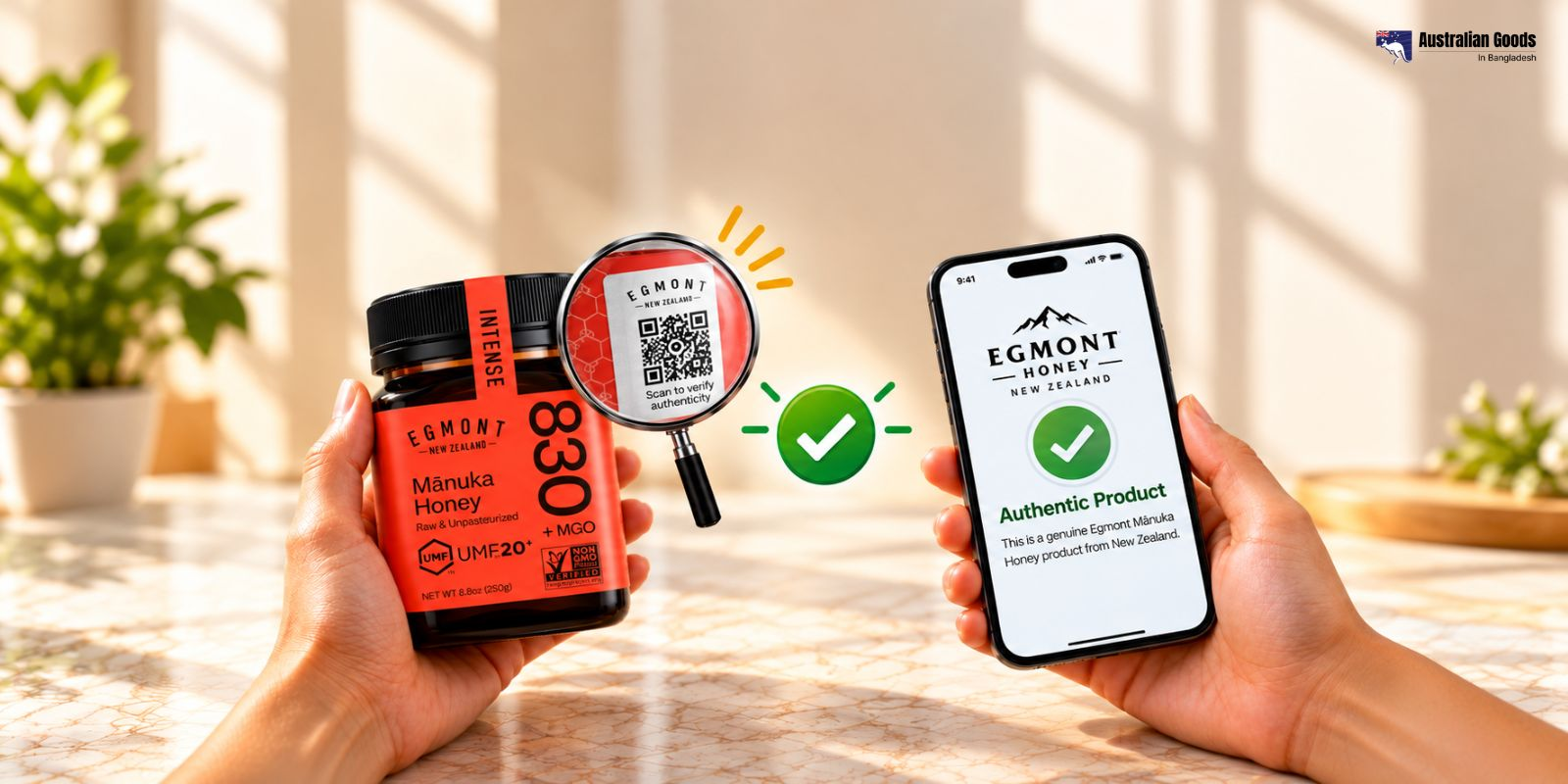
If the jar has a QR code, check the destination before trusting the page. Does it belong to the manufacturer or relevant certification organisation? Does the information relate to the product or batch, or merely open a generic promotional page?
A copied code may still lead to a real website. Treat digital verification as one part of the evidence, alongside the supply chain, packaging and seller. Do not enter payment details or personal information simply to read a purported authenticity result.
Extra checks for Manuka honey
For New Zealand mānuka, distinguish the honey’s identity from its MGO grade. MPI’s export definition uses chemical and DNA attributes to classify monofloral and multifloral honey. MGO measures methylglyoxal; it does not, on its own, establish every aspect of origin or certification.
Where a jar carries UMF certification, check the relevant branding and licence information through official UMF resources. Do not assume that any MGO-labelled jar automatically has a UMF licence. Our guide to MGO, UMF and Manuka grades explains the distinction.
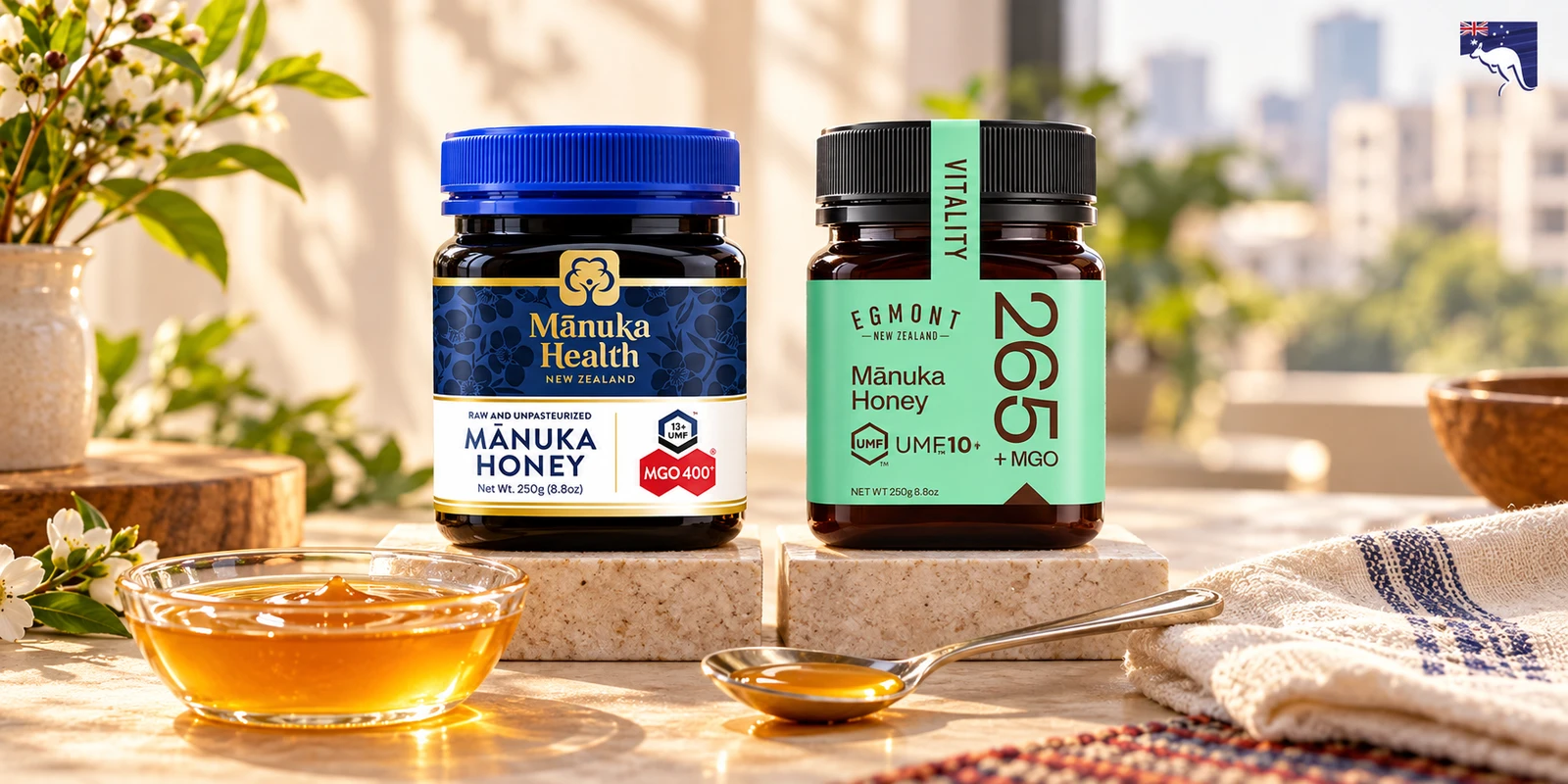
For an example, the Egmont MGO 265+ listing identifies New Zealand origin and offers clearly described pack options. Use the product page to compare the current label and selected size, then check the physical jar when it arrives.

Egmont Premium Manuka Honey MGO 265+ (New Zealand)
Egmont MGO 265+ Manuka honey in Bangladesh: compare jar weight, labelled grade, batch traceability, food-use guidance and current price.
For brand-specific checks, the guide below walks through the Egmont details to inspect. If you are buying Manuka Health instead, use our Manuka Health authenticity checklist.
What if the honey changes after you open it?
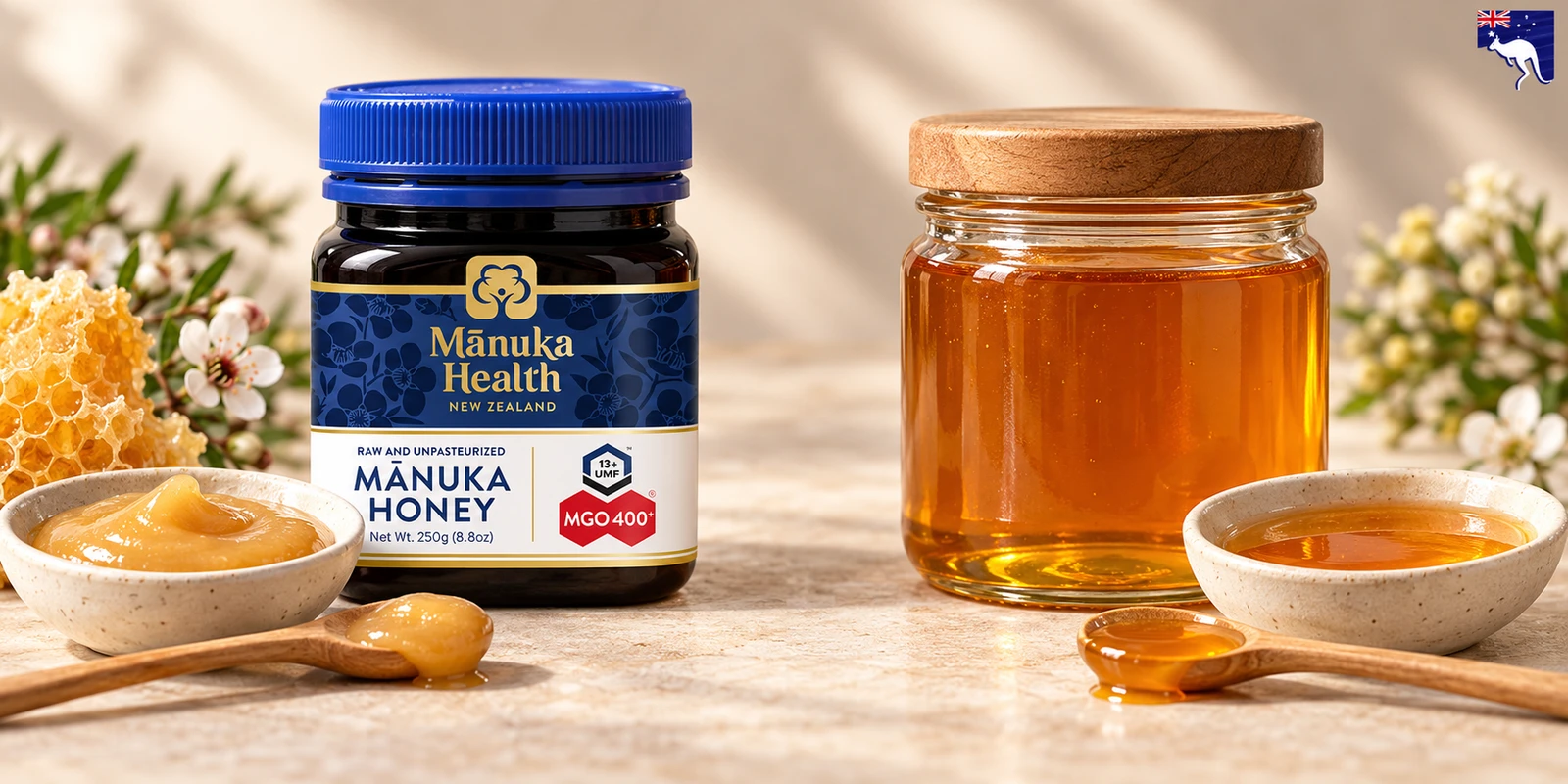
Crystals, cloudiness or a thicker texture do not automatically mean adulteration. Honey’s natural sugar composition and storage conditions influence crystallisation. Colour can also differ between floral sources and batches. The CORDIS honey-processing research summary discusses crystallisation as a natural product issue.
However, a leaking jar, damaged seal, unexpected fermentation signs or an unusual smell deserves attention. Stop using it if you suspect contamination, retain the packaging and ask the seller for help. Do not use a taste test to settle a safety concern.
When laboratory testing becomes relevant
A laboratory may use different methods to investigate added sugars, origin or other authenticity questions. The right method depends on what is being assessed and the reference information available. A report should identify the sample, method, date and scope rather than simply displaying an impressive-looking “tested” badge.
For an ordinary household purchase, your most practical protection is choosing an accountable seller and a traceable product. If a serious dispute remains, appropriate professional testing may help; a home test cannot replace it. When you are ready to compare jars, our Bangladesh honey buying guide brings purity, price and intended use together.