Best Honey in Bangladesh: A Buyer’s Guide to Purity, Price and Type
Choosing honey becomes easier when you compare the right things. This Bangladesh buying guide explains purity checks, honey types, MGO labels and price per 100 g, with practical examples from the Egmont and Manuka Health ranges.
Quick Answer
The best honey in Bangladesh is a traceable, correctly labelled jar that suits your taste, intended use and budget. Check the ingredient list, origin, seal, batch details and seller support first. Then compare the same honey type, grade and weight. Manuka honey offers distinctive provenance and grading, but a higher MGO number does not automatically make it the best everyday purchase.
Key Takeaways
- Choose by traceability, taste, use and budget; there is no single best jar for everyone.
- Compare price per 100 g only after matching honey type, grade and pack size.
- MGO describes a measured compound in Manuka honey, not a treatment dose or proof of every health claim.
- Check the selected jar, delivery total and batch details before paying.
Two jars of honey can look almost identical and cost very different amounts. One promises purity, another highlights its country of origin, and a third puts a large MGO number on the front. If you are simply looking for good honey for your home, it is easy to feel that you need a science lesson before breakfast.
You do not. Finding the best honey in Bangladesh starts with four questions: Can you trace the jar? Do you understand its label? Will you enjoy using it? Is the price sensible for the type and amount you are buying? Those questions matter more than a dramatic promise on the packaging.
This guide helps you make that decision, whether you began by searching for pure honey, an everyday breakfast jar or premium imported Manuka honey.
Which honey should you choose? Start with your purpose
Before comparing brands, decide what the jar is for. Honey stirred into tea, drizzled over yoghurt or given as a gift does not need to be chosen in exactly the same way. A good purchase meets your actual needs without asking you to pay for features you do not value.
| Your priority | What to compare | What to avoid assuming |
|---|---|---|
| Everyday flavour | Floral source, texture, price per 100 g and a manageable jar size | The highest MGO number is necessary |
| A first Manuka purchase | A traceable, clearly graded jar within your budget | You must begin with the most expensive grade |
| A premium gift | Recipient preferences, labelled origin, presentation and delivery timing | Premium packaging proves purity |
| Confidence in authenticity | Batch identification, seller accountability and relevant verification | A home water test can certify the jar |
If you are buying for a medical problem, change the question. Ask a qualified clinician about appropriate care; do not choose a food jar by an advertised disease claim. Honey can be enjoyable food without needing to earn its place through a treatment promise.
Understand the honey type before comparing the price
Local honey and other everyday floral honeys
Honey varies with the flowers visited by bees and with handling after harvest. Colour, aroma, texture and sweetness can differ substantially. A darker jar is not automatically purer, and a lighter jar is not automatically diluted. Country of origin is useful traceability information, but it is not a complete quality assessment.
Apply the same questions to Bangladeshi and imported honey: What is the product called? Who produced or packed it? What does the ingredient list say? Can the seller help if the supplied jar does not match the listing? A local jar should not be dismissed simply because an imported one costs more.
Multifloral and monofloral Manuka honey
Manuka honey has a particular floral identity. New Zealand export classification uses a combination of chemical markers and plant DNA to distinguish qualifying monofloral and multifloral mānuka honey. These terms describe classification, not a personalised health recommendation. The MPI science definition explains the testing framework.
For a shopper, the practical point is to compare like with like. A multifloral MGO 50+ jar and a higher-grade monofloral jar are different offerings. Either may suit a particular taste or budget, but comparing their prices without recognising those differences tells you very little.
Australian and New Zealand origin
Check the origin on the individual product, rather than inferring it from the shop name. The Egmont and Manuka Health examples in this guide are labelled as New Zealand honey. Australian Goods is the retailer; its name does not turn a New Zealand product into Australian honey.
If a listing uses phrases such as “imported honey” or “foreign honey,” look for the actual origin and manufacturer details behind them. Specific information is more useful than a broad impression of overseas quality.
Five checks before buying pure honey in Bangladesh
- Read the full product identity. Match the brand, honey type, grade and net weight across the page and supplied jar. A familiar brand name is only the starting point.
- Check ingredients. For plain honey, look for honey as the ingredient. A flavoured blend or honey-based syrup should be described as such; it is not an equivalent comparison.
- Look for traceability. Keep the batch or lot code, date information, invoice and any manufacturer verification details. A QR code is useful only when it leads to credible information relevant to the product.
- Inspect the seal and condition. A broken seal, leaking container or mismatch between the listing and label deserves clarification before consumption.
- Assess the seller. Look for accessible contact details, clear delivery information and a practical route for resolving an incorrect or damaged order.
No visual trick can replace those checks. The Food Standards Agency explains why authenticity assessment is complex and why no single analytical test answers every question. A spoonful sinking in water or a jar crystallising at home is not a reliable certificate of purity.
For a step-by-step version you can use while shopping, read our guide to identifying pure honey. If a seller cannot explain an unusual claim, you do not have to buy first and investigate later.
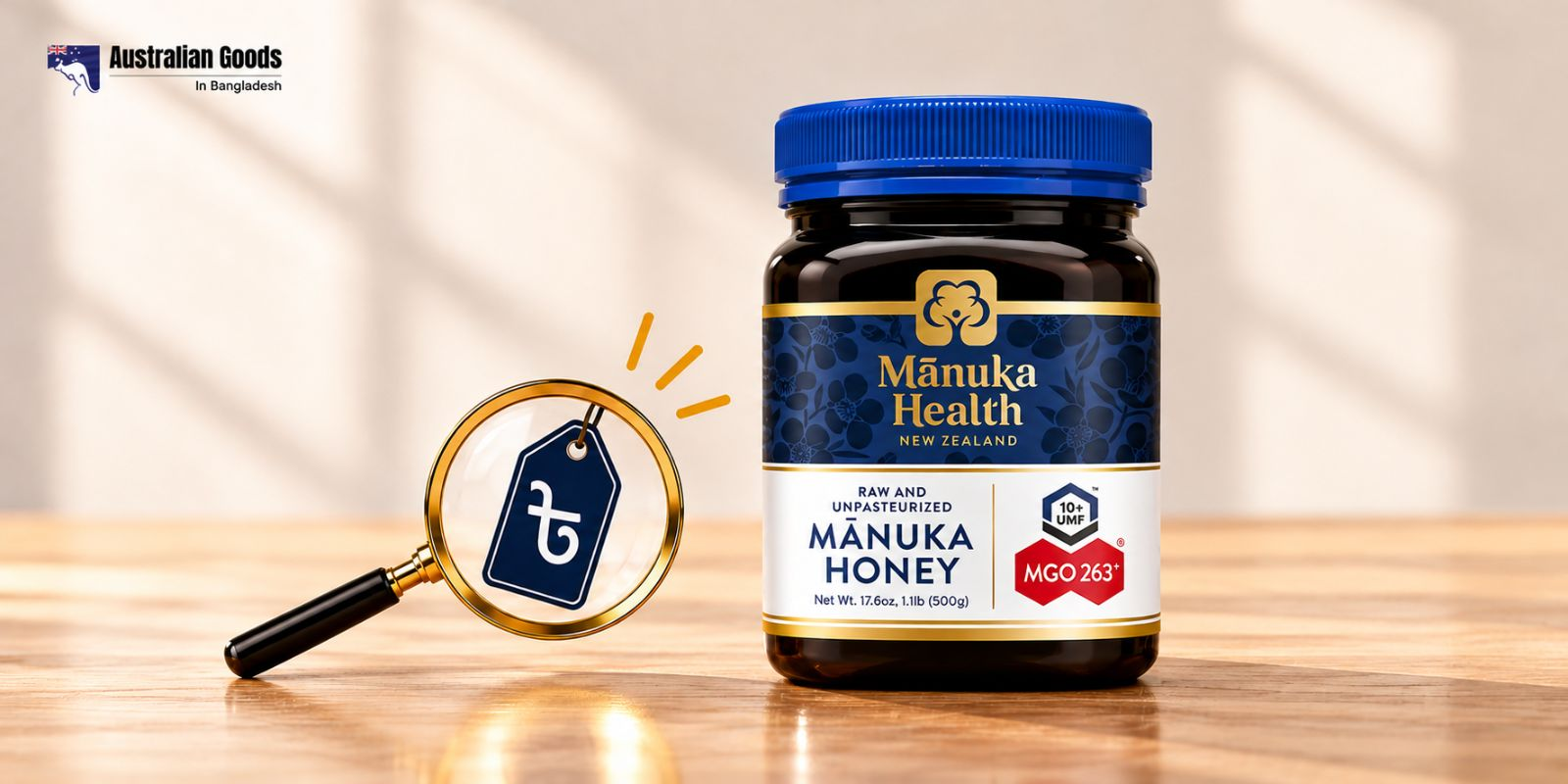
How to compare honey prices in Bangladesh fairly
Start with the exact jar option. A product page may offer more than one weight, and the price beside the first image may change after you choose a pack. Then calculate:
Price per 100 g = jar price ÷ net weight in grams × 100.
For example, a hypothetical 250 g jar priced at ৳3,000 costs ৳1,200 per 100 g. A hypothetical 500 g jar priced at ৳5,000 costs ৳1,000 per 100 g. These are arithmetic examples, not current offers. The second jar gives more honey for the money only if the type, grade and other features are comparable and you actually want the larger amount.
Next, include delivery and any applicable order charges. Check whether the selected option is ready for dispatch or has a longer stated lead time. This matters particularly for gifts: a lower price is not useful if the jar cannot arrive when you need it.
A very low price deserves questions, but an expensive jar is not automatically genuine. Compare evidence and product identity alongside cost. Our brand-specific guide below helps you compare the Egmont range more closely; use each live product page for its current selected-pack price.
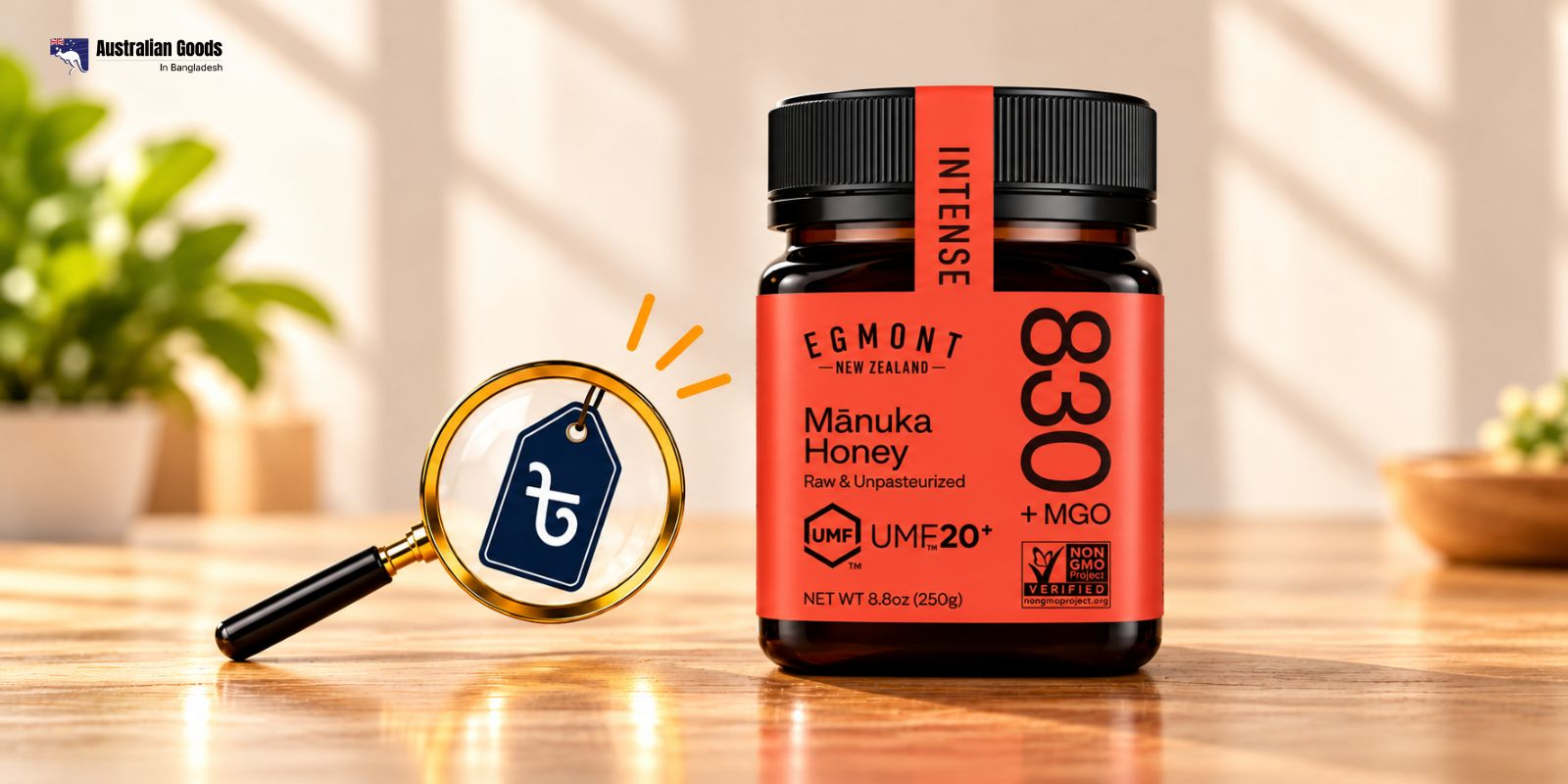
Is Manuka honey worth the extra cost?
It can be, if you specifically value its flavour, origin, documented grading and the experience of buying that product. It may be less compelling if you only want an economical sweetener for a recipe where its distinctive character will be lost.
MGO stands for methylglyoxal, a compound measured in Manuka honey. UMF is a broader certification framework for participating products. Neither number should be read as “this many times healthier.” A higher MGO level is a product characteristic, not a guarantee that eating the honey will deliver a better clinical outcome.
The UMF quality framework considers multiple markers. If you want to understand the labels before paying for a higher grade, our MGO and UMF explainer walks through them using actual product examples.
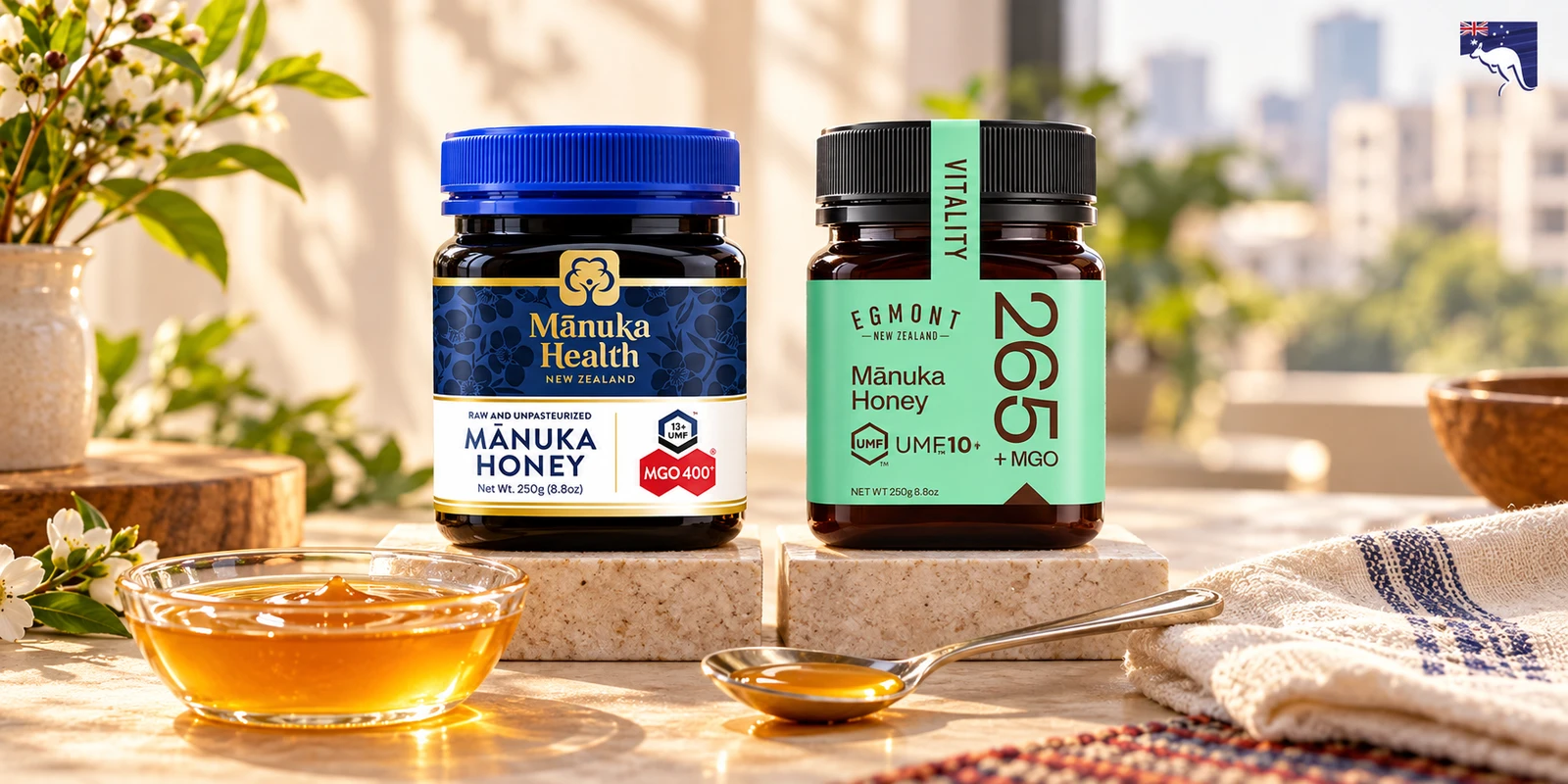
Still deciding whether to pay extra? Compare Manuka honey with regular honey. If you have already chosen Manuka, our Egmont and Manuka Health comparison helps you compare the two brands on matching terms.
Three imported honey options to compare
- Egmont Multifloral MGO 50+: a New Zealand multifloral option for shoppers comparing a lower labelled MGO level and the available jar sizes.
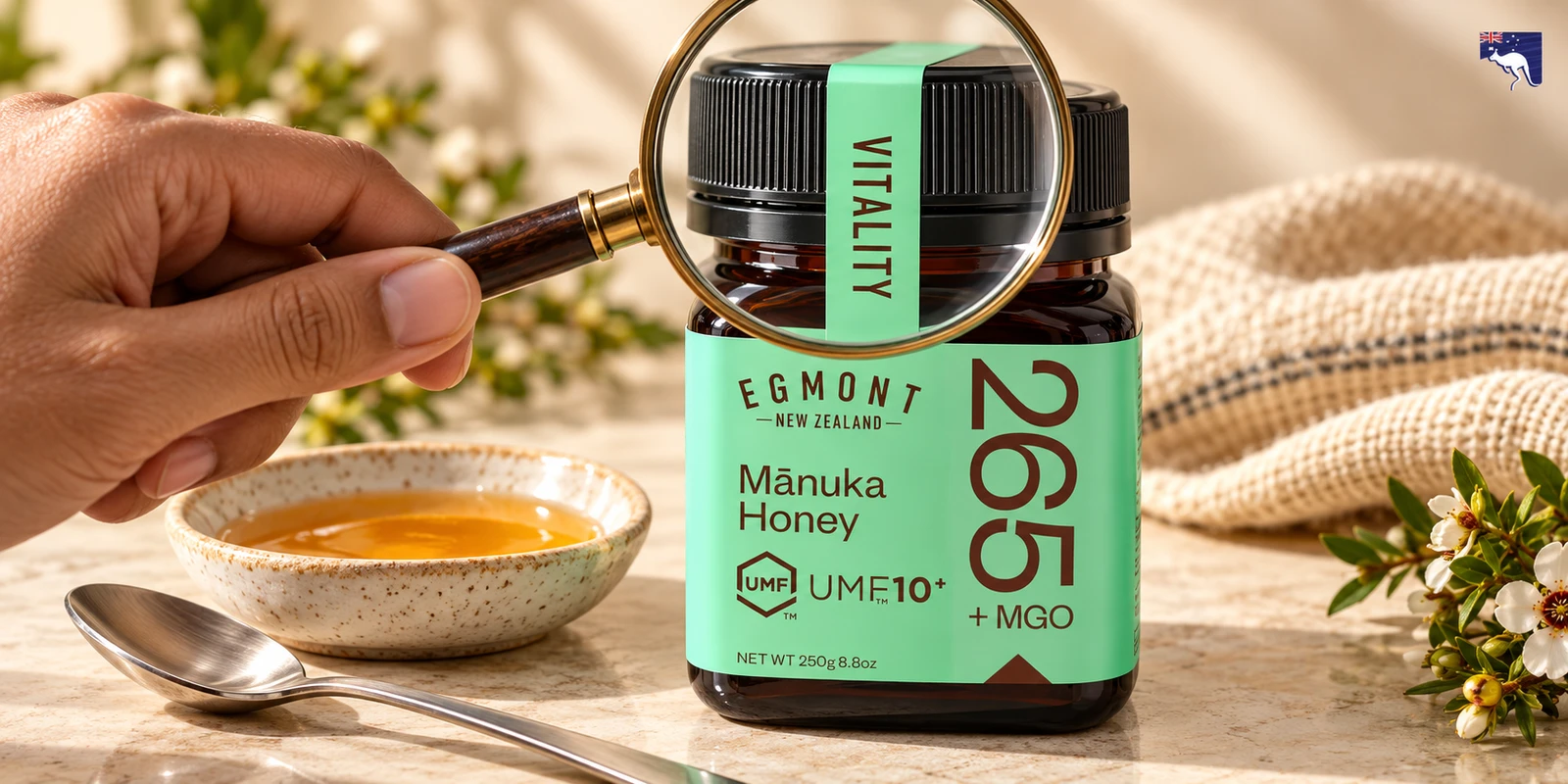
- Egmont MGO 265+: a monofloral option, with the catalogue showing a UMF 10+ pack. Check the selected size and supplied label.
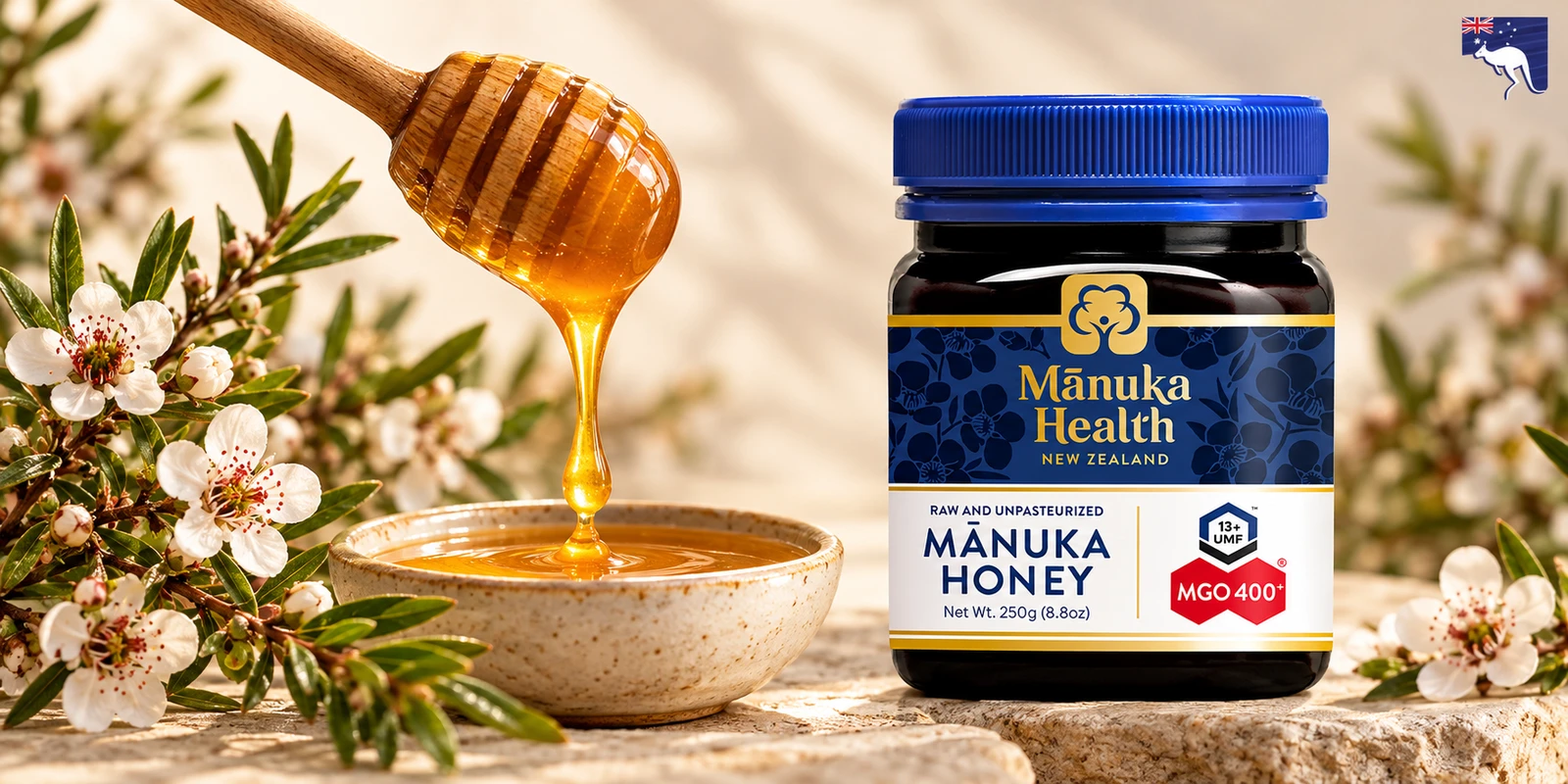
- Manuka Health MGO 400+: a higher labelled MGO option, with the catalogue showing UMF 13+. Choose it because those features matter to you, not because the number promises a treatment benefit.
The product card below is a practical place to check the Egmont MGO 265+ options. Compare the current pack, price and availability with the other recommended jars before deciding.

Egmont Premium Manuka Honey MGO 265+ (New Zealand)
Egmont MGO 265+ Manuka honey in Bangladesh: compare jar weight, labelled grade, batch traceability, food-use guidance and current price.
We sell these products, so this is a shopping comparison within our range, not a claim to have independently ranked every honey sold in Bangladesh. You can browse the Manuka honey collection to see the available alternatives.
Choose a jar you can use and store sensibly
A large jar may offer better unit value, but a smaller one can be a sensible first purchase when you are unsure about flavour or texture. Keep the lid closed, use a clean, dry spoon and follow the storage instructions on the supplied pack. In a warm kitchen, avoid leaving it beside the stove or in direct sunlight.
Honey remains a source of free sugars, including premium Manuka. Treat it as a sweet food within your overall diet, not an unlimited wellness ingredient. Never give any honey to a baby under 12 months. These points apply regardless of price, origin or grade.
What to ask before an online order
If the listing leaves something unclear, send the seller a specific question: “Which net weight and grade will I receive?” is more useful than “Is this good honey?” Ask for the current label when packaging matters, and confirm whether any photograph is illustrative or shows the supplied pack.
For a gift, check the recipient’s preferences before choosing a high-priced grade. Someone who enjoys a mild drizzle on breakfast may value a different texture or pack size from someone who collects distinctive Manuka honeys. Presentation should support the choice, not make it on its own.
When the order arrives, compare it with your confirmation while the packaging is still available. Photograph any visible damage or product mismatch and contact the seller promptly through the stated support channel. Keep the batch information even after opening the jar. These small habits make it easier to resolve a problem and repeat a purchase you enjoyed.
Your final buying checklist
Before checkout, make sure you can answer these questions: Which honey type am I buying? What is the exact weight and grade? What evidence supports the label? What is the delivered total? Does the stated delivery timing work for me? If the answers are clear and the jar fits your taste and budget, you have a stronger basis for choosing than any “best honey” slogan can provide.