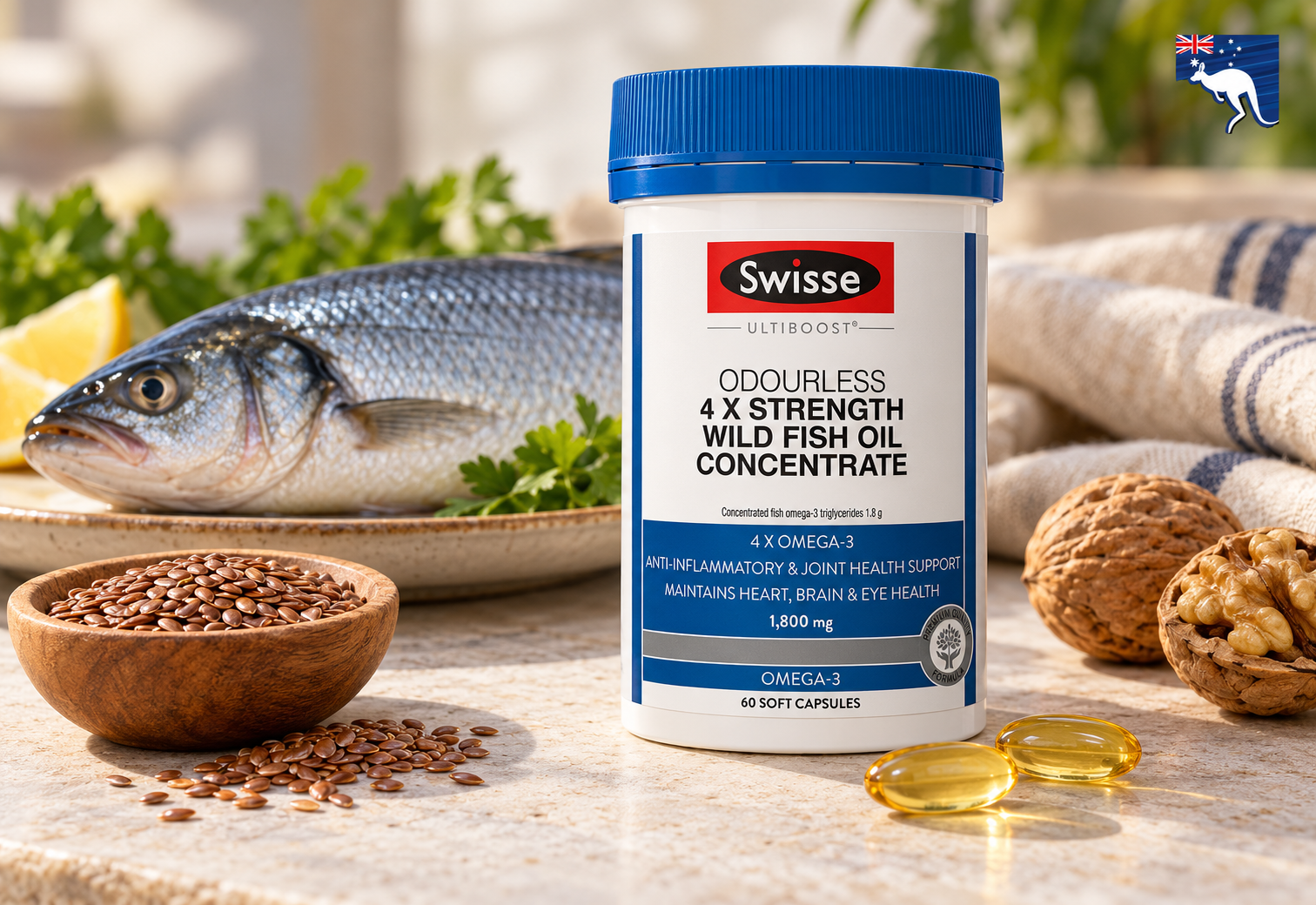
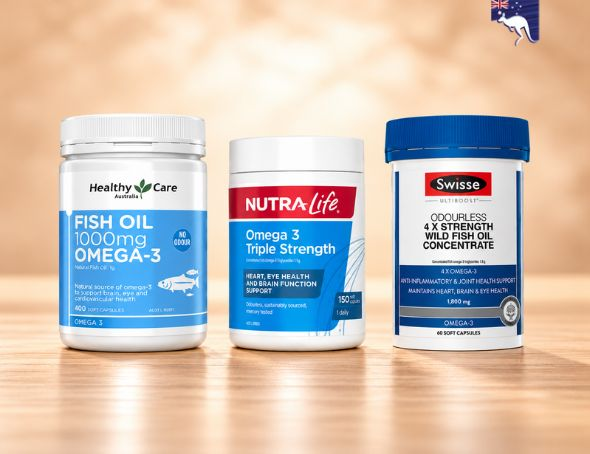
Omega-3 vs Omega-3-6-9: Which Supplement Makes Sense?
A bottle with three omega numbers is not automatically more useful than a fish-oil supplement. The right comparison starts with your purpose, the oils included and the actual EPA and DHA amounts. Here is how to read those differences without relying on the front label.
Quick Answer
Choose by the nutrients you want, not the number of omega types advertised. Fish oil can provide EPA and DHA directly; a 3-6-9 blend also includes other fats, often from plant oils. More ingredients do not establish better results, and the two products may deliver very different EPA+DHA amounts.
Key Takeaways
- ALA, EPA and DHA are different omega-3 fats. A plant-oil amount cannot be treated as an equal amount of marine EPA+DHA.
- Omega-6 and omega-9 fats occur in ordinary foods. Their presence in a blend is a reason to inspect the formula, not automatic proof that you need the extra ingredients.
- Compare the same units: EPA and DHA per capsule or labelled serving, capsule count and current price. Never compare total oil on one bottle with EPA+DHA on another.
What do the three numbers describe?
Omega-3, omega-6 and omega-9 are families of fatty acids. They are not quality grades. Within omega-3, ALA occurs in plant sources while EPA and DHA occur in fish and seafood. The body converts ALA into EPA and DHA only in limited amounts, so these figures are not interchangeable. NIH explains the omega-3 forms.
Linoleic acid is an essential omega-6 fat. By contrast, the body can make cis-monounsaturated fats, a group that includes the common omega-9 fat oleic acid. Calling every component of a 3-6-9 blend “essential” is therefore too broad. See EFSA's dietary reference values summary.
For the closer distinction between plant ALA and direct EPA/DHA, read our plant-based omega-3 versus fish oil guide.
Look at your food before adding more oils
Nuts, seeds, fish and non-tropical vegetable oils can supply unsaturated fats. The American Heart Association's practical advice emphasises replacing saturated and trans fats with unsaturated fats within the diet. It does not mean that every meal needs an additional multi-oil capsule. AHA guidance on fats in foods.
In a Bangladesh household, begin with the oils actually used in cooking and the fish, nuts or seeds you regularly eat. Do not assume your diet is deficient in omega-6 or omega-9 because you have never bought them as supplements. Equally, do not treat omega-6 foods as something to eliminate simply because a social-media post calls them inflammatory.
Two real labels show why the front number is insufficient
These manufacturer-listed amounts are per capsule and illustrate composition, not equivalent recommended servings or a clinical ranking.
| Product example | Oils listed | EPA and DHA per capsule |
|---|---|---|
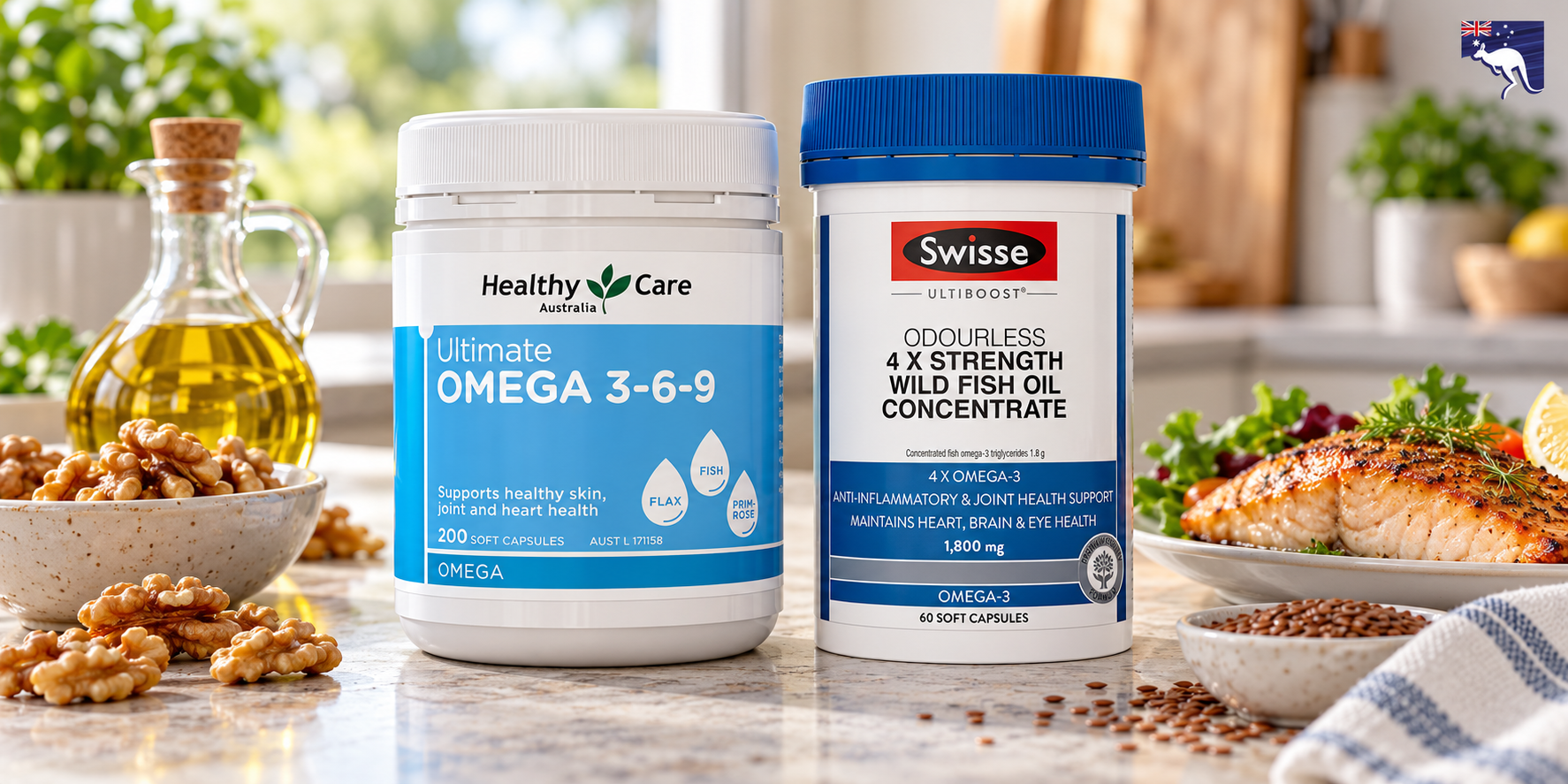
| Healthy Care Ultimate Omega 3-6-9 | Evening primrose, flaxseed and fish oils, 333.3 mg each | 60 mg EPA + 40 mg DHA = 100 mg |
| Swisse Odourless 4 X Strength Wild Fish Oil Concentrate | Concentrated fish oil, 1.8 g | 720 mg EPA + 486 mg DHA = 1,206 mg |
Sources: Healthy Care's ingredient panel and Swisse's product information. Check the supplied pack because variants and formulations can change.
The blend also supplies fatty acids from its plant oils. That explains why its total oil amount is not a marine omega-3 figure. The concentrated product supplies more EPA+DHA per capsule in this comparison, but that alone does not establish which product suits you or how many capsules you should take.
Make the purchase decision in this order
- Define the purpose. If your clinician has specified EPA/DHA, compare those ingredients directly. If you are considering a blend for another reason, ask which ingredient and evidence are relevant.
- Read the serving instructions. Per-capsule and per-serving numbers can differ. Use the current physical label rather than assuming all bottles follow the same directions.
- Compare cost on a consistent basis. Note the Bangladesh selling price, capsule count and labelled serving. A cheaper bottle is not necessarily cheaper to use.
- Check what else is included. Oil sources, capsule ingredients and allergen information matter alongside the headline strength.
- Keep the comparison small. A clear comparison of two suitable formulas is more useful than a long list chosen only because their names contain “omega”.
For a broader checklist covering concentration, servings and packaging, see how to choose an omega-3 supplement. The practical aim is a formula that answers a real need, with understandable quantities and evidence. Extra numbers on the front do not substitute for that.