Omega-3 for PCOS: What Studies Show and What Remains Uncertain
Omega-3 research in PCOS is promising in places, but metabolic changes do not automatically mean regular ovulation or a higher chance of having a baby. Understand what individual studies measured, where inositol complicates the picture, and how to discuss supplements alongside established care.
Quick Answer
Omega-3 may affect triglycerides and some metabolic measures in people with PCOS, but results vary and it is not an established treatment for the condition or its infertility. Combination studies cannot establish the effect of fish oil alone. Discuss the goal, product and follow-up with your clinician before adding it to your care.
Key Takeaways
- A change in insulin or triglycerides is different from an improvement in ovulation, conception or live birth.
- Evidence for omega-3 combined with inositol does not prove that either ingredient works alone.
- Choose care around your main concern; a supplement should not delay evaluation of irregular periods or fertility difficulties.
A fish-oil bottle can look like a straightforward answer when PCOS advice has become exhausting. Yet “good for hormones” is too vague to guide a purchase. A useful decision starts with the outcome you want to improve: a blood-fat result, menstrual symptoms, or the chance of conceiving. Those questions require different evidence.

This article uses the familiar term PCOS. Monash University now also uses polyendocrine metabolic ovarian syndrome, or PMOS, following a name change announced in May 2026. The underlying condition and the need for individual care remain the focus. Read the official terminology note.
What does omega-3 research actually measure?
PCOS studies often report laboratory results rather than outcomes you can directly feel. HOMA-IR is an estimate of insulin resistance, while triglycerides are a type of blood fat. Neither result, by itself, tells you whether periods will become predictable, unwanted hair will improve, or a pregnancy will lead to a live birth.
Keep that distinction in mind when a supplement advertisement turns “improved metabolic markers” into “restores fertility.” Ask which result changed, compared with what, and whether that result matches your own reason for considering the product.
| Outcome studied | What it can tell you | What it cannot establish alone |
|---|---|---|
| Triglycerides or fasting insulin | A possible metabolic effect during the study | Reliable ovulation or pregnancy |
| Hormone measurements | A change in a particular blood result | Relief of every PCOS symptom |
| Clinical pregnancy | Pregnancy identified during follow-up | A proven increase in live births |
Fish oil for PCOS: results are not uniformly positive
An older controlled trial with 51 completers compared fish oil, flaxseed oil and a soybean-oil control over six weeks. Triglyceride responses differed between groups, but fasting glucose and insulin did not improve with any intervention. Some glucose-tolerance measures moved unfavourably in the fish-oil group. This small, short study does not settle the question; it shows why “omega-3 improves insulin resistance” is too definite. See the original metabolic trial.
It also illustrates an important product distinction. Fish-derived EPA and DHA and plant-derived ALA should not be treated as identical interventions. If a headline concerns flaxseed oil, it is not direct evidence for the fish-oil bottle in your shopping basket. Study duration, background treatment and the characteristics of participants matter too.
What about omega-3 and inositol together?
A 2025 paper from researchers in Dhaka compared omega-3 plus D-chiro-inositol with D-chiro-inositol alone in 60 women with insulin-resistant PCOS. The abstract describes improvements during treatment, but also states that the groups did not differ significantly in the measured post-treatment hormonal and biochemical outcomes. It therefore does not establish a clear added benefit from omega-3. Read the Bangladesh study.
This is more than a statistical technicality. People in both groups may improve because of the treatment they share, other changes or normal variation. To judge an add-on ingredient, the useful comparison is between the groups, not simply whether one group improved from its starting point.
The 2023 international guideline describes the clinical benefits of inositol as limited and does not recommend a particular type, dose or combination. It treats inositol for PCOS-related infertility as experimental because benefits and risks remain uncertain. A combination supplement should therefore not be presented as a proven fertility treatment. See the international PCOS guideline.
Does omega-3 improve the chance of pregnancy?
A small randomised study followed 34 women with PCOS-related ovulation difficulties across 60 treatment cycles. All received clomiphene for ovulation induction; omega-3 was an additional intervention. The reported pregnancy difference was statistically significant in an overweight or obese subgroup. This is a signal for further research, not proof that fish oil alone improves fertility for everyone with PCOS. Read the 2023 trial.
The study was small, used a fertility medicine alongside the supplement and focused on conception rather than establishing a live-birth benefit. A shopper should not turn its capsule schedule into a personal treatment plan. If conception is the priority, discuss fertility assessment and appropriate treatment rather than waiting to see what a bottle does.
Where does it fit beside established care?
The international guideline supports sustainable lifestyle measures for metabolic health and treatment matched to the person's priorities. Medicines used for cycle concerns, metabolic problems or ovulation have different purposes. Omega-3 should not silently replace any of them. There is also no single PCOS diet that everyone must follow. Review the guideline recommendations.
In Bangladesh, a practical discussion can begin with the meals you already eat, your routine and your budget. Bring a typical day's food list and the labels of everything you take. An affordable, consistent care plan is more useful than buying several products with overlapping promises.
Check the label and agree on a purpose
Use a simple checklist before purchasing:
- Write down the specific goal and how it will be assessed.
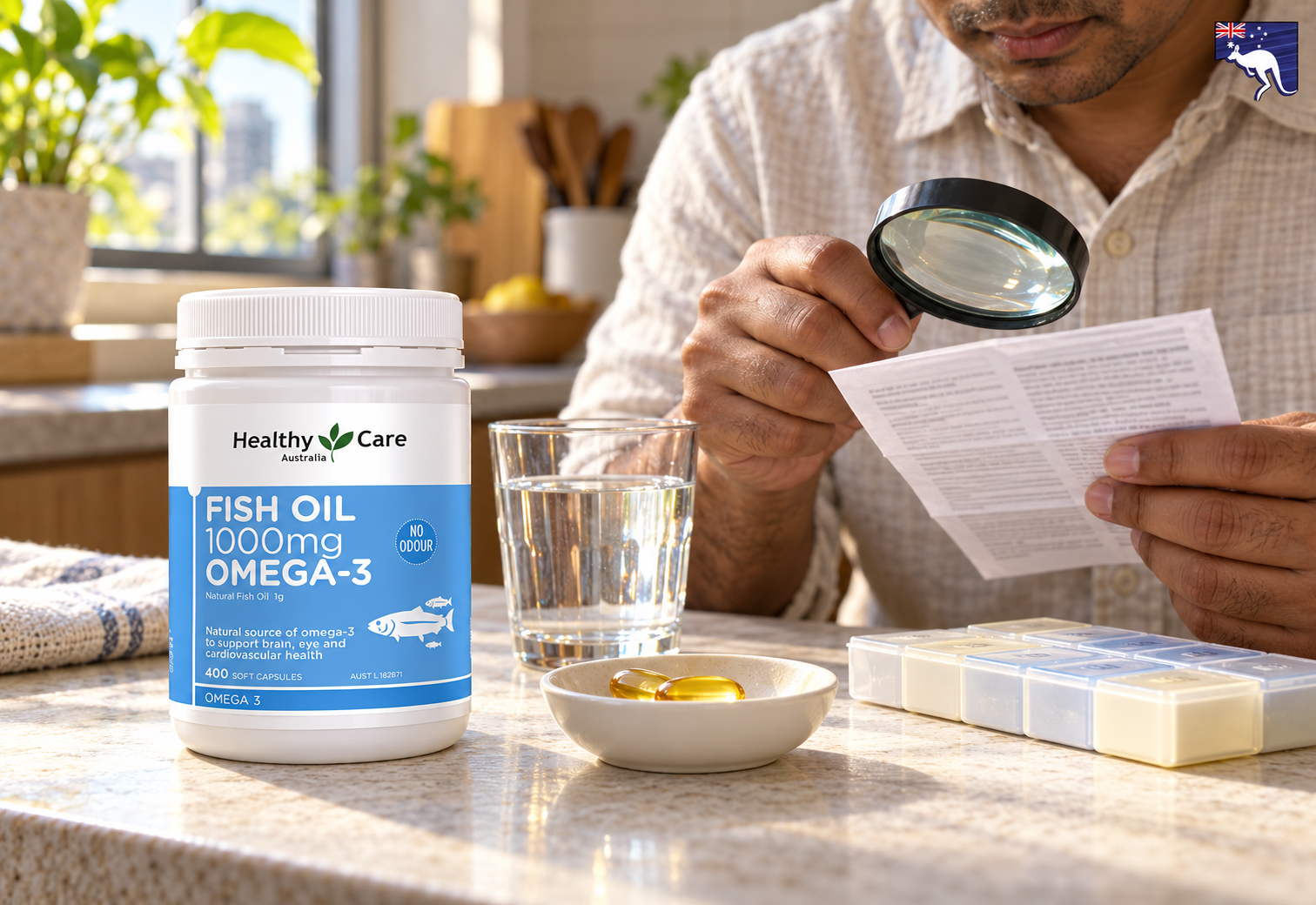
- Compare the listed EPA and DHA per serving, not just the large fish-oil weight on the front.
- Check whether another supplement already contains omega-3 or inositol.
- Show the complete ingredient panel to your clinician, including any added vitamins.
- Agree on follow-up instead of continuing indefinitely because the bottle says “daily.”
The omega-3 label-reading guide explains how to compare products. Stronger concentration means a different amount per capsule; it does not establish that the product is better for PCOS.

Nutra life Omega 3 Triple Strength
Nutra-Life Omega 3 Triple Strength is a high-potency fish oil supplement that supports heart health, healthy brain function, and eye health. Each soft capsule delivers 900 mg of Om...
Safety still matters
Fish oil can cause unpleasant taste, reflux or digestive discomfort. Tell your clinician about anticoagulants and any history of an irregular heartbeat before considering high-dose use. Some high-dose cardiovascular trials found an increased atrial-fibrillation risk; that is not a reason to assume all ordinary food intake is dangerous. NIH reviews omega-3 safety.
If a supplement is agreed upon, keep its name, serving size and start date with your treatment list. Report new symptoms rather than increasing the amount yourself. When pregnancy becomes possible or is confirmed, have the whole supplement list reviewed again.