Omega-3 and Diabetes: Blood Sugar, Triglycerides and Safety
Buying fish oil for someone with diabetes starts with identifying the problem it is meant to address. Blood glucose, triglycerides and cardiovascular risk are different outcomes. This guide explains the evidence, prescription distinctions and questions to take to a diabetes appointment in Bangladesh.
Quick Answer
Omega-3 supplements are not established treatments for lowering blood glucose or HbA1c. A clinician may consider specific omega-3 medicines for triglycerides or cardiovascular risk in selected patients. Those findings do not make ordinary fish-oil capsules interchangeable with prescription EPA, and supplements must not replace diabetes medicines.
Key Takeaways
- An improvement in triglycerides does not establish an improvement in blood glucose: they are different measurements with different treatment goals.
- Cardiovascular results from prescription icosapent ethyl cannot be assumed for every EPA/DHA supplement sold online.
- Before buying omega-3 in Bangladesh, identify the intended outcome and show your clinician the exact product label alongside your medicines and recent reports.
Start with the result you want to change
“Good for diabetes” is too vague to guide a purchase. A person may be concerned about a high HbA1c, a triglyceride result on a lipid profile, or a history of heart disease. A recommendation relevant to one concern may not answer the others. Before comparing capsule prices, write down which result prompted the search.
| Measurement or concern | What it describes | What it cannot tell you alone |
|---|---|---|
| Blood glucose | The amount of glucose in the blood when measured | Whether triglycerides have improved |
| HbA1c | An estimate of average blood glucose over about three months | Whether a particular capsule prevents cardiovascular events |
| Triglycerides | A type of fat measured in a blood lipid test | Whether diabetes medicines can be reduced |
The distinction between a glucose measurement and HbA1c is explained by NIDDK. MedlinePlus explains triglycerides and their relationship to cardiovascular risk. Keep the names and dates of these tests visible when discussing a supplement; “my blood result was high” leaves too much uncertainty.
Does omega-3 lower blood sugar or HbA1c?
The overall evidence does not support choosing fish oil as a glucose-lowering treatment. A systematic review of randomised trials found little or no meaningful improvement in glucose metabolism from increasing long-chain omega-3. Its conclusion was that supplementation should not be encouraged to prevent or treat diabetes. This is different from saying every person will have exactly the same laboratory response. Read the BMJ systematic review.
The American Diabetes Association's 2026 Standards of Care also describes reviews in which fatty-acid supplements did not improve glycaemic management. Therefore, a lower glucose reading after starting a capsule is not sufficient evidence that the capsule caused it. Continue the monitoring and treatment plan agreed with your diabetes team instead of using a supplement trial to adjust medicines yourself.
Why triglycerides enter the conversation
Triglycerides are blood fats, and poorly controlled type 2 diabetes can contribute to high levels. Management can involve food choices, physical activity and, for some people, medicines. A lipid result deserves its own assessment; a supplement advertisement cannot establish which option is appropriate. MedlinePlus outlines causes and treatment approaches.
This explains why someone with diabetes might hear about an omega-3 medicine even though omega-3 is not a treatment for high glucose. The clinical target may be a lipid problem or cardiovascular risk. Our guide to omega-3 and blood lipids explores that separate question. Ask the prescriber to name the target explicitly, then record it beside the product name.
Prescription EPA has a specific evidence base
Studies of omega-3 products have not produced one uniform cardiovascular result. The ADA discusses a trial of ordinary omega-3 supplementation that did not show cardiovascular benefit in people with diabetes without cardiovascular disease, alongside REDUCE-IT, which found benefit with prescription purified EPA in a selected population. These were different interventions and circumstances. See the ADA's discussion of the trials.
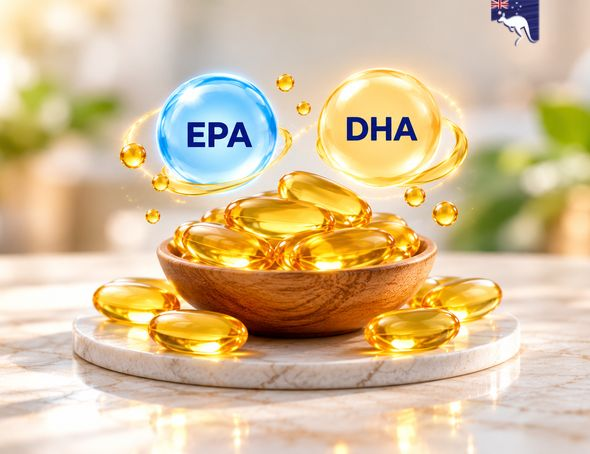
VASCEPA contains icosapent ethyl, an EPA medicine. Its US label includes use alongside statin therapy for specified adults with elevated triglycerides and cardiovascular disease, or diabetes plus additional cardiovascular risk factors. That indication does not mean everyone with diabetes needs it, nor does it establish the same indication for a retail fish-oil product. Read the FDA prescribing information. Local prescribing and availability should be discussed with a clinician in Bangladesh.
A real label shows why products are not interchangeable
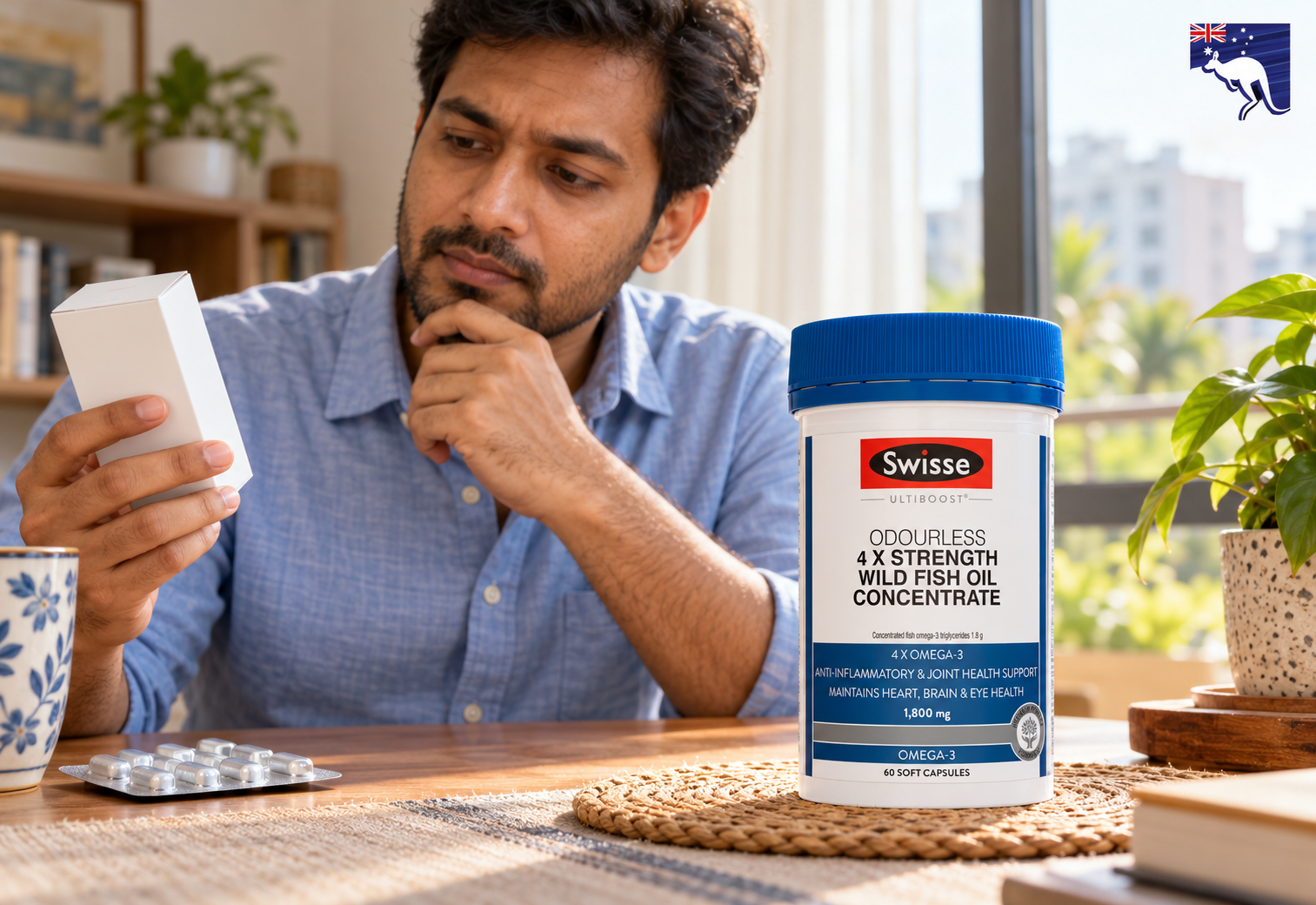
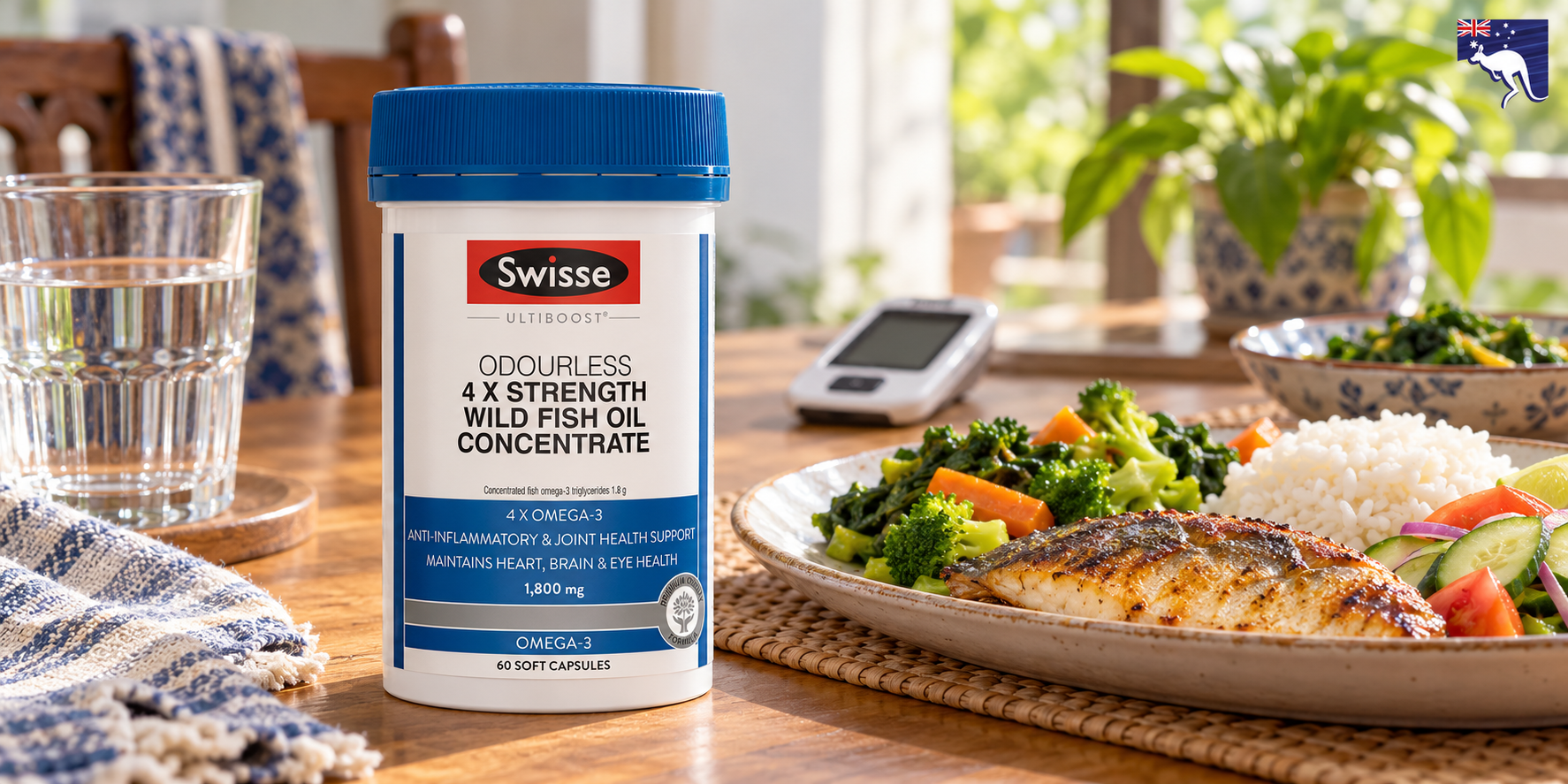
For example, the manufacturer lists Swisse Ultiboost 4 x Strength Wild Fish Oil Concentrate as providing 720 mg EPA and 486 mg DHA per capsule. It is an EPA/DHA combination, not the prescription EPA-only formulation described above. This label comparison identifies ingredients; it is not a recommendation to treat diabetes. Check the current Swisse label.
In a Bangladeshi online listing, terms such as “high strength,” “Australian” and “heart health” may help describe a product but do not answer the clinical question. Do not calculate a replacement for a prescribed medicine by adding up supplement capsules. If the exact prescribed formulation is unavailable, ask the prescriber or pharmacist to resolve the substitution.
Make the appointment useful before making the purchase
Bring a short, organised record rather than a long list of competing advertisements:
- Your reason for considering omega-3: write “triglyceride result,” “dietary intake” or the specific concern in your own words.
- The relevant reports: retain the test name, date, units and laboratory reference information. Include earlier results if your clinician requested a comparison.
- Every current medicine and supplement: use exact names or photographs of the packs instead of descriptions such as “the small white tablet.”
- The proposed product: photograph the ingredients, serving directions and warnings on the bottle you intend to buy.
- The follow-up question: ask what outcome would justify continuing it and who will review that outcome.
Afterwards, write down the agreed purpose and review plan. This makes a later purchase less vulnerable to a seller switching between “blood sugar,” “cholesterol” and “heart protection” as if they were identical promises. It also helps family members buying on your behalf choose the correct item.
Safety belongs in the same discussion
The prescription EPA label includes warnings about atrial fibrillation or flutter, bleeding and possible reactions in people with fish allergy. Bleeding risk was greater with medicines such as aspirin, clopidogrel or warfarin. These warnings support individual assessment; they should not be used to assign the same risk rate to every retail capsule. See the FDA safety information.
A useful purchase decision therefore has a named purpose, an identifiable formulation and a plan that fits your existing care. A bottle's popularity or a relative's experience cannot supply those details for you.

Swisse Ultiboost Odourless 4 x Strength Wild Fish Oil Concentrate
Swisse Ultiboost Odourless 4 x Strength Wild Fish Oil Concentrate is a high-strength omega-3 supplement formulated to support heart, brain, eye and joint health. Each capsule provi...