Omega-3 for Gym Training, Bodybuilding and Muscle Recovery
Omega-3 research in exercise is more nuanced than “fish oil builds muscle”. Some trials report improvements in soreness or recovery, but these are different from long-term muscle growth. Use this guide to judge the evidence and keep supplements in proportion to your training plan.
Quick Answer
Omega-3 may improve some measures of recovery after demanding exercise, but results vary and do not establish guaranteed muscle growth or better gym performance. Protein intake, a suitable training programme and recovery habits remain the foundation. Choose supplements by verified EPA/DHA amounts, not bodybuilding promises or the total fish-oil number.
Key Takeaways
- Less delayed-onset soreness is not the same result as more muscle. Recovery, strength, training performance and long-term hypertrophy need separate evidence.
- Exercise trials use different participants, formulations, durations and tests. A positive result in one small study does not identify a universal bodybuilding dose.
- A fish-oil label can verify the ingredients you purchase. It cannot prove that the product will improve your training, replace protein or reproduce a research outcome.
First, decide what you mean by recovery
After a difficult session, you might care about soreness, your ability to train again, or whether your programme is building muscle over months. Those are related questions, but they are not interchangeable outcomes.
| Outcome | What it tells you | What it does not establish |
|---|---|---|
| Delayed-onset muscle soreness, or DOMS | How sore participants report feeling after exercise | That muscle growth has increased |
| Recovery of a strength or jump test | Performance on that test after a demanding session | Better results in every sport or gym programme |
| Long-term muscle growth | Changes in muscle size across a training period | A result that can be inferred from soreness alone |
This distinction prevents a common shopping mistake: treating “recovery support” as a promise of larger muscles.
What have studies actually found?
A 2024 systematic review included 13 controlled studies in physically healthy adults. Some markers of muscle damage and inflammation improved, but soreness findings were mixed. The studies used different amounts and intervention lengths, and the authors considered the evidence insufficient for a clear universal supplementation protocol. Read the systematic review.
One small trial assigned 30 men to EPA, DHA, combined EPA+DHA or placebo. Following several weeks of supplementation and a deliberately damaging exercise session, some recovery measures improved in the separate EPA and DHA groups. The combined group did not show the same clear benefit. That finding argues against assuming that every formula produces an identical response. Trial of EPA, DHA and exercise-induced muscle damage.
A 2026 trial with 38 completers examined a DHA preparation over 12 weeks in physically trained adults. It reported lower soreness after eccentric cycling and improvements in some later recovery measures. This adds useful evidence, but it remains a small study of a particular preparation and exercise test—not proof that any retail fish oil increases bodybuilding muscle mass. DHA recovery trial.
Keep the training basics ahead of the supplement
Protein supplies the amino acids needed to build and repair muscle, while resistance exercise provides a training stimulus. Fish oil does not replace either. The NIH exercise and performance fact sheet explains the role of adequate dietary protein and the limits of supplement claims.
For someone training in Bangladesh, the practical review starts with an ordinary week: what you eat, how consistently you train, and whether your schedule allows recovery. Fish, eggs, dairy, meat and pulses can be part of a planned food intake. A sports dietitian can help adapt the plan to your preferences, budget and training demands.
Before adding another bottle, look at your training log. Are sessions progressing sensibly? Are you missing meals around a busy workday? Are you changing the programme, protein intake and supplements at the same time? If everything changes together, it becomes difficult to know what helped.
Read the label without turning it into a performance claim
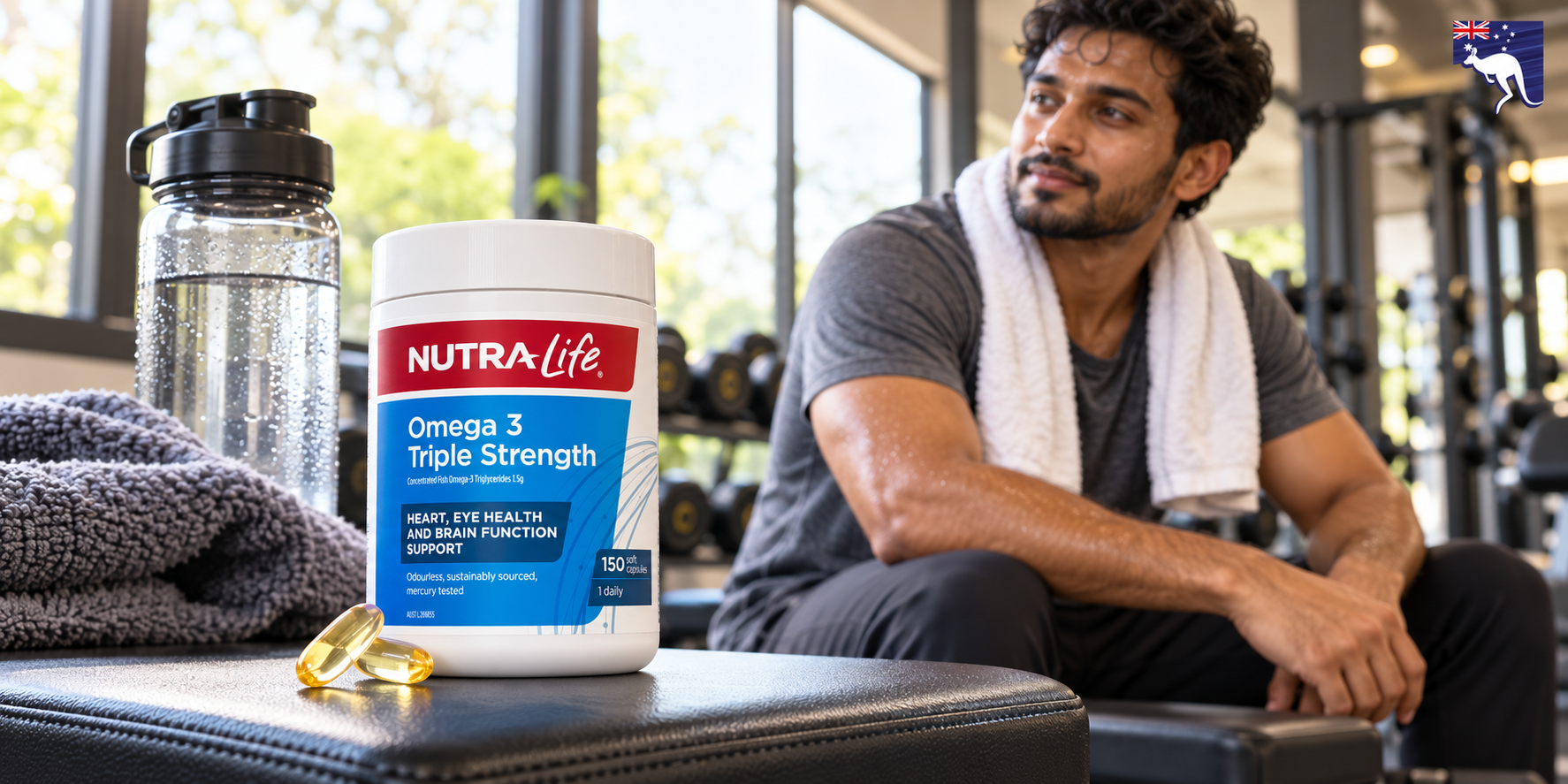
Nutra-Life's manufacturer page lists 540 mg EPA and 360 mg DHA per capsule for its Omega 3 Triple Strength product. Together, that is 900 mg EPA+DHA. These are useful composition facts, not a finding that this specific retail product improves bodybuilding outcomes. Manufacturer ingredient information.
Compare the supplied variant with the current label, then check capsule count, serving instructions and price. “Triple strength” needs a reference point; the actual ingredient amounts are easier to compare. Our omega-3 selection guide explains the wider label checks.
Do not copy a trial's high intake into your routine simply because a result looked promising. The intervention may differ from your product, diet, health history and training. For daily use questions, see our omega-3 dosage and timing guide and discuss your circumstances with a qualified professional.

Nutra life Omega 3 Triple Strength
Nutra-Life Omega 3 Triple Strength is a high-potency fish oil supplement that supports heart health, healthy brain function, and eye health. Each soft capsule delivers 900 mg of Om...
Use a simple, honest way to review your experience
- Write down the reason you are considering omega-3: dietary intake, a clinician's advice or a specific recovery question.
- Record the exact product and labelled serving rather than simply writing “fish oil”.
- Track practical outcomes such as training attendance, performance on the same exercise and how soreness affects daily activity.
- Keep expectations modest. Feeling better after a session does not prove that a supplement caused the change.
- Review whether the cost remains worthwhile alongside food, coaching and other priorities.
Digestive symptoms and unpleasant taste can occur with omega-3 supplements. Tell your healthcare professional about supplements you use, particularly when regular medicines or ongoing health problems are involved. NCCIH safety information. Persistent or unusual exercise-related pain deserves assessment rather than attempts to cover it with supplements.