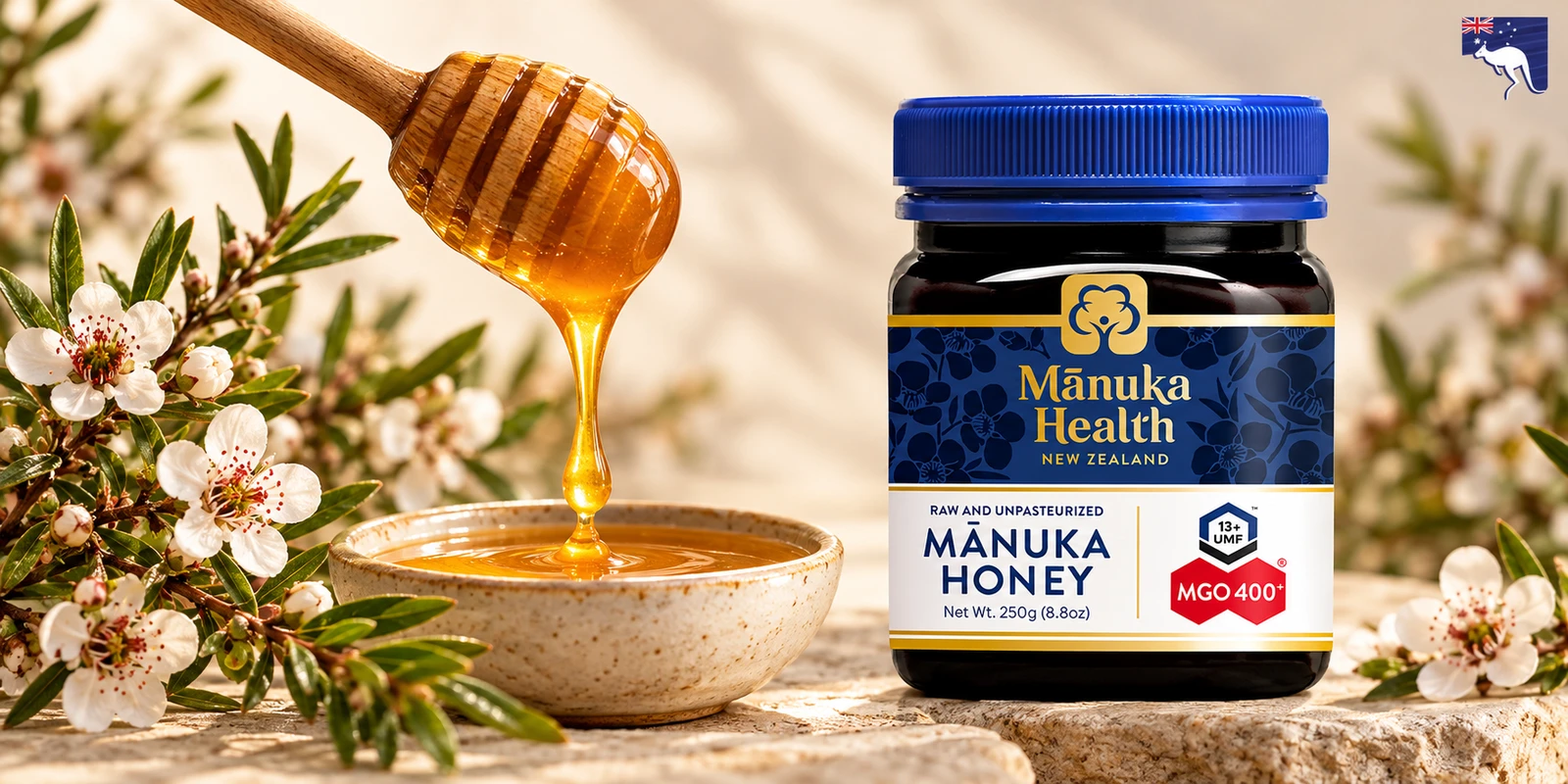
Manuka Honey Benefits, Uses and Limitations: What Is Supported by Evidence?
Manuka honey is distinctive, but its reputation can outrun its evidence. Explore what laboratory research and human studies can tell us, why food honey differs from medical dressings, and how to choose a jar without buying into unsupported health promises.
Quick Answer
Manuka honey is a distinctive honey with measured compounds such as methylglyoxal, or MGO. Laboratory antimicrobial findings do not establish that eating it treats infections, improves immunity or cures digestive conditions. Honey may ease some acute cough symptoms, while medical wound products are a separate category. Choose food Manuka for taste, traceability and labelled features, with realistic expectations about its benefits.
Key Takeaways
- Laboratory activity is not the same as a proven benefit from eating Manuka honey.
- A higher MGO grade does not establish a better clinical outcome or a treatment dose.
- Ordinary food Manuka is not a substitute for sterile medical honey dressings.
- Manuka still contains sugars and is unsuitable for babies under 12 months.
Manuka honey attracts unusually ambitious promises for something that comes in a food jar. A label may show an impressive MGO number, while an online description mentions immunity, digestion, skin and infections in the same paragraph. It is reasonable to wonder how much of that you are actually buying.
The useful answer is neither “it does everything” nor “it is just hype.” Manuka honey benefits need to be separated into three questions: what makes the honey chemically distinctive, what happens in laboratory research, and what has been shown when people use it. Those are related questions, but they are not interchangeable.
What makes Manuka honey different?
Manuka honey is associated with nectar from mānuka or related Leptospermum plants, depending on origin. One prominent measured compound is methylglyoxal, abbreviated MGO. Product labels often state a minimum MGO concentration, while certified UMF products are assessed using a broader framework.
Those characteristics help describe and compare the product. They do not establish that a spoonful will prevent illness or treat a particular condition. Our guide to Manuka honey, MGO and UMF explains the terminology without turning grades into medical instructions.
Manuka honey benefits: an evidence map
| Topic | What the evidence means | What it does not establish |
|---|---|---|
| Antimicrobial activity | Laboratory studies can show activity against microbes under test conditions | Eating a retail jar cures an infection |
| Cough comfort | Honey generally may provide short-term symptom relief | A high-MGO brand is necessary or superior |
| Wound care | Some clinical research concerns honey-based treatments for particular wounds | Kitchen honey is a safe substitute for medical dressings |
| Digestive health | Mechanistic interest does not settle clinical effectiveness | A reliable cure for reflux, ulcers or H. pylori |
| Everyday immunity | A balanced diet and established preventive care remain important | A guaranteed reduction in infections from a daily spoonful |
Why laboratory results do not become a treatment claim
A laboratory experiment can expose a microorganism directly to honey or a honey component at a controlled concentration. Eating honey is a different situation: it is consumed with food or drink and passes through digestion. The exposure, location and outcome are not the same.
The Memorial Sloan Kettering Manuka honey summary distinguishes research findings from established uses and discusses limitations. It is a useful check against descriptions that jump from “antibacterial in a laboratory” to “treats infection in the body.”
To support the second claim, researchers need suitable human studies with meaningful outcomes, appropriate comparisons and safety assessment. A certificate showing the MGO level answers a product-testing question; it does not replace those clinical studies.
Cough and throat comfort: keep the claim modest
The Cochrane review of honey for acute cough in children suggests some short-term benefit, with limitations in the available studies. It does not establish that everyone needs Manuka, that a particular MGO grade is best, or that honey treats the cause of a cough.
If you enjoy a little honey in a comfortably warm drink, it may feel soothing. Do not let that delay medical advice for persistent symptoms, breathing difficulty or other warning signs. No honey should be given to a baby under 12 months.
Wound research concerns a different kind of product
Research into honey and wounds is often used in food-honey marketing without enough explanation. The Cochrane wound review found that results varied with the wound type and comparison treatment; much of the evidence was uncertain. It does not justify treating any wound with any honey.
Medical honey dressings are prepared for clinical use. Ordinary jars sold for eating are not interchangeable with those products. The British Heart Foundation also makes this distinction. Ask a healthcare professional about appropriate wound care, especially for infected, deep or slow-healing wounds.
Digestive health, immunity and other popular promises
Be cautious with claims that Manuka honey repairs the gut, removes H. pylori, cures reflux or strengthens immunity in a predictable way. The evidence reviewed here does not support recommending a retail jar as treatment for those problems.
Symptoms such as ongoing abdominal pain, unexplained weight loss or repeated reflux deserve proper assessment. A temporary soothing sensation does not establish that an underlying condition has resolved. Continue prescribed treatment unless your clinician advises otherwise.
The same reasoning applies to “detox” routines and weight-loss claims. If you enjoy honey, use it as food. There is no need to give it an unsupported medical job to justify the purchase.
Does a higher MGO number mean more benefit?
A higher number indicates a higher labelled minimum methylglyoxal concentration. It does not tell you how much to eat for a symptom or establish that more will be better for you. The UMF framework covers several quality markers, while clinical outcomes require different evidence.
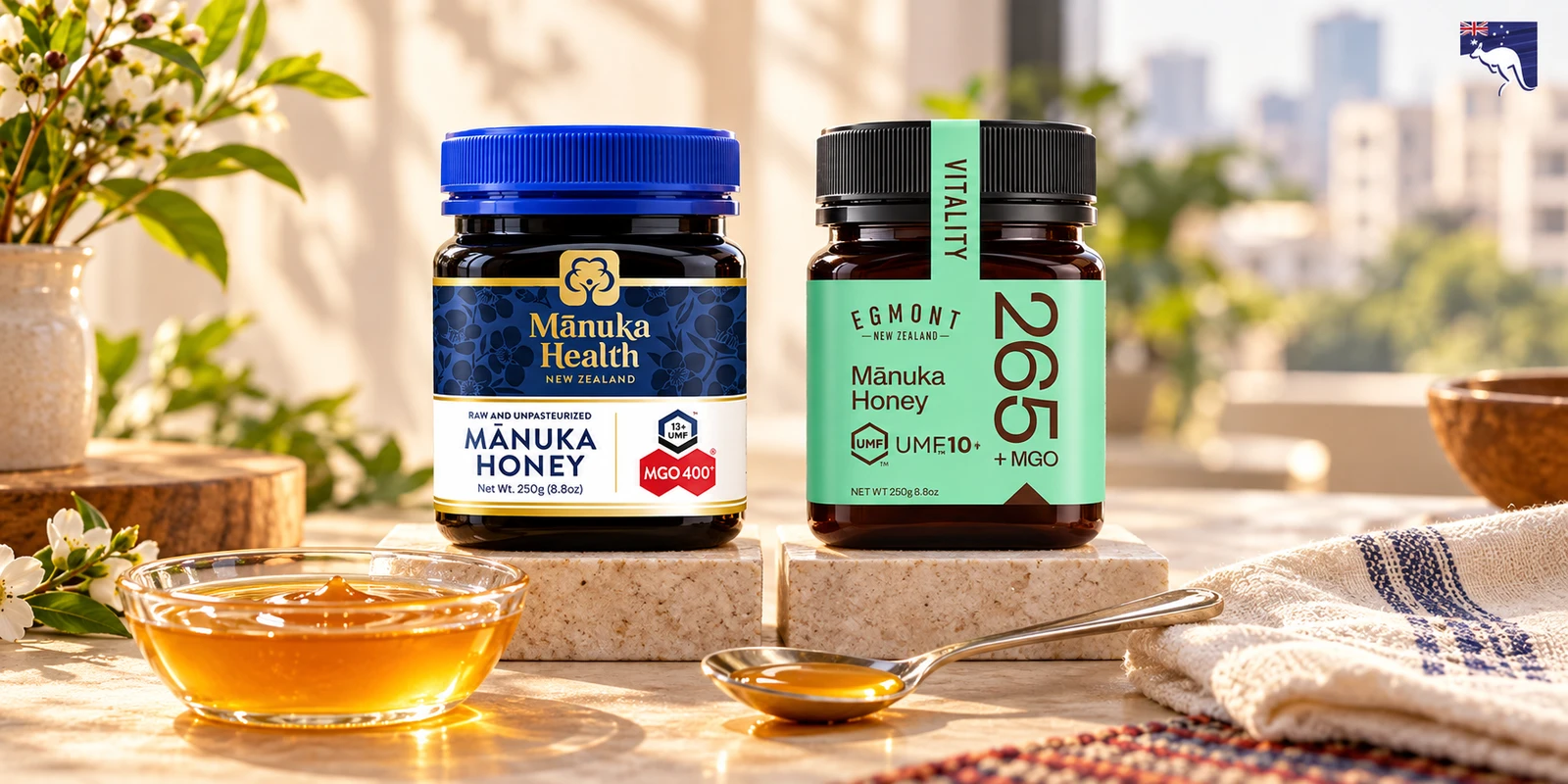
For example, Manuka Health MGO 115+, 263+ and 400+ are different labelled options in our catalogue. The difference is a reason to compare their product characteristics and prices, not to assign them to “daily health,” “illness” and “treatment” categories.
The MGO 263+ product below provides a concrete label to inspect. Check the pack size, current price and available options before choosing.

Manuka Health MGO 263+ Manuka Honey (New Zealand)
Manuka Health MGO 263+ honey in Bangladesh: compare jar weight, UMF 10+ label, food-use guidance, expiry and current selected-pack price.
Side effects and who should take care
- Babies: never give honey to a child younger than 12 months, regardless of grade.
- People managing diabetes: honey contributes carbohydrate and can affect blood glucose. Follow your individual dietary plan.
- People with suspected honey allergies: avoid a product that has caused a reaction and seek appropriate advice.
- Anyone using large amounts: more honey means more sugar and can cause digestive discomfort; there is no universal therapeutic serving.
For the wider nutrition and safety picture, the guide below covers ordinary honey and Manuka together.
How to read a health claim before you buy
Ask what was actually studied. Was it people eating honey, bacteria exposed to it in a laboratory, or a medical dressing placed on a particular wound? Then ask whether the result concerns the exact product and use being advertised. A citation can be real while the sales claim built around it goes too far.
Notice the outcome too. A change in a laboratory marker is different from fewer illnesses, improved symptoms or faster recovery. Reliable descriptions explain those limits and do not hide them behind a long list of scientific-sounding compounds. If a claim cannot be explained in clear language, do not let it determine how much you spend.
When buying Manuka honey makes sense
Choose it if you appreciate the flavour, want a particular origin or value a clearly described and traceable grade. Those are honest reasons to pay for a premium food. You do not need the most expensive jar to make a thoughtful first purchase.
Start with a budget, compare the exact jar weight and grade, and read the supplied label. Australian Goods sells the products featured here, so our recommendation is to compare their features openly rather than assume one is medically superior.
Our Bangladesh honey buying guide helps you make that final decision. Buy a jar you will enjoy and can verify, with expectations that match what the evidence actually shows.