Cod Liver Oil: Benefits, Uses and Safety
Cod liver oil provides a combination of fish-derived oil and vitamins A and D. That combination can be useful, but it also needs closer checking than an ordinary fish-oil label. This guide explains the nutrients, a verified product example and the main safety questions.
Quick Answer
Cod liver oil can contribute vitamins A and D and omega-3 fats to your diet. These nutrients have established roles, but a capsule is not a cure or a guaranteed immune booster. Check each nutrient separately and avoid cod liver oil during pregnancy because it contains preformed vitamin A.
Key Takeaways
- Cod liver oil's vitamin content is part of the buying decision. A product chosen for omega-3 may also add vitamin A and vitamin D that you already receive elsewhere.
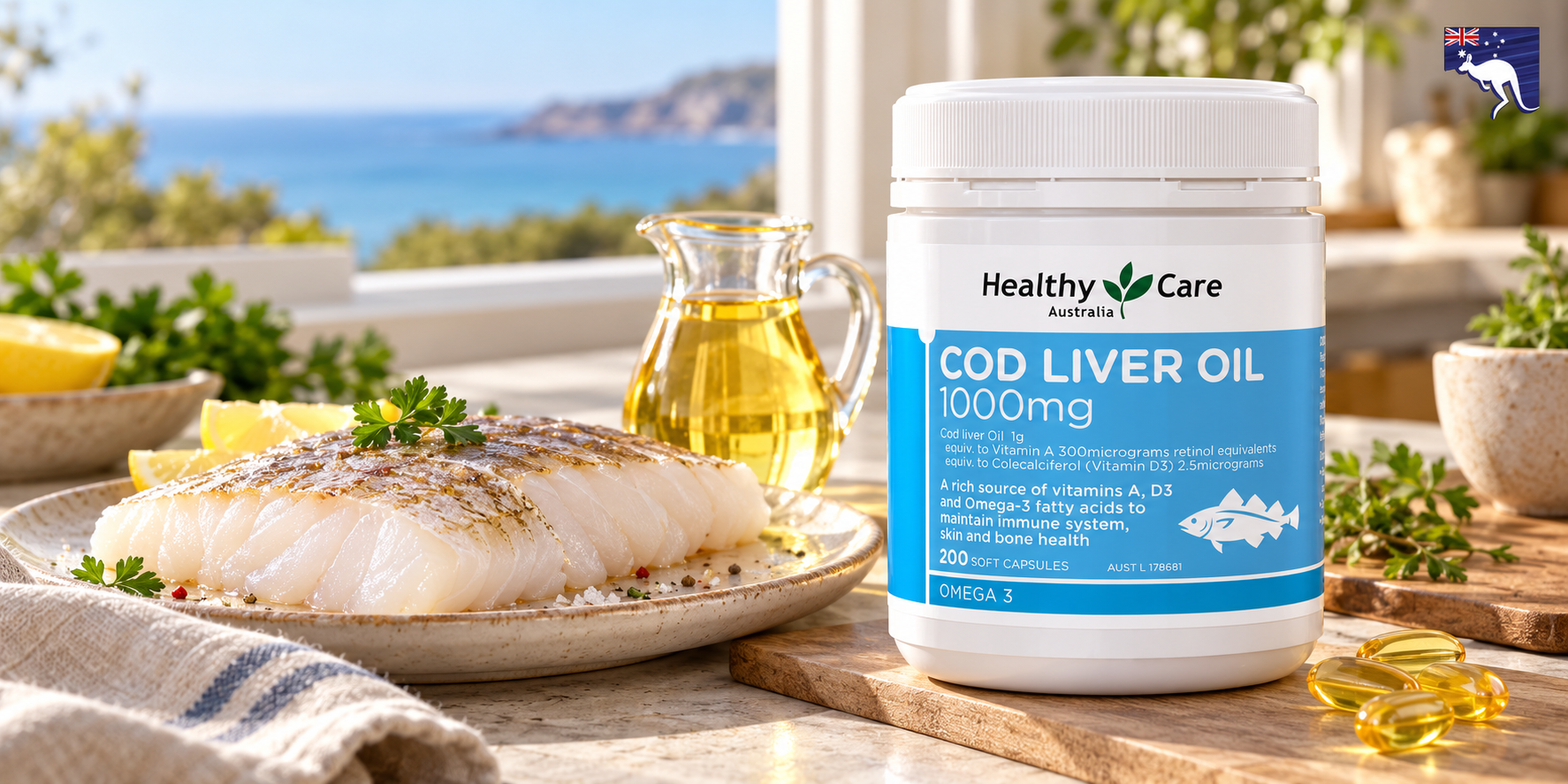
- The verified Healthy Care example contains 1,000 mg cod liver oil, 300 micrograms vitamin A RE and 2.5 micrograms vitamin D3 per capsule; the oil amount is not an EPA+DHA amount.
- During pregnancy, choose prenatal supplements with your maternity clinician. NHS guidance specifically advises avoiding cod liver oil and supplements containing vitamin A as retinol.
What makes cod liver oil different?
Cod liver oil comes from the liver of cod. Its useful distinction is the combination of oil with vitamins A and D, rather than the word “cod” making it a stronger version of every fish-oil supplement. Formulations vary, so the amount of each nutrient on the current label matters more than the general product name. Healthy Care's product information illustrates this combination.
Start with your purpose. Are you looking for an omega-3 supplement, addressing a clinician-identified vitamin need, or simply replacing a product you have used before? Those are different decisions. If you only want to compare marine omega-3 amounts, our cod liver oil versus fish oil guide addresses that narrower comparison.
Which benefits are supported by the nutrients?
Vitamin A supports normal vision and immune function. It also participates in the maintenance and development of body tissues. These are normal nutrient functions, not evidence that taking extra cod liver oil improves already-normal eyesight or prevents infections. The NIH vitamin A fact sheet explains both its roles and the risks of excess.
Vitamin D helps the body absorb calcium. It contributes to bone health and normal muscle and nerve function. A product containing vitamin D can contribute to intake, but the amount may be much smaller than someone assumes from the large oil number on the front. Treatment of a diagnosed deficiency is a separate clinical decision. See NIH's vitamin D overview.
Omega-3 content needs its own assessment. Findings about particular omega-3 preparations cannot automatically be transferred to every cod liver oil capsule. The NCCIH evidence overview describes substantial differences between eating seafood, using supplements and treating particular medical conditions. “Contains omega-3” does not establish a particular clinical result.
A real label example: what does 1,000 mg mean?
The manufacturer's current online information for Healthy Care Cod Liver Oil 1000mg lists the following per capsule. This is a label-reading example, not a recommendation to take a particular number of capsules.
| Label item | Per capsule | What to notice |
|---|---|---|
| Cod liver oil | 1 g, or 1,000 mg | Total oil, not a stated EPA+DHA quantity |
| Vitamin A | 300 micrograms retinol equivalents | Count alongside other vitamin A supplements |
| Vitamin D3 | 2.5 micrograms | Read the vitamin amount separately from the oil amount |
Source: Healthy Care's active-ingredient list. Check the physical bottle before purchase because packaging and formulations can change. That ingredient list does not provide separate EPA and DHA amounts; do not invent them from the 1,000 mg figure.
For a Bangladesh shopper comparing imported bottles, photograph the back label as well as the front. An attractive front panel may identify the oil, while the details needed for comparison appear in smaller print. Ask the seller to confirm that the photographed pack is the variant being supplied.
Compare vitamin units before adding up labels
Imported packs may use different units for the same nutrient. “mcg” and “µg” both mean micrograms; 1 mg equals 1,000 micrograms. For vitamin D, 1 microgram equals 40 IU, so the 2.5 micrograms in the example above equals 100 IU. This converts a label amount; it does not establish the dose you need. NHS guidance explains these units.
Do not apply that vitamin D conversion to vitamin A. Vitamin A may come from preformed retinol or carotenoids such as beta-carotene. Its activity and conversion depend on the source and measurement system. The NIH vitamin A guide distinguishes these forms and explains retinol activity equivalents.
When copying figures into your supplement list, keep the complete label wording, including RE, RAE or IU and whether the amount is per capsule or per serving. Do not erase those details to make the numbers look comparable. If two labels use different systems, ask a pharmacist to reconcile them before deciding that one bottle supplies more, or that combining them is appropriate.
Why pregnancy changes the decision
Do not take cod liver oil during pregnancy. NHS guidance advises avoiding cod liver oil and supplements containing vitamin A, sometimes called retinol, because too much can harm the baby's development. This is not the same as advising everyone to avoid all dietary vitamin A. Read the NHS pregnancy supplement guidance.
If you are planning a pregnancy, bring the exact product and any multivitamin to your clinician or pharmacist before continuing. Do not assume that a product marketed for bones, immunity or general wellness is appropriate for pregnancy. Our pregnancy DHA guide covers the different questions involved in choosing pregnancy-related omega-3 products.
Check the whole supplement shelf
Vitamin A is stored in the body, and excessive preformed vitamin A can accumulate. Too much vitamin D from supplements can also cause harm. Adding cod liver oil to a multivitamin and a separate vitamin product therefore deserves a check rather than an automatic assumption that each bottle is harmless on its own. NIH vitamin A safety information; NIH vitamin D safety information.
Make a short list showing each product, serving size and vitamin amounts. Bring that list to a pharmacist if you use regular medicines or have an existing medical condition. The useful question is “What am I adding to my total intake?” rather than “Which bottle has the most benefits?”
Omega-3 supplements can cause unpleasant taste or digestive symptoms such as heartburn, nausea or diarrhoea. Persistent symptoms deserve advice rather than repeatedly changing brands. NCCIH lists common adverse effects.
Buying and keeping a bottle in Bangladesh
- Match the exact product name, capsule count and ingredient panel before comparing prices.
- Check the seal, batch and expiry information, and ask for a clear invoice and seller contact details.
- Read the bottle's storage directions. The verified Healthy Care page specifies below 30°C, dry conditions and protection from heat and direct sunlight. Manufacturer storage instructions.
- Consider whether your available storage space meets the stated conditions before buying a large pack.
- Use the manufacturer's directions and personalised professional advice, rather than a social-media capsule count.
You do not need a longer supplement list to make a better decision. You need a clear reason for choosing cod liver oil, a readable current label and a check that its additional vitamins suit your circumstances.