Egmont vs Manuka Health: Which Manuka Honey Should You Buy in Bangladesh?
Choosing between Egmont and Manuka Health is easier when you compare equivalent jars. This guide uses their current catalogue labels to explain grades, pack sizes, traceability and value, with a clear decision path for Bangladesh shoppers.
Quick Answer
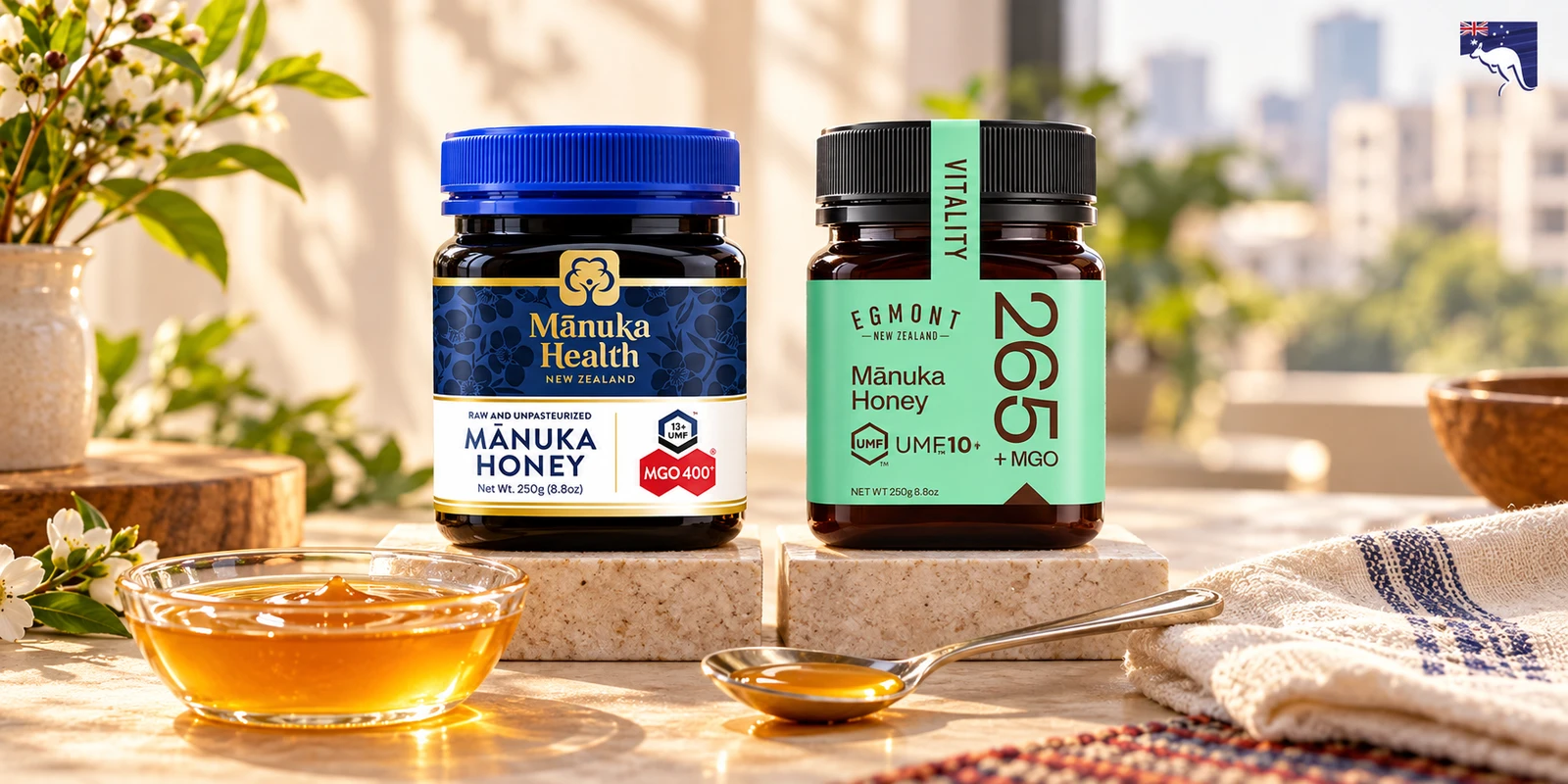
Neither Egmont nor Manuka Health is the best choice for every buyer. Compare the specific honey type, labelled MGO and UMF, net weight and price per 100 g. Egmont MGO 265+ and Manuka Health MGO 263+ are useful monofloral UMF 10+ examples to compare; Egmont MGO 50+ is a different, multifloral option. Choose by documented features, taste preference and budget, not promised medical superiority.
Key Takeaways
- Compare specific jars, not brand names alone: floral type, grade and pack size change the offer.
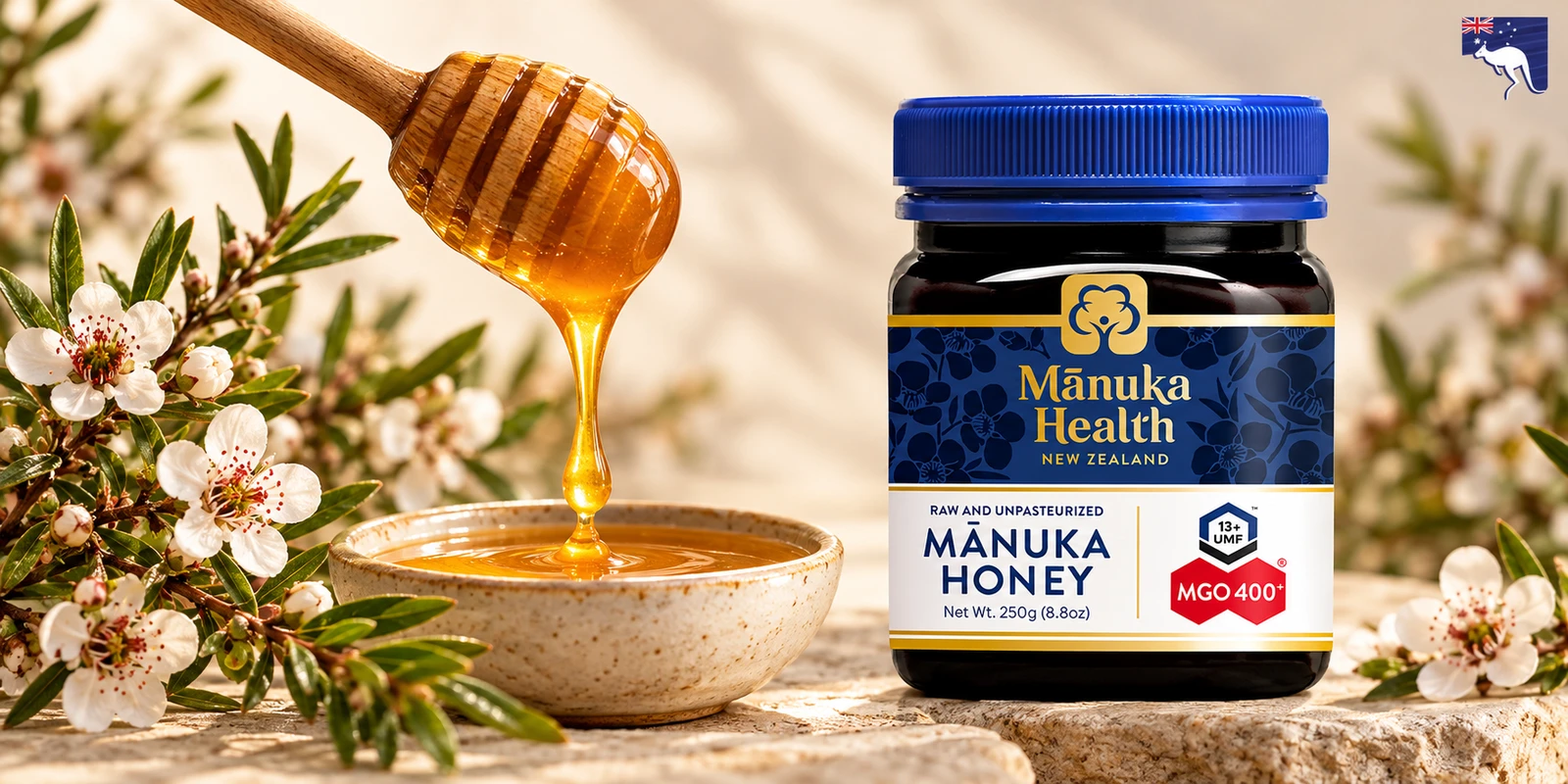
- Egmont MGO 265+ and Manuka Health MGO 263+ both have UMF 10+ catalogue examples.
- A two-point MGO difference does not establish a meaningful health advantage.
- Check the selected pack, delivered total and supplied label before choosing your preferred brand.
You have narrowed the choice to two jars: Egmont and Manuka Health. Both say New Zealand. Both display MGO numbers. The prices differ, and you would rather understand why than simply buy the more expensive one.
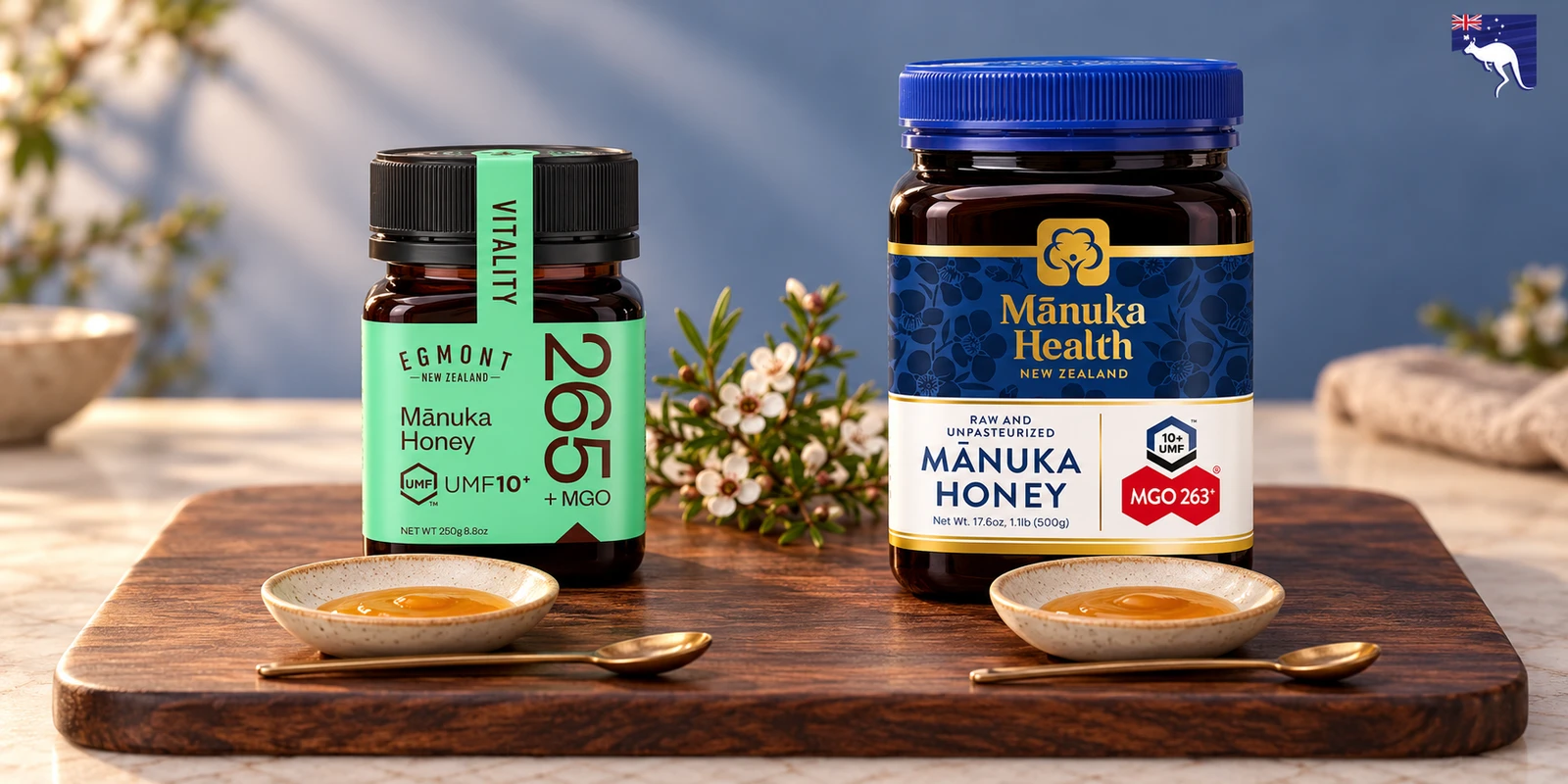
That is the right starting point for an Egmont vs Manuka Health comparison. The most useful question is which specific jar suits you. A brand can offer several honey types, grades and sizes, so a verdict about the whole range can hide the detail that matters at checkout.
The quick decision: which option fits your priorities?
- Want to compare similar monofloral grades? Start with Egmont MGO 265+ and Manuka Health MGO 263+, then match the weight. Both have UMF 10+ examples in our catalogue.
- Considering a multifloral option? Look at Egmont MGO 50+. Compare it as a different honey category, rather than as a cheaper version of every monofloral jar.
- Already enjoy one brand? Your flavour preference and the price of the pack you use are sensible reasons to stay with it.
- Buying for a medical condition? Neither brand should be chosen as a substitute for assessment or prescribed care.
Australian Goods sells both ranges. This guide compares documented labels and buying considerations; it does not claim that we independently tested which brand is healthier.
Egmont and Manuka Health: product facts side by side
These are examples checked on 27 October 2026. The pack shown when a product page opens may differ from another selectable option. Always confirm the option in your order.
| Catalogue example | Type and origin | Labelled grade | Pack shown when checked |
|---|---|---|---|
| Egmont Multifloral Manuka | Multifloral, New Zealand | MGO 50+ | 500 g |
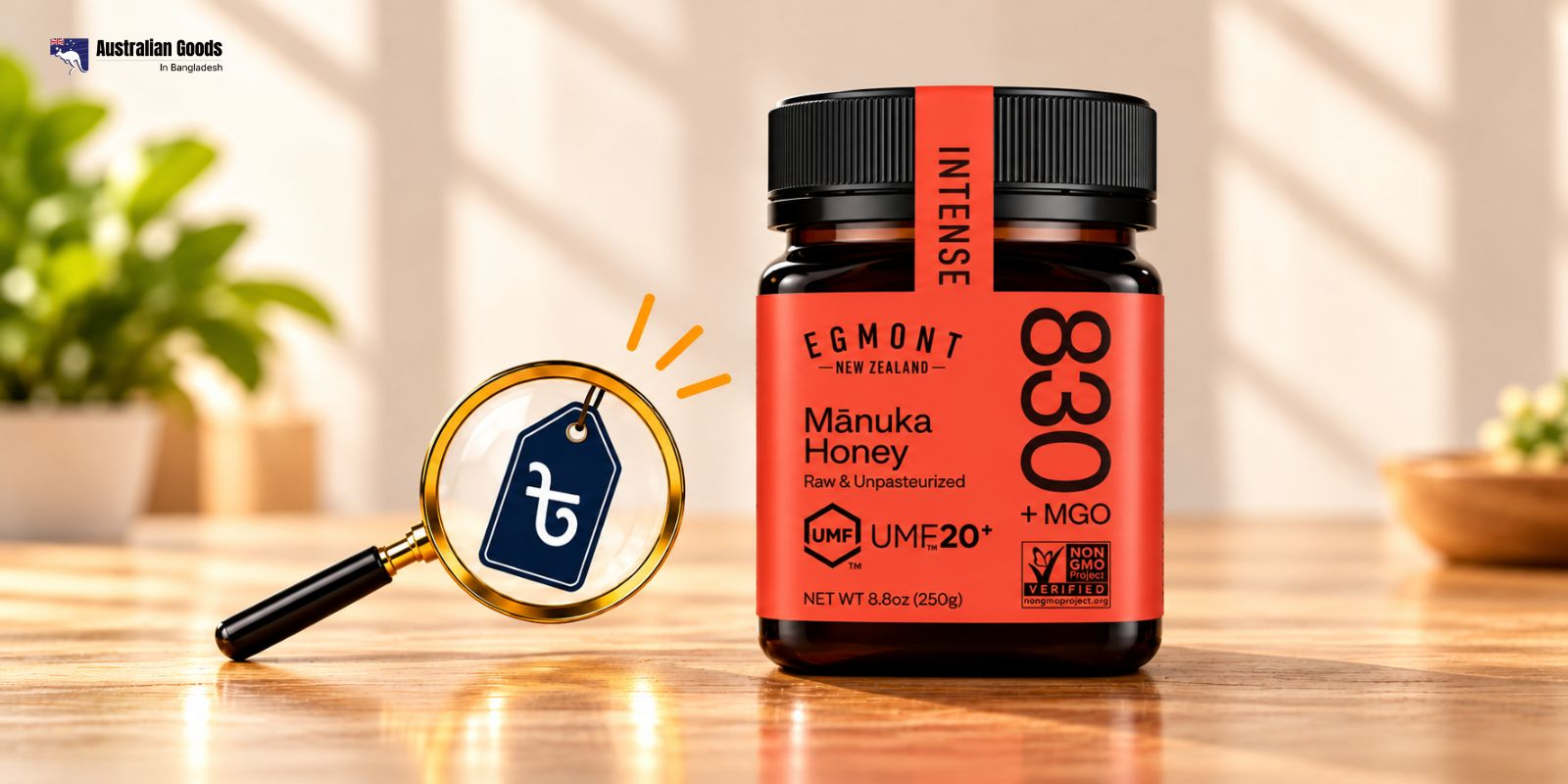
| Egmont Manuka | Monofloral, New Zealand | MGO 265+ / UMF 10+ | 250 g |
| Manuka Health Manuka | Monofloral, New Zealand | MGO 115+ / UMF 6+ | 500 g |
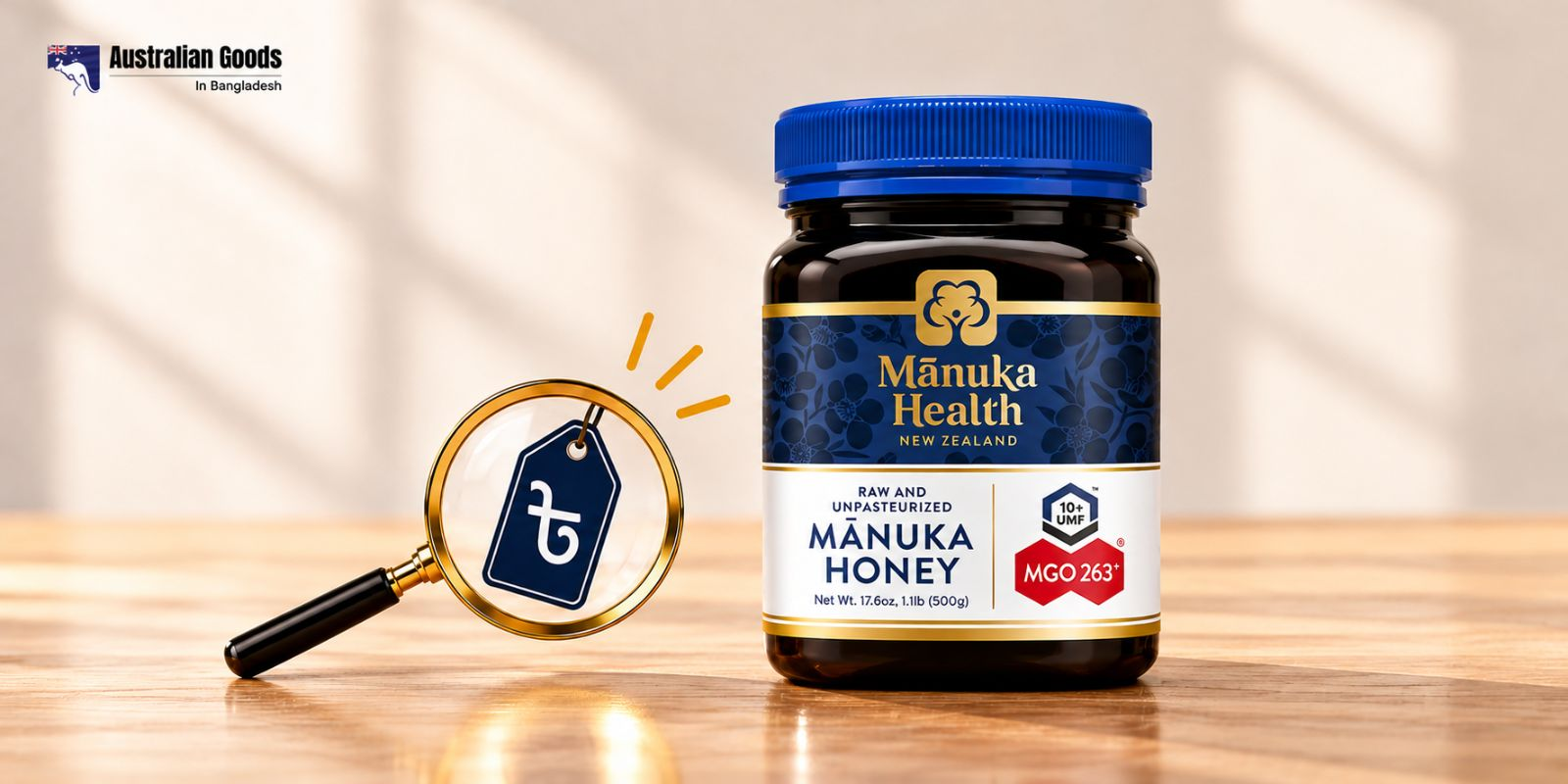
| Manuka Health Manuka | Monofloral, New Zealand | MGO 263+ / UMF 10+ | 500 g |
The 250 g Egmont and 500 g Manuka Health examples contain different amounts of honey. A comparison of their total jar prices alone would therefore be incomplete. Look for an equivalent weight where offered, or use the unit-price calculation below.
MGO 265+ versus 263+: does the difference matter?
MGO is methylglyoxal concentration, commonly stated in milligrams per kilogram. The number followed by a plus sign indicates a labelled minimum; it is not a daily dose. A difference of two points should not become a claim that one jar will produce better health results.
UMF provides a broader framework for certified products. Both examples above carry a UMF 10+ label pairing in the catalogue. That makes them useful products to compare, but does not make them identical in flavour, packaging or price.
The UMF Honey Association explains its quality markers. If the labels are new to you, read our MGO and UMF guide before paying for a higher grade. You do not need to work upwards through the numbers as if they were a health target.
Multifloral versus monofloral: compare the right category
Egmont MGO 50+ is labelled multifloral. The MGO 265+ Egmont and MGO 263+ Manuka Health examples are labelled monofloral. New Zealand’s MPI definition uses chemical and DNA attributes to distinguish qualifying categories.
Multifloral does not automatically mean fake, and monofloral does not mean that every bee visited only one plant. They are different classifications. If your priority is exploring Manuka as a food within a modest budget, you can consider a multifloral jar without pretending it is the same offering as a higher-grade monofloral product.
Keep that distinction visible when comparing prices. Otherwise, a lower price can look like a brand advantage when much of the difference is simply the product type.
How to compare value in Bangladesh
Use this calculation for each selected pack:
Price per 100 g = jar price ÷ net weight in grams × 100.
Then compare the same honey category and a similar labelled grade. Add delivery costs and check the stated dispatch or arrival estimate. A jar that costs less before shipping may not offer the lowest delivered total.
There are two kinds of value to consider. Unit value describes how much you pay for the honey. Personal value includes whether you like it, whether the size fits your household and whether you value its particular certification or presentation. A large jar you do not enjoy is not a saving.
Use our Egmont price guide and Manuka Health price guide to explore each range. The live product pages provide the current price for the option you select.
Traceability: what to check with each brand
Egmont
Egmont provides a batch lookup and product-information service. Keep the jar’s batch code and check that any result relates to the product you have. The brand’s UMF 10+ product information is also useful when comparing a labelled grade.
Manuka Health
Manuka Health describes batch testing and traceability in its official product information. Match the brand, weight, grade and batch details across the listing, order and delivered jar. Ask the seller or manufacturer to explain a mismatch before assuming a label variation is harmless or fraudulent.
With either brand, an intact seal and a QR code are helpful checks, but neither alone proves authenticity. Keep your invoice and choose a seller who can respond to a specific product question. Our pure honey buying checklist explains the limits of home purity tests.
Read reviews at the product level
A review of a brand’s MGO 50+ jar does not automatically describe its MGO 265+ product. Check the grade and pack mentioned, and separate comments about delivery or packaging from comments about the honey itself. They can all be useful, but they answer different questions.
Customer ratings can help you understand someone’s experience; they cannot establish purity or prove a medical result. Be especially careful with a testimonial that attributes recovery from an illness to one jar. When comparing Egmont and Manuka Health, give more weight to verifiable label details and the aspects of use that matter to you. A review should inform a shortlist, not override missing product information.
What about taste and texture?
Taste is personal, and texture can vary with the honey and its handling. This article is not based on a blind tasting, so we will not invent a winner for smoothness or flavour. Descriptions such as rich, mild or earthy can help you form expectations, but they cannot tell us which jar you will prefer.
If you are trying a brand for the first time, a smaller available pack can be a practical introduction. Taste it with a food you already enjoy before deciding whether to order a larger size. If you mainly use honey in strongly flavoured drinks, consider how much you value subtle differences.
A useful starting pair to inspect
Open the Egmont MGO 265+ product alongside the Manuka Health MGO 263+ card below. Compare the selected weight, current price, label and delivery information. This creates a more meaningful shortlist than choosing whichever brand has the largest number somewhere in its range.

Manuka Health MGO 263+ Manuka Honey (New Zealand)
Manuka Health MGO 263+ honey in Bangladesh: compare jar weight, UMF 10+ label, food-use guidance, expiry and current selected-pack price.
Choose the jar, then the brand
For most shoppers, the decision comes down to a short list: the type of Manuka you want, the grade you value, a suitable pack and a price you can justify. The brand supports that decision through its product information and traceability.
If you are still weighing imported Manuka against other honey options, the broader guide below will help. You can then return to these two brands with a clear budget and a clear reason for your choice.