Why Your Iron Supplement May Not Be Working Properly
Taking iron but still feeling tired or seeing little improvement in your ferritin levels? Learn why iron supplements may not work properly, including poor timing, tea or coffee, calcium, medicine interactions, digestive conditions, and ongoing blood loss. Discover practical absorption tips, common mistakes, warning signs, and when to seek medical advice.
You've been taking an iron supplement for several weeks or even months, yet your energy levels haven't improved, your ferritin remains low, or your latest blood test still shows iron deficiency. It's natural to wonder whether the supplement is working at all. In many cases, the issue isn't the supplement itself, it is how your body absorbs and uses iron.
Quick Navigation
Why Isn't My Iron Supplement Working?
Iron supplements may not work as expected if they are taken with foods, drinks, or medicines that reduce absorption, if the supplement is not taken consistently, or if an underlying medical condition such as ongoing blood loss or poor intestinal absorption is present. Improving iron levels often requires the right timing, good dietary habits, and treatment of the underlying cause not simply taking more iron.
Why Iron Supplements Sometimes Don't Work
Many people believe that taking an iron tablet every day automatically corrects iron deficiency. In reality, iron supplementation is only one part of treatment. Your digestive system must absorb the iron effectively, your body must use it efficiently, and any ongoing cause of iron loss should be identified and managed.
Even a high-quality iron supplement may appear ineffective if it is taken with foods that reduce absorption, combined with certain medicines, stopped too early, or used while another medical condition continues to lower your iron stores.
Understanding these factors helps you get the greatest benefit from your supplement while avoiding unnecessary frustration or unsafe self-adjustments.
Common Reasons Your Iron Supplement May Not Be Working
Before changing your supplement or increasing the dose, check whether one or more of these common factors may be affecting iron absorption.
- Taking iron with tea or coffee.
- Taking iron together with calcium-rich foods or supplements.
- Using antacids or acid-reducing medicines without proper timing.
- Not taking the supplement consistently.
- Stopping treatment too early.
- Low vitamin C intake.
- Heavy menstrual bleeding or other ongoing blood loss.
- Digestive conditions affecting absorption.
- Using a supplement that may not be suitable for your needs.
- An underlying medical condition that requires further investigation.
How Iron Works in Your Body
Iron is an essential mineral that supports many important functions in the body. Its primary role is helping produce haemoglobin, a protein inside red blood cells that carries oxygen from your lungs to every organ and tissue. Without enough iron, your body cannot produce healthy red blood cells efficiently, which may reduce oxygen delivery and contribute to symptoms such as fatigue, weakness, dizziness, poor concentration, and reduced physical performance.
Beyond oxygen transport, iron also contributes to normal energy production, immune system function, cognitive performance, muscle health, and healthy growth. Since the body cannot produce iron on its own, it must come from iron-rich foods or supplements when recommended by a healthcare professional.
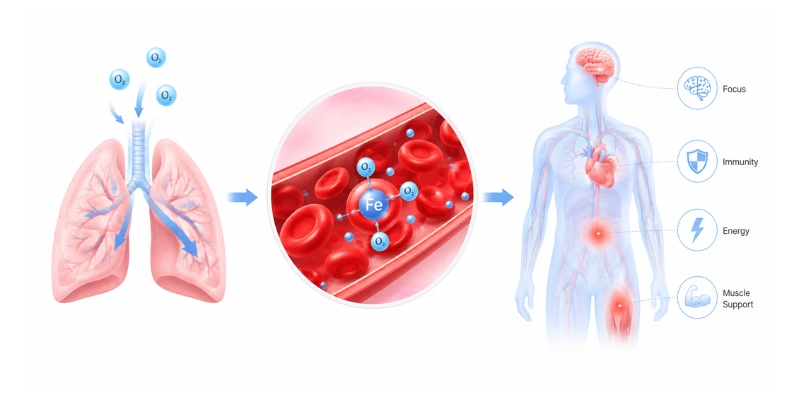
Iron plays an important role in:
- Producing healthy red blood cells.
- Transporting oxygen throughout the body.
- Supporting normal energy metabolism.
- Maintaining cognitive performance and concentration.
- Supporting immune system function.
- Helping muscles receive the oxygen they need during physical activity.
Expert Insight
Taking an iron supplement alone does not guarantee improvement. The body must absorb and utilise the iron effectively, while the underlying cause of iron deficiency should also be identified and treated when necessary.
Iron Deficiency vs Iron Deficiency Anaemia
Although these terms are often used interchangeably, they describe different stages of the same condition. Understanding the difference helps explain why some people continue taking iron supplements even when they do not have anaemia.
| Iron Deficiency | Iron Deficiency Anaemia |
|---|---|
| Iron stores (ferritin) are lower than normal. | Iron deficiency has progressed enough to reduce haemoglobin. |
| Symptoms may be mild or absent. | Symptoms are often more noticeable, including fatigue, weakness, dizziness, and shortness of breath. |
| May be detected through routine blood tests. | Requires proper diagnosis and treatment under medical guidance. |
| Can often be corrected before anaemia develops. | Recovery usually takes longer because both iron stores and haemoglobin need to improve. |
10 Reasons Your Iron Supplement May Not Be Working Properly
If your symptoms continue despite taking iron regularly, don't assume the supplement has failed. In many cases, everyday habits, food choices, medicine interactions, or untreated medical conditions reduce iron absorption or increase iron loss.
Below are the most common reasons healthcare professionals investigate when iron levels do not improve as expected.
1. You're Taking Iron With Tea or Coffee
Tea and coffee contain natural compounds called polyphenols and tannins, which can reduce the absorption of non-haem iron from supplements and plant-based foods. This is particularly relevant in Bangladesh, where tea is commonly consumed with or immediately after meals.
- Avoid drinking tea or coffee at the same time as your iron supplement.
- Leave an appropriate gap before or after taking iron whenever possible.
- Water is generally the safest drink when taking iron tablets.
2. You're Taking Iron Together With Calcium
Calcium from supplements or dairy products may temporarily reduce iron absorption when consumed together. This does not mean you should avoid calcium altogether, but taking both at the same time may reduce the amount of iron your body absorbs.
- Do not take iron together with calcium supplements unless advised by your healthcare professional.
- Separate dairy-rich meals and iron supplements whenever practical.
3. You're Taking Iron at the Wrong Time
Iron is often absorbed more efficiently on an empty stomach. However, some people experience stomach discomfort, nausea, or constipation when taking iron this way. If side effects occur, your healthcare professional may recommend taking it with food while balancing absorption and tolerability.
4. You're Not Getting Enough Vitamin C
Vitamin C can improve the absorption of non-haem iron by converting it into a form that is easier for the body to absorb. Pairing iron-rich meals or iron supplements with vitamin C-rich foods may help improve absorption.
Vitamin C-rich foods include:
- Oranges
- Guava
- Lemons
- Amla
- Tomatoes
- Bell peppers
5. Ongoing Blood Loss Is Continuing
Iron supplements may struggle to restore iron stores if your body continues losing iron faster than it can replace it. Heavy menstrual bleeding, gastrointestinal bleeding, frequent blood donation, or other medical conditions may contribute to persistent iron deficiency.
Key Takeaways So Far
- Iron absorption depends on much more than simply taking a supplement.
- Tea, coffee, calcium, and incorrect timing may reduce iron absorption.
- Vitamin C-rich foods may help improve non-haem iron absorption.
- Persistent iron deficiency often requires investigation rather than simply increasing the dose.
6. A Digestive Condition May Be Reducing Iron Absorption
Even if you take your iron supplement correctly every day, your body may still struggle to absorb it if you have an underlying digestive condition. Iron is mainly absorbed in the small intestine, so conditions affecting the digestive tract can reduce how much iron enters the bloodstream.
Some people continue to have low ferritin or iron deficiency despite consistent supplementation because the problem lies in absorption rather than intake.
Conditions that may affect iron absorption include:
- Coeliac disease.
- Inflammatory bowel disease (such as Crohn's disease).
- Previous stomach or intestinal surgery.
- Certain chronic digestive disorders.
7. Some Medicines Can Reduce Iron Absorption
Certain medicines can interfere with iron absorption or reduce the amount of iron your body can use. This does not mean you should stop your medicines, but it is important to understand that timing may matter.
| Medicine Type | Possible Effect |
|---|---|
| Antacids | May reduce iron absorption. |
| Proton Pump Inhibitors (PPIs) | Reduced stomach acid may decrease iron absorption in some people. |
| Calcium supplements | May temporarily reduce iron absorption if taken together. |
| Certain prescription medicines | Your doctor or pharmacist can advise if spacing doses is appropriate. |
8. You Haven't Taken Iron for Long Enough
Iron deficiency does not usually improve overnight. Many people begin feeling better before their iron stores have fully recovered. Even when hemoglobin returns to normal, ferritin levels may require additional time to rebuild.
This is why healthcare professionals often recommend continuing iron supplementation for a period after blood levels begin improving, depending on your individual situation.
9. Your Iron Supplement May Not Be the Most Suitable Option
Iron supplements are available in different forms and strengths. Some provide more elemental iron, while others are designed to improve tolerability or reduce digestive discomfort.
The best supplement varies from person to person. Factors such as side effects, absorption, medical history, pregnancy, digestive conditions, and healthcare advice all influence which option is most appropriate.
10. Your Diagnosis May Need to Be Reassessed
If your ferritin or haemoglobin does not improve despite taking iron correctly, your healthcare professional may investigate whether another medical condition is contributing to your symptoms.
Persistent fatigue, unexplained weight loss, ongoing blood loss, digestive disease, chronic inflammation, or another nutritional deficiency may require further assessment.
Foods and Drinks That Can Reduce Iron Absorption
Some everyday foods and beverages can temporarily reduce how much iron your body absorbs. This doesn't mean they should be avoided completely, but they are generally best consumed separately from your iron supplement.
| Food or Drink | Why It Matters |
|---|---|
| Tea | Contains tannins that may reduce non-haem iron absorption. |
| Coffee | Contains polyphenols that may reduce iron absorption. |
| Milk & Dairy | Calcium may temporarily reduce iron absorption. |
| Calcium Supplements | May compete with iron absorption when taken together. |
| High-fibre supplements | May reduce absorption in some situations. |
Foods That May Help Improve Iron Absorption
Pairing iron supplements or iron-rich meals with foods naturally high in vitamin C may help improve non-haem iron absorption.
- Guava
- Orange
- Lemon
- Amla
- Tomatoes
- Bell peppers
- Strawberries
- Citrus fruits
Best Time to Take Iron Supplements
- Take iron according to the product label or your healthcare professional's advice.
- Iron is often absorbed best on an empty stomach if tolerated.
- If stomach upset occurs, taking iron with food may be recommended.
- Avoid taking iron together with tea, coffee, calcium supplements, or antacids.
- Take your supplement consistently at approximately the same time each day.
Common Iron Supplement Mistakes to Avoid
- Missing doses regularly.
- Taking iron with tea or coffee.
- Taking iron together with calcium supplements.
- Stopping treatment too early.
- Increasing the dose without medical advice.
- Skipping follow-up blood tests.
- Assuming all tiredness is caused by iron deficiency.
Practical Iron Supplement Tips for People in Bangladesh
- Avoid drinking tea immediately after taking your iron supplement.
- Include vitamin C-rich fruits with iron-rich meals whenever possible.
- Do not ignore heavy menstrual bleeding or persistent fatigue.
- Buy authentic iron supplements from trusted retailers.
- Attend follow-up blood tests recommended by your healthcare professional.
- Avoid self-diagnosing iron deficiency without laboratory testing.
Recommended Iron Supplement in Bangladesh
A balanced diet should always be the primary source of iron. However, when iron deficiency has been diagnosed or additional iron intake has been recommended by a healthcare professional, choosing a high-quality supplement from a trusted manufacturer can help support your treatment plan.
The following product is included as an example of an authentic Australian iron supplement available in Bangladesh. It should be used according to the product label or healthcare professional's advice.
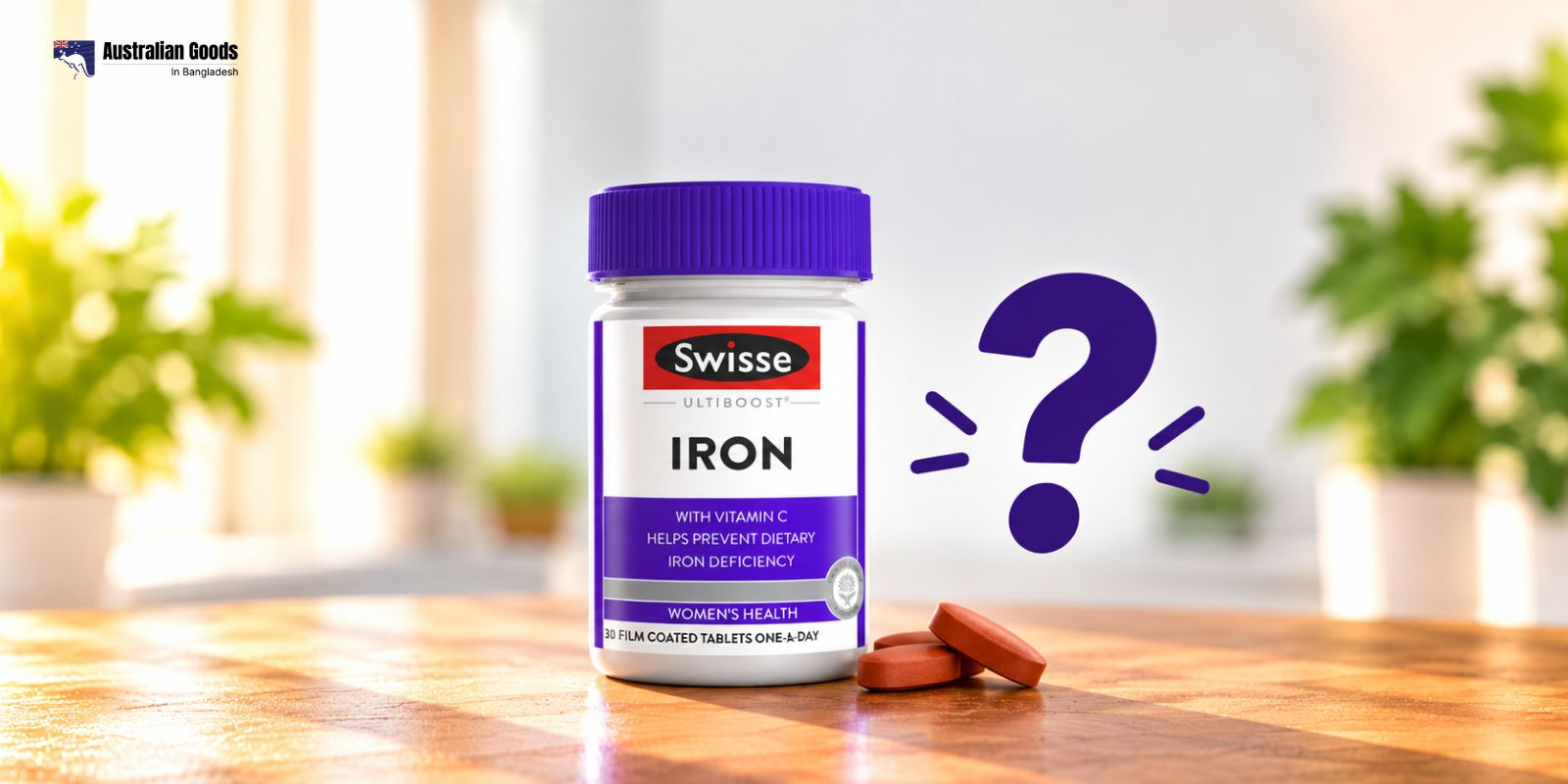
Swisse Ultiboost Iron – Gentle Daily Iron Support
Why supplementation may help: Some people cannot meet their iron needs through diet alone, particularly those diagnosed with iron deficiency, women with heavy menstrual bleeding, individuals with increased iron requirements, or people advised by a healthcare professional to take an iron supplement.
What it does: Swisse Ultiboost Iron is formulated to support healthy iron levels, normal red blood cell production, oxygen transport, energy production, and general wellbeing when used as directed.
- Best for: Adults requiring additional iron intake following professional advice.
- Food-first reminder: Continue eating iron-rich foods such as lean meat, fish, poultry, beans, lentils, spinach, and vitamin C-rich fruits alongside supplementation.
- Common mistake: Taking iron together with tea, coffee, calcium supplements, or stopping supplementation before iron stores have recovered.
Better iron absorption isn't just about taking more iron it starts with taking it correctly and supporting your body's natural absorption process.

When Should You See a Doctor?
Iron supplements should not be used as a substitute for identifying the cause of iron deficiency. If your iron levels do not improve despite taking supplements correctly, further medical assessment may be necessary.
Seek medical advice if you have:
- Persistent tiredness despite taking iron.
- Low ferritin or haemoglobin that does not improve.
- Heavy menstrual bleeding.
- Blood in the stool or black stools.
- Unexplained weight loss.
- Persistent stomach pain or digestive symptoms.
- Difficulty swallowing.
- Pregnancy or breastfeeding before starting supplementation.
- A history of digestive disease or stomach surgery.
Iron Absorption Checklist
- Take your iron supplement consistently.
- Separate iron from tea and coffee.
- Avoid taking iron with calcium supplements.
- Include vitamin C-rich foods with meals.
- Follow your healthcare professional's advice.
- Continue treatment for the recommended duration.
- Attend follow-up blood tests.
- Buy authentic supplements from trusted retailers.
Summary
Iron supplements may not work properly because of poor absorption, incorrect timing, interactions with tea, coffee, calcium, or medicines, digestive conditions, or ongoing blood loss. Improving iron levels often requires consistent supplementation, better absorption habits, vitamin C-rich foods, and treatment of the underlying cause rather than simply increasing the dose.
Frequently Asked Questions (FAQs)
1. Why isn't my iron supplement increasing my ferritin?
Poor absorption, medicine interactions, ongoing blood loss, digestive conditions, or inconsistent use may all contribute. Speak with your healthcare professional if ferritin remains low.
2. Can tea and coffee reduce iron absorption?
Yes. Tea and coffee contain compounds that can reduce non-haem iron absorption when consumed close to your iron supplement.
3. Should I take iron with vitamin C?
Vitamin C-rich foods may improve non-haem iron absorption and are commonly recommended alongside iron-rich meals.
4. Can calcium reduce iron absorption?
Calcium may temporarily reduce iron absorption when taken at the same time. Ask your healthcare professional about appropriate timing.
5. How long does it take for iron supplements to work?
Improvement varies between individuals. Symptoms may improve before iron stores are fully restored, which is why follow-up blood tests are important.
6. Should I take iron on an empty stomach?
Iron is often absorbed best on an empty stomach if tolerated. If stomach discomfort occurs, follow the directions provided by your healthcare professional or product label.
7. Can antacids affect iron absorption?
Yes. Some antacids may reduce iron absorption. Your doctor or pharmacist can advise whether a timing gap is appropriate.
8. When should I repeat my blood test?
Your healthcare professional will recommend appropriate follow-up testing based on your diagnosis, treatment plan, and progress.
References & Scientific Sources
This article is based on established guidance regarding iron deficiency, iron supplementation, nutrient absorption, and evidence-based clinical recommendations from internationally recognized health organizations.
- National Institutes of Health (NIH) Office of Dietary Supplements – Iron Fact Sheet for Health Professionals
- Mayo Clinic – Iron Deficiency Anemia: Symptoms & Causes
- World Health Organization (WHO) – Anaemia Fact Sheet
- British Society of Gastroenterology – Guidelines for the Management of Iron Deficiency Anaemia in Adults
- NHS (UK) – Iron Deficiency Anaemia
Medical Disclaimer
This article is provided for general educational purposes only and should not replace professional medical advice, diagnosis, or treatment. Iron supplements should only be used according to the product label or under the guidance of a qualified healthcare professional. If you have persistent fatigue, ongoing blood loss, pregnancy, digestive disease, or symptoms of iron deficiency, consult your doctor before starting or changing any supplement regimen.