Australian Fish Oil Quality: Regulation, Testing and Label Checks
An Australian brand gives you somewhere to begin your checks. It does not answer every question about the oil, its health claims or the bottle being sold. Learn how regulation, manufacturing and product evidence fit together.
Quick Answer
Assess Australian fish oil quality through the exact product’s regulatory status, manufacturing controls and relevant testing evidence. AUST L does not mean the TGA has assessed that medicine’s efficacy before sale. A country name, register entry or quality logo alone cannot establish superiority or verify an individual bottle.
Key Takeaways
- Read the letters before the AUST number: different regulatory pathways involve different levels of assessment.
- Manufacturing standards concern consistent production; evidence of a health benefit is a separate question.
- Ask what a certification covers and whether its evidence applies to the exact formulation being offered.
“Australian quality” can sound reassuring on a fish-oil label. But what, exactly, are you being asked to trust: the brand, the factory, a laboratory result or a health claim? Those are different questions, and a useful answer should identify which one it addresses.
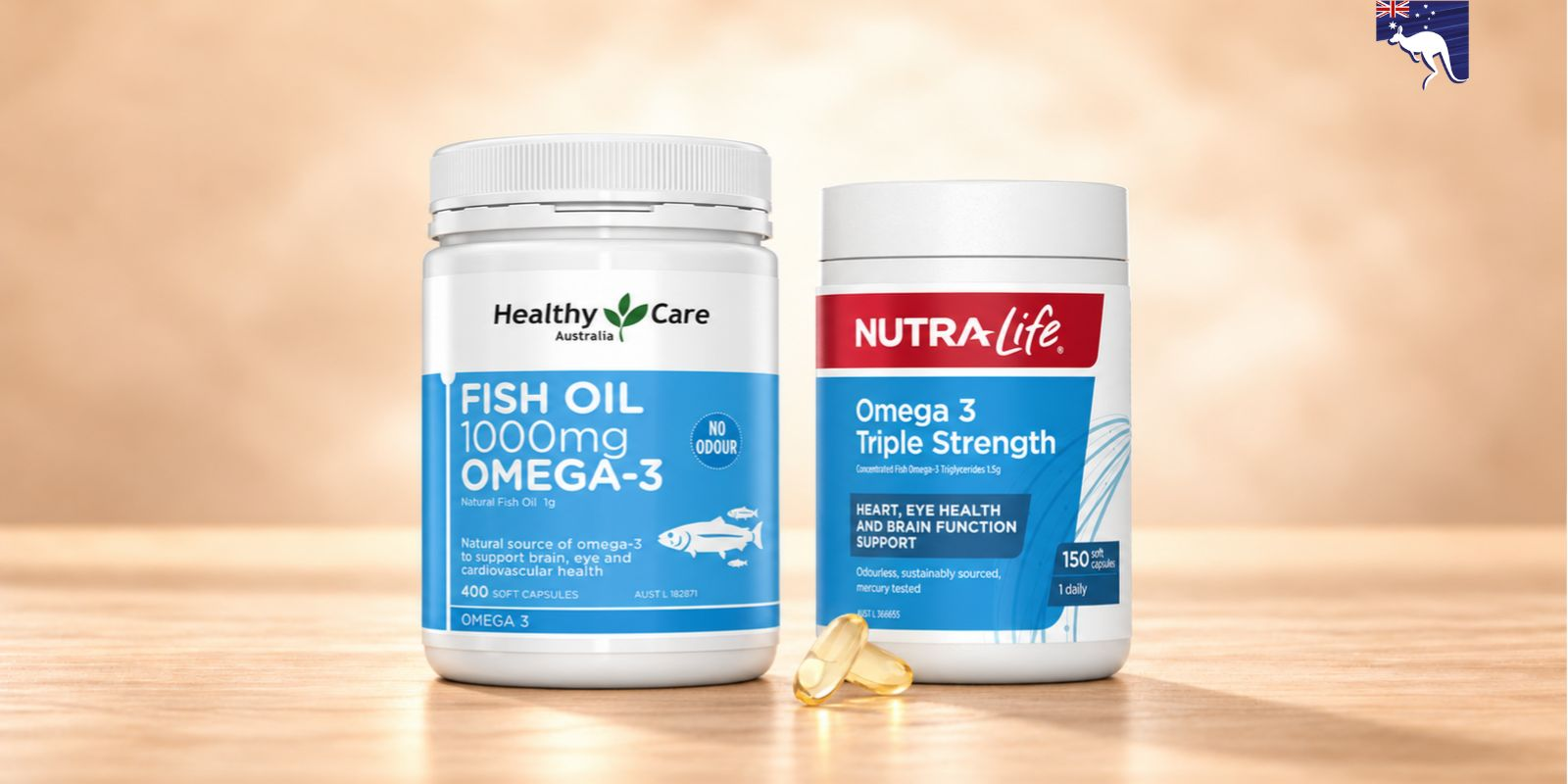
For a customer in Bangladesh, Australian fish oil quality is best assessed through information you can check. The aim is to understand a product’s evidence before paying for its reputation.
Read the regulatory category before the advertising
The Australian Therapeutic Goods Administration, or TGA, explains three medicine categories. The letters beside a product’s AUST number help identify its pathway. See the TGA’s consumer explanation.
| Label category | What it means for assessment |
|---|---|
| AUST L: listed | The TGA does not assess each medicine’s efficacy before sale. Sponsors must meet applicable requirements and hold supporting evidence. |
| AUST L(A): assessed listed | The TGA assesses evidence supporting the health claims before listing. |
| AUST R: registered | The medicine undergoes pre-market assessment, including efficacy. |
These categories should not become a simple league table for shopping. They reflect different regulatory pathways and permitted claims. An AUST L product is not automatically ineffective; equally, its listing should not be advertised as proof that the TGA established its clinical benefit.
In particular, “TGA approved fish oil” is too imprecise to be useful without the product identity and an explanation of the claimed approval. Ask the seller to state the actual category and provide the official record.
Use the Australian register to identify the product
The Australian Register of Therapeutic Goods (ARTG) is the TGA’s public product database. Its information includes product names, formulation and sponsor details, with public summaries available for relevant entries.
Start with the number printed on the actual pack, then compare the returned name and ingredients. A record for another product in the same brand range is not a match. Keep a note of any unexplained difference and ask the manufacturer or sponsor about it before ordering.
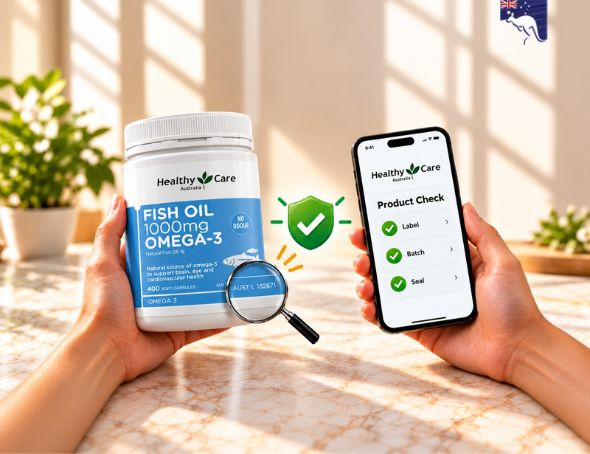
A register record describes a regulated product. It does not certify the Bangladesh retailer, show the journey of a parcel or authenticate a number copied onto a label. Our original fish-oil checklist covers the separate question of bottle authenticity.
What good manufacturing practice adds
Good manufacturing practice, usually shortened to GMP, concerns the systems and procedures used to produce goods consistently. The TGA’s GMP guidance covers Australian licensed manufacturers and sponsors responsible for overseas manufacturing sites supplying the Australian market.
That overseas coverage matters when interpreting a brand’s nationality. A company’s Australian identity does not, by itself, tell you where every ingredient originated or every production stage occurred. Read specific manufacturing statements instead of filling those gaps with assumptions.
GMP is valuable evidence about production controls. It is not a clinical trial showing that a particular fish oil prevents disease, and it does not make every product from the same manufacturer identical. A high-strength concentrate and a standard-strength oil still need separate label comparisons.
Testing claims need a defined scope
The TGA’s natural fish-oil compositional guideline specifies checks covering ingredient identity, fatty-acid composition and unwanted substances. It also explains that different fish-oil categories can be covered by different recognised standards.
Therefore, the useful question is not simply “Is it tested?” Ask what was measured, against which specification and for which material. An ingredient test, a finished-product report and a general supplier certificate are different pieces of evidence.
For a deeper explanation of contaminant and oxidation measurements, use our purity and freshness guide. Avoid comparing isolated numbers from unrelated reports as though they were a controlled comparison of two brands.
Read quality badges as individual claims
A badge may concern manufacturing, sustainability, dietary suitability or testing. Before treating it as a reason to pay more, answer four questions:
- Who issued it, and can you verify that issuer?
- What precisely is certified: a facility, ingredient, product or batch?
- Does the scope include the formulation and pack being sold?
- Is the evidence current, and are any conditions or exclusions explained?
A sustainability statement does not supply a missing EPA/DHA figure. A manufacturing certificate does not settle whether a capsule meets your dietary requirements. Keeping each claim within its scope makes comparisons clearer.

Swisse Ultiboost Odourless High Strength Wild Fish Oil
Swisse Ultiboost Odourless High Strength Wild Fish Oil is a premium Omega-3 supplement that supports heart health, brain function, healthy vision, and nervous system health. Its hi...
Turn the evidence into a buying decision
Build a short shortlist using full product names rather than national flags. Beside each option, record its declared EPA and DHA, serving directions, relevant regulatory information and the documentation available for its quality claims. Leave a blank where information is missing instead of assuming the most favourable answer.
Then consider whether the formulation suits the intended user and whether the price is justified by a useful difference. Stronger evidence, a practical serving or a suitable format can matter; a longer list of impressive-sounding words may not.
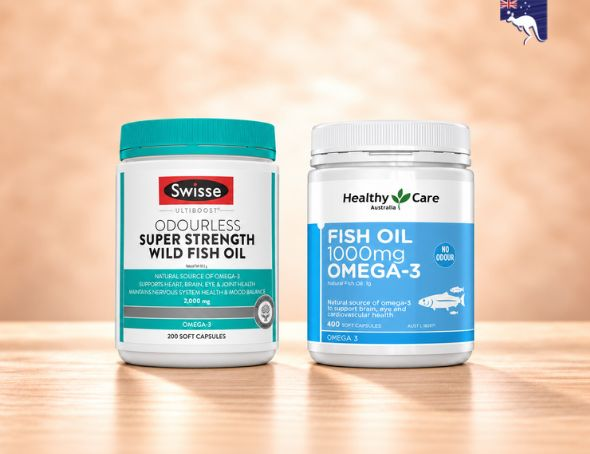
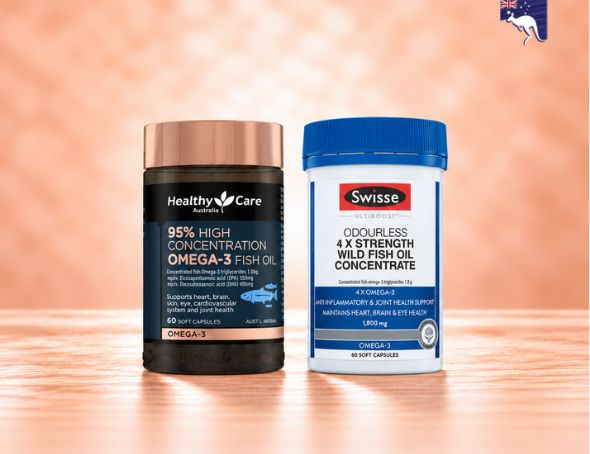
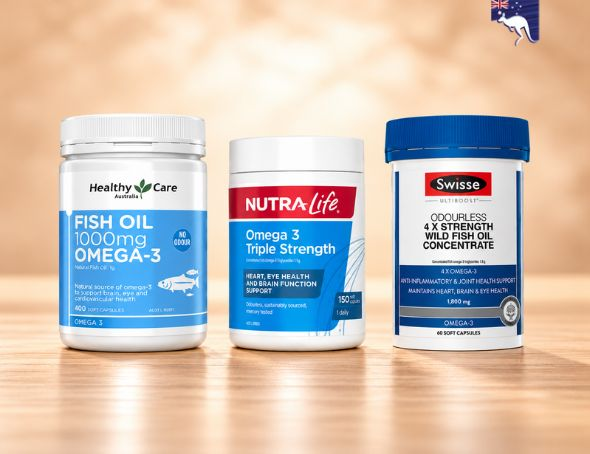
Australian Goods sells the related products displayed here. Open their labels and compare the exact formulation with the official information. If a crucial claim cannot be explained clearly, ask for clarification before completing the purchase.