Fish Oil Purity, Freshness and Storage in Bangladesh
A fish-oil bottle can have a convincing label while leaving important quality questions unanswered. Purity, EPA/DHA content and freshness require different evidence. This guide explains the useful checks, the limits of smell and marketing claims, and practical storage decisions in Bangladesh.
Quick Answer
Fish-oil purity concerns contaminants; freshness concerns changes such as oxidation. Neither is proved by capsule colour, an odourless claim or a manufacturing slogan. Look for relevant test evidence and follow the exact bottle's storage directions. If a delivery is damaged or may have overheated, ask the manufacturer before using it.
Key Takeaways
- A contaminant test, an EPA/DHA assay and an oxidation test answer different questions; one result cannot replace all three.
- A useful laboratory report identifies the sample, batch, methods, results and acceptance limits—not merely a decorative certificate.
- Follow the product's stated temperature and storage conditions, and ask about uncertain heat exposure rather than inventing a safe time limit.
Where will the bottle live after it arrives: beside the cooker, in a bedroom cupboard or in a bag carried through the afternoon heat? Fish-oil quality is partly a manufacturing question and partly a handling question. Both deserve attention before ordering a large pack.
Separate three different quality questions
| Question | Relevant evidence | What it does not establish |
|---|---|---|
| What is in the oil? | An assay of EPA, DHA and other declared ingredients | Freshness or freedom from every contaminant |
| Are unwanted substances controlled? | Appropriate contaminant testing | How the bottle was handled after testing |
| Has the oil oxidised? | Suitable oxidation measurements | Whether the product treats a health condition |
The TGA's natural fish-oil guideline illustrates these separate checks, including fatty-acid composition, specified contaminants and oxidation measures. Different oil categories can fall under different standards. Do not assume one screenshot of a test result establishes every aspect of quality.
What purification can—and cannot—tell you
Refining involves processing steps that change crude oil into an ingredient suitable for its intended use. A named process such as molecular distillation is a description of production, not a result from the bottle in your hand. Ask which substances are tested and what standard is applied, rather than relying on the word “purified.”
Similarly, “mercury-free” needs context. The TGA guideline specifies limits and methods for substances including mercury, lead and certain environmental contaminants; it does not turn every marketing claim into proof of absolute zero. A reported result below a test's detection limit is also different from proving that no molecule of a substance exists. See the guideline's testing framework.
How laboratories assess oxidation
Oil can undergo oxidation during its life. The Codex fish-oil standard distinguishes peroxide value, which concerns primary oxidation products, from anisidine value, which concerns secondary products. TOTOX combines these measures. Its quality section also notes that flavourings can interfere with the analytical assessment. These are laboratory measurements, not numbers a customer can reproduce by tasting a capsule. See the Codex standard's explanation.
EFSA's assessment of bulk fish oil discusses protection from oxygen, light and heat-related handling conditions. Its scope does not cover every finished retail capsule, so use it to understand why handling matters—not as a substitute for your bottle's storage instructions. Read the EFSA scientific opinion.
What to ask when a seller shows a certificate
A report becomes useful when it can be connected to the product being offered. Check these details:
- The exact sample or product name and, where relevant, its batch identifier.
- The issuing laboratory and a way to verify the document.
- The test date, measured results, units and methods.
- The acceptance limits and the standard used for comparison.
- Whether the sample was bulk oil, a finished capsule or a different formulation.
A generic brand certificate can describe a programme without identifying your batch. That distinction is not evidence that a product is poor; it describes what the supplied document can support. Avoid ranking bottles by unrelated reports using different samples or methods.
Storage decisions for a Bangladesh household
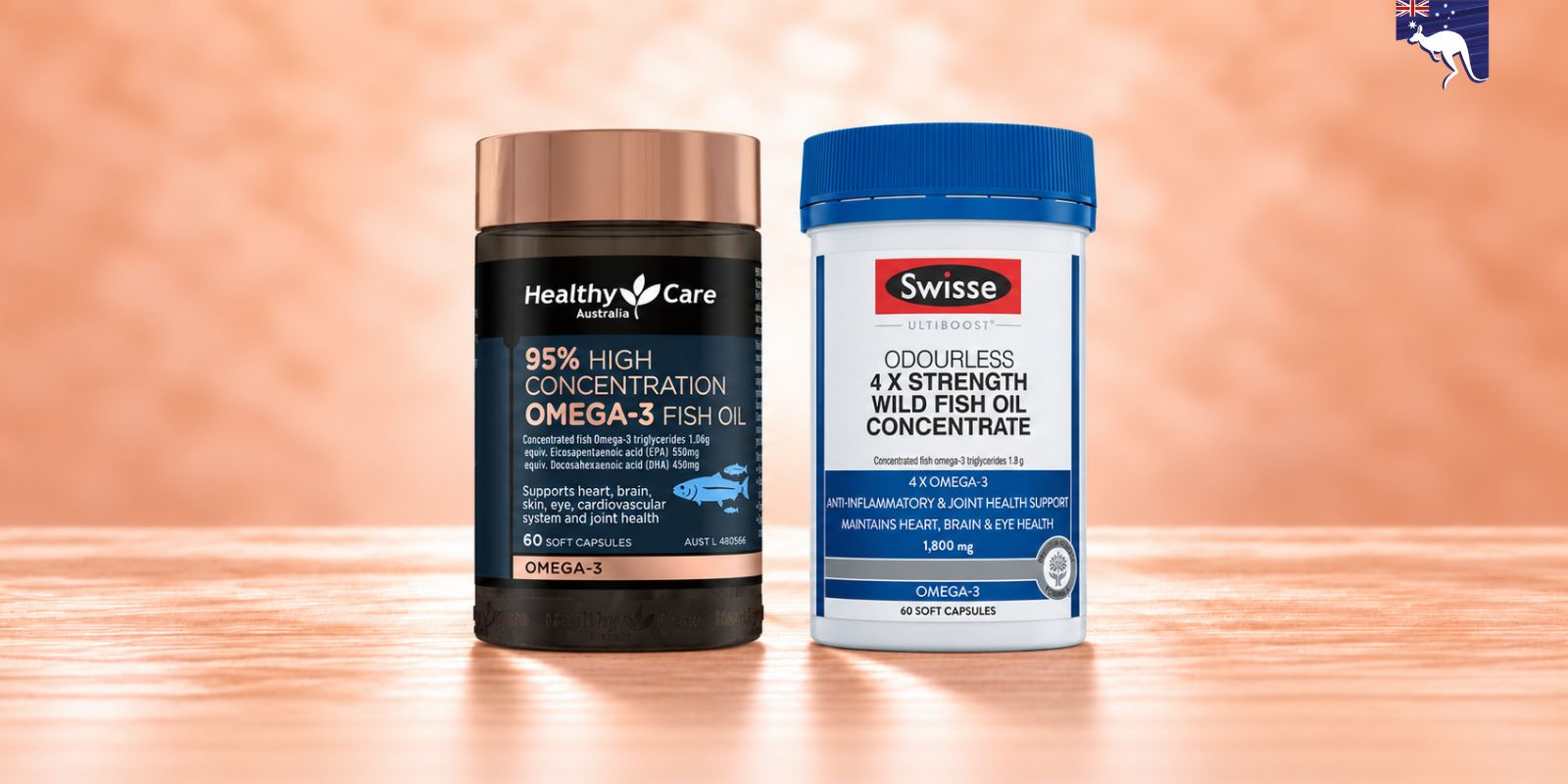
The verified Healthy Care Fish Oil 1000mg page instructs storage below 30°C in a dry place protected from heat and direct sunlight. That is a product-specific example, not a universal rule for every liquid or capsule. Check the manufacturer's directions. Swisse likewise directs customers to each product's label or page for storage guidance. Read its product FAQ.
- Choose a location that meets the stated conditions, away from cooking heat and direct sun.
- Keep the original container and close it after use so the instructions and batch details remain available.
- Follow any separate directions after opening a liquid product.
- Do not refrigerate automatically: first check whether the manufacturer instructs or permits it.
- Buy a pack size you can use within the stated dates and handling conditions.
If a parcel arrives very warm, record when it arrived and the visible condition, then contact the seller or manufacturer. You cannot calculate an acceptable heat exposure from the expiry date alone. Without temperature-and-time information and product stability data, a confident “it is fine” would be a guess.

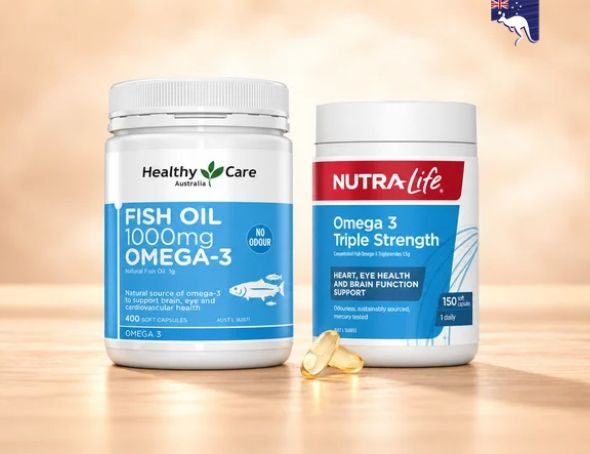
Healthy Care Fish Oil 1000mg Omega-3
Healthy Care Fish Oil 1000mg Omega-3 is an odourless fish oil supplement that provides essential Omega-3 fatty acids to support heart, brain, eye and joint health. It is a convenie...
What should make you pause?
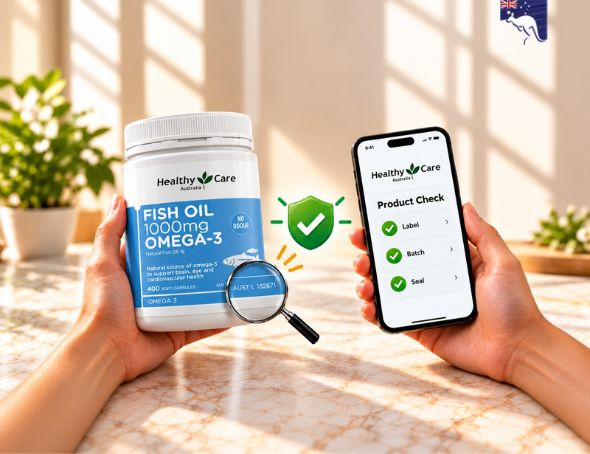
A leaking container, damaged seal or unexpected change deserves clarification before use. An absence of smell does not certify freshness, while a fishy aftertaste alone does not identify the source of a problem. Keep photos and the batch information available for investigation.
For suspected counterfeit packaging, use our original fish-oil checklist. For Australian regulatory categories, see our Australian fish-oil quality guide. This page focuses on what testing and storage can tell you about the oil itself.