Turmeric vs Curcumin Supplements: Strength, Absorption & How to Choose
Compare turmeric and curcumin extracts, plant-equivalent numbers, bioavailability systems, piperine and liver-safety cautions.
Turmeric and curcumin are often treated as synonyms, but supplement labels can mean very different things. Turmeric is the plant, Curcuma longa. Curcumin is one of the main curcuminoids found in turmeric. A turmeric powder, a concentrated curcumin extract and a high-bioavailability curcumin formula are not directly interchangeable.
What does the evidence say?
NCCIH says many studies have examined turmeric or curcumin, including for osteoarthritis and other conditions, but there is not enough high-quality evidence to definitively conclude benefit for most health uses. For knee osteoarthritis, some meta-analyses show promising effects on pain and function, but better-quality research is still needed.
Turmeric powder vs extract
A product may contain:
- turmeric powder
- turmeric extract
- curcuminoid-standardized extract
- a bioavailability-enhanced curcumin formulation
The front-label milligram number does not tell the whole story.
Curcuminoid standardisation
Look for whether the label states:
- total curcuminoids
- curcumin amount
- extract ratio
- branded delivery system
A 500 mg turmeric powder is not equivalent to 500 mg concentrated curcuminoids.
Piperine / black pepper
Some formulations add piperine to increase curcumin bioavailability. That can change absorption and also the interaction profile. Do not assume “more absorbed” automatically means “safer”.
Bioavailability-enhanced formulas
NCCIH specifically warns that highly bioavailable curcumin formulations have been linked to liver injury in some people. Do not assume that improved absorption removes safety concerns.
Liver-warning symptoms
Stop use and seek medical advice for:
- jaundice
- dark urine
- severe fatigue
- nausea
- poor appetite
- abdominal pain
Pregnancy
NCCIH notes turmeric supplements during pregnancy may be unsafe. Little is known about high-dose supplement use during breastfeeding.
Medicine interactions
Professional advice is important with:
- anticoagulants
- antiplatelet medicines
- multiple medicines
- liver disease
- gallbladder disease
How to compare products
Check:
- turmeric vs curcumin
- extract concentration
- curcuminoid amount
- piperine or delivery system
- daily serving
- warnings
- product purpose
Current catalogue examples show why headline numbers mislead
Nutra-Life
- Ultra Curcumin Turmeric 55,000+
- Bio-Curcumin Turmeric 16,500+
Swisse
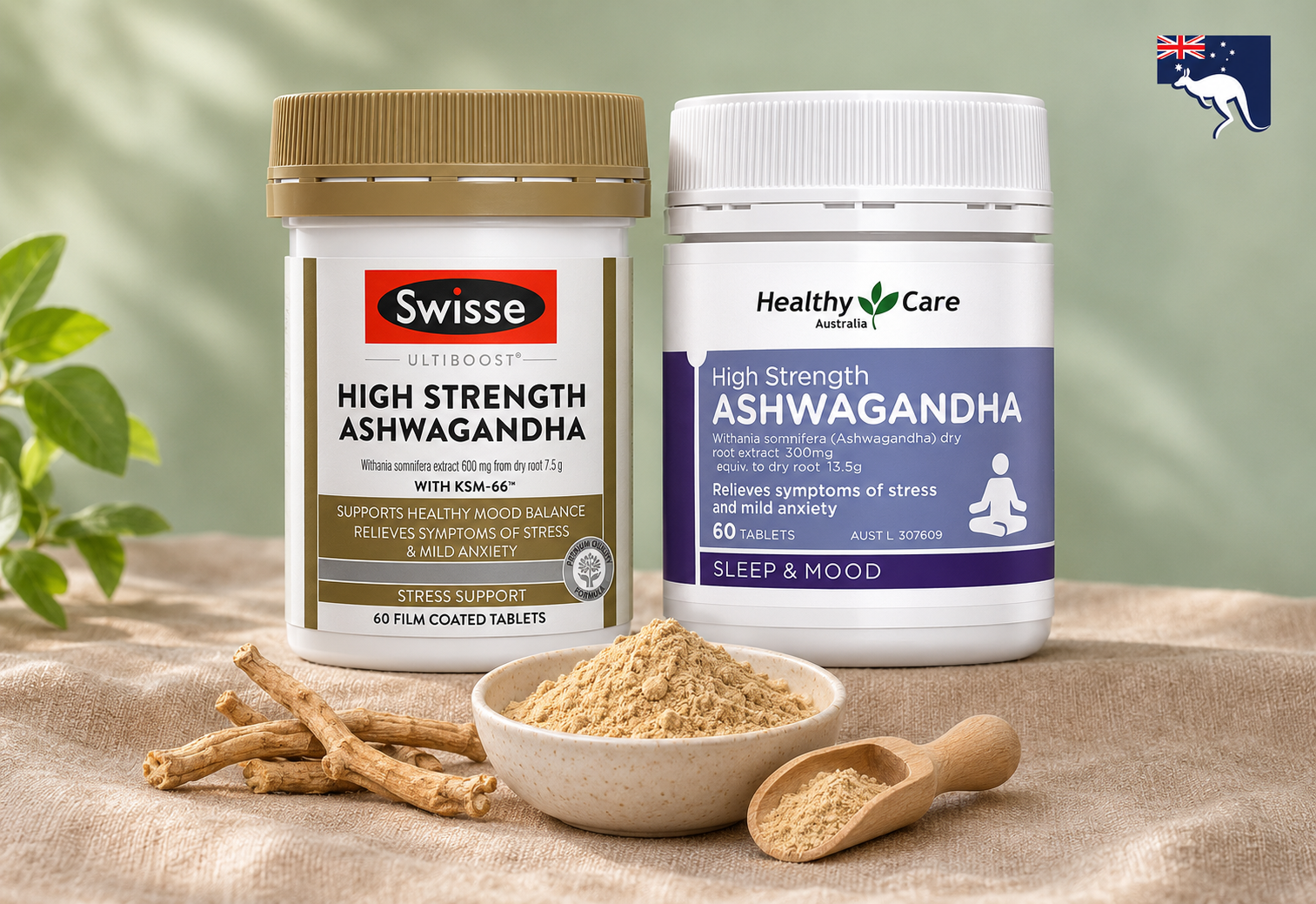
- Ultiboost High Strength Curcumin
Healthy Care
- Super Strength Bio Turmeric 3100
- High Strength Curcumin 600 mg
- Curcumin 1200 mg
These names use different conventions. A “55,000+” plant-equivalent style number cannot be compared directly with a 600 mg extract label.
Gallbladder, medicines and surgery
People with gallbladder disease, liver disease, anticoagulant/antiplatelet use or planned surgery should seek professional advice before high-dose turmeric/curcumin supplementation.
Product-label comparison template
For each turmeric/curcumin product record:
- extract amount
- turmeric/curcumin plant equivalent
- standardized curcuminoids
- piperine/black pepper
- branded absorption technology
- capsules/tablets per day
- liver warning
- pregnancy warning
What “bio turmeric” means on a label
Terms such as:
- Bio Turmeric
- Bio-Curcumin
- high absorption
- high strength
are product-positioning terms until the label specifies the actual extract and delivery system. Do not compare them by name alone.
Evidence should stay condition-specific
NCCIH’s most promising summary is around osteoarthritis-related pain/function, but it still calls for higher-quality evidence.
Do not generalize that into claims for:
- all inflammation
- all pain
- liver detox
- cancer prevention
Product labels to compare
The following catalogue pages are label-checking references, not a personalized recommendation or proof of treatment benefit. Verify the current pack, directions and warnings before choosing.
Frequently asked questions
Is curcumin stronger than turmeric?
Curcumin extracts are usually more concentrated in curcuminoids, but “stronger” does not mean better or safer.
Does turmeric help joint pain?
Some evidence is promising for osteoarthritis-related outcomes, but more high-quality evidence is needed.
Is black pepper necessary?
No. It is one method used to increase absorption, not a universal requirement.
Can high-absorption curcumin affect the liver?
Rare liver injury has been reported with some bioavailable products.
Does “55,000 mg equivalent” mean 55,000 mg curcumin?
No. A plant-equivalent number describes an amount of source plant material, not that amount of isolated curcumin.
Is turmeric powder the same as curcumin extract?
No. Whole turmeric powder and a concentrated extract can have very different curcuminoid amounts and delivery systems.
Is piperine always better?
No; it changes absorption and interaction considerations.
Bottom line
Compare turmeric products by formulation, not headline milligrams.
Related reading
Sources and label references
Manufacturer sources describe product ingredients and directions; they are not independent proof of clinical benefit. Formula details can change, so compare the current physical pack.
This guide provides general information, not a diagnosis or an individual treatment plan. Discuss pregnancy, children’s health, persistent symptoms, medicine interactions and supplement choices with an appropriately qualified healthcare professional.