Omega-3 for Memory and Concentration: Evidence and Limits
Forgetting a name and struggling with everyday tasks are different concerns. Explore what omega-3 research can tell us about adult memory, concentration and cognitive decline.
Quick Answer
DHA is part of normal brain structure, but that does not prove that extra fish oil improves memory or concentration. Large trials in older adults have not shown consistent cognitive benefit. Persistent or worsening memory problems deserve assessment rather than a self-selected high-dose supplement.
Key Takeaways
- A nutrient's role in the brain and a supplement's effect on memory are separate questions.
- Results from a particular age group or clinical condition do not apply automatically to every adult.
- Choose a supplement for a clear nutritional reason, with realistic expectations about focus.
You reread a paragraph and realise none of it stayed with you. After a demanding day, a product promising sharper focus can sound appealing. Before buying, it helps to separate tiredness, distracted attention and a developing memory problem.
Omega-3 for memory and concentration is a common search, but the evidence offers a more measured answer than many product claims. This guide focuses on adults; children's development has its own evidence and belongs in our DHA guide for parents.
Why is DHA associated with brain health?
The NIH omega-3 fact sheet describes DHA as an important component of cell membranes, with particularly high concentrations in the brain. EPA and DHA are therefore relevant nutrients.
That biological role establishes a reason to study them. Whether an additional capsule improves recall, attention or everyday functioning must be tested separately. A bottle can contain a genuine ingredient without delivering the particular improvement a customer hopes for.
What have clinical trials found?
| Research question | Finding | Practical meaning |
|---|---|---|
| Can supplementation protect cognition in generally healthy older adults? | The VITAL cognitive studies found no significant overall cognitive benefit over two to three years. | Do not promise routine memory protection. |
| Can DHA treat established Alzheimer's disease? | A large trial in mild to moderate disease did not slow cognitive or functional decline. | Fish oil should not replace dementia care. |
| Can some younger adults improve on cognitive tests? | Individual trials have reported benefits on particular outcomes. | Findings require context and do not establish a universal focus supplement. |
The VITAL cognitive analysis included more than 4,000 older adults across two substudies. Its overall result is more informative for routine older-adult supplementation than a striking claim based on one small test or subgroup.
In the Alzheimer's Disease Cooperative Study trial, DHA did not slow decline in people with mild to moderate Alzheimer's disease. That finding does not mean nutrition is irrelevant; it means this intervention did not deliver the treatment benefit being tested.
A 2021 trial in healthy young adults reported improvements with an EPA-rich preparation on some cognitive measures. It illustrates why the whole literature cannot be reduced to “always works” or “never works.” The formulation, participants, comparison group and outcome all affect interpretation.
Can omega-3 help students or busy professionals focus?
There is no established universal fish-oil dose that reliably improves exam performance, work productivity or concentration. Taking extra capsules before an examination or presentation is not an evidence-based shortcut.
A useful first step is to describe the difficulty precisely. Are you forgetting information after learning it, struggling to pay attention while reading, or feeling sleepy throughout the day? Write down when it happens and whether sleep, stress or a medicine change coincided with it. That record is more useful than simply asking for a stronger “brain supplement.”
For a student in Dhaka or a professional working shifts, the most workable plan may begin with the routine itself. Schedule demanding tasks when you are more alert, reduce interruptions and give learning sessions a clear purpose. These organisational choices do not diagnose or treat a medical condition, but they make the problem easier to understand.
When forgetfulness deserves a medical assessment
The National Institute on Aging distinguishes occasional lapses from changes that disrupt everyday life. Repeated questions, getting lost in familiar places or difficulty following ordinary directions should prompt a medical conversation.
Bring examples and a list of medicines. A family member may help describe changes that are difficult to notice yourself. Sleep problems, mood, health conditions and medicines can all belong in the assessment. Do not assume a new difficulty means low omega-3 or simply normal ageing.
Sudden confusion or an abrupt neurological change needs urgent medical assessment. For ongoing concerns, arrange an appointment instead of waiting for a supplement trial to end.
Choosing a product with realistic expectations
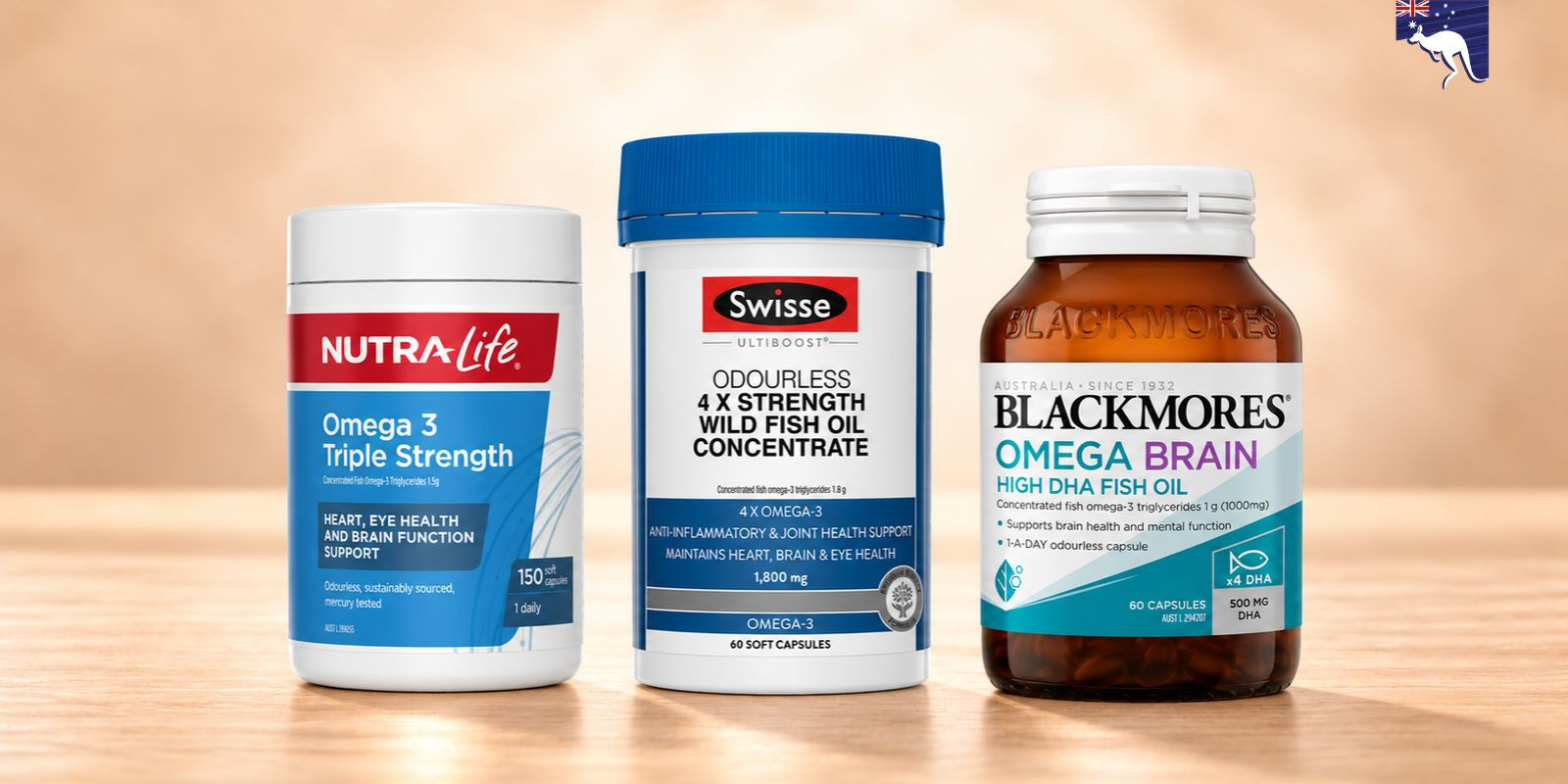
If supplementation is appropriate for your dietary intake, check EPA and DHA separately, the serving size, allergens and age suitability. “Brain,” “memory” and “high strength” on a pack do not identify a clinically proven cognitive outcome.
For a vegetarian diet, an algal product may provide direct DHA; read whether it also contains EPA. A flaxseed-oil product supplies a different omega-3 profile. Our EPA versus DHA guide explains the distinction.
Use the product links to examine those facts, rather than selecting the bottle with the strongest memory promise. If you take regular medicines or have a medical condition, ask a pharmacist to review the exact pack before adding it.

Healthy Care 95% High Concentration Omega-3 Fish Oil
Healthy Care 95% High Concentration Omega-3 Fish Oil is a high-potency fish oil supplement designed to support heart health, brain function, and healthy vision. Its concentrated fo...
What would a worthwhile result look like?
Decide what you are actually trying to improve: dietary consistency, tolerability of a prescribed routine, or a symptom that needs assessment. Avoid judging a product from a single unusually productive day. Expectations, workload and sleep can change how a day feels.
If a clinician recommends supplementation, agree on the purpose and when to review it. Continuing indefinitely because the bottle mentions brain health is a poor substitute for a clear reason to use it.