EPA vs DHA – Which Omega-3 Do You Actually Need?
EPA and DHA are two omega-3 fatty acids, not competing quality grades. Their roles overlap, while research findings depend on the formulation and outcome studied. Learn how to read their separate amounts and avoid choosing a supplement from a ratio or a simplified health slogan.
Quick Answer
Choose by your purpose and the actual EPA and DHA amounts, not by assuming one fatty acid is universally better. DHA has important structural roles, while specific EPA and EPA/DHA medicines have been studied for clinical uses. A label ratio alone cannot establish the right product or dose for you.
Key Takeaways
- The same EPA:DHA ratio can describe very different amounts, so calculate both the individual quantities and their sum.
- DHA's presence in brain tissue does not prove that a DHA supplement improves memory or prevents dementia.
- Evidence for a particular prescription formulation cannot automatically be applied to an ordinary fish-oil capsule with a similar-looking ratio.
One bottle highlights EPA, another promotes DHA, and both claim to support several parts of the body. The choice can look like a contest with a single winner. It is more useful to ask what each bottle contains and why you are considering it.
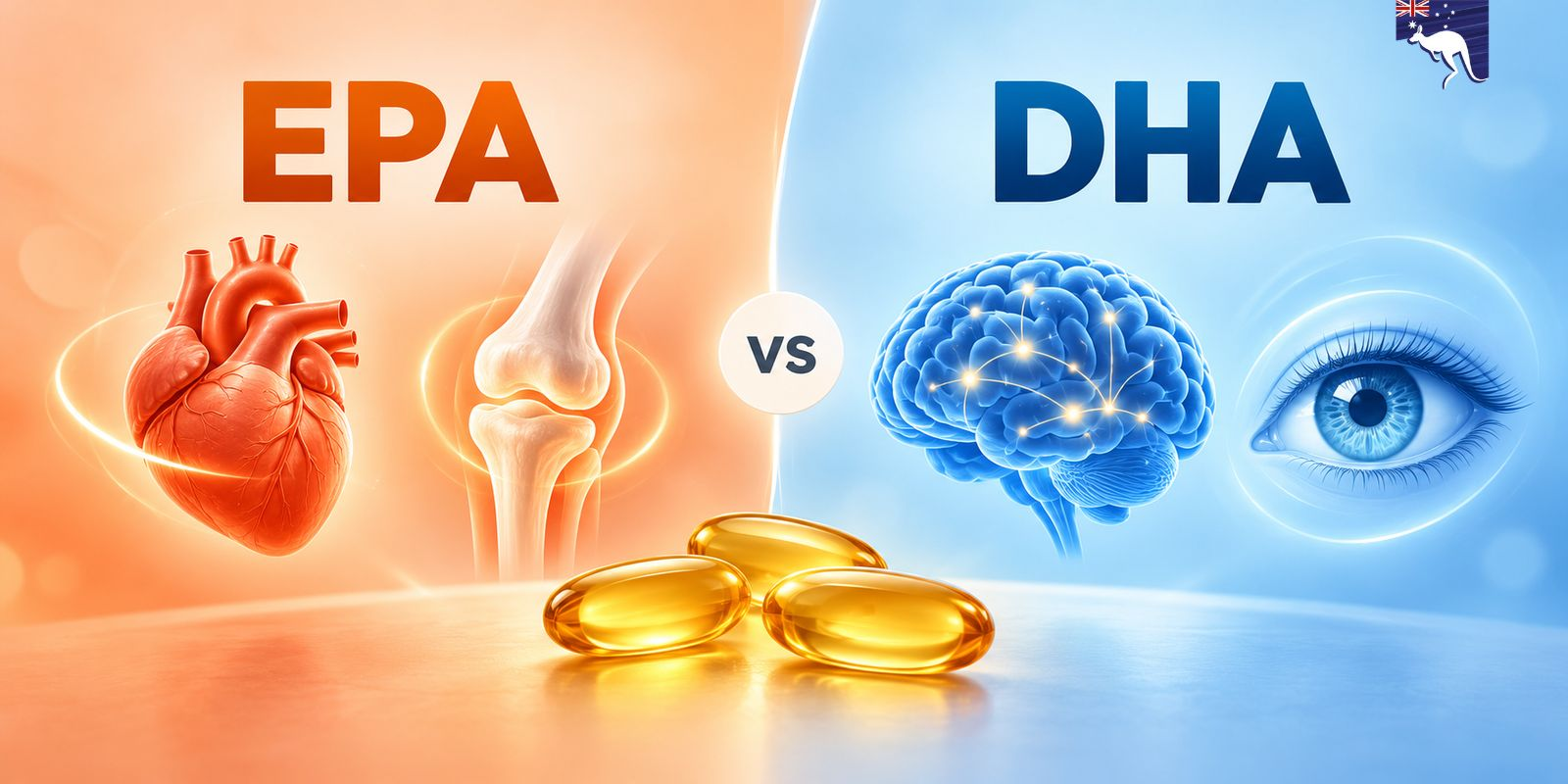
What are EPA and DHA?
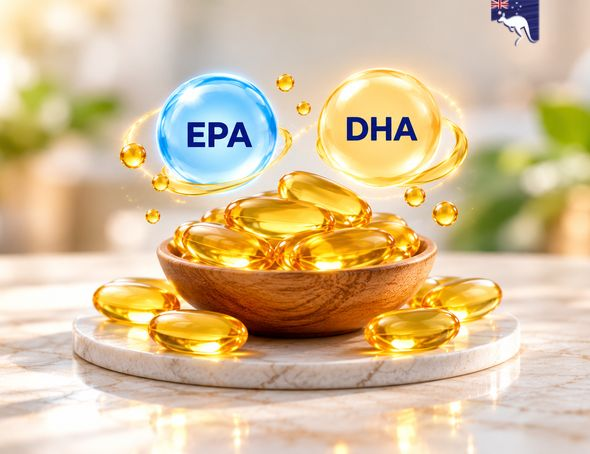
EPA means eicosapentaenoic acid; DHA means docosahexaenoic acid. Both are long-chain omega-3 fats found in seafood. Omega-3s contribute to cell membranes, and DHA is particularly concentrated in the brain and retina. These biological roles explain research interest, but they do not automatically establish a treatment benefit from taking extra capsules. NIH explains the main omega-3 types.
Descriptions such as “EPA for the heart, DHA for the brain” can help people remember the names, but they are too simple to make a clinical or purchasing decision. A product's evidence must match the outcome being claimed.
A ratio tells you proportion, not strength
EPA:DHA expresses the relative amounts of the two fats. A 3:2 ratio means three parts EPA for every two parts DHA. It says nothing about how large those parts are.
| Illustrative label | EPA + DHA per capsule | EPA:DHA ratio |
|---|---|---|
| 180 mg EPA and 120 mg DHA | 300 mg | 3:2 |
| 360 mg EPA and 240 mg DHA | 600 mg | 3:2 |
| 180 mg EPA and 360 mg DHA | 540 mg | 1:2 |
These are arithmetic examples, not product recommendations or suggested doses. The first two have the same ratio, but the second supplies twice the amount per capsule. The third has a different balance. None of those facts, on its own, proves that one is the right choice.
Also check whether the panel describes one capsule or a serving of several capsules. US Supplement Facts panels identify serving size and ingredient amounts per serving; imported products may use other layouts, so read the stated basis carefully. The FDA explains supplement-label information.
For triglycerides, the formulation matters
The American Heart Association's advisory distinguishes prescription omega-3 treatment from dietary supplements. It describes clinical use of prescription formulations for elevated triglycerides; that is not an invitation to reproduce treatment by buying enough retail capsules. Read the AHA advisory summary.
Evidence can concern triglyceride reduction, cardiovascular events or another outcome. Those are different questions. A medicine's EPA content does not make every EPA-heavy supplement equivalent, and a benefit in selected patients does not establish a need for everyone.
If a clinician has prescribed a specific formulation, keep its exact name and directions. Ask the prescriber or pharmacist before substituting another product. Our guide to triglycerides and cholesterol explains the distinction between those laboratory measures.
For brain and eye claims, look beyond the ingredient's role
DHA's normal biological role does not establish that extra supplementation improves a symptom. For learning, memory or an eye condition, check the participant group, formulation and outcome in the supporting study. Do not treat a healthy adult, a child and someone with a diagnosed condition as interchangeable. Our memory and concentration article explores adult cognitive questions separately.
Where does plant omega-3 fit?
ALA is another omega-3, found in foods such as flaxseed and walnuts. The body can convert some ALA to EPA and DHA, but the conversion is limited. An ALA amount therefore should not be entered into an EPA+DHA comparison as though it were already either of those fats. Algal oil offers a non-fish source of long-chain omega-3; check which ones the actual product provides. See NIH's explanation of sources.
This matters when comparing a fish oil, a plant-oil blend and an algae product in Bangladesh. The total oil weights may look similar while describing different ingredients. The plant-based omega-3 comparison covers that question in depth.

Swisse Ultiboost Odourless High Strength Wild Fish Oil
Swisse Ultiboost Odourless High Strength Wild Fish Oil is a premium Omega-3 supplement that supports heart health, brain function, healthy vision, and nervous system health. Its hi...
A practical way to compare two bottles
- Write the purpose at the top: dietary supplementation or a specific clinician-directed treatment.
- Copy EPA and DHA separately, with the serving size beside them.
- Add EPA and DHA, then calculate the ratio only if that detail is relevant to the question.
- Check other ingredients, warnings and whether a cited study used the same kind of formulation.
- Compare price and convenience only after determining that the options are appropriate.
A clear comparison should let you explain why the product is being considered without repeating the words “strongest” or “best ratio.” If the reason remains uncertain, use the label as the starting point for a pharmacist discussion. For the broader shopping process, see how to choose the right omega-3 supplement.