Omega-3 for Kids in Bangladesh: Compare Formats and Labels
A colourful pack cannot tell you whether an omega-3 product fits your child. This guide helps parents compare formats, age directions, active amounts and practical costs without confusing a supplement with a learning guarantee.
Quick Answer
The best omega-3 for kids in Bangladesh is a product that fits the child’s age, dietary needs and ability to take it safely. Compare the actual DHA and EPA per labelled serving, ingredients, directions and price per serving. Ask a paediatrician about need and suitability before using a supplement for a child.
Key Takeaways
- “Kids” on the front does not replace the age range and directions on the back.
- Compare milligrams of DHA and EPA per serving; percentages and total fish-oil weight can mislead.
- A manageable format and a clear reason for use matter more than a promise of better school results.
The bottle your child will happily take may not be the bottle that answers your nutritional question. A sweet flavour can make a product easier to offer, but it says little about how much DHA it contains or whether the directions fit your child's age.
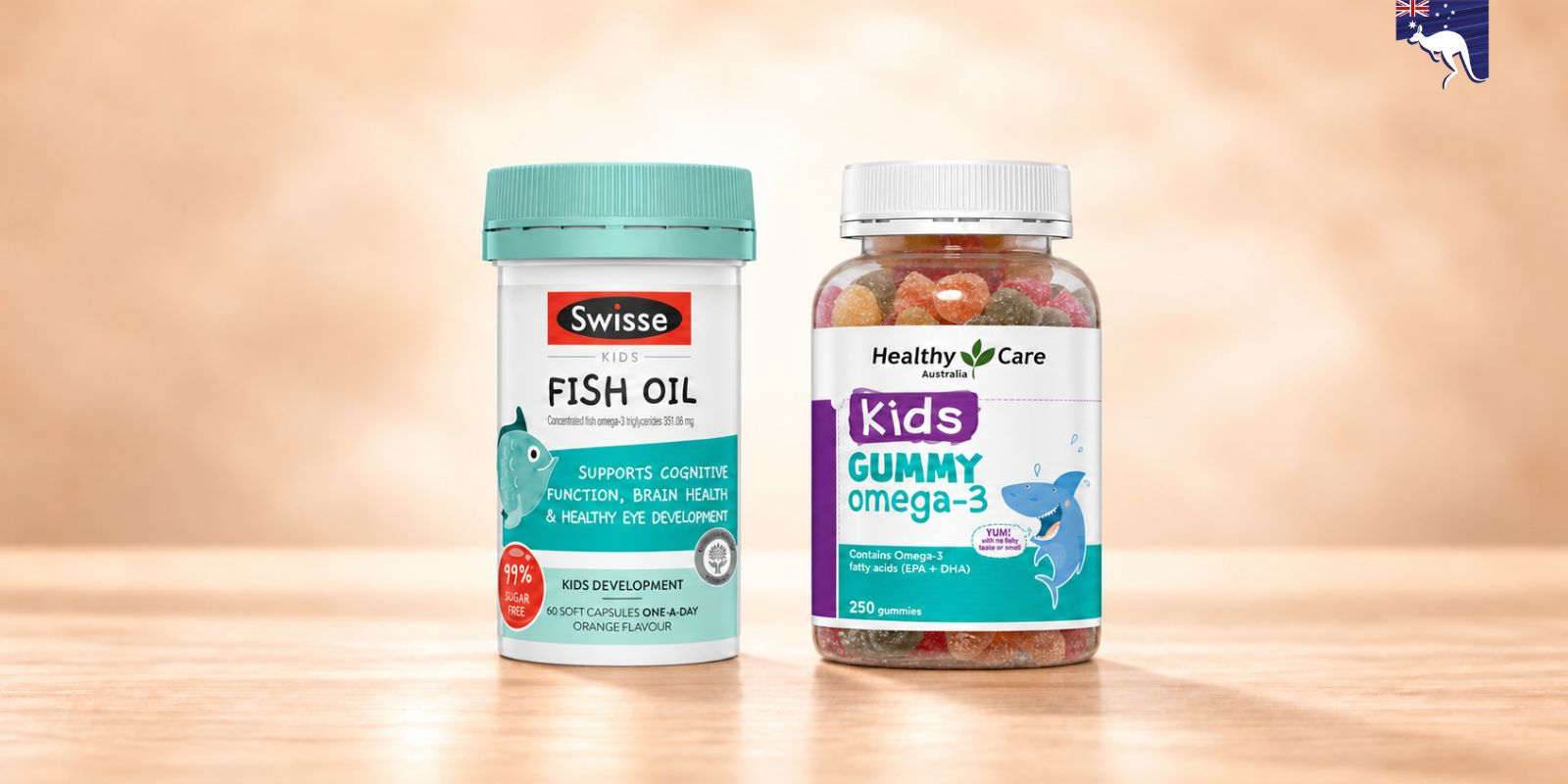
For parents comparing omega-3 for kids in Bangladesh, the useful starting point is a short list: the child's age, usual fish intake, allergies, medicines and the reason you are considering supplementation. With those details in hand, choosing between liquids, chewables and capsules becomes much more straightforward.
Begin with the child's diet and the reason for buying
A child who rarely eats fish presents a different question from a child who eats a varied diet but is struggling with reading. The first deserves a nutrition discussion. The second may need a learning or health assessment; buying a supplement should not delay it.
The FDA/EPA fish guidance encourages children to eat age-appropriate portions of lower-mercury fish as part of a varied diet. Fish also supplies nutrients beyond omega-3. The guidance is from the United States; it should not be treated as a complete safety list for every local fish species sold in Bangladesh.
If your child avoids fish because of taste, feeding difficulty, allergy or a vegetarian diet, explain which reason applies when seeking advice. It affects the options worth considering. A supplement may be part of a plan, but the plan should address the actual dietary gap.
Liquids, chewables, gummies and capsules: what changes?
| Format | Practical advantage to consider | What to check |
|---|---|---|
| Liquid oil | A measured portion may suit a child who cannot take capsules. | Age directions, measuring device, amount per mL, storage after opening and permitted mixing instructions. |
| Chewable capsule | Can fit a child who can use that format safely. | Whether it is meant to be chewed, swallowed or opened; the specified age range and adult supervision instructions. |
| Gummy | Texture and flavour may be acceptable to some children. | Actual EPA/DHA, serving count, sugars or sweeteners, gelatin and allergy information. |
| Swallowable capsule | A convenient option for an older child when the label permits it. | Swallowing ability, capsule size and the child's directions—not an adult dose divided by guesswork. |
No format wins automatically. A liquid that is repeatedly measured incorrectly is not a practical choice. Neither is a capsule that causes a struggle at every dose. Use only the method the manufacturer permits, and ask a pharmacist before opening a capsule or mixing an oil into food.
Read DHA and EPA per serving
Find the amounts beside the words DHA and EPA. Then read the serving size. “Per capsule” and “per two capsules” can make similar-looking labels deliver different amounts. For a liquid, confirm whether the figures are per mL or per measured spoonful.
The NIH omega-3 fact sheet notes that established US intake values beyond infancy refer to ALA; it does not provide a universal EPA+DHA supplement dose for all children. A number copied from an adult guide is therefore not an appropriate shortcut.
A “high DHA percentage” is also incomplete without the amount of oil and the serving size. Compare the declared milligrams first. If the listing only shows the front of the bottle, ask for a clear photograph of the ingredient panel and age directions before ordering.
Three children's products: compare the declared amounts
These examples use Swisse's 60-capsule information and Healthy Care's DHA and gummy pages, checked on 29 October 2026. Match the supplied pack before use.
| Product | Declared amount per unit | Important distinction |
|---|---|---|
| Swisse Kids Fish Oil | DHA 165 mg + EPA 35.11 mg per capsule. | Age-specific administration; the referenced label says not to swallow whole. |
| Healthy Care Kids High Strength DHA | DHA 100 mg per capsule, from algal oil. | Serving varies by age; contains soya bean products and sulfites. |
| Healthy Care Kids Gummy Omega-3 | EPA and DHA amounts are not stated on the reviewed manufacturer page. | Request the supplied panel before comparing strength; contains fish and sulphites. |
This is a label comparison, not a ranking for every child. An undisclosed amount must remain unknown rather than being guessed from the product name.
Check the ingredients beyond omega-3
Review the oil source, capsule shell, flavourings, sweeteners and any added vitamins. If your child already takes a multivitamin, bring both labels to the pharmacist so overlaps can be checked. Cod liver oil is a separate comparison because it can include vitamins A and D; do not treat it as an interchangeable fish-oil product.
For a child with a known fish or seafood allergy, seek individual advice rather than relying on “purified” or “odourless” wording. For halal requirements, check the exact product and relevant certification, including the capsule ingredients. An Australian brand name alone does not answer either question.
Compare the real cost for your family
Use the current price in taka divided by the number of age-appropriate labelled servings in the pack. Keep the DHA/EPA amount beside that price so you can see what each serving provides. Add delivery costs if they change the comparison.
For liquids, ask how long the opened bottle can be used and how it must be stored. A large bottle offers little saving if your household cannot use it within its stated period after opening. Compare the available pack size, rather than assuming an overseas listing describes the same product supplied locally.
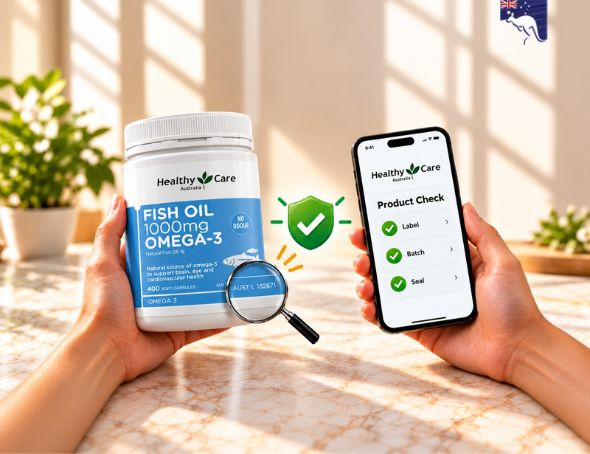
Before payment, confirm the pack, batch and expiry information using our fish-oil authenticity checklist.
Keep the routine safe and simple
NCCIH advises involving a child's healthcare provider when considering supplements. Many have not been adequately tested in children, and interactions or unwanted effects are possible. Omega-3 products can cause digestive discomfort, including burping or diarrhoea.
Keep the bottle out of children's reach, even if the product resembles sweets. Let one responsible adult manage the routine, or keep a simple record when several family members help. This avoids a parent and grandparent both giving the same serving.
Follow the printed storage instructions, especially during hot weather or travel. Do not leave the pack in a sunny car or beside a cooker. If the product is damaged, leaking or appears abnormal, pause use and contact the seller or manufacturer.

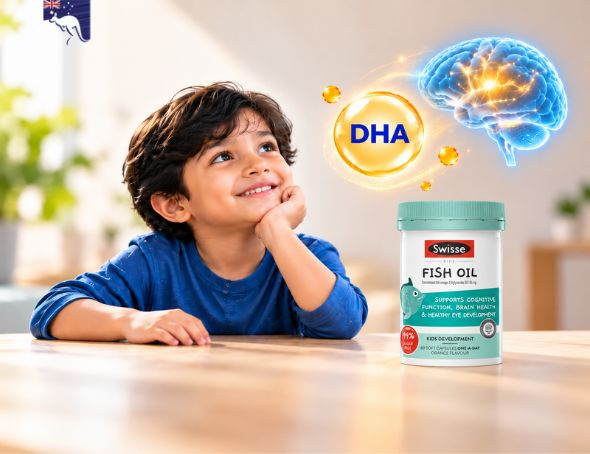
Swisse Kids Fish Oil
Swisse Kids Fish Oil is a children's Omega-3 supplement designed to support healthy growth and development, brain function, and eye health. Made with sustainably sourced fish oil,...
Choose with realistic expectations
When a product promises focus, memory or school success, separate the sales wording from the evidence. DHA's role in the body does not establish that every child will learn faster after taking it. Our DHA and children's learning guide examines that question separately.
Use the related product cards to inspect labels and compare suitable formats. The most useful purchase is one made for a clear reason, with directions your family can follow and a plan to review whether supplementation is still needed.