Fish Oil vs Krill Oil vs Algal Omega-3: Key Differences
The source of an omega-3 supplement matters, but it is only the beginning of a fair comparison. Learn how to compare the active ingredients, capsule requirements and evidence before paying more for a different oil.
Quick Answer
Fish oil and krill oil supply EPA and DHA; algal oil supplies DHA and, in some products, EPA. There is no universal winner. Compare the labelled EPA+DHA amount, dietary and allergy requirements, daily capsule count and cost. A claim of better absorption does not by itself prove better health results.
Key Takeaways
- Compare EPA and DHA per serving, rather than equal weights of three different oils.
- An algal source can suit a vegan preference, but the capsule and other ingredients still need checking.
- A premium price or an absorption claim needs product-specific evidence to justify it.
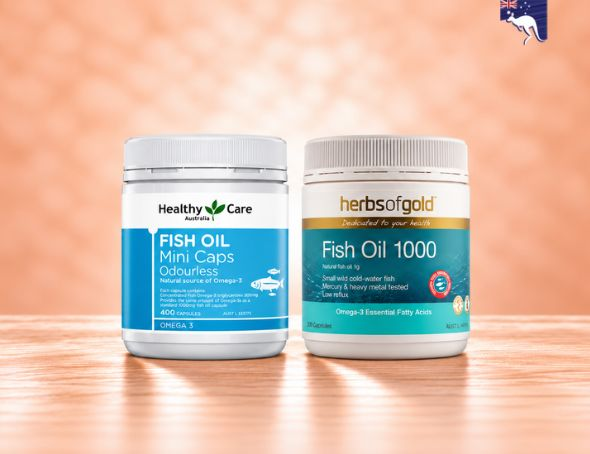
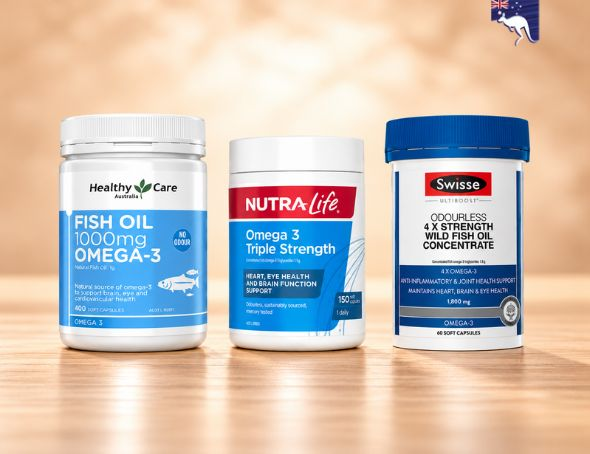
Three bottles can all say “omega-3” while offering three different answers to your needs. One may fit a vegetarian diet. Another may provide the amount you are looking for in fewer capsules. A third may cost less per useful serving, despite having a higher bottle price.
When comparing fish oil vs krill oil in Bangladesh, add algal omega-3 to the discussion if avoiding animal-derived oil matters to you. Then turn each bottle around. The small print usually tells you more than the front-label promise.
What is different about the three sources?
NCCIH distinguishes the main supplement sources: fish oil provides EPA and DHA, krill oil carries omega-3s in phospholipids, and algal oil is a vegetarian source of DHA, with EPA included in some formulations. Flaxseed oil is different again: its main omega-3 is ALA.
| Source | What to compare | A useful question before buying |
|---|---|---|
| Fish oil | Separate EPA and DHA amounts, serving size and oil form if specified. | Does the actual formulation meet my requirements at a workable capsule count? |
| Krill oil | EPA+DHA, capsule count and any additional ingredients promoted on the label. | What evidence supports the particular benefit for which I would pay extra? |
| Algal oil | DHA alone versus a combination of EPA and DHA; capsule ingredients. | Does the whole product fit my dietary preference, rather than only the oil? |
These are categories, not fixed recipes. A comparison between one fish-oil bottle and one krill-oil bottle cannot establish that every product from either source is better. The same brand may sell several strengths and pack sizes.
Start with EPA+DHA, not “1,000 mg oil”
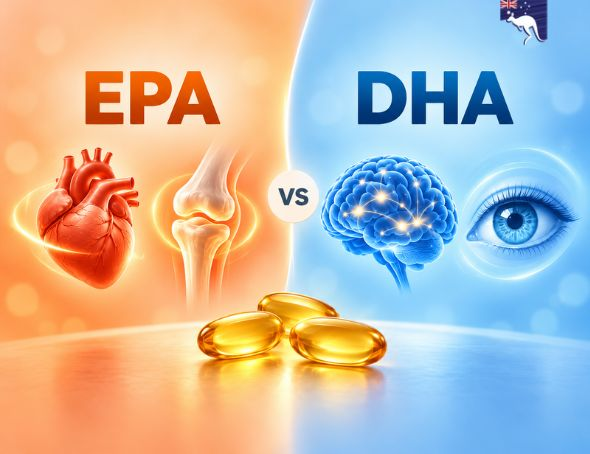
Total oil weight and the amount of EPA plus DHA are different label figures. Look for both active ingredients and check whether the amounts refer to one capsule or the full serving. If you need help with the names, our EPA and DHA guide explains the distinction.
Here is a hypothetical comparison, included only to show the arithmetic. It does not describe a particular brand or recommend a daily dose.
| Example label | EPA per capsule | DHA per capsule | Combined amount |
|---|---|---|---|
| Product A | 180 mg | 120 mg | 300 mg |
| Product B | 120 mg | 80 mg | 200 mg |
| Product C | Not listed | 250 mg | 250 mg of declared DHA; EPA unconfirmed |
Do not silently assume that an unlisted ingredient is present. Equally, do not reject a DHA-focused product simply because it has little or no EPA: the relevant question is what you are trying to obtain and why. A clinician's recommendation for a particular formulation should not be replaced by matching a front-label number.
Is krill oil absorbed better than fish oil?
Research has produced different findings. In a four-week randomised trial involving 66 adults, fish-oil and krill-oil products produced similar blood EPA+DHA levels when the active amounts were matched. That is a useful reminder to compare equivalent amounts, but it does not settle every formulation or every outcome.
A separate small crossover study involving 15 participants found a higher short-term response on its main blood measurement after krill oil. The researchers called for longer-term work. An increase in a blood marker over hours or weeks is a different result from preventing illness or improving symptoms.
For a buyer, the practical response is to ask three questions: Was the exact product studied? Were EPA and DHA amounts comparable? Did the study measure a result that matters to my reason for taking it? “Better absorbed” is incomplete information without those details.
When algal omega-3 may be the practical choice
Someone avoiding fish-derived products may prefer an algal source. Check the ingredient list for the capsule shell, flavourings and other additions as well as the oil. A vegetarian oil inside an unsuitable capsule would not meet that buyer's requirements.
Dietary preference and allergy are separate questions. If you have a fish or shellfish allergy, do not treat an oil-source description or a purification claim as personalised clearance. Ask a pharmacist or allergist to review the complete label and any manufacturer allergen statement before use.
For halal requirements, verify the exact finished product and current certification rather than assuming that a marine source settles the question. Keep that check separate from vegan suitability: the two labels address different requirements.
Compare cost on the same basis
Begin with the delivered price in taka, including any delivery charge that affects your order. Divide it by the number of servings you would actually obtain under the applicable directions. Record the EPA and DHA supplied by that serving alongside the cost.
A larger bottle can look economical until you discover that its stated serving uses more capsules. A smaller bottle may also be poor value if you pay for an ingredient or formulation you do not need. The goal is a transparent comparison, not the cheapest capsule regardless of suitability.
Use our fish-oil value guide for the calculation. Recheck prices on the product page before ordering; a static article cannot guarantee that an earlier price or promotion remains available.
The linked products illustrate different oil sources. The children’s algal-DHA formula has its own age directions and is not an adult serving recommendation.

Healthy Care Wild Krill Oil 1000mg
Healthy Care Wild Krill Oil 1000mg is a marine oil supplement designed to support joint mobility, cardiovascular health and general wellbeing. It also provides naturally occurring...
Make the final decision with the actual pack
- Define the purpose. Write down whether you are comparing dietary options or following a specific clinical recommendation.
- Confirm the formulation. Match the full name, EPA/DHA amounts and serving size, not just the brand.
- Check suitability. Review allergies, medicines, life stage and dietary requirements.
- Assess daily use. Consider capsule size, instructions, taste and the number needed under the label directions.
- Check the available bottle. Confirm batch details, expiry, packaging condition and storage instructions with the seller.
In Bangladesh's warmer weather, the storage directions deserve attention before delivery. Ask how to handle the product when it arrives and where it should be kept after opening. Do not assume every liquid or capsule needs the same refrigeration routine.
Compare the related product labels on this page with that checklist. Choose the formulation you can explain clearly: what it contains, why it fits, how you will use it and what it costs. That is a stronger purchase decision than choosing an oil because its name sounds more advanced.