Lutein Benefits for Eye Health: Who May Need It?
Lutein is a pigment found in food and concentrated in the eye. This guide explains its role, where supplements have meaningful evidence, and how to choose sensibly without confusing everyday eye nutrition with treatment for an eye disease.
Quick Answer
Lutein helps form the pigment in the macula, the part of the retina used for detailed central vision. Its clearest clinical role is within an AREDS2 supplement formula for certain people with age-related macular degeneration. Healthy adults can obtain lutein from foods such as spinach and egg yolks; taking a supplement is not a proven way to prevent all eye disease.
Key Takeaways
- Lutein supports normal eye nutrition, but a supplement cannot replace an eye examination.
- AREDS2 evidence concerns a specific combination for selected AMD patients, not every lutein product.
- Start with varied meals; compare the actual daily amounts and all ingredients before buying.
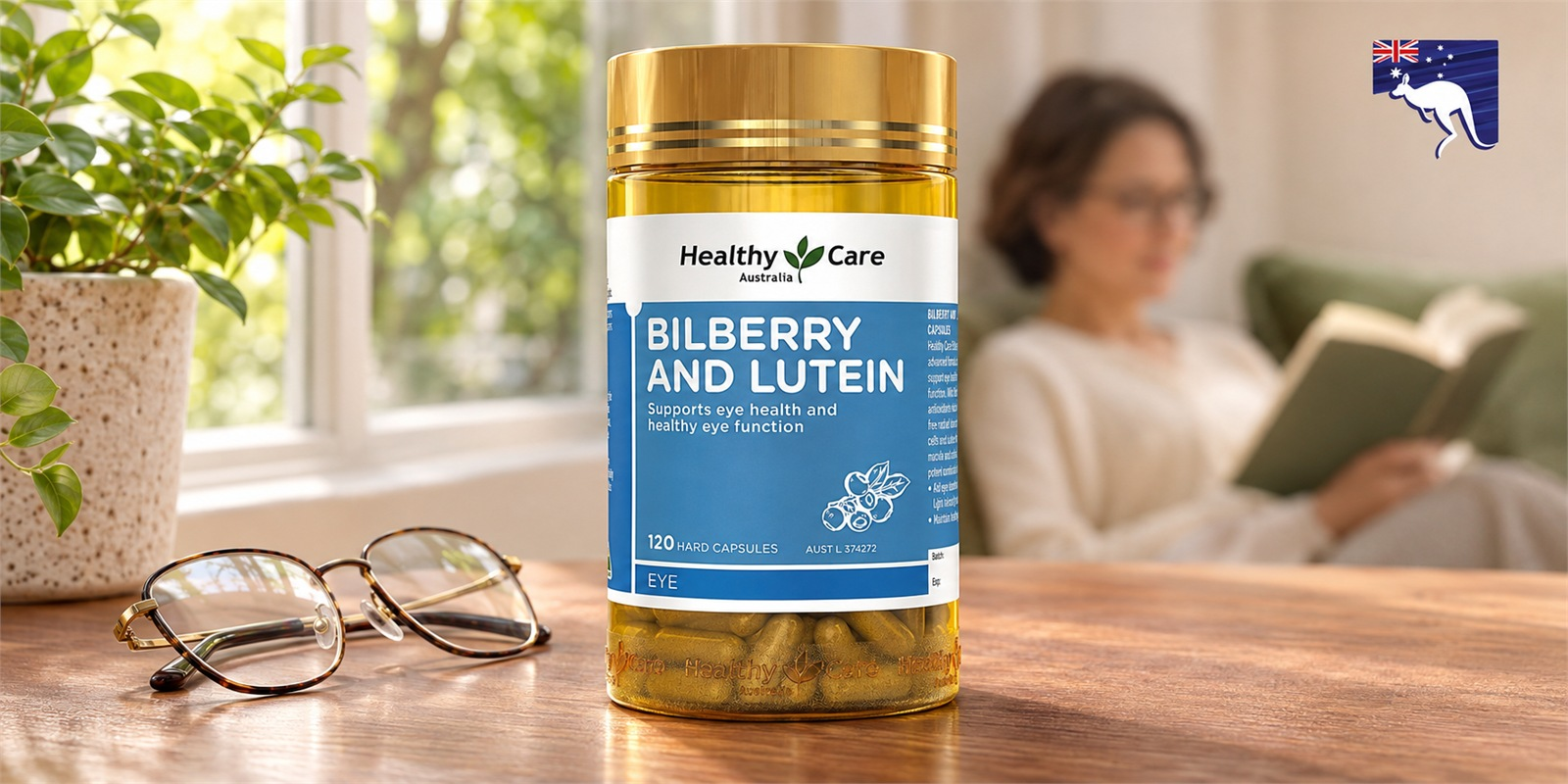
You finish an evening of work, look up from your phone, and notice that your eyes feel tired. An eye-health supplement sounds like an easy next step. But before choosing one, it helps to separate three different things: nourishing healthy eyes, managing screen discomfort, and treating an eye condition.
Lutein benefits are often discussed as though these are the same problem. They are not. Lutein is worth understanding, particularly if an eye specialist has mentioned macular degeneration, but the reason you take it matters more than the promise on the front of a bottle.
What lutein does in the macula
Lutein is a carotenoid, a naturally occurring pigment supplied by food. It is found alongside a related pigment, zeaxanthin, in the retina and lens. Together they contribute to the macular pigment involved in filtering light. This biological role explains why researchers study lutein for eye health; it does not mean that swallowing more will automatically sharpen your sight.
Lutein is also different from vitamin A. Although both appear in eye-health discussions, lutein is not converted into vitamin A. A product containing lutein should therefore never be used as a substitute for assessment or treatment of vitamin A deficiency. The National Eye Institute's AREDS guidance explains these distinctions.
Lutein benefits in context: what AREDS2 found
The best-known research concerns age-related macular degeneration, or AMD. This affects central vision, which is needed for recognising faces, reading and seeing fine detail. In the AREDS studies, a particular combination of nutrients reduced progression to advanced AMD in people at higher risk. The modern AREDS2 formula includes lutein and zeaxanthin together with vitamins C and E, zinc and copper.
This is evidence for a specific clinical situation and formulation. It is not evidence that any capsule labelled “eye health” prevents AMD, restores lost vision or treats cataracts. The NEI trial overview reports that AREDS/AREDS2 supplements do not prevent AMD from starting.
If your doctor recommends AREDS2, ask for the formula in writing or photograph the recommended label. A lutein-only capsule, a bilberry combination and a complete AREDS2 product may sit beside each other on a shelf, yet they are not interchangeable.
Who might be offered an AREDS2 formula?
| Your situation | A useful next step |
|---|---|
| Intermediate AMD, or advanced AMD in one eye | Ask whether an AREDS2 formula is appropriate for your other eye and current treatment plan. |
| No diagnosed eye disease, but few vegetables in your diet | Review everyday food choices first; discuss a supplement if improving intake is difficult. |
| Tired eyes after screen work | Check breaks, lighting, glasses and possible dry-eye symptoms before assuming a nutrient problem. |
| New blur, distortion or trouble seeing in dim light | Arrange an eye assessment instead of trying supplements to identify the cause. |
The NEI patient guide to AREDS2 makes eligibility dependent on the stage of AMD. Age alone, family history alone or spending long hours at a computer does not establish a need for this high-dose combination.
Screen strain: start with why your eyes feel tired
Claims about “blue-light protection” can make a nutrient sound like a shield against every hour spent online. Lutein's role in the eye does not establish that a supplement prevents screen-related damage or solves the many causes of discomfort. Small studies of visual performance are not a reason to promise that your headaches or blur will disappear.
For everyday screen fatigue, make changes you can assess: enlarge small text, reduce glare, avoid holding a phone very close, and take regular distance-viewing breaks. Notice whether discomfort follows long uninterrupted sessions or occurs even on days away from screens. That pattern is useful information for an optometrist or ophthalmologist.
Persistent symptoms deserve a check for dry eye, an outdated glasses prescription or another cause. NEI's healthy-vision advice recommends regular breaks and appropriate eye care as part of protecting sight.
From palong shak to egg yolks: lutein on the plate
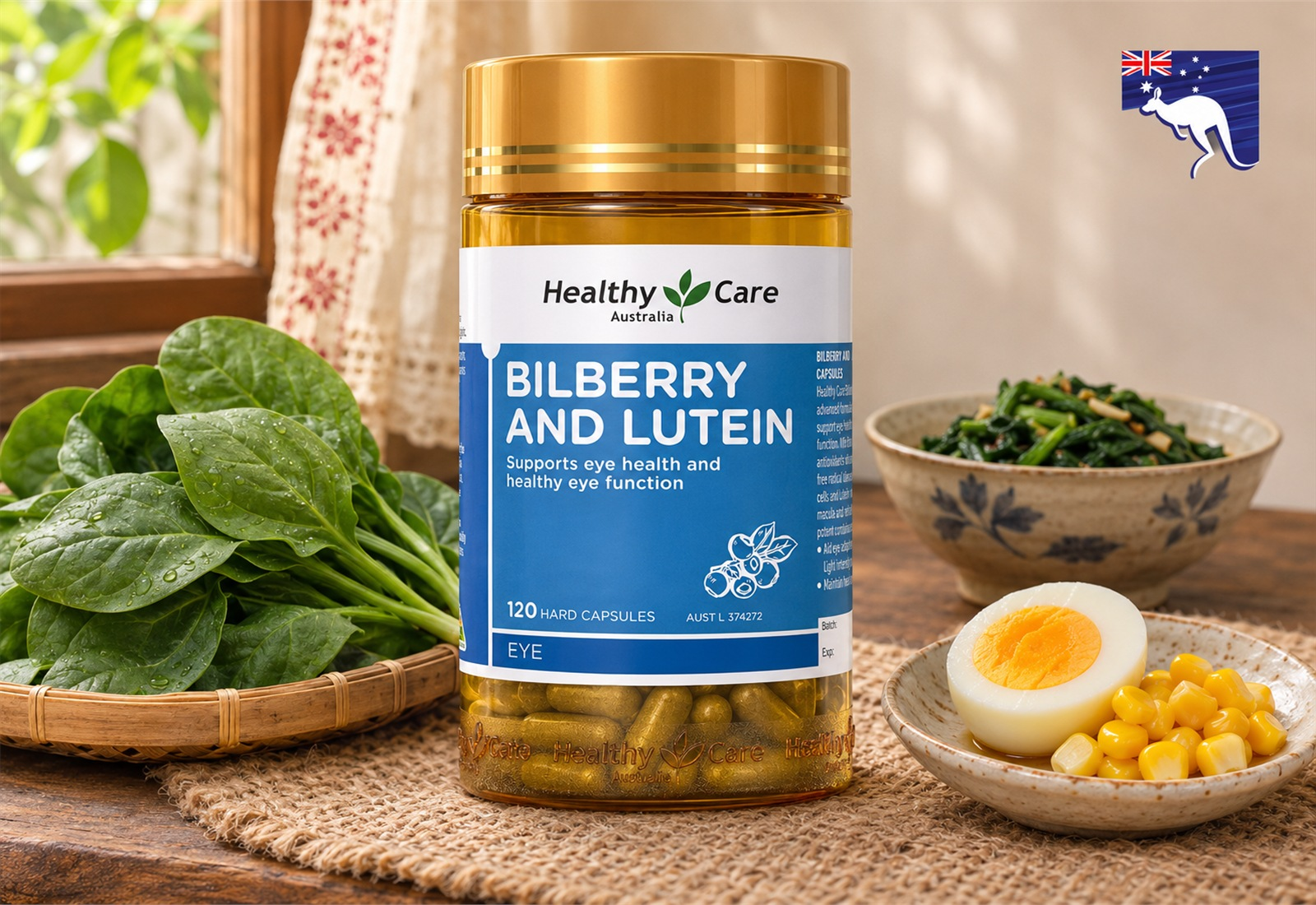
You do not need an imported “superfood” to begin. Palong shak is a practical leafy option; broccoli, peas and sweet corn add variety when available. Egg yolks also supply lutein and zeaxanthin. Choose foods you enjoy enough to eat regularly, rather than planning a perfect menu that lasts two days.
For breakfast, add cooked spinach to an omelette. At lunch, serve a portion of shak beside dal and rice. For dinner, include peas or broccoli in a mixed vegetable dish. These are meal ideas, not a prescribed lutein dose, and the nutrient content varies with the food and portion.
A little oil already used in a balanced meal can help with carotenoid absorption; there is no need to deep-fry vegetables. The Linus Pauling Institute's carotenoid resource describes how food preparation and dietary fat influence absorption.
To turn those examples into a weekly food habit, the Bangladesh lutein-food guide below covers market choices, local greens and simple ways to prepare them.
Five label details that separate eye formulas
Begin with the purpose. If you want to address a dietary gap, do not assume you need a product designed for an eye disease. If you have AMD, do not select a general wellness formula simply because it contains lutein. The full ingredient list should match the recommendation you received.
- Check the daily serving. The amount per capsule may differ from the amount in the suggested daily dose.
- Look for lutein and zeaxanthin separately. A large number on the front of a mixed formula may refer to a different ingredient.
- Read the other nutrients. Vitamin A, vitamin E and zinc can overlap with a multivitamin you already take.
- Compare cost per daily serving. Bottle size alone does not tell you how long a product lasts.
- Check practical details. Expiry, seal, storage directions, allergens and a clearly identified manufacturer all matter.
There is no established daily requirement for lutein that makes everyone below a single number “deficient.” A study dose should not be treated as a universal prescription. Follow the product directions and professional advice applicable to your situation.
If supplementation has been recommended, use the label below to practise those checks. Compare the whole formulation with the advice you received: this general eye-health product should not be assumed to be a complete AREDS2 formula.
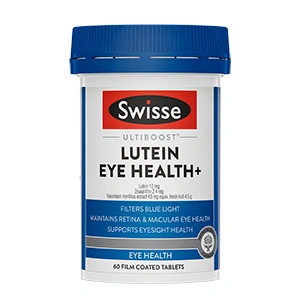
Swisse Ultiboost Lutein Eye Health+
Swisse Lutein Eye Health+ in Bangladesh: lutein 12 mg, zeaxanthin and bilberry formula, one-a-day directions, 60-day pack and current price.
Smoking history and the other ingredients matter
Ask a pharmacist to check the full label if you take regular medicines, are pregnant or breastfeeding, or plan to give a product to a child. Eye supplements can contain several ingredients at substantial doses, so checking only lutein misses part of the safety picture.
Current and former smokers should avoid the older AREDS formula containing beta-carotene and discuss an appropriate AREDS2 option with their clinician. Do not stop prescribed medicines, injections or eye drops because you start a supplement.
Let the eye problem guide your next move
If your eyes are healthy and your diet needs attention, start by improving meals. If you have diagnosed AMD, ask about a suitable formula and continue scheduled follow-up. If your vision has changed, book an examination. Sudden vision loss, new flashes with many floaters, or a dark curtain across your sight needs urgent assessment.
An eye-health label is useful when its ingredients fit the reason for taking it. Take that reason, the full label and any questions to your eye-care appointment, rather than choosing the highest strength by default.