Kids Nutrition Supplements in Bangladesh: Multivitamins, Greens & Milk Products
An unfinished lunchbox does not tell you which supplement a child needs. This guide helps parents separate vitamin and mineral gaps from low food intake, compare three real product labels, and recognise when feeding or growth concerns need professional assessment.
Quick Answer
Kids nutrition supplements serve different purposes: multivitamins supply listed vitamins and minerals, greens gummies contain plant ingredients, and milk tablets differ from protein-and-energy drinks. Most healthy children eating a varied diet do not need a routine multivitamin. A restrictive diet, confirmed deficiency or growth concern calls for an individual assessment before choosing a product.
Key Takeaways
- Separate low vitamin or mineral intake from a shortage of energy and protein.
- Compare the declared serving, ingredient percentages and nutrient amounts—not the front-of-pack theme.
- A food diary and growth record are more useful than trialling several products when eating problems persist.
The lunchbox comes home almost untouched. Your child will happily eat rice, but pushes away the vegetables. Before buying kids nutrition supplements in Bangladesh, ask one useful question: is the concern missing nutrients, too little food, or difficulty trying new foods? Those problems need different responses, even when the bottles sit on the same shelf.
Which nutrition gap are you trying to fill?
A vitamin tablet supplies very different nutrition from a drink with protein and energy. Start with the purpose of the product, then look at its ingredients.
| Product type | What to examine | What it cannot tell you |
|---|---|---|
| Children’s multivitamin | Amounts of each vitamin and mineral | Whether your child has a deficiency |
| Greens gummy | Plant content, fibre and sweeteners | That it equals a serving of vegetables |
| Milk chewable tablet | Milk percentage and declared nutrients | That it provides a glass of milk’s nutrition |
| Fortified nutrition drink | Energy, protein and nutrients per prepared serving | Whether extra calories are needed |
Children’s multivitamins: read the amounts, not just the ingredient count
The American Academy of Pediatrics says most healthy children with a varied diet do not need extra vitamin supplements. Children with restrictive diets, diagnosed deficiencies or certain medical conditions may need specific support. A paediatrician can help decide whether a multivitamin or a targeted nutrient is appropriate.
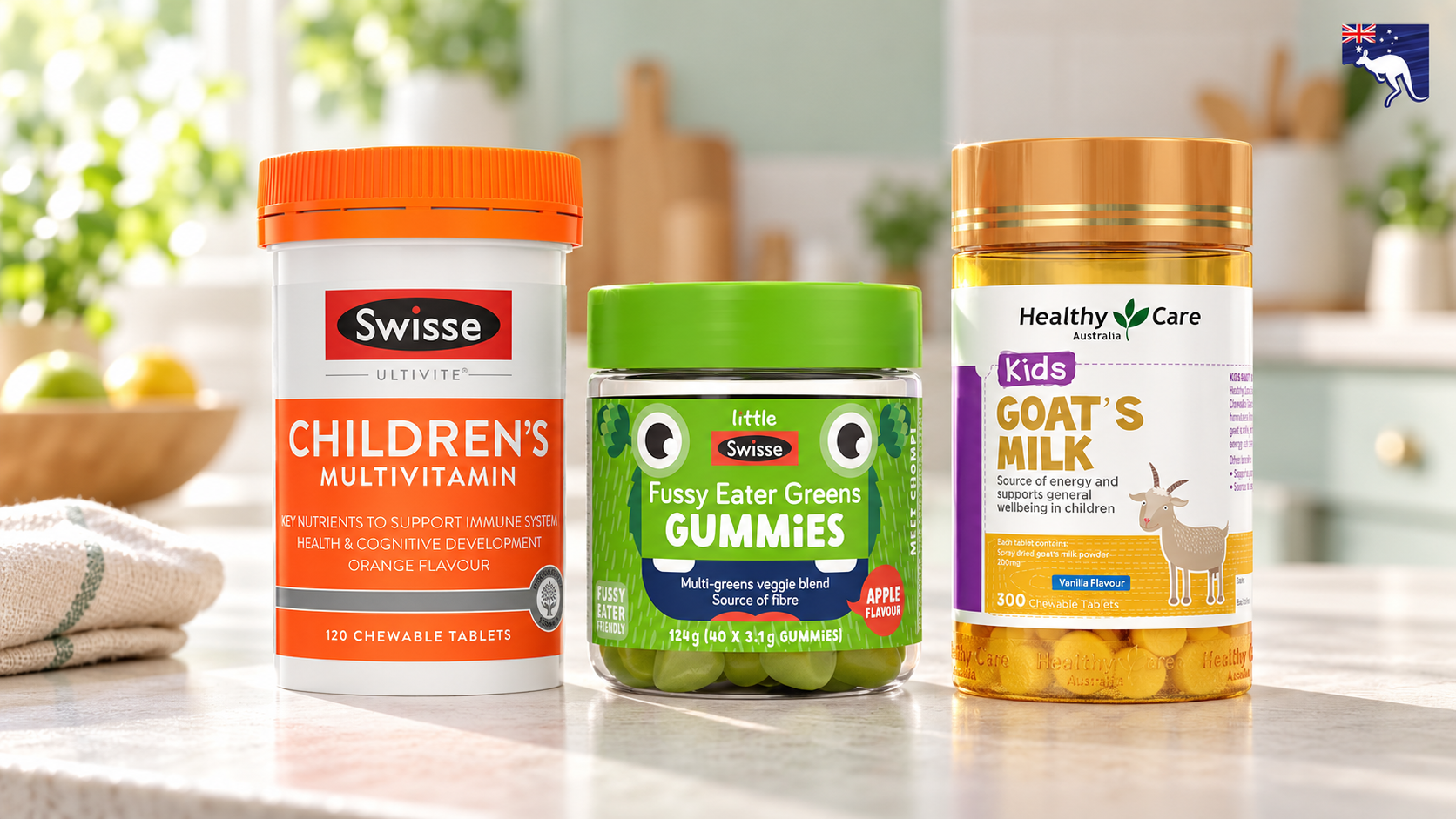
Swisse Ultivite Children’s Multivitamin illustrates why the nutrient panel matters. The manufacturer lists 50 mg vitamin C, 2.3 mg iron and 21.1 mg calcium per chewable tablet. The presence of calcium does not make it equivalent to a dedicated calcium product, and the manufacturer states it is not for treating iron deficiency.
Its online directions use age bands that overlap at four years. If that applies to your child, have a pharmacist confirm the current pack’s instructions before use. Do not estimate a child’s dose from an adult product.

Swisse Ultivite Children’s Multivitamin
Swisse Children's Multivitamin in Bangladesh. Compare the 120-chewable pack, nutrient panel, age-specific label and dietary suitability.
Greens gummies for picky eaters: what is actually inside?
Little Swisse Fussy Eater Greens Gummies lists 70% chicory-root fibre and 1.3% greens blend, including kale, broccoli, spirulina and spinach powders. These figures describe the ingredients; they do not establish equivalence to fresh vegetables or a clinical benefit for picky eating.
A green colour or vegetable name cannot show how much of each nutrient a child receives. This product’s fibre-based formula also differs from a multivitamin with individually declared vitamin and mineral amounts. Continue offering ordinary vegetables in manageable portions: a gummy does not give a child practice with their tastes and textures.
Milk tablets, nutrition drinks and infant formula are different
Healthy Care Kids Goat Milk Vanilla Flavour is a chewable milk tablet. Its ingredient list includes glucose, 32.5% goat milk powder and lactose from milk. The manufacturer’s page does not provide enough quantified protein and calcium information to treat it as a replacement for a glass of milk.
It contains milk, so do not assume the word “goat” makes it suitable for a child with a milk allergy. The online directions do not state a minimum age; confirm age suitability on the physical pack and with a qualified professional before giving it to a young child.
A fortified nutrition drink, by contrast, may provide measurable energy and protein per prepared serving. That can be relevant when a clinician or dietitian identifies inadequate intake or poor weight gain. Most healthy toddlers do not routinely need special toddler drinks, according to the AAP. Products for older children are also not interchangeable with infant formula for babies under 12 months.

Help a picky eater without making every meal a test
Use regular meal and snack opportunities. Offer a familiar food alongside a small amount of something less familiar, and let your child decide how much to eat without pressure. One rejected meal is less informative than the overall eating pattern.
For a Bangladeshi family meal, that might mean rice and dal with an accepted egg or carefully deboned fish, plus a little soft pumpkin or other vegetable. Adapt texture to the child’s chewing skills and avoid known allergens. The goal is repeated, comfortable opportunities to eat a wider range of foods.
When food refusal or growth concerns need assessment
Arrange a paediatric review if your child is losing weight, gaining poorly, eating an increasingly limited range, or has persistent pain or digestive symptoms. Repeated coughing or difficulty swallowing during meals also needs assessment rather than another supplement.
Bring recent growth records, a short food-and-drink diary and photos of every product label. This helps the clinician distinguish a nutrient shortage from low energy intake, a feeding difficulty or another condition—and choose support for the actual problem.