Daily Multivitamin Benefits: What to Expect
You may notice very little after starting a daily multivitamin. This guide separates the job of adding nutrients from promises about energy, immunity and long-term health, and explains how to judge whether a supplement has a useful place in your routine.
Quick Answer
A daily multivitamin can increase intake of the vitamins and minerals it contains and help cover some dietary shortfalls. Whether that improves how you feel depends on your starting nutrition and health. It is not a guaranteed energy boost, infection shield or substitute for treatment. There is no universal week-by-week results timeline.
Key Takeaways
- Look for a specific nutritional purpose before deciding to take a multivitamin indefinitely.
- Nutrients help normal body functions, but taking extra does not necessarily improve those functions when intake is already adequate.
- Daily use means following the exact product’s serving and warnings; it does not always mean one tablet.
Two weeks into a new bottle and you feel exactly the same. Is that normal? Often, yes. A daily multivitamin adds nutrients to your diet, but it does not come with a guaranteed change you can feel. Understanding that difference helps you judge the benefits without chasing a stronger tablet.
What happens when you take a multivitamin every day?
The most direct change is simple: you consume extra amounts of the nutrients listed on the label. If your meals consistently fall short of one of those nutrients, an appropriate supplement may help close that gap. Whether you notice better wellbeing depends on what was missing, how much the product supplies and whether something else is causing your symptoms.
A multivitamin does not provide the full package found in food. Protein, fibre and the energy in balanced meals still matter. In Bangladesh, a tablet taken with breakfast cannot make a routine of skipped meals nutritionally complete.
Multivitamin benefits: what is realistic?
| Your situation | A realistic expectation |
|---|---|
| Your diet supplies too little of certain nutrients | A suitable formula can add those nutrients; it may not cover every shortfall. |
| A clinician has identified a deficiency | You may need a particular nutrient, dose and follow-up. A general multivitamin is not automatically the treatment. |
| Your nutrient intake is already adequate | You may feel no difference. Extra intake does not guarantee extra energy or stronger immunity. |
| You want protection against major diseases | A multivitamin is not a reliable substitute for established prevention measures or medical care. |
The NIH evidence review describes limits in research on broad health outcomes. Studies differ in formulas and participants; findings about a particular group should not be turned into a promise for every customer.
Will it improve energy, immunity or concentration?
Vitamins and minerals have essential roles in normal body processes. That is different from showing that an extra tablet improves those processes in a well-nourished person. For example, the NIH reports that vitamin B12 supplements do not improve athletic performance or endurance in people with adequate B12 status.
The same distinction matters when a pack says “supports immune function”. It does not mean the product prevents colds or guarantees fewer sick days. Nor should a busy student or office worker expect sharper concentration simply because a formula includes B vitamins.
If tiredness continues, consider the symptom itself. Sleep problems, illness, stress and other causes may need attention. Increasing the supplement dose can delay finding the actual reason you feel unwell.
How long do multivitamins take to work?
There is no trustworthy schedule saying everyone feels more energetic in week two, sleeps better by week six and develops healthier hair in month three. A person correcting a confirmed deficiency is in a different situation from someone trying a supplement without evidence of low intake.
Before starting, write down the purpose: covering a restricted diet, following professional advice or addressing an identified gap. If treatment is prescribed, use the clinician’s review plan and relevant tests. If you are buying because of an unexplained symptom, arrange an assessment instead of treating the end of a bottle as the only checkpoint.
“Daily” does not always mean one tablet
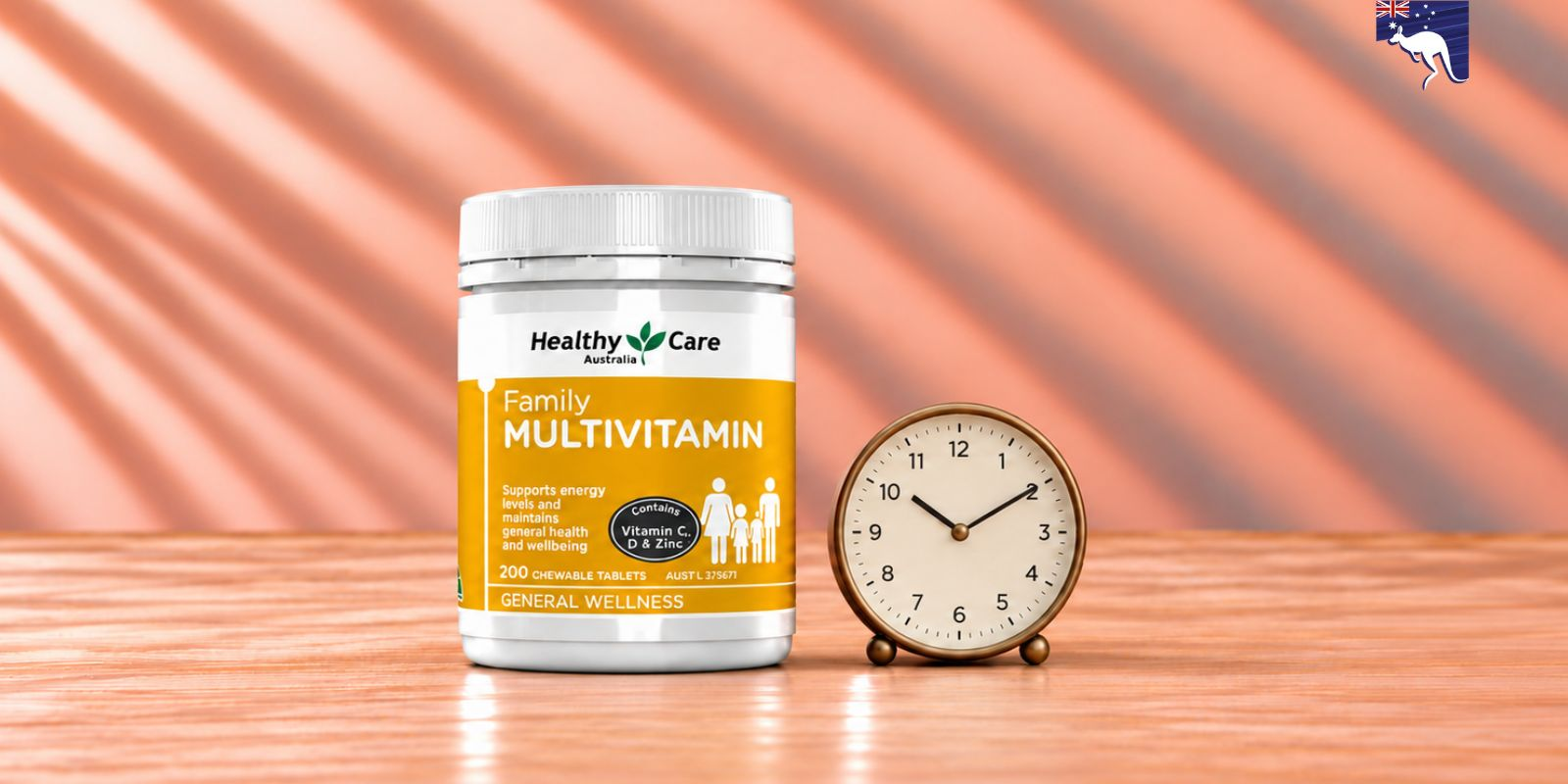
Healthy Care Family Multivitamin illustrates why the back label matters. The manufacturer lists one to two chewable tablets daily for adults, with separate children’s directions. These are product-specific instructions, not a serving rule for all multivitamins or an invitation to choose a child’s dose from an adult formula.

Healthy Care Family Multivitamin
Healthy Care Family Multivitamin 200 chewable tablets in Bangladesh. Compare price, adult and child directions, pack duration and vitamin precautions.
When comparing multivitamin prices in Bangladesh, use the selected pack and the serving you are meant to take. A 200-tablet bottle lasts 200 days at one tablet a day, or 100 days at two. This arithmetic compares pack value; it does not decide which dose is appropriate.
Check the supplied pack’s ingredients and cautions as well. This product lists soy, gluten and sulfites and has pregnancy-related vitamin A advice. The manufacturer specifies storage below 30°C. A sealed bottle still needs a suitable place away from heat and children.
Can daily multivitamins cause side effects?
Yes. A standard formula used as directed is generally low risk for many healthy adults, but high amounts, overlapping products and medicine interactions can change that picture. “Water-soluble” does not mean a nutrient is harmless at any dose.
Vitamin B6 is a practical example: the TGA has received nerve-damage reports involving multiple supplements, including products marketed for other purposes. Review magnesium, B-complex and energy supplements alongside your multivitamin. Stop a relevant supplement and seek medical advice if tingling, burning or numbness develops.
If a new product causes a troublesome symptom, do not assume discomfort proves it is working. Ask a pharmacist or clinician about the ingredients, serving and timing. Keep supplements out of children’s reach; iron-containing products can cause serious poisoning if accidentally swallowed.
Decide what earns a place in your routine
A useful supplement has a purpose you can explain. Review that purpose when your diet, medicines or life stage changes. Buying another bottle automatically is less informative than asking whether the original need still exists.
For someone who wants help deciding whether to start at all, this related guide works through the need for a multivitamin before comparing products.