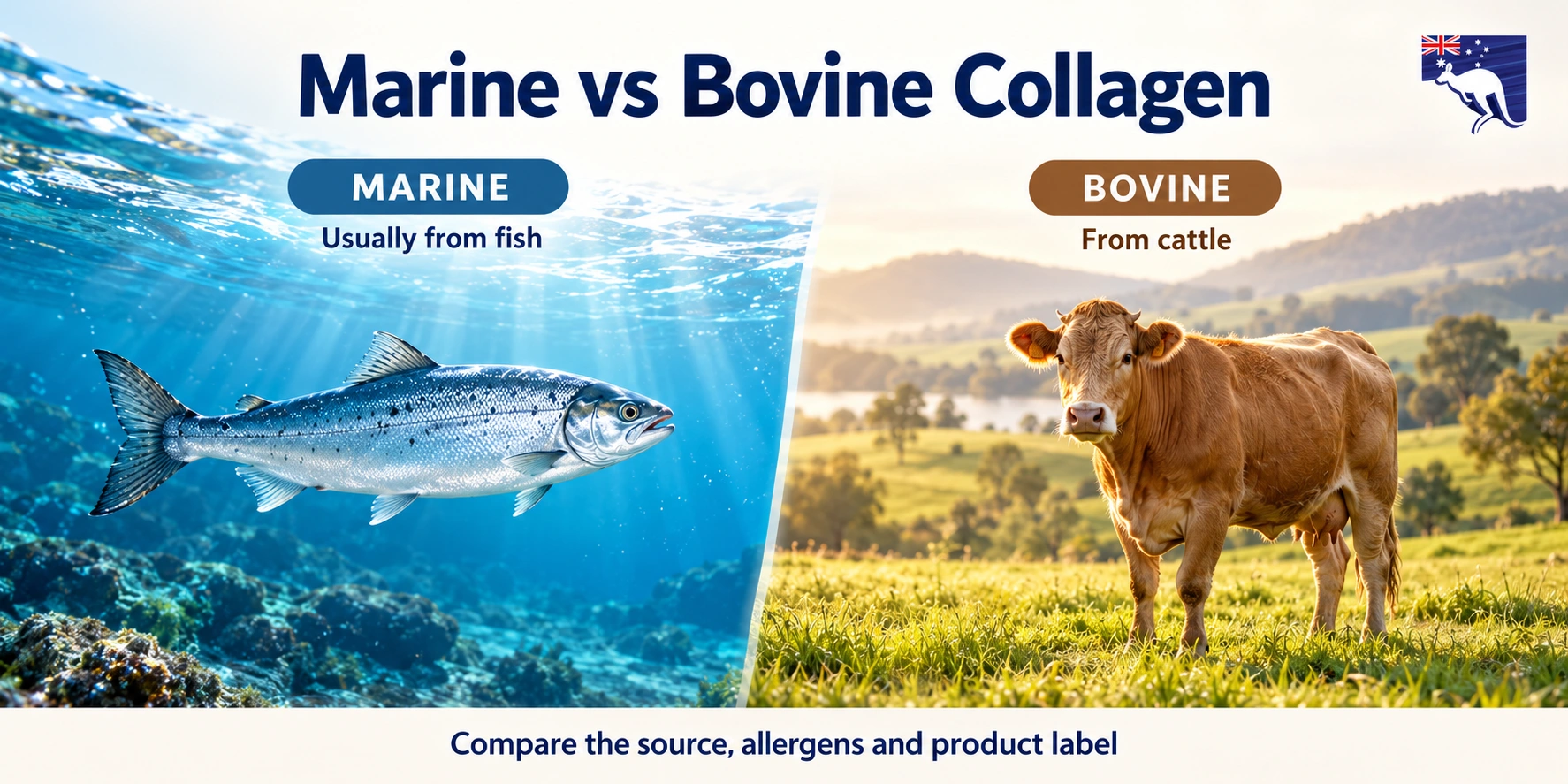
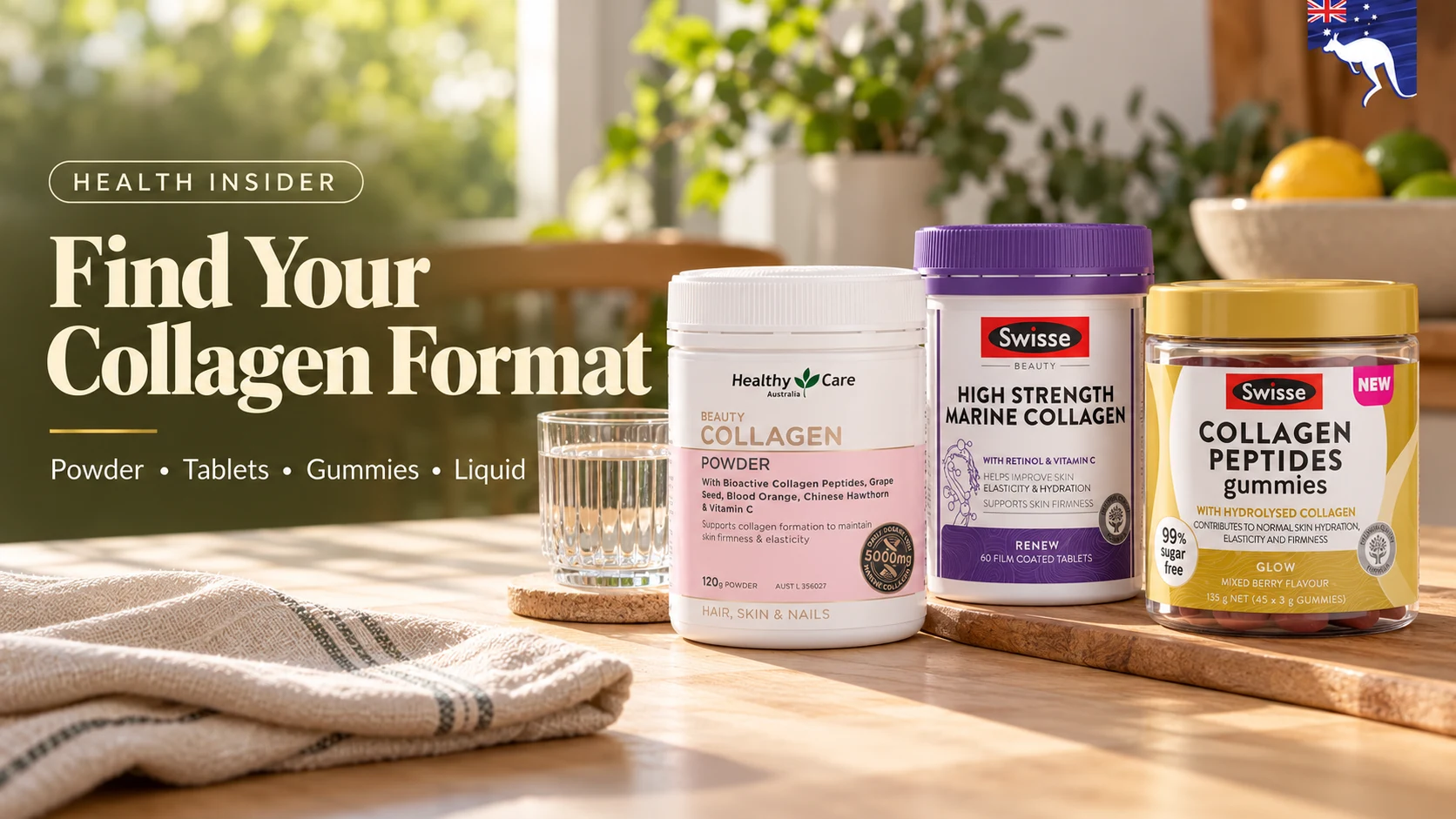
Collagen Types I, II & III: What the Label Really Tells You
Three Roman numerals can make a simple purchase feel complicated. Learn what collagen types mean, why processing matters, and what real marine, bovine and joint-formula labels tell Bangladesh shoppers before they buy.
Quick Answer
Types I, II and III describe collagen structures, not strength levels. Type I is abundant in skin, bone and tendons; Type II is prominent in cartilage; Type III supports tissues including skin and blood-vessel walls. For supplements, check the animal source, hydrolysed versus undenatured form, daily amount and evidence for the specific preparation. More types do not automatically mean better results.
Key Takeaways
- Type numbers describe collagen structures; they are not a ranking of quality, strength or absorption.
- Hydrolysed collagen peptides and undenatured Type II are different preparations. Their gram and milligram doses are not interchangeable.
- A marine, bovine or joint-health label does not establish an exact collagen-type breakdown. Ask for the actual ingredient declaration.
- Before buying in Bangladesh, check source and halal documentation, allergens, cost per labelled day, storage and delivery timing.
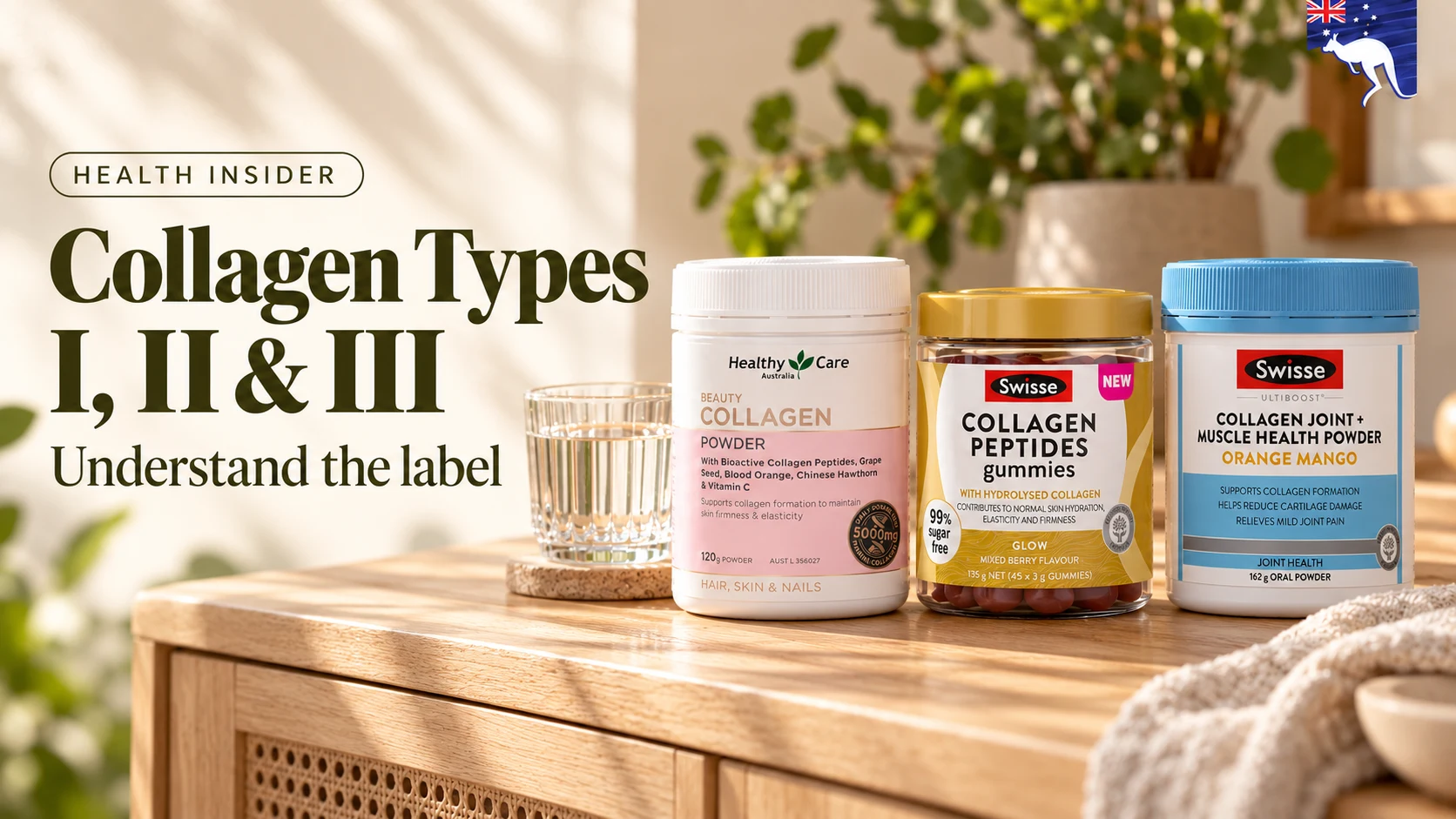
Would you pay more for a collagen supplement just because it lists three types instead of one? Before you do, turn the pack around. Those Roman numerals tell only part of the story.
I, II and III are names, not scores. A higher number does not mean stronger collagen, and a longer list does not guarantee better results. If you are shopping for collagen in Bangladesh, the words beside those numbers can be more useful than the numbers themselves.
What do Types I, II and III actually mean?
Collagen is a family of proteins that helps give tissues structure. Different types occur in different places. Here is the distinction without the biology lesson:
| Type on the label | Where it occurs in the body | What that does not tell you |
|---|---|---|
| Type I (1) | Abundant in skin, bone and tendons. | Whether a particular supplement will improve your skin or bones. |
| Type II (2) | Prominent in cartilage, including cartilage in joints. | Whether the product contains hydrolysed or undenatured collagen. |
| Type III (3) | Found in tissues including skin and blood-vessel walls. | Whether taking it benefits blood vessels or delivers collagen directly to them. |
These normal functions are described by NIH MedlinePlus Genetics for Type I, Type II and Type III. A protein’s role in the body is a starting point for understanding it—not proof that a supplement produces the same benefit.
Look for the processing words next
Hydrolysed collagen, also called collagen peptides, has been broken into smaller protein chains. The original triple-helix structure is disrupted during processing. A label mentioning Types I and III alongside “hydrolysed” therefore should not be read as a promise to deliver intact Type I and III fibres to your skin.
Undenatured Type II collagen is a different preparation that retains its native structure. Do not treat “Type II”, “collagen peptides” and “joint collagen” as interchangeable phrases. Read the full ingredient name.
One 180-day trial in people with knee osteoarthritis tested 40 mg daily of a specific UC-II ingredient and reported improvements in symptom scores. That 40 mg ingredient supplied 1.2 mg of measured undenatured Type II collagen. The study was industry-funded, with author links to its sponsor. It does not establish that every Type II product works, or that cartilage regrows.
This is why comparing “40 mg” with “5,000 mg” can mislead. The preparation, active composition and purpose differ. Do not calculate an equivalent dose across them or replace a prescribed treatment with a collagen supplement.

Three real labels worth looking at
These Australian Goods products show why source, processing and intended use need separate checks. They are examples for reading labels, not a ranking or a suggestion to take all three.
Healthy Care Beauty Collagen Powder: a declared marine source
The manufacturer lists hydrolysed marine collagen peptides at 500 mg per gram of powder. Its directions total 10 g of powder daily, supplying 5 g of collagen. Notice the two different weights: the whole powder is not pure collagen.
This is a marine-peptide example. Marine origin alone does not give you a verified Type I/III percentage breakdown. It contains fish and sulfites, which matter more than the front-label type count if you have relevant sensitivities.

Healthy Care Beauty Collagen Powder
Healthy Care Beauty Collagen Powder is a daily beauty supplement formulated to support collagen formation, skin firmness and elasticity. It combines VERISOL® bioactive marine colla...
Swisse Collagen Peptides Gummies: bovine does not mean Type II
Swisse identifies bovine collagen peptides (VERISOL B) and bovine gelatin in these gummies. The labelled daily serving is three gummies. The ingredient list also includes wheat-derived gluten, so this is not a suitable choice for someone who needs to avoid gluten.
A bovine source tells you the animal origin. It does not, by itself, verify an exact Type I/III ratio or make a beauty gummy an undenatured Type II joint product.
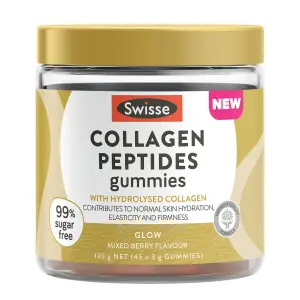
Swisse Collagen Peptides Gummies
Swisse Collagen Peptides Gummies are a tasty daily beauty supplement formulated to support skin hydration, elasticity and firmness. Made with hydrolysed bovine collagen and vitamin...
Swisse Collagen Joint + Muscle Health Powder: read beyond “joint”
This formula supplies 5 g of hydrolysed bovine collagen (FORTIGEL) in a 9 g daily serving, alongside glucosamine, magnesium and vitamin C. The manufacturer identifies crustacean-derived glucosamine and lists crustacea and sulfites as warnings.
It is not labelled as undenatured Type II or UC-II. Its joint-health name should not lead you to assume that it is. Anyone checking allergies or suitability with a clinician should discuss the full formula, not just its collagen content.
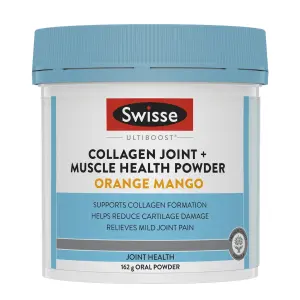
Swisse Ultiboost Collagen Joint + Muscle Health Powder
Swisse Ultiboost Collagen Joint + Muscle Health Powder is formulated to support joint cartilage health, muscle health and collagen formation. With FORTIGEL® collagen, glucosamine,...
Four questions to ask before paying in Bangladesh
- Can I see the complete label? Ask for the animal source, preparation and actual collagen amount per daily serving. A seller’s “multi-collagen” description is not a substitute for this information. Match the supplied pack to the listing, including batch and expiry details.
- Does the whole product fit my requirements? Check allergens, added nutrients and gelatin as well as collagen. If halal status matters, request current certification for the exact finished product. Marine or bovine origin alone is not certification.
- What does a labelled day cost? At the checked price of ৳6,600, the 162 g Swisse joint powder provides 18 servings of 9 g: about ৳367 per day before delivery. This is a budgeting calculation, not an effectiveness comparison. Recheck current prices.
- Can it be delivered and stored properly? Confirm stock and the estimated delivery date before paying. Follow each pack’s temperature limit; for example, Swisse specifies below 25°C for the joint powder. A hot shelf or parked car is a poor storage choice in Bangladesh.
You do not need to collect every collagen number. Choose a clearly labelled preparation that matches the question you are trying to answer, and keep expectations tied to evidence for that preparation. Persistent joint pain or unexplained skin, hair or nail changes deserve assessment rather than repeated supplement switching.