Collagen for Skin, Hair & Nails: What Does the Evidence Show?
Considering collagen for skin, hair or nails in Bangladesh? Learn where the evidence is promising, where claims go too far, and how to compare actual collagen amounts, added nutrients, safety warnings and daily cost before choosing an Australian supplement.
Quick Answer
Collagen may improve skin hydration or elasticity in some studies, but benefits remain uncertain because trial quality and funding affect the findings. Evidence for hair regrowth and brittle nails is weaker. Choose by the exact collagen amount, full formula and suitability. Follow the label, check allergies and biotin-related blood-test cautions, and seek assessment for persistent hair or nail changes.
Key Takeaways
- Collagen research is more developed for skin than for hair or nails, but higher-quality studies do not consistently confirm skin benefits.
- A product that supports collagen formation may contain vitamins rather than collagen. Check the ingredient list and collagen amount per labelled day.
- Compare cost per day and complete formulas. A cheaper tub can run out sooner, and a capsule may supply far less collagen than a powder.
- Check fish and other allergens, added nutrients and use limits. Tell your clinician about biotin before blood tests; persistent hair loss needs assessment.

Collagen (কোলাজেন) supplements are often advertised for smoother skin, thicker hair and stronger nails. Those are three different outcomes, and the evidence is not equally strong for each. Before buying in Bangladesh, decide what you want to improve and check whether the exact formula suits you.
This guide explains what research can support, what remains uncertain and how to compare products without confusing collagen with vitamins that support its production.
Does collagen work for skin, hair and nails?
Skin has the most research, but benefits remain uncertain; hair and nail claims need more caution. Some trials report better skin hydration or elasticity. That does not establish reliable hair regrowth, stronger nails for everyone or a reversal of ageing.
| Goal | What the evidence supports | Practical meaning |
|---|---|---|
| Skin hydration and elasticity | Positive results appear in several reviews, but trial quality, funding and differing formulas limit confidence. | A possible benefit, with no guarantee of a visible change. |
| Wrinkles or skin whitening | Wrinkle findings are inconsistent. These studies do not establish collagen as a skin-whitening treatment. | Do not expect erased wrinkles, permanent lightening or treatment of dark spots. |
| Hair growth or reduced shedding | Collagen alone is not established as a reliable treatment for hair loss. | Persistent or sudden shedding needs assessment of its cause. |
| Brittle nails | A small uncontrolled study reported improvements; stronger controlled evidence is needed. | A promising signal cannot predict what will happen with every product. |
Why do studies on collagen for skin disagree?
A 2025 meta-analysis of 23 trials involving 1,474 participants found improvements when all trials were pooled. However, the higher-quality studies and the subgroup without pharmaceutical-company funding did not show significant benefits. This makes strong anti-ageing claims difficult to justify.
A 2026 systematic review of 25 trials also found encouraging skin results, but rated most included trials at high risk of bias and called for better, longer studies. A newer publication does not automatically resolve weaknesses in the underlying research.
The reasonable expectation is modest and uncertain benefit, depending on the preparation and person. Brand popularity, a high milligram number or a testimonial cannot replace a well-designed study of the relevant outcome.
Can collagen stop hair loss or strengthen brittle nails?
Hair-loss treatment depends on the diagnosis. A collagen drink should not delay assessment for sudden, patchy or persistent shedding, scalp discomfort or other symptoms. The American Academy of Dermatology recommends addressing a confirmed nutrient deficiency when relevant, rather than assuming everyone with thinning hair needs extra biotin, iron or zinc.
For nails, a 2017 study followed 25 people taking 2.5 g of a specific collagen peptide daily for 24 weeks. It reported less breakage, but had no placebo comparison. That design cannot establish how much improvement came from the supplement, and its result should not be applied to every collagen capsule.
Biotin and collagen are different ingredients. Biotin is vitamin B7; adding it to collagen does not prove that a formula treats hair loss. NIH guidance describes limited evidence for beauty claims and warns that supplemental biotin can distort some laboratory results.

How long should you try collagen, and how much should you take?
There is no universal beauty dose or guaranteed results date. Skin trials often assess changes over several weeks to around three months; for example, a 2021 review examined benefits around 90 days. A study timeframe is not a promise that your skin will change by that day, and it cannot be reused as a hair-growth timeline.
Follow the exact product's serving, food instructions and maximum duration. Do not increase a capsule dose to match the grams in a powder. Some blends have specific limits: the Swisse unflavoured formula below is labelled for adults and limits use to three months.
If a suitable trial brings no worthwhile change, reassess the cost and need with a healthcare professional instead of indefinitely adding more products. Stop and seek advice if you develop troublesome symptoms. Persistent hair or nail changes deserve assessment rather than a longer self-directed supplement trial.
How do you choose a collagen supplement for skin?
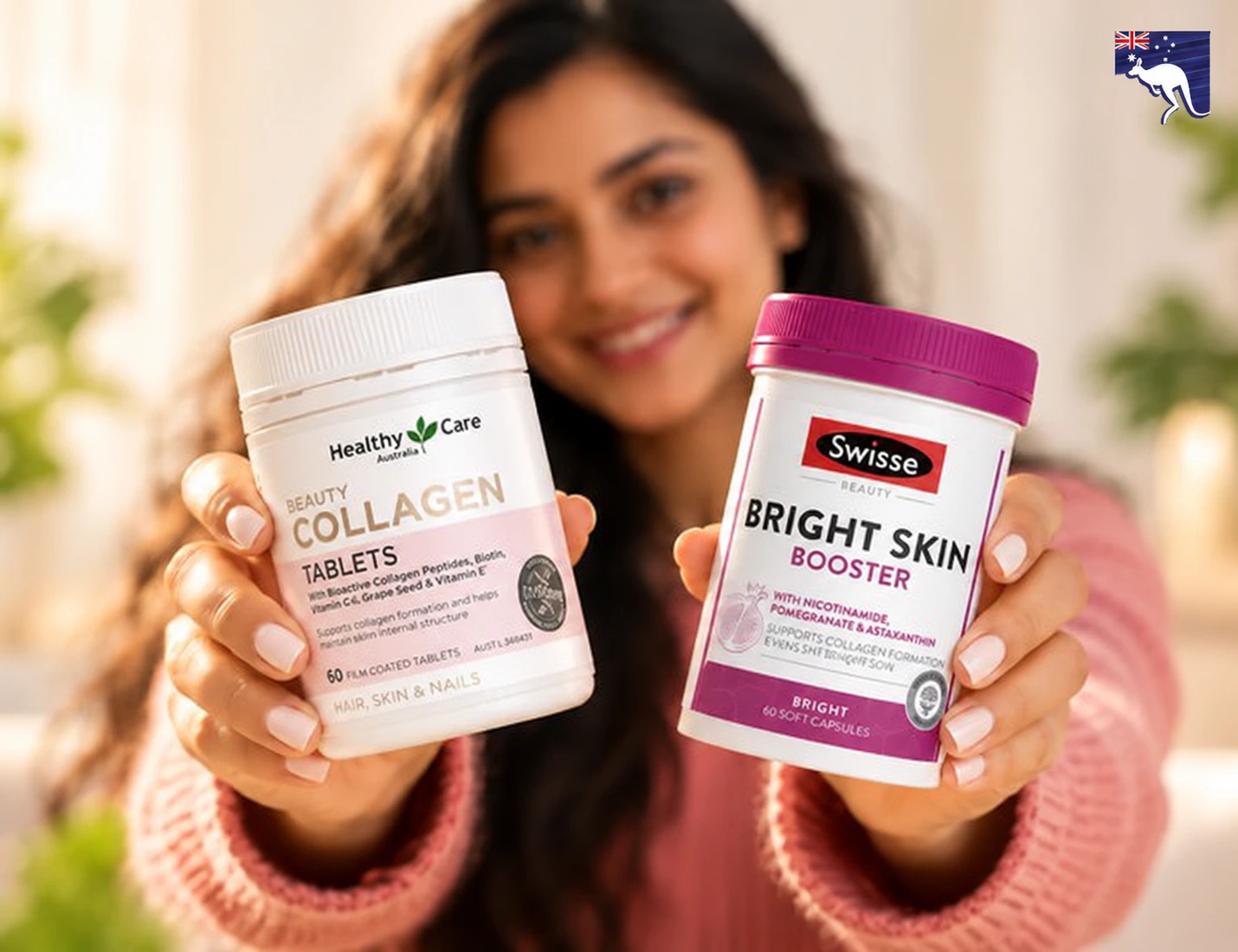
- Check what is actually in it. Look for collagen or hydrolysed collagen in the ingredients, with a declared amount. “Supports collagen formation” may describe vitamin C or another nutrient instead. Swisse Beauty Hair Skin Nails+, for example, lists vitamins, minerals and milk thistle; its current ingredient list does not include collagen.
- Compare daily collagen, not scoop weight. A 6 g blend may contain only 3 g of collagen. Count all servings in the labelled day and convert milligrams correctly: 1,000 mg equals 1 g.
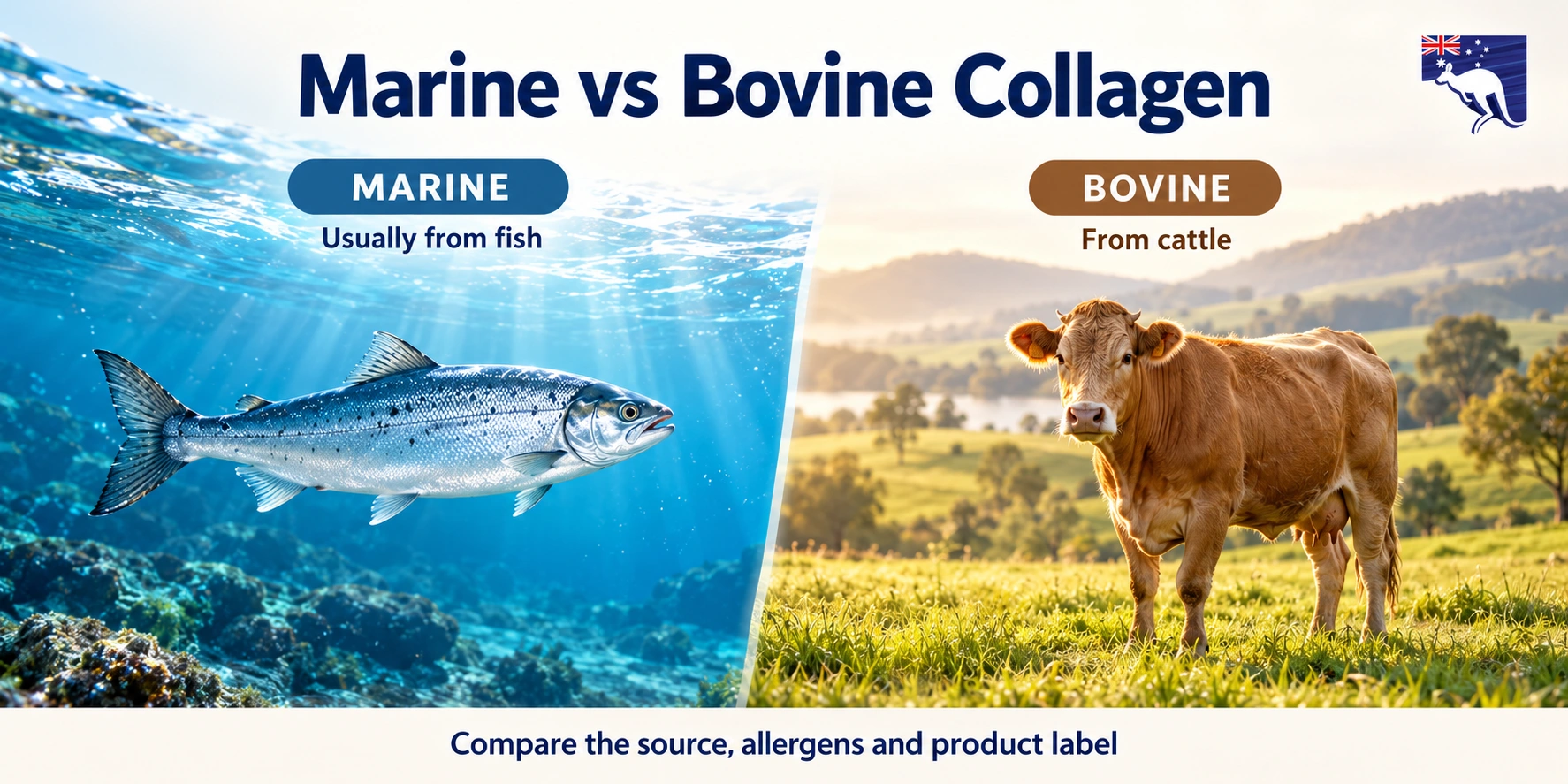
- Check source and suitability. Marine generally means an aquatic source, commonly fish. Bovine means cattle. Source alone does not prove superior results. Fish-derived products are unsuitable for people with a fish allergy and for vegan diets.
- Review the full blend. Biotin, zinc, vitamin C, herbs, sweeteners and hyaluronic acid change the comparison. Check overlap with products you already take.
- Choose a manageable format. Powder, tablets, capsules, gummies and liquids can deliver different amounts. Convenience matters, but the format itself does not establish better absorption or effectiveness.
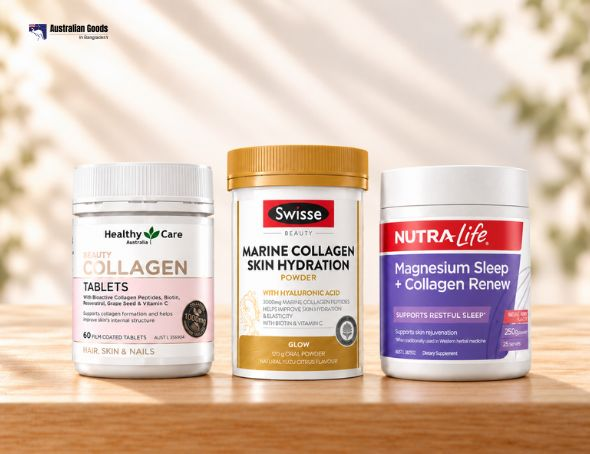
Powder with biotin and hyaluronic acid: the Swisse manufacturer label specifies fish, phenylalanine, sugars and sulfites, and advises against use during pregnancy or breastfeeding. Its three-month limit matters when budgeting for continued use.

Swisse Beauty Marine Collagen Skin Hydration Unflavoured Powder
Swisse Beauty Marine Collagen Skin Hydration Unflavoured Powder is a daily beauty supplement formulated to support skin hydration, elasticity and collagen formation. It combines ma...
Powder with vitamin C and extracts: the Healthy Care label declares 500 mg collagen per gram of powder. Its 10 g daily powder amount therefore supplies 5 g collagen. Check fish, gluten and sweetener declarations on the supplied pack; do not assume it is gluten-free.

Healthy Care Beauty Collagen Powder
Healthy Care Beauty Collagen Powder is a daily beauty supplement formulated to support collagen formation, skin firmness and elasticity. It combines VERISOL® bioactive marine colla...
A capsule alternative: Herbs of Gold declares 400 mg collagen per capsule, distinct from its 833 mg total capsule weight. It offers a different format with a substantially smaller daily collagen amount than these powders. It is not a dose-equivalent substitute; do not exceed its label to make it one.
What side effects and safety checks matter?
Collagen studies generally report reasonable short-term tolerability, but that does not prove every blend is suitable for everyone. The AAD's supplement guidance advises weighing risks alongside uncertain beauty benefits.
- Allergies: check the animal source, additives and shared-equipment warnings. All three examples contain fish. Stop use and seek urgent care for breathing difficulty or swelling suggesting a serious allergic reaction.
- Pregnancy, breastfeeding, children and medical conditions: obtain professional advice before starting; follow any stricter product restriction. This also applies if you take regular medicines or need a medically restricted protein intake.
- Blood tests: tell your clinician and laboratory about biotin-containing products. Ask them whether and when to pause a supplement; there is no single stopping interval suitable for every test.
- Digestive symptoms and duplicate ingredients: sweeteners and other components may affect tolerability. Combining beauty supplements can unnecessarily duplicate nutrients. Have the full ingredient lists reviewed.
What should shoppers in Bangladesh check before buying?
Price, authenticity, halal suitability and delivery are separate checks. A lower tub price may cover fewer days, as the comparison shows. Confirm the exact pack and delivery estimate before paying, particularly when an imported product has a longer lead time.
- Match the product: verify source, serving, ingredient panel and pack size against the supplied label, not just an old marketing image.
- Check traceability: look for a clear seller contact, purchase record, intact seal, readable batch and expiry. A barcode or Australian flag alone does not prove authenticity.
- Verify halal requirements: ask for current certification that covers the exact product and manufacturer. A marine or bovine description by itself is not proof that the finished product is halal-certified.
- Plan storage: follow the pack's temperature limit. Swisse specifies below 25°C and Healthy Care below 30°C. Keep powder dry and closed; a hot vehicle or humid bathroom may not meet these conditions.
Collagen remains an optional purchase. A varied diet and suitable skin care deserve priority. The AAD recommends gentle cleansing, moisturising and sun protection, including broad-spectrum SPF 30 or higher. A supplement does not replace sunscreen, a diagnosis or treatment for persistent skin, hair or nail concerns.