Collagen for Joint Health: Peptides, Type II Collagen & How to Choose
Considering collagen for knee discomfort or joint support? This guide explains the evidence, the difference between peptides and undenatured type II collagen, and the safety checks that matter. Shoppers in Bangladesh can compare daily servings, allergens, storage requirements and pack value before choosing a suitable product.
Quick Answer
Some collagen preparations may modestly improve pain and function in people with osteoarthritis, but results vary and they are not a cure. Hydrolysed collagen peptides and undenatured type II collagen are different preparations with different serving amounts. Choose by the exact formula, evidence and safety warnings. Keep exercise and your clinician’s care plan central, and have persistent or sudden joint pain assessed.
Key Takeaways
- Collagen studies suggest possible improvements in osteoarthritis symptoms; they do not establish a cure or guaranteed cartilage regrowth.
- Hydrolysed peptides and undenatured type II collagen are different preparations. Compare the exact ingredient and daily serving, not the largest number on the pack.
- Check animal sources, allergens and every added ingredient. Collagen blends containing glucosamine need special review if you take warfarin.
- Exercise, weight management when appropriate and clinical assessment remain central to joint care. Sudden severe pain or a hot, swollen joint needs prompt medical attention.

Choosing collagen for joint health starts with understanding the preparation and the reason for your discomfort. A beauty powder, a joint blend and an undenatured type II capsule may contain very different ingredients. This guide helps you read those differences before buying in Bangladesh.
Does collagen help joint pain?
Research suggests that some collagen preparations can improve symptoms in people with osteoarthritis. A 2024 meta-analysis of 35 randomised trials found small-to-moderate average improvements in pain and function compared with controls. It pooled different collagen derivatives, so its results should not be treated as proof for every brand or formula.
A 2025 knee osteoarthritis review also reported benefits, but results varied substantially between studies. Symptom improvement does not establish that a supplement regrows cartilage, reverses arthritis or prevents joint replacement. Evidence in osteoarthritis should not be assumed to apply to rheumatoid arthritis, gout or a new injury.
What is the difference between peptides and type II collagen?
Collagen is a structural protein in connective tissues. A type number describes the collagen; words such as hydrolysed and undenatured describe its preparation. Check both on the label.
| Preparation | What it means | What to compare |
|---|---|---|
| Hydrolysed collagen peptides | Collagen broken down into smaller pieces. Powders commonly state the collagen amount in grams. | The named ingredient, animal source and actual collagen per daily serving, rather than the total powder weight. |
| Undenatured type II collagen | A different preparation that preserves collagen structure. The UC-II ingredient studied in a clinical trial came from chicken cartilage. | The exact standardised ingredient and its labelled amount. A small milligram number is not directly comparable with grams of peptides. |
| Hydrolysed type II collagen | Type II collagen that has been hydrolysed. | Do not assume that evidence or serving amounts for undenatured UC-II apply simply because both labels say type II. |
For example, a 180-day trial in 191 people tested 40 mg daily of a specific UC-II ingredient and reported better knee symptom scores than placebo. This is a study amount for that ingredient, not a universal dose for type II collagen. The trial included manufacturer-affiliated authors, which is relevant when weighing the evidence.
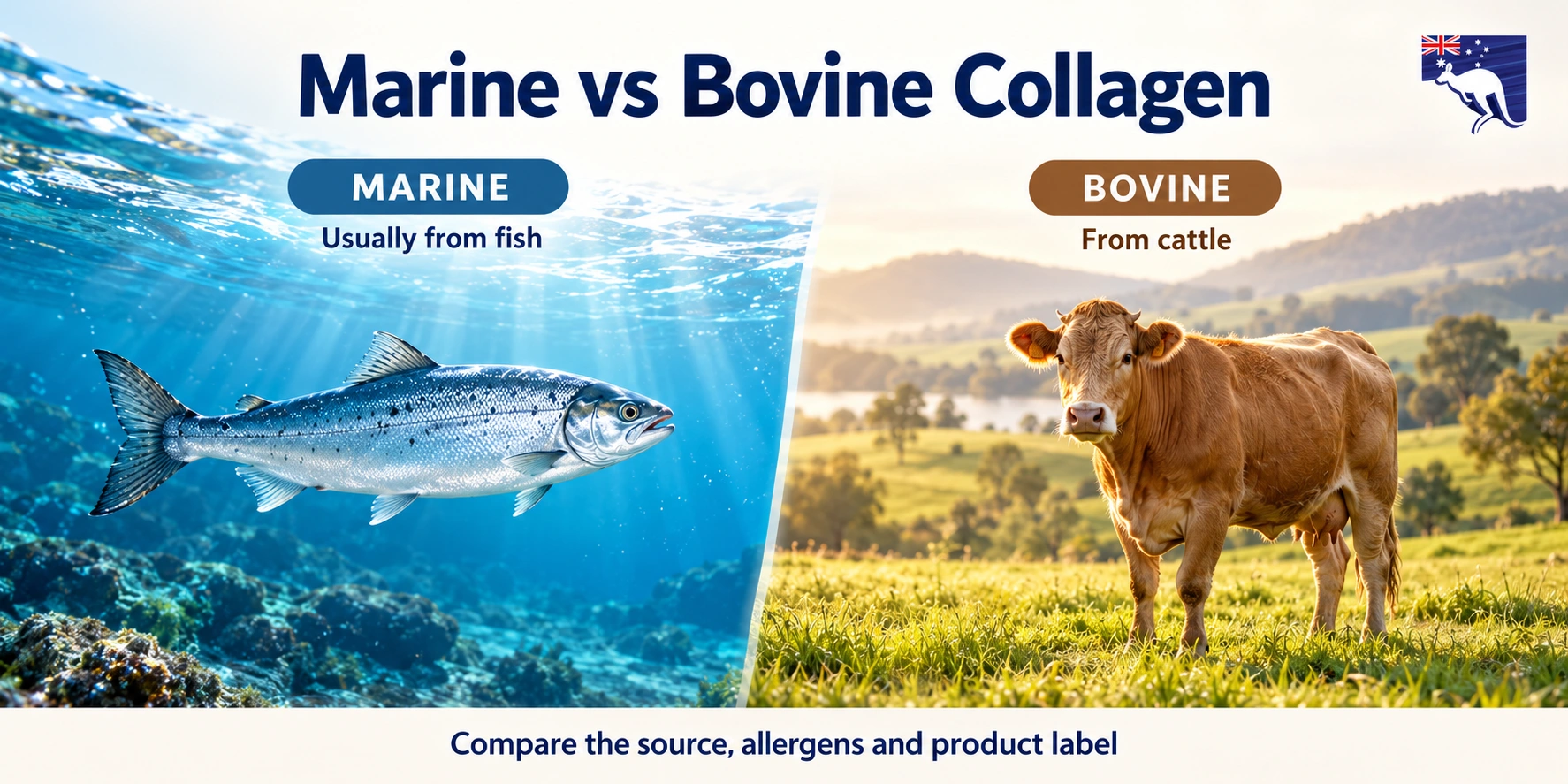
Animal source is a separate question from collagen preparation. Our marine-versus-bovine guide explains source, allergy and dietary checks.
How much should you take, and how long might it take?
Follow the directions on the exact supplied product. Research doses cannot be transferred between preparations or used to justify taking extra scoops. A placebo-controlled trial of a hydrolysed collagen preparation assessed a 10 g test product over six months; the UC-II trial above used a very different amount and formulation.
These studies assess changes over months, not immediate pain relief. They do not guarantee a benefit by a particular week. Agree with your clinician what improvement you are looking for, such as easier walking or less difficulty on stairs, and when to review whether continued use is worthwhile. Do not postpone assessment while waiting for a supplement to work.
There is no single timing rule for all collagen products. Follow food and mixing instructions, check the complete daily serving and avoid doubling up on collagen blends or their added nutrients.
Who should check safety before starting?
- Food allergies: identify every animal source and declared allergen. Fish collagen and seafood-derived ingredients in a blend are separate label checks. Avoid ingredients to which you are allergic.
- Medicines: show a pharmacist the whole formula. NCCIH warns that glucosamine and chondroitin can increase bleeding risk with warfarin; glucosamine may also affect blood glucose in some people. These cautions concern those added ingredients, not a claim that all collagen behaves the same way.
- Pregnancy, breastfeeding or children: ask a qualified healthcare professional before use. Adult directions should not be adapted into a child's dose.
- Medical conditions or a prescribed diet: have the protein, mineral and sodium content checked, especially if you have kidney disease or have been told to restrict particular nutrients.
Trials that report good tolerability do not establish safety for every person or indefinite use. Stop a product and seek advice if you develop a reaction or persistent digestive symptoms. Seek emergency care for breathing difficulty or swelling of the mouth or throat.
How do you compare collagen labels?
| Label detail | Practical check |
|---|---|
| Preparation and source | Look for hydrolysed peptides or undenatured type II, plus the declared animal source. Do not infer halal certification from the words marine or bovine. |
| Daily collagen amount | Separate collagen grams or milligrams from the weight of the whole blend. Check how many scoops or tablets make one daily serving. |
| Added ingredients | Review glucosamine, minerals, vitamins, sweeteners and allergens. More ingredients do not automatically mean a better choice. |
| Pack value | Calculate days per pack from the labelled daily serving, then divide the current price by those days. |
| Evidence and claims | Look for research on the actual preparation and relevant condition. Testimonials and large front-label numbers cannot establish effectiveness. |
Comparing two joint-focused collagen formulas
Swisse Collagen Joint + Muscle Health Powder and Blackmores Joint Mobility Plus illustrate two different preparations. Compare their full labels rather than treating the larger collagen number as proof of a better result. These are separate options to discuss with a clinician or pharmacist, not a suggested combination.
The comparison below uses the Swisse manufacturer label and the Blackmores manufacturer label.
| Label check | Swisse Collagen Joint + Muscle Health Powder | Blackmores Joint Mobility Plus |
|---|---|---|
| Collagen preparation | FORTIGEL hydrolysed bovine collagen peptides | UC-II type II collagen from chicken sternum cartilage |
| Amount per daily serving | 5 g collagen in a 9 g powder serving | 40 mg UC-II cartilage powder, equivalent to 10 mg total collagen |
| Other active ingredients | Glucosamine sulfate 1.5 g, magnesium 105 mg and vitamin C 50 mg | Vitamin C 50 mg and vitamin D3 10 micrograms (400 IU) |
| Adult directions | 3 level metric teaspoons (9 g) in 200 mL water once daily, during or immediately after a meal; consume immediately | Chew 1 tablet once daily; do not swallow whole |
| Pack and labelled supply | 162 g: 18 daily servings | 60 chewable tablets: 60 daily servings |
| Declared allergens | Crustacea and sulfites; includes seafood-derived ingredients | Gluten, soya bean products and sulfites |
The amounts are not interchangeable. The 40 mg Blackmores figure describes its cartilage ingredient, not 40 mg of pure collagen. Neither the gram comparison nor a manufacturer claim establishes that one finished product is more effective than the other.
For Swisse, check the glucosamine medicine cautions above; its daily serving also contains 179.44 mg sodium. Store below 25°C in a cool, dry place and do not use if the cap seal is broken. Glucosamine evidence is inconsistent, as NCCIH explains.
Blackmores is for adults only. Do not use with a sulfite or collagen allergy. Seek professional advice during pregnancy or breastfeeding, with medicines or existing conditions, and if symptoms persist. Check the supplied pack for current directions and warnings before using either product.
The cards below link to the exact products for current pack details and prices. Product inclusion is a label comparison, not an individual treatment recommendation.
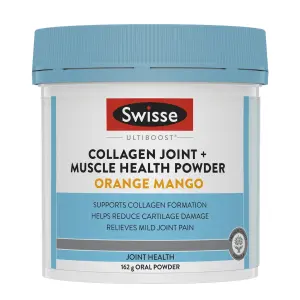
Swisse Ultiboost Collagen Joint + Muscle Health Powder
Swisse Ultiboost Collagen Joint + Muscle Health Powder is formulated to support joint cartilage health, muscle health and collagen formation. With FORTIGEL® collagen, glucosamine,...
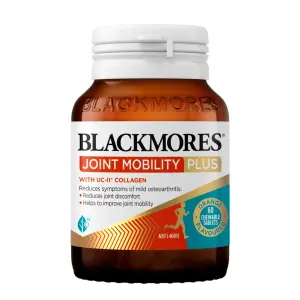
Blackmores Joint Mobility Plus
Blackmores Joint Mobility Plus is a daily joint health supplement formulated to help relieve mild joint pain, aches and stiffness associated with mild osteoarthritis. It combines U...
What should you check when buying in Bangladesh?
- Confirm the exact product. Match the formula, pack size and daily directions with the supplied packaging.
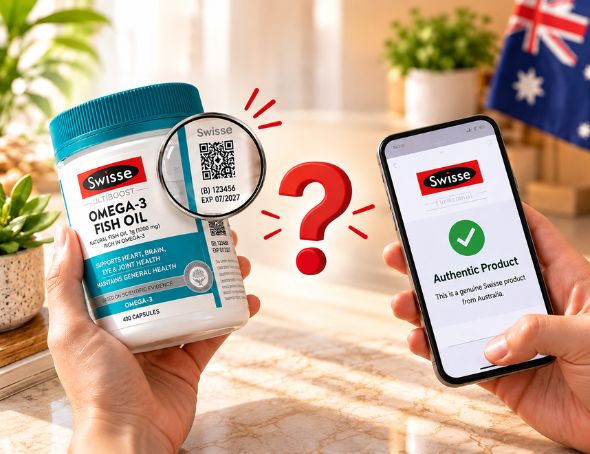
- Check traceability. Keep the invoice and check the seller's contact details, intact seal, batch number and expiry. Packaging appearance alone cannot prove authenticity.
- Verify dietary requirements. Ask for product-specific evidence for any halal claim. Do not assume all products from one brand have the same certification.
- Plan storage before ordering. Heat and humidity can make label conditions difficult to maintain. Avoid hot vehicles, sunny shelves and damp bathrooms; follow the temperature and moisture limits on your pack.
- Compare cost per labelled day. For an 18-serving pack, divide its current price by 18. A lower daily cost is useful only if the formula is suitable.
What else matters for joint health?
For osteoarthritis, NICE recommends exercise tailored to the person, including muscle strengthening and general aerobic activity. Weight management can also help when someone is living with overweight or obesity. A physiotherapist or clinician can help adapt activity to your symptoms and ability. Supplements do not replace that care or prescribed treatment.
Get prompt medical assessment for persistent or worsening joint symptoms. Sudden severe pain, a hot or swollen joint, inability to move or put weight on it, or fever and feeling unwell need urgent attention. These can be signs of a serious joint problem; do not try to manage them by buying collagen.