Bone Health Supplements in Bangladesh – What You Actually Need
Bone health in Bangladesh requires more than just milk or calcium. This guide explains why Calcium, Vitamin D3, Vitamin K2, and Magnesium must work together to build strong bones. Learn age-wise needs, common habits that weaken bones, and how the right supplements help prevent joint pain and early osteoporosis safely.
We often think bone health is simple: "Just drink milk." But in Bangladesh, despite eating dairy and fish, millions suffer from weak bones, joint pain, and early osteoporosis. Why? Because Calcium alone is not enough. To build strong bones that last a lifetime, you need the right team of minerals working together.
Beyond Calcium: The "Big 4" You Actually Need
If you only take Calcium, you are only doing 25% of the job. For a supplement to actually strengthen your bones (and not just sit in your stomach), it must have these partners:
- 1. Calcium (The Bricks): The raw material. Ideally, look for Calcium Citrate or carbonate blends that digest easily.
- 2. Vitamin D3 (The Transport): Think of D3 as the truck that carries Calcium from your gut into your blood. Without D3, calcium passes right through you. Read more about the D3 connection here.
- 3. Vitamin K2 (The Guide): The most ignored hero. K2 takes calcium from the blood and puts it into the bone. Without K2, calcium can calcify your arteries.
- 4. Magnesium (The Glue): It keeps bones flexible so they don't snap under pressure.
What Do You Need? (By Age Group)
Your bone needs change as you age. One size does not fit all.
Growing Kids (Ages 3-12)
Goal: Peak Bone Mass.
They need easy-to-absorb Calcium + D3 to support rapid growth spurts and prevent rickets.
Adults (Ages 25-45)
Goal: Maintenance.
Bone breakdown starts to equal bone building. A standard Calcium + D3 supplement is usually sufficient here.
Seniors & Menopause (Age 50+)
Goal: Prevention.
Bone loss accelerates rapidly. You strictly need Calcium + D3 + K2 to ensure calcium goes to bones, not arteries. See our full Osteoporosis guide.
The "Indoor" Worker
Goal: D3 Correction.
If you work 9-5 in AC, you likely have no sun exposure. You need higher Vitamin D3 intake alongside calcium.
Top-Rated Bone Health Supplements in Bangladesh
These Australian formulas are chosen because they follow the "Team" approach, combining minerals for actual absorption.
1) The Essential: Swisse Calcium + Vitamin D3
Best For: Daily maintenance for men and women (Ages 25-50).
This is the "Foundation" bottle. It provides high-potency calcium along with natural Vitamin D3. It is designed to dissolve smoothly in the stomach, reducing the bloating common with cheaper local tablets.
- Why we picked it: It covers the two most common deficiencies in Bangladesh in one go.
- Dosage: 2-3 tablets daily with food.
Don't wait for pain. Bone loss is silent. By the time you feel an ache, you may have already lost density. This is your daily insurance.

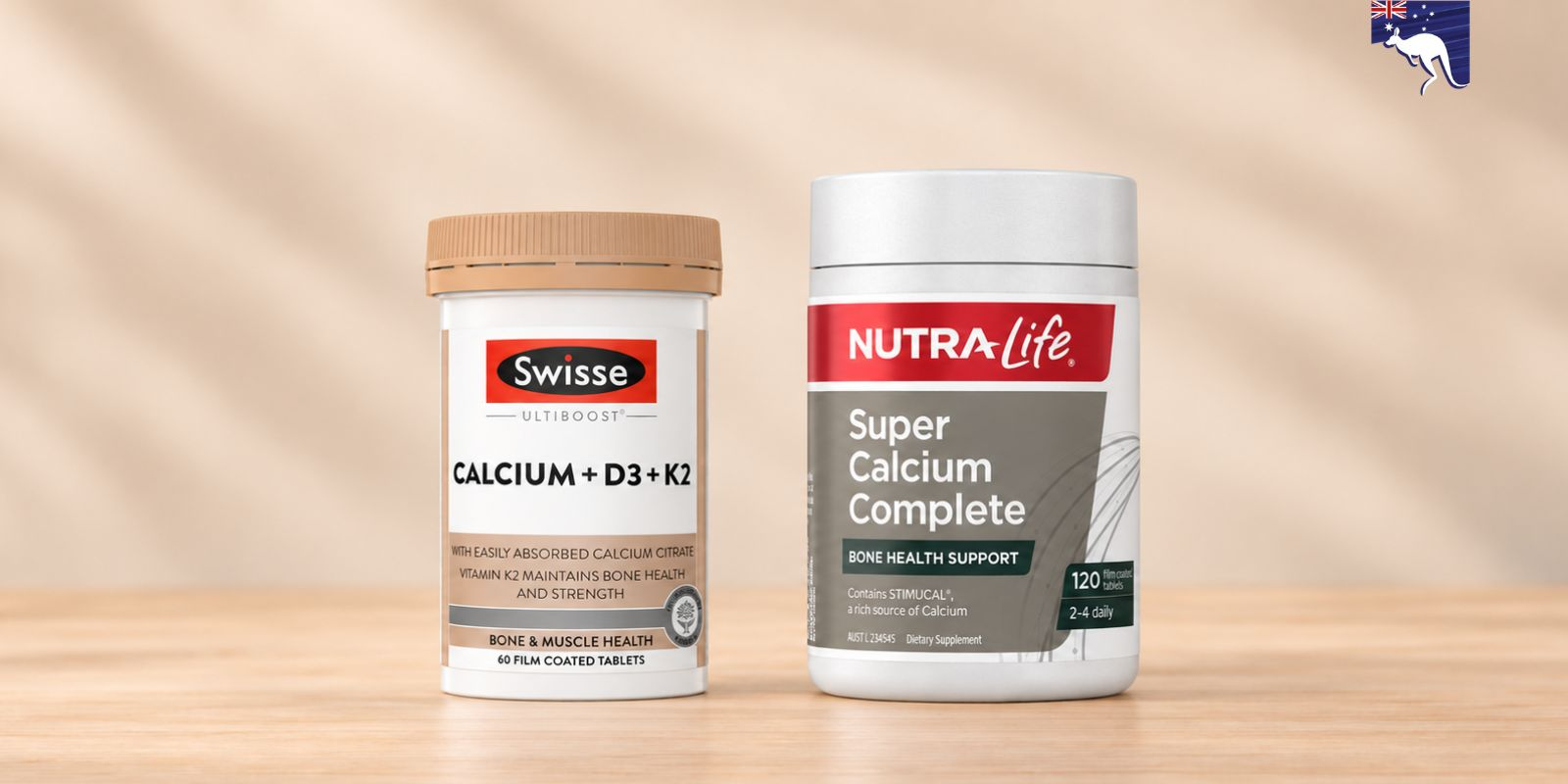
2) The Advanced: Swisse Calcium + D3 + K2
Best For: Adults over 50, Post-Menopausal Women, or those with Osteoporosis concern.
This is the smart choice. It adds Vitamin K2 (Menaquinone-7) to the mix. K2 activates osteocalcin, which grabs calcium and anchors it into the bone. It prevents calcium from settling in your arteries.
- Why we picked it: It addresses the "Calcium Paradox" (safety for the heart and kidneys).
- Dosage: Follow the label instructions carefully.
Smart Aging Rule: If you are over 50, taking Calcium without K2 is risky. Upgrade to K2 to ensure the calcium actually goes to your bones.

3) For Kids: Healthy Care Kids Milk Calcium
Best For: Children aged 2+ who need growth support.
Kids hate swallowing tablets. This liquid-filled capsule is easy to take and is derived from real cow's milk, making it bio-identical to food sources. It supports strong teeth and height growth.
- Why we picked it: It builds the "Bone Bank" early in life.
- Dosage: Twist the tail of the capsule and squeeze onto food, or chew whole (if age appropriate).
The Height Window: A child's bone foundation is built before age 12. Don't miss this critical growth window with poor nutrition.

Habit Check: Are You Destroying Your Calcium?
Did you know? Drinking strong tea immediately after a meal (a common Bangladeshi habit) blocks calcium absorption due to tannins. Excess salt and fizzy drinks also leach calcium from your bones. Try to keep a 1-hour gap between your calcium supplement and your tea.
Frequently Asked Questions (FAQs)
1. Will taking calcium cause kidney stones?
This is a common fear. Interestingly, low calcium intake can sometimes cause stones. However, taking excess calcium without water and Magnesium increases the risk. The solution? Drink plenty of water, stick to the recommended dose, and consider magnesium support.
2. Can I take Calcium and Iron together?
No. They fight for absorption. If you take Iron for anemia, take it at lunch. Take your Calcium at dinner. Keep them at least 4 hours apart.
3. Is liquid calcium better than tablets?
Liquid or "Soft Gel" forms (like the Kids Milk Calcium) often absorb faster, but high-quality Australian tablets (like Swisse) are formulated to break down quickly in the gut, making them equally effective.
4. At what age should I start taking supplements?
Bone density peaks at 30. If your diet is poor, starting a low-dose supplement in your 30s is smart maintenance. By age 50, it becomes a necessity for most people to prevent fractures.
Your Bones Need a Strategy, Not Just a Pill
From Magnesium for flexibility to Zinc for healing, discover how minerals work together to keep you moving pain-free.
Related Topics:
References & Scientific Sources
We rely on evidence-based guidelines to ensure your bone health strategy is safe and effective.
- NIH Osteoporosis and Related Bone Diseases – Calcium & D3
- Harvard T.H. Chan School of Public Health – Vitamin K
- Mayo Clinic – Osteoporosis Treatment & Prevention
- Therapeutic Goods Administration (TGA) Australia
Medical Disclaimer
The information provided in this blog post is for general informational purposes only and does not constitute medical advice. It is not intended to diagnose, treat, cure, or prevent any disease. Always consult with a qualified healthcare professional before starting any new supplement regimen. Australian Goods Bangladesh is a retailer of health products and not a medical service provider.