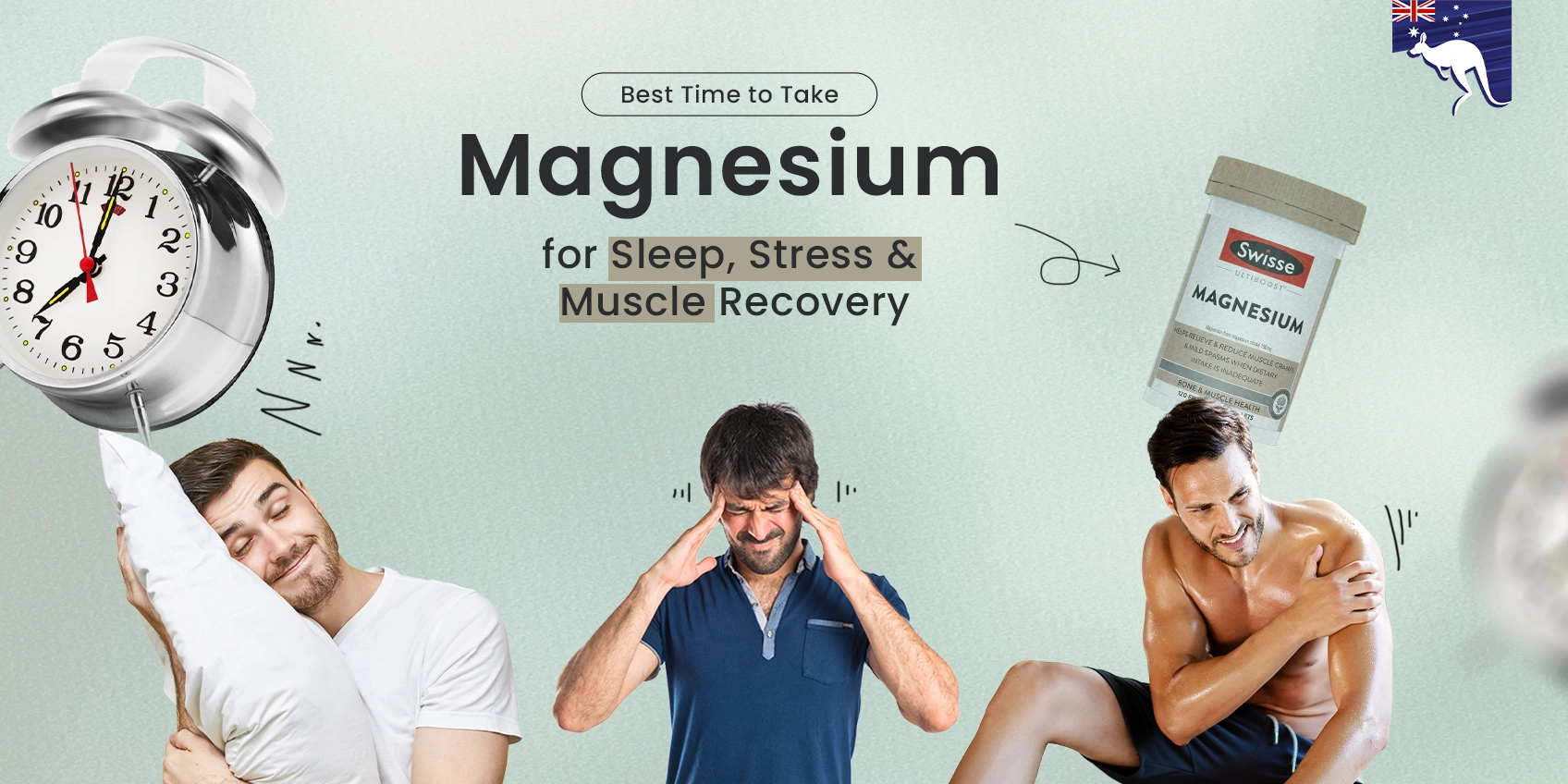
Best Time to Take Magnesium for Sleep, Stress & Muscle Recovery
Magnesium plays a vital role in sleep, stress management, and muscle recovery. This guide helps you understand when to take magnesium for maximum benefits, including timing recommendations for sleep, stress, and post-workout recovery. Find trusted magnesium supplements available in Bangladesh to improve your wellness.
Magnesium is one of the most important minerals for relaxation, muscle function, nerve support, energy production, and overall wellness. Many people in Bangladesh search for magnesium for sleep, stress, muscle cramps, tiredness, and post-workout recovery, but they often feel confused about when to take it and which form is right for them. This guide explains the best time to take magnesium, how it may support sleep, stress, and muscle recovery, and which trusted magnesium supplements are available in Bangladesh.
Quick Navigation to This Magnesium Guide
What Is Magnesium and Why Is It Important?
Magnesium is an essential mineral that helps the body perform hundreds of important functions. It supports muscle contraction and relaxation, nerve communication, energy production, blood sugar regulation, protein synthesis, and normal heart function.
In daily life, magnesium is often discussed for three common goals: better sleep, calmer mood, and fewer muscle cramps. For people in Bangladesh, these concerns are very common because long work hours, traffic stress, irregular meals, high tea or coffee intake, gym routines, heat, sweating, and poor sleep patterns can all make the body feel more tired and tense.
How Magnesium Affects Sleep, Stress & Muscle Recovery
- Sleep support: Magnesium helps the body relax, supports normal nervous system function, and may help improve sleep quality when low magnesium intake is part of the problem.
- Stress support: Magnesium supports a calm nervous system and may help the body manage everyday tension better.
- Muscle recovery: Magnesium helps muscles contract and relax properly, which is why many people use it for cramps, tightness, and post-exercise recovery.
Simple Takeaway:
Magnesium is not a sleeping pill, painkiller, or instant stress solution. It is a daily mineral support that works best when used consistently with proper sleep, hydration, balanced food, and a healthy routine.
Benefits of Magnesium for Sleep, Stress & Muscle Recovery
Magnesium for Better Sleep
If your body feels tense at night, your muscles feel tight, or your mind feels too active before bed, magnesium may help support a more relaxed night routine. It supports muscle relaxation and normal nerve function, which can make it easier for the body to wind down.
- Helps the body relax before bedtime.
- Supports normal nervous system function.
- May support sleep quality when low magnesium intake is affecting relaxation.
Magnesium for Stress Relief
Magnesium is often called a relaxation-support mineral because it plays a role in nerve signalling and muscle relaxation. For students, office workers, business owners, parents, and people with busy schedules in Bangladesh, magnesium may be helpful as part of a daily stress-support routine.
- Supports a calmer nervous system.
- Helps reduce the feeling of physical tension.
- Works well with a routine that includes proper sleep, hydration, and less late-night screen time.
Magnesium for Muscle Recovery & Cramps
Magnesium supports healthy muscle contraction and relaxation. This makes it useful for people who experience muscle cramps, mild spasms, tightness, or soreness after exercise. It is also relevant for people who sweat a lot in Bangladesh’s hot and humid weather.
- Supports muscle relaxation after exercise.
- Helps maintain normal muscle and nerve function.
- May support recovery for gym-goers, runners, active adults, and people with physically demanding routines.
When Is the Best Time to Take Magnesium for Sleep, Stress & Muscle Recovery?
The best time to take magnesium depends on your main goal. Some people take it at night for relaxation, some take it after workouts for recovery, and some prefer taking it with meals to make it easier on the stomach.
Best Time to Take Magnesium for Sleep
For sleep support, magnesium is usually taken in the evening or around 30–60 minutes before bedtime, depending on the product label. This timing works well because it fits naturally into a wind-down routine.
- Take it after dinner or before bed if your goal is relaxation.
- Avoid taking it with too much tea or coffee late at night.
- Combine it with a consistent sleep schedule for better routine support.
Best Time to Take Magnesium for Stress
For everyday stress support, magnesium can be taken either in the morning with breakfast or in the evening after dinner. The best time is the time you can follow consistently.
- Morning use may suit people who feel tense during the workday.
- Evening use may suit people who feel mentally and physically tired after work.
- If the product makes you feel relaxed, evening may be a better option.
Best Time to Take Magnesium for Muscle Recovery
For muscle recovery, magnesium is often taken after exercise or with an evening meal. This timing can support relaxation, recovery, and overnight muscle comfort.
- Take after workout if your main goal is recovery.
- Take in the evening if cramps or muscle tightness happen at night.
- Powder forms can be convenient after gym, running, or sports.
| Goal | Suggested Timing | Practical Tip |
|---|---|---|
| Sleep Support | Evening or 30–60 minutes before bed | Best with a calm bedtime routine |
| Stress Support | Morning or evening | Choose the time you can follow daily |
| Muscle Recovery | After workout or with dinner | Helpful after sweating, exercise, or muscle tightness |
| Sensitive Stomach | With food | Avoid taking high doses on an empty stomach |
Practical Takeaway:
For sleep, take magnesium at night. For stress, take it at the time that fits your routine. For muscle recovery, take it after exercise or in the evening. Always follow the label direction first.
Magnesium Dosage and Forms: What You Should Know
Magnesium dosage can be confusing because total daily magnesium includes both food and supplements. Adults usually need magnesium from food and supplements combined, but high supplemental magnesium should be used carefully. Always check the elemental magnesium amount on the label and avoid taking more than recommended.
Recommended Magnesium Dosage for General Wellness
Many adults use magnesium supplements in the range of 100–350 mg elemental magnesium per day, depending on diet, product type, and personal need. Some products may have different serving sizes, so the safest approach is to follow the product label and consult a healthcare professional if you are unsure.
- Do not take multiple magnesium products together without checking the total dose.
- High supplemental doses may cause loose stool, nausea, or stomach discomfort.
- People with kidney disease, heart conditions, or medication use should ask a doctor before taking magnesium.
Common Forms of Magnesium
| Magnesium Form | Best Known For | Who May Prefer It |
|---|---|---|
| Magnesium Glycinate | Relaxation, sleep, stress, gentle digestion | People with sensitive stomach or night-time tension |
| Magnesium Citrate | Absorption, muscle relaxation, occasional constipation support | People who want a commonly used, well-absorbed form |
| Magnesium Oxide | General magnesium support, lower absorption | People using it only as directed; may not suit sensitive digestion |
| Magnesium Powder | Flexible serving, easy mixing, recovery routine | Gym-goers, active adults, and people who dislike tablets |
| Magnesium Oil | Topical muscle comfort | People who prefer external application for tight muscles |
Symptoms of Magnesium Deficiency
Low magnesium intake does not always show clear symptoms at first. But when intake stays low for a long time, some people may notice muscle cramps, fatigue, poor sleep, mood changes, or weakness. These symptoms can also happen for many other reasons, so magnesium should not be treated as the only explanation.
Common Signs People Often Notice
- Muscle cramps, tightness, or mild spasms.
- Tiredness or low energy.
- Restless sleep or difficulty relaxing.
- Mood changes or feeling easily stressed.
- Frequent fatigue after physical activity.
Who May Be at Higher Risk of Low Magnesium Intake?
- People with poor or irregular diet.
- Athletes, gym-goers, and physically active people.
- People who sweat a lot due to Bangladesh’s hot and humid weather.
- Older adults.
- People with long-term digestive issues or certain medical conditions.
- People who regularly feel stressed and sleep poorly.
Important:
Muscle cramps, fatigue, insomnia, and stress can have many causes. If symptoms are severe, long-lasting, or affecting daily life, consult a qualified healthcare professional instead of self-diagnosing.
How to Choose the Right Magnesium Supplement in Bangladesh
When buying magnesium supplements in Bangladesh, do not choose only by price. Check the magnesium form, dose, product purpose, brand reputation, storage condition, expiry date, and whether the product is factory-sealed and authentic.
Match the Product to Your Main Goal
For Sleep
Look for magnesium glycinate, magnesium citrate, or formulas designed for sleep and relaxation support.
For Stress
Choose gentle, well-absorbed magnesium forms that support nervous system balance and daily calmness.
For Muscle Recovery
Powder or high-strength magnesium options may be useful for gym-goers, active adults, and cramp-prone users.
What to Check Before Buying
- Form: Glycinate, citrate, powder, tablet, capsule, or topical oil.
- Elemental magnesium: This is the actual magnesium amount your body receives.
- Label direction: Check serving size, timing, and daily limit.
- Brand quality: Choose trusted Australian and New Zealand brands when possible.
- Storage: In Bangladesh’s heat and humidity, proper storage helps protect supplement quality.
- Authenticity: Buy from a trusted store that provides sealed packaging, batch information, and expiry transparency.
Recommended Magnesium Supplements Available in Bangladesh
Below are practical magnesium options available through Australian Goods Bangladesh. The right choice depends on your goal: sleep, stress support, cramps, recovery, or daily mineral support.
Swisse Ultiboost Magnesium Glycinate: The Gentle Stress, Sleep & Cramp Support Option
What it is: Swisse Ultiboost Magnesium Glycinate is a magnesium supplement designed for people who want a gentle, well-absorbed magnesium option for relaxation, muscle function, and nervous system support.
- Why Buy This: Magnesium glycinate is often preferred by people who want a stomach-friendly option for stress, sleep routine, and muscle comfort.
- Best For: Adults with stress-heavy routines, night-time tension, mild cramps, or sensitive digestion.
- Best Time to Take: Evening with food or 30–60 minutes before bed, depending on label direction.
Want magnesium without stomach discomfort? This is a strong option if your goal is calmness, sleep routine support, and muscle relaxation.

Swisse Ultiboost Magnesium + Sleep: The Night-Time Relaxation Choice
What it is: Swisse Ultiboost Magnesium + Sleep is designed for adults who want magnesium support with a stronger night-time relaxation focus.
- Why Buy This: It is a practical choice for people who mainly search for magnesium for sleep, night-time muscle tension, and evening calmness.
- Best For: Adults with restless nights, stress-related sleep disturbance, or muscle tightness before bed.
- Best Time to Take: Usually 30–60 minutes before bedtime, following the product label.
If sleep is your main concern, choose a formula built for night-time use. This option fits a bedtime routine better than a general magnesium product.

Healthy Care Super Magnesium Powder: The Muscle Cramp & Recovery Support
What it is: Healthy Care Super Magnesium Powder is a powder-format magnesium option for people who want muscle cramp support, energy support, and post-exercise recovery help.
- Why Buy This: The powder format is useful for people who do not like tablets and want a drinkable magnesium routine after meals or workouts.
- Best For: Gym-goers, active adults, office workers with muscle tension, and people with low dietary magnesium intake.
- Best Time to Take: After meals or post-workout, following the product label.
Prefer a drink instead of tablets? This powder option is easier to fit into a post-workout or evening recovery routine.
Swisse Ultiboost High Strength Magnesium Powder Berry: The Active Lifestyle Powder Option
What it is: Swisse Ultiboost High Strength Magnesium Powder Berry is a powder magnesium formula for muscle health, recovery, energy support, and relaxation.
- Why Buy This: It is useful for people who want a high-strength powder format with a berry taste and daily muscle support.
- Best For: Active adults, gym users, runners, and people who feel muscle tightness after long workdays or exercise.
- Best Time to Take: During or after meals, or after physical activity, following the product label.
Need magnesium for movement, muscle comfort, and daily energy? A powder format can be easier for active users to maintain.

Quality Tips Before Buying Magnesium Supplements in Bangladesh
Magnesium supplements are popular, but quality matters. A low-quality or poorly stored supplement may not give the same experience as a properly sourced, factory-sealed, and well-stored product.
Choose Reputable Brands
Trusted brands such as Swisse, Healthy Care, and Nutra-Life are popular choices for people looking for Australian magnesium supplements in Bangladesh. When buying, check the product label, brand name, batch number, expiry date, and packaging condition.
Why Storage Matters in Bangladesh
Bangladesh’s heat and humidity can affect supplement quality if products are not stored properly. This is especially important for powders, gummies, soft capsules, and products sensitive to moisture. Choose sellers that follow proper storage and freshness control.
Product Safety Checklist
- Buy factory-sealed products only.
- Check expiry date before use.
- Follow the label dosage.
- Avoid taking multiple magnesium supplements together unless advised.
- Consult a healthcare professional if you are pregnant, breastfeeding, taking medicine, or managing a health condition.
- People with kidney disease should not take magnesium supplements without medical advice.
Final Recommendations
Magnesium can be a helpful daily mineral support for sleep, stress, muscle cramps, and exercise recovery. But the best time to take it depends on your goal. For sleep, evening or bedtime use is usually most practical. For stress, morning or evening can work depending on your routine. For muscle recovery, post-workout or evening use may be more suitable.
The most important rule is consistency. Choose the right form, follow the product label, and do not expect instant results from one or two doses. Magnesium works best when combined with enough water, balanced meals, regular sleep, movement, and stress control.
Looking for Authentic Magnesium Supplements in Bangladesh?
Explore original Australian magnesium supplements for sleep, stress support, muscle cramps, and post-workout recovery — with nationwide delivery and Cash on Delivery options.
Safety Note
- Supplements are not medicines.
- They are not intended to diagnose, treat, cure, or prevent disease.
- Magnesium should not replace a balanced diet, medical treatment, or professional health advice.
- Do not exceed the recommended dose on the product label.
- Pregnant or breastfeeding women, people with kidney disease, people with heart conditions, and people taking medications should consult a qualified healthcare professional before use.
Frequently Asked Questions (FAQs)
1. Can magnesium help with sleep issues?
Magnesium may support sleep quality by helping the body relax and supporting normal nervous system function. It is most useful when low magnesium intake, muscle tension, or poor relaxation is part of the problem. If sleep problems continue, consult a doctor.
2. What is the best time to take magnesium for sleep?
Many people take magnesium in the evening or around 30–60 minutes before bedtime. Always follow the product label because different formulas may have different directions.
3. How much magnesium should I take for muscle cramps?
The right amount depends on the product, your diet, and your health condition. Many supplements provide 100–350 mg elemental magnesium per day. For frequent or severe cramps, consult a healthcare professional before increasing the dose.
4. Can magnesium reduce stress?
Magnesium supports normal nervous system function and muscle relaxation, so it may help the body manage everyday tension better. It should be used as part of a healthy routine, not as a replacement for mental health care.
5. Is magnesium safe to take every day?
Magnesium is generally safe for many adults when taken as directed. However, high supplemental doses can cause digestive discomfort and may not be suitable for people with kidney disease or certain medication use. Follow the label and ask a healthcare professional if unsure.
6. What is the best magnesium form for sleep?
Magnesium glycinate is commonly preferred for sleep and relaxation because it is gentle on the stomach. Magnesium citrate may also be used in some sleep-focused products. The best choice depends on your body, product formula, and tolerance.
7. Should I take magnesium before or after workout?
For muscle recovery, many people take magnesium after workout or with an evening meal. This timing can support muscle relaxation and recovery, especially after sweating or intense activity.
8. Can I take magnesium with Vitamin D or calcium?
Magnesium, Vitamin D, and calcium all support important body functions, especially bone and muscle health. Some products combine them. If you take multiple supplements, check the total dosage and consult a healthcare professional if needed.
References & Scientific Sources
This article is written for educational and general informational purposes using cautious supplement language, established nutrition references, and product information from Australian Goods Bangladesh.
Medical Disclaimer
This article is for educational and general informational purposes only. It does not diagnose, treat, cure, or prevent disease, and it should not replace medical advice. Supplements are not medicines. If you are pregnant, breastfeeding, under medical care, taking prescription medicine, managing kidney disease, heart disease, or any long-term health condition, consult a qualified healthcare professional before starting magnesium or any supplement. Australian Goods Bangladesh is a retailer, not a medical service provider.