Best Multivitamin for Kids in Bangladesh: Age & Label Guide
Choosing children’s vitamins involves more than picking a flavour. Compare three multivitamin options sold in Bangladesh, understand their different age instructions, and separate a practical dietary supplement from promises about appetite, height or fewer illnesses.
Quick Answer
There is no single best multivitamin for every child. Most healthy children eating a varied diet do not need a routine multi. When supplementation is appropriate, choose the exact age-labelled formula, a format the child can chew safely, and suitable ingredients. A paediatrician should assess restricted eating, poor growth or suspected deficiency before a product is chosen.
Key Takeaways
- Children’s multivitamins have different age-based directions; one gummy or tablet is not a universal daily serving.
- A product labelled for immunity or calcium is not automatically a broad multivitamin.
- Check allergens, other fortified foods and the child’s chewing ability before introducing a supplement.
The gummy looks like a sweet, the chewable promises a long list of nutrients, and both say “kids”. How do you choose? The best multivitamin for kids in Bangladesh starts with a smaller question: what, if anything, is missing from your child’s diet? Once that is clear, age directions and the actual label matter more than colourful packaging.
Does your child need a multivitamin?
A child who eats a reasonable variety of foods and grows as expected may not need one. The American Academy of Pediatrics advises discussing vitamin supplements with a paediatrician; healthy children with balanced diets generally do not need extra vitamins beyond recommended amounts.
Start with a few days of meals and snacks, rather than one refused dinner. Note which food groups are consistently missing, whether the child drinks fortified milk, and whether a supplement has already been prescribed. Restricted eating, difficulty chewing, persistent tiredness or a change in growth deserves a professional review. School pressure or screen time alone cannot identify a nutrient deficiency.
For a toddler, ask about the appropriate formulation before buying a gummy. A child must meet the pack’s age instructions and be able to chew it safely. Never turn an adult multivitamin into a child’s dose by cutting a tablet.
Three children’s multivitamins to compare
These are examples from our catalogue, with Australian manufacturer directions checked on 25 October 2026. They are not ranked by medical effectiveness. An imported pack can differ, so the bottle supplied must match the instructions used.
| Product | What changes the choice? |
|---|---|
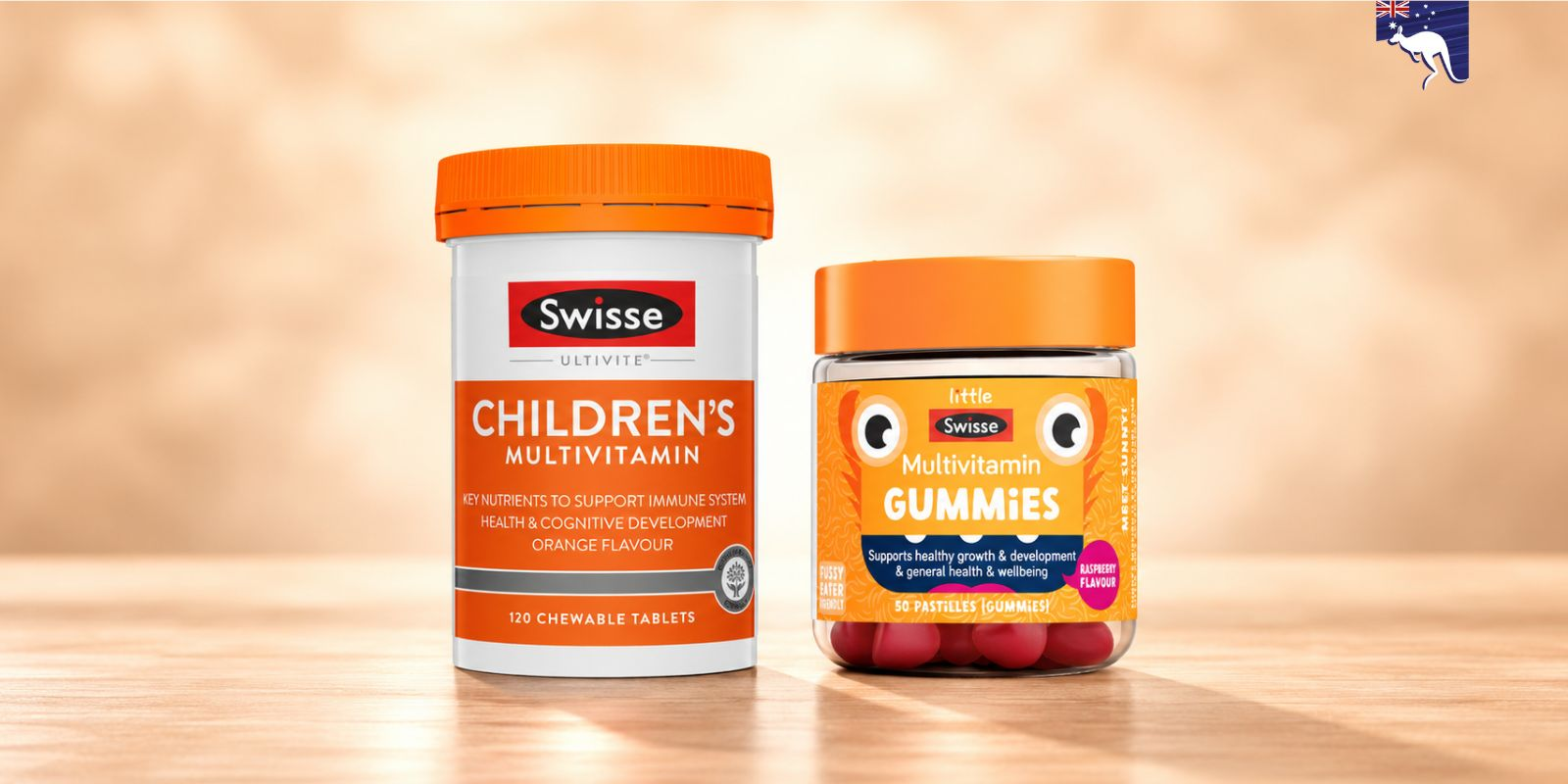
| Little Swisse Multivitamin Gummies | Raspberry gummy. The manufacturer lists one daily for ages 2–8 and two for 9–12, with or just after a meal. Contains sulfites and sugar alcohols. |
| Swisse Ultivite Children’s Multivitamin | Orange chewable tablet. Published directions use different age bands from the gummies. Contains soya beans, sulfites and sucralose. |
| Blackmores Superkids Multi Chewables | Strawberry-vanilla chewable. The manufacturer lists one daily with food for ages 2–12. Contains soya bean products and sulfites. |
Check the four-year boundary: Swisse’s Children’s Multivitamin webpage lists one tablet for “2–4 years” and two for “4–12 years”. Those bands overlap at age four. Ask a pharmacist or the manufacturer to clarify the exact pack’s directions for a four-year-old; do not resolve it by borrowing the gummy dose.
For Little Swisse gummies, the label also warns that maltitol and sorbitol can have a laxative effect. “Sugar free” does not mean sweetener free or suitable in unlimited quantities. The card below opens that specific gummy product, so it is easy to distinguish it from other Swisse children’s packs.

Little Swisse Multivitamin Gummies
Little Swisse Multivitamin Gummies in Bangladesh: age-based directions, 50 or 100 gummies, vitamin D, iodine, zinc and current pack price.
Gummy or chewable tablet: which is more practical?
A format is useful only if your child can take the labelled amount safely. Both gummies and chewable tablets need chewing; neither should be swallowed whole. The three manufacturers require adult supervision. Keep the entire bottle out of reach between doses, even when the child can open it independently.
- Check the full serving: two small gummies can represent one day’s intake, while another product uses one tablet. Count the daily amount, not the number of bottles.
- Compare allergens separately: “no added dairy” does not establish that a product is free of soy, sulfites or every other allergen.
- Look beyond the nutrient count: a multi may contain little calcium, no iron, or different quantities of vitamin D. The name alone cannot answer those questions.
What about appetite, immunity and height?
Normal immune function needs adequate nutrition, but a supplement is not a guarantee against colds. An “immune” product may supply only selected ingredients; a calcium product has another purpose. Neither should be presented as an interchangeable replacement for a broad multivitamin.
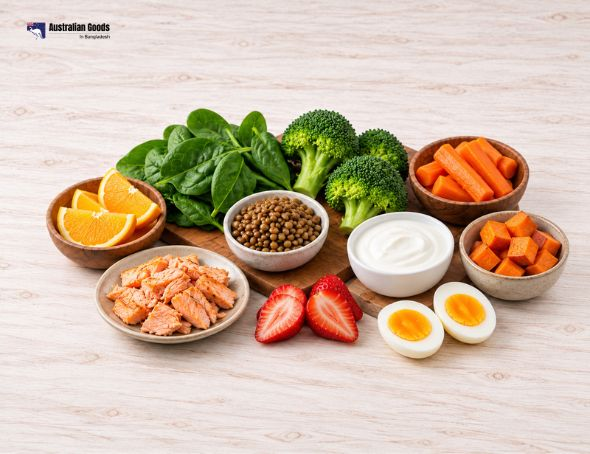
Similarly, vitamins do not supply a meal’s protein and energy. If the concern is an extremely narrow diet or faltering growth, the next step is to understand the feeding problem. The Royal Children’s Hospital nutrition guide recommends a mix of food groups and medical advice when eating or development is concerning. Familiar foods such as lentils, eggs, fish, vegetables, fruit and yoghurt can contribute according to the child’s age, allergies and usual diet.
Buying kids’ multivitamins in Bangladesh
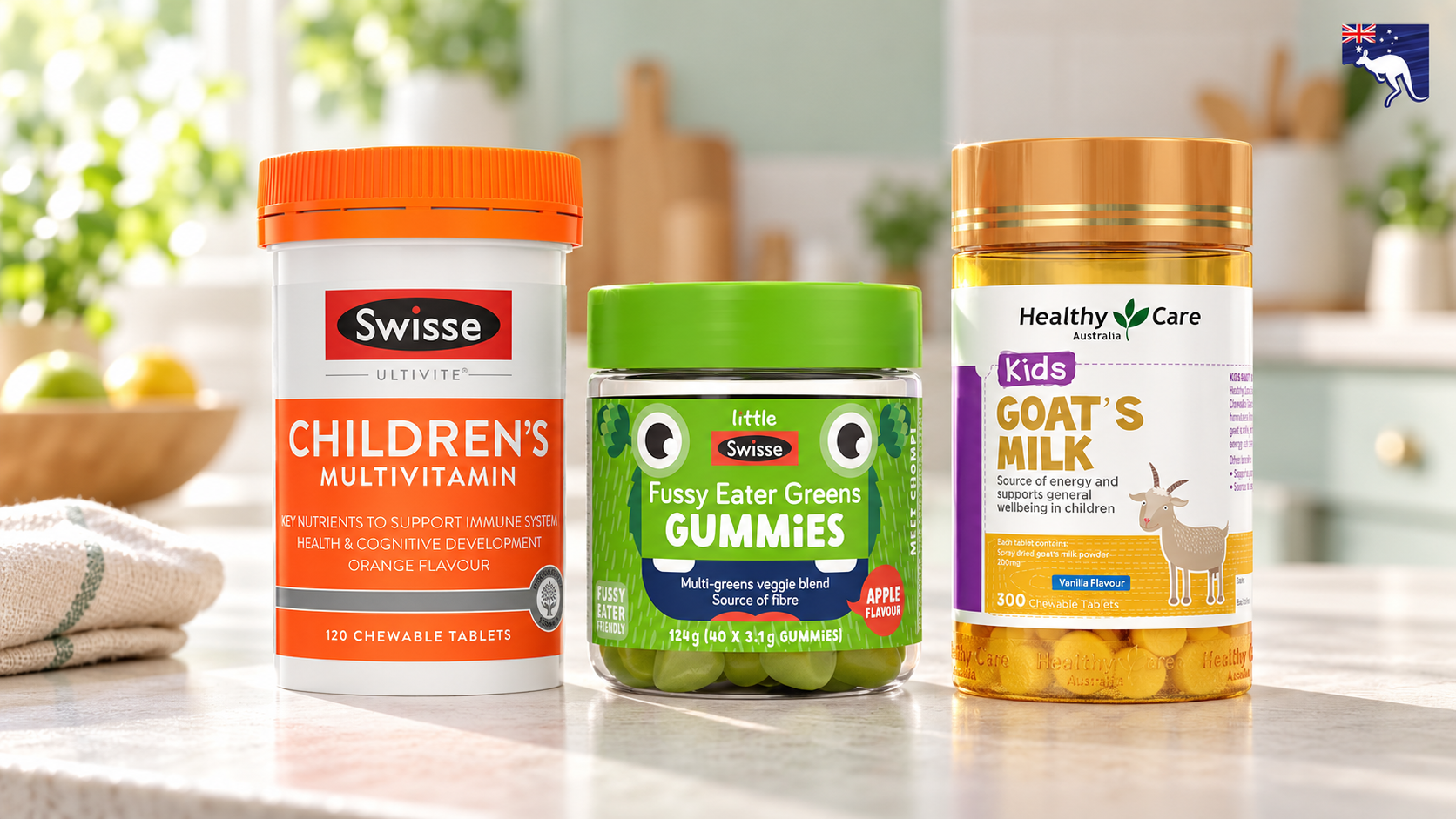
Request clear photos of the label and expiry date when the listing does not show them. Confirm the exact product name: Little Swisse Multivitamin Gummies and Swisse Children’s Multivitamin are different formulas. Check the seal when the bottle arrives, and keep the invoice and batch details.
Work out how long the selected pack lasts at your child’s labelled serving. For example, a 50-gummy pack lasts 50 days at one a day or 25 days at two. That is a pack-duration calculation, not a dose recommendation. It makes price comparisons more useful than judging bottle size alone.
Store according to the actual label. The Australian Little Swisse page specifies below 25°C, while the Children’s Multivitamin page specifies below 30°C; a hot car or sunny windowsill is unsuitable. Finally, an AUST L listing is not an individual TGA approval of a product’s effectiveness or proof that a particular seller’s bottle is authentic.