Teenage Boys vs Girls Multivitamins: What Actually Differs?
Parents comparing teen multivitamins in Bangladesh need more than a boys’ or girls’ label. This guide puts dietary reference intakes beside two Swisse formulas, explains the significance of iron and herbal ingredients, and separates everyday nutrition choices from symptoms that need medical review.
Quick Answer
Teenage boys’ and girls’ multivitamins can differ in iron, zinc, vitamin B6 and added herbs. For ages 14–18, recommended iron and zinc intakes differ by sex, while calcium and vitamin D recommendations are the same. Choose according to age, diet, menstrual losses and medicines; a gendered label alone cannot establish suitability or diagnose a nutrient deficiency.
Key Takeaways
- For ages 14–18, boys and girls share the same calcium and vitamin D reference intakes.
- The Swisse Teenage Women’s formula includes a hormone-related Vitex precaution, so iron content is only part of the comparison.
- A multivitamin’s per-tablet amounts and a teenager’s total dietary requirements are different measurements.
Two teenage multivitamins can look almost identical until you turn the bottles around. One may contain more zinc; the other may include a herb that can affect hormones. For families comparing teenage boys’ and girls’ multivitamins in Bangladesh, those details matter more than the colour of the lid.
Do teenage boys and girls need different nutrients?
They need the same essential nutrients, but the recommended amounts of some differ. The US National Institutes of Health gives these daily reference intakes for healthy adolescents aged 14–18 years:
| Nutrient | Boys | Girls |
|---|---|---|
| Iron | 11 mg | 15 mg |
| Zinc | 11 mg | 9 mg |
| Calcium | 1,300 mg | 1,300 mg |
| Vitamin D | 15 mcg (600 IU) | 15 mcg (600 IU) |
These are total daily intake references from food, drinks and any supplements, not prescribed supplement doses or upper safety limits. They are US reference values, not a Bangladesh-specific dosing schedule. Younger adolescents have different age-based guidance; pregnancy and breastfeeding also change some requirements.
Menstrual blood loss is an important reason to examine iron intake. Diet matters too: plant iron is absorbed less efficiently than iron from animal foods. A vegetarian teenage boy can therefore need careful dietary planning even though the table’s reference amount for boys is lower.
Swisse Teenage Men’s vs Women’s: the actual formula comparison
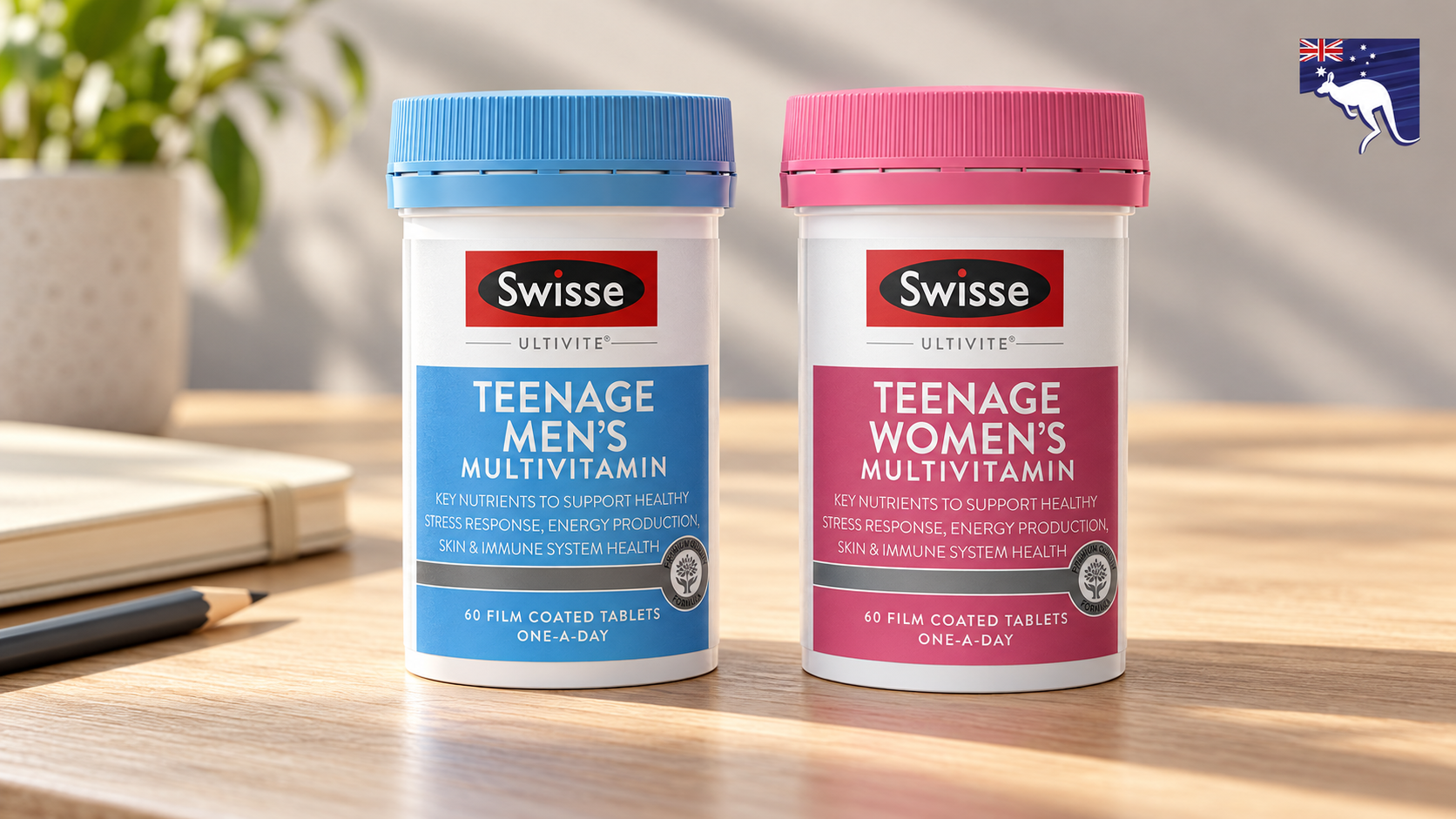
Swisse Ultivite Teenage Men’s Multivitamin and Swisse Ultivite Teenage Women’s Multivitamin provide the following selected amounts per tablet, according to the manufacturer pages checked on 25 October 2026.
| Nutrient | Teenage Men’s | Teenage Women’s |
|---|---|---|
| Iron | 4 mg | 5 mg |
| Zinc | 15 mg | 11 mg |
| Vitamin B6 | 0.822 mg | 7.98 mg |
| Vitamin D3 | 5 mcg | 5 mcg |
| Calcium | 5 mg | 7.07 mg |
| Folic acid | 400 mcg | 400 mcg |
The tables answer different questions: what a teenager needs across the day, and what one tablet supplies. Do not subtract a tablet’s numbers from the reference table and automatically buy extra supplements to make up the difference. Food intake and individual needs must be considered.
A larger amount of one nutrient also does not make the whole formula a better choice.
The difference that an iron comparison can miss: Vitex
The Teenage Women’s formula contains Vitex agnus-castus. Swisse warns that it can affect hormones and medicines, including oral contraceptives, and advises consulting a health professional before use. That is relevant whether contraception is used for pregnancy prevention or menstrual symptoms.
Both formulas declare soybeans, sulfites and phenylalanine. The Men’s webpage also contains conflicting “no added soy” wording; do not interpret that as soy-free. Check the supplied pack and resolve an allergy concern before using it.

Swisse Ultivite Teenage Women's Multivitamin
Swisse Teenage Women's Multivitamin 60 tablets in Bangladesh. Compare price, key nutrients, teenage directions, pack duration and Vitex precautions.
Heavy periods and tiredness need more than a higher-iron bottle
Neither Swisse formula is labelled for treating iron-deficiency conditions. A teenager who repeatedly feels dizzy, unusually tired or breathless—especially with heavy periods—should have a medical assessment. These symptoms do not confirm iron deficiency on their own.
The Royal Children’s Hospital notes that needing to change period products every one to two hours or repeatedly soaking through them overnight can indicate heavy bleeding. A clinician may arrange blood tests and investigate the cause. Keep a record of bleeding and symptoms rather than relying on a multivitamin to resolve them.
Why a teen multivitamin may leave the calcium question unanswered
The calcium amounts in these multivitamins are small compared with the dietary reference intake. Review foods such as milk, plain doi, cheese or a calcium-fortified alternative that suits the teenager’s diet and allergies. Check the nutrition panel: plant-based drinks are not all fortified equally.
A dedicated product serves a different purpose. For example, Healthy Care Super Calcium Complex D lists 600 mg elemental calcium per tablet, plus vitamins D3 and K1, with manufacturer directions for adults and children over 12. It is included as a separate label comparison, not a routine addition to either multivitamin. Ask a clinician or dietitian whether a calcium supplement is needed and how it fits the total intake.
Check the exact teen pack sold in Bangladesh
The Swisse webpages describe a teenage serving but do not give numerical age limits. Ask to see the current pack’s age instructions before purchase; the 14–18 reference table above does not establish product eligibility. Also distinguish “Teenage Men’s” and “Teenage Women’s” from the brand’s standard adult formulas when checking a Bangladesh listing.