
Do You Need Vitamin K2 With Vitamin D3?
D3 and K2 often share a supplement label, but taking one does not automatically mean you need the other. Learn the difference between a useful combination and an unnecessary addition, including recent research, dose overlap and medication precautions.
Quick Answer
Not everyone taking vitamin D3 needs a separate vitamin K2 supplement. The nutrients have related roles, but research does not establish a universal combination or ratio for healthy adults. A combined product may suit an individual plan when both ingredients are appropriate. K2 does not prevent vitamin D toxicity, and people taking warfarin need medical advice before using it.
Key Takeaways
- D3 use alone is not a reason to assume you need K2.
- No universal D3-to-K2 ratio has been established for healthy adults.
- K2 cannot make excessive vitamin D safe; check the total dose across all products.
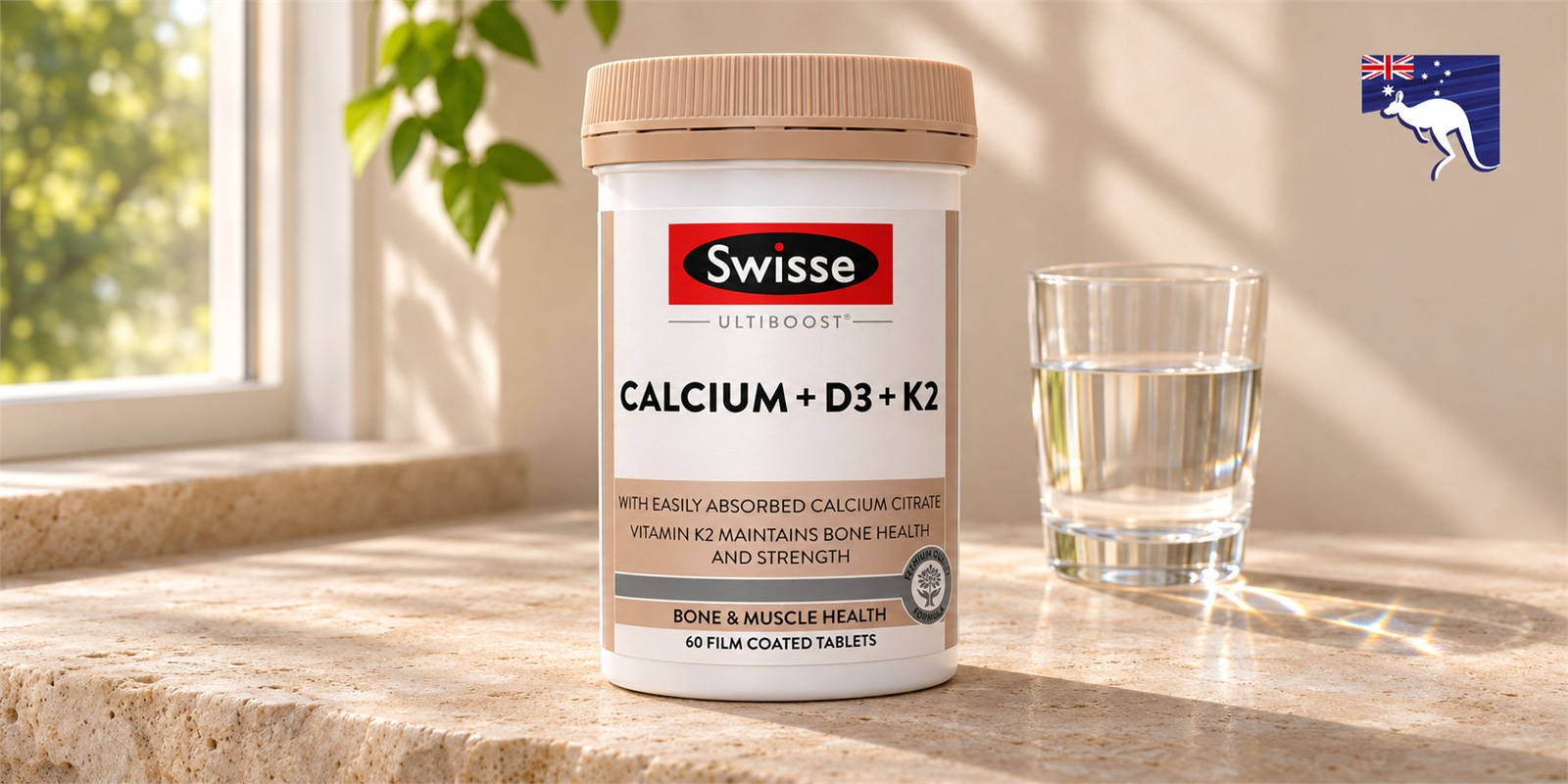
You buy vitamin D3, then notice another bottle offering D3 plus K2. The next question is easy to understand: have you been missing an essential partner all along?
Usually, the answer is less dramatic. Taking vitamin K2 with vitamin D3 can be appropriate in some circumstances, but it is not a requirement for every person taking D3. The reason for supplementation, the amounts in the product and your medical history matter more than the appeal of a two-in-one label.
How D3 and K2 became a popular pairing
Vitamin D helps the body absorb calcium and supports normal bone mineralisation. Vitamin K participates in activating certain proteins, including proteins associated with bone and mineral metabolism. Those related roles provide a biological reason to study the nutrients together.
However, a plausible partnership is different from proof that everyone benefits from a combined supplement. The popular description that D3 absorbs calcium while K2 sends it exclusively into bones makes a complex system sound like a delivery service. The body regulates calcium through several hormones, organs and processes; a capsule cannot guarantee where all calcium will go.
It helps to understand K2 on its own before deciding whether to pair it with D3. Our K2 benefits guide explains its role in the body and separates that role from claims about what an extra capsule can achieve.

Does taking vitamin D3 mean you also need K2?
No. Studies investigate particular people and outcomes rather than one universal rule. The Endocrine Society's vitamin D guidance addresses appropriate vitamin D use in different groups. It does not create a requirement for every healthy adult using D3 to add a K2 supplement.
Bone research is also mixed. In a three-year trial in women with osteopenia, adding MK-7 to calcium and D3 changed a vitamin K-related marker without improving measured bone density compared with placebo. That is why a mechanism or a blood-test change should not be confused with demonstrated protection against fractures.
Coronary arteries and heart valves are different research questions
The 2026 DANCODE trial found slower progression of coronary calcification with K2 plus D3 in people who already had severe coronary calcification. This adds to the evidence for a specific clinical question. It did not establish that all D3 users should take K2, or demonstrate that the combination prevents heart attacks in the general population.
There are also differences between heart conditions. A 2022 trial of K2 and D in older men with aortic valve calcification did not slow progression of that valve outcome. Reading the patient group and outcome is more useful than treating every positive or negative study headline as the final answer.
Match the combination to your reason for taking D3
A combination may be convenient when a clinician has reviewed your needs and both ingredients fit the plan. It can reduce the number of separate bottles and make a routine easier to remember. Convenience is a valid benefit, provided the daily amounts are suitable.
| Your situation | A practical next step |
|---|---|
| You take D3 for a diagnosed deficiency | Follow the prescribed dose and review schedule. Ask before adding another formula. |
| You already use a bone or multivitamin product | Check whether it contains D, K or calcium before buying a combination. |
| You have osteoporosis or cardiovascular disease | Discuss supplements within the treatment plan for that condition. |
| You are healthy and considering general prevention | Review diet and the actual reason for supplementation before adding ingredients. |
| You take warfarin | Do not start K2 without your anticoagulation clinician's advice. |
Why an online D3-to-K2 ratio is not a dosing rule
Online charts may pair a fixed number of K2 micrograms with every amount of D3. These are not universal dosing rules for healthy adults. Different studies have used different preparations, and a research dose in a selected group does not become an everyday shopping target.
Read the units carefully. Vitamin D can be listed in micrograms or international units: 1 microgram equals 40 IU. K2 is generally listed in micrograms. Do not compare the two numbers as though they use the same scale or represent a required balance.
For context, the NIH vitamin D fact sheet gives an adult upper intake level of 4,000 IU daily from all sources. This is a safety limit for usual unsupervised intake, not a target. Clinicians sometimes prescribe higher amounts for specific reasons, with an appropriate duration and monitoring.
K2 does not make excessive vitamin D safe
No reliable evidence supports using K2 as insurance against excessive D3. Too much vitamin D can raise blood calcium and cause harm, including kidney problems. Adding K2 does not remove that risk or make it reasonable to continue a high-dose course indefinitely.
Review your whole shelf: a multivitamin, calcium formula, cod liver oil and separate D3 may all contribute vitamin D. Write down the amount per daily serving for each. If instructions are unclear, ask a pharmacist to calculate the total instead of guessing from front-label numbers.
One bottle or two? Check flexibility, calcium and serving size
Separate products offer flexibility when only one dose needs changing. A combination offers convenience but fixes the relationship between ingredients. Neither format is automatically more effective. Choose the format that matches the plan you can explain clearly.
Check whether calcium is also included. A D3/K2 formula with calcium is a different product from D3/K2 alone, and extra calcium is not automatically needed. Also review allergens, capsule ingredients, serving size and expiry information. A large tablet count can be misleading if the daily serving requires several tablets.
The Swisse example here includes calcium as well as D3 and K2. Use its full label to check whether all three match your plan; the sidebar includes K2-only alternatives. Calculate the total daily amounts across products before choosing a combination.
Swisse Ultiboost Calcium + D3 + K2
Swisse Ultiboost Calcium + D3 + K2. Per tablet: elemental calcium 300 mg, D3 12.5 micrograms and K2 (menaquinone-7) 90 micrograms. Compare Bangladesh pack prices and directions.
For everyday food habits in Bangladesh, keep the whole diet in view. Eggs, suitable dairy, fish and leafy vegetables can all have a place in a varied meal pattern, even though they provide different nutrients. A supplement decision should not push familiar nutritious foods out of the budget.
When the D3-and-K2 decision needs professional advice
Ask before starting a combination if you take warfarin, have kidney disease or high blood calcium, are pregnant or breastfeeding, or are selecting a product for a child. Bring the actual label to the conversation. Knowing the brand name without the ingredients and serving amounts is often not enough.
If D3 has been prescribed, do not stop it simply because you are not taking K2. Clarify the purpose of the treatment, how long to take it and whether follow-up is needed. That gives you a useful plan without turning one recommendation into an ever-growing collection of supplements.