Bilberry Benefits and Side Effects: Does It Help Eye Health?
Bilberry has a long reputation as an eye-health ingredient, but its clinical evidence is limited. Learn what small studies can and cannot show, how extracts differ, and what to check before adding a bilberry product to your routine.
Quick Answer
Bilberry contains anthocyanins, pigments studied for possible health effects. However, reliable evidence has not established bilberry as a treatment for an eye disease or a way to improve night vision in healthy people. Small eye-fatigue studies are interesting but not conclusive. Check the complete product label and discuss use with a clinician if you take medicines, are pregnant or are breastfeeding.
Key Takeaways
- Bilberry is not proven to treat an eye condition or reliably improve night vision.
- An extract amount and its equivalent fruit weight describe different things; read the full label.
- Persistent eye discomfort or changes in vision need assessment, even if a supplement seems to help.
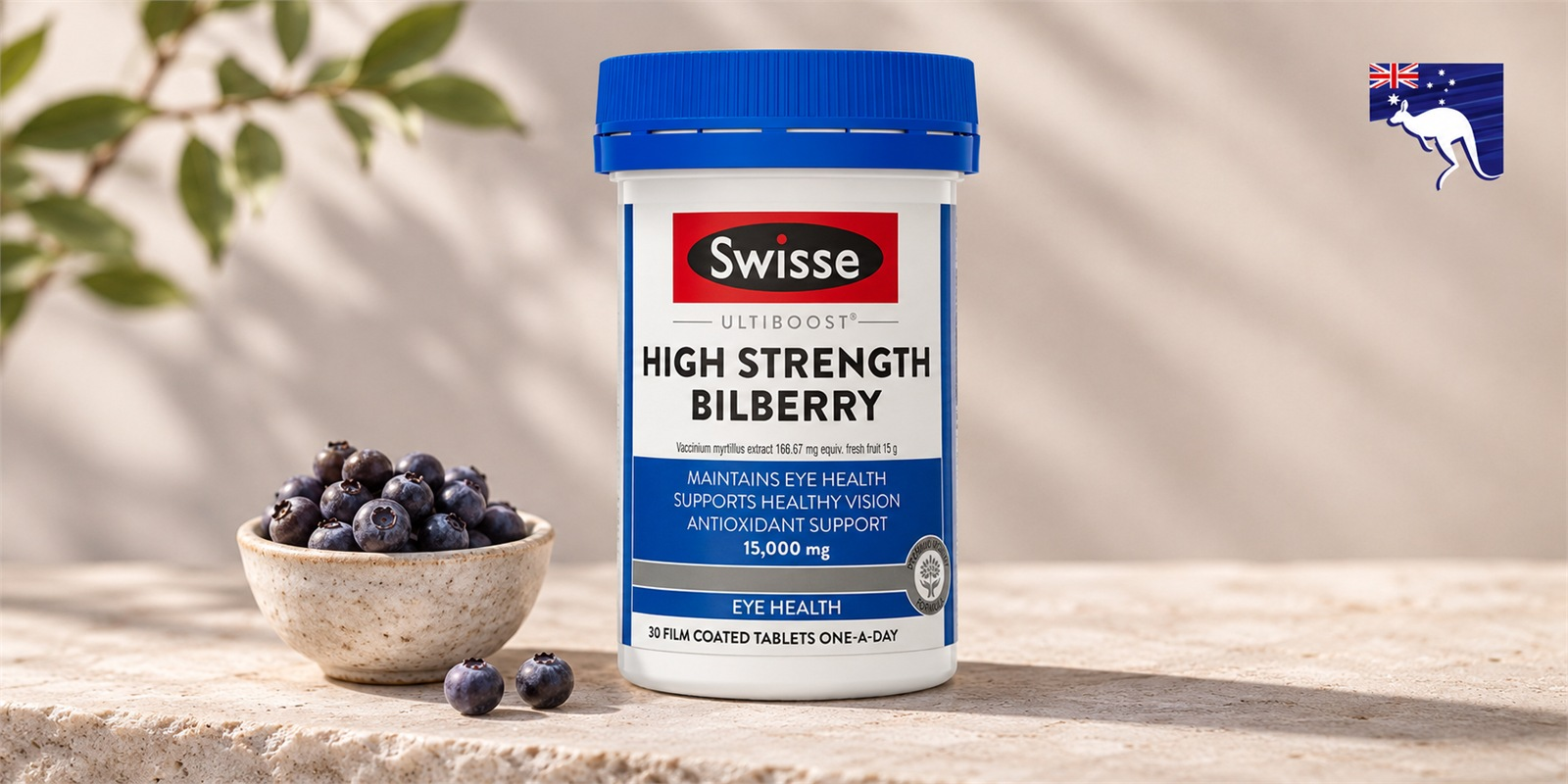
A bilberry label may show a striking number: thousands of milligrams of fruit equivalent in a single tablet. It can look impressive before you have answered the more useful question: what has this ingredient actually been shown to do for eyes?
Bilberry benefits and side effects deserve a balanced look. There are reasons researchers are interested in the fruit, and there are small studies worth knowing about. There is also a considerable gap between that research and claims that bilberry can restore vision, prevent eye disease or make night driving safer.
What a bilberry extract actually contains
Bilberry, usually identified as Vaccinium myrtillus, is a dark berry related to blueberry. Its pigments include anthocyanins, a group of plant compounds investigated for antioxidant and other biological effects. Eating a berry and taking a concentrated extract are different exposures, even when both begin with the same plant.
Products may contain fruit powder, a concentrated extract, or a combination with nutrients such as lutein. The name alone does not tell you how much extract is present or whether it resembles the preparation used in a study.
Night vision: the bilberry claim and the evidence
The popular night-vision story has outlived the strength of the evidence behind it. According to the US National Center for Complementary and Integrative Health, the more rigorous studies have not found improved night vision in healthy people. Its overall assessment is that bilberry has not been clearly shown to help any health condition.
If you have recently started struggling to see in dim light, do not use a supplement trial as a test for the cause. Arrange an eye examination, and avoid driving in conditions where you cannot see safely. An online product description cannot establish whether the issue comes from your glasses, the eye itself, nutrition or another health problem.
Screen-work studies measured specific outcomes
Some trials have reported improvements in selected measures of eye fatigue. For example, a 12-week randomised study published in Nutrients examined a standardised extract and a particular measurement of the eye's focusing response after screen tasks. This is a narrower outcome than preventing disease or improving everyday sight for everyone.
Another placebo-controlled study in display-terminal workers reported benefits in some fatigue measures. Such findings justify further research, but different extracts, participant groups and outcome measures make it difficult to predict what an individual customer will notice.
When judging a claim, ask three questions: was the study conducted in people like me, did it test this type of preparation, and was the improvement meaningful in daily life? “Studied” does not mean that every claimed benefit has been established.
Why bilberry is not an AREDS2 ingredient
A mixed eye formula can blur important distinctions. Lutein is a carotenoid found in the eye; bilberry supplies plant compounds such as anthocyanins. Combining them on a label does not make the product an AREDS2 formula.
AREDS2 refers to a specific combination used for selected people with age-related macular degeneration. Bilberry is not one of its defining ingredients. If your eye specialist recommended AREDS2, compare the entire ingredient list rather than replacing it with a product that simply says “eye health.” The NEI patient guidance explains who may benefit.
If lutein is the ingredient you are actually considering, the guide below separates its nutritional role from the evidence for specific AMD formulations. That distinction helps when bilberry and lutein appear together on one label.
Who should pause before taking bilberry?
Bilberry fruit in ordinary food amounts is generally considered safe. Research on concentrated fruit extracts is more limited, particularly for long-term use. Do not assume that taking several products or increasing the dose will produce greater benefit.
Stop a new supplement and seek advice if you develop an unexpected reaction, such as persistent stomach upset or a rash. Breathing difficulty or swelling of the lips or tongue needs emergency care. Keep the pack so a clinician can identify all the ingredients involved.
- Regular medicines: have a pharmacist review the complete formula, including any added vitamins or herbs.
- Pregnancy or breastfeeding: safety information for supplement amounts is insufficient; do not self-prescribe.
- Children: an adult eye supplement is not automatically suitable.
- Leaf preparations: avoid treating bilberry leaf products as equivalent to fruit extracts; high-dose or prolonged leaf use may be unsafe.
These checks are particularly useful when a product is being added to an existing routine. Bring a photo of every supplement label, not just the one you plan to buy.
Decode the fruit-equivalent number on the bottle
| Label detail | Why it matters |
|---|---|
| Actual extract amount | This is the amount of extract in the serving, which may differ greatly from the fruit-equivalent figure. |
| Equivalent fresh or dry fruit | This describes the starting-material equivalence; it is not a direct measurement of clinical benefit. |
| Standardisation | If stated, an anthocyanin amount or percentage helps describe the extract more precisely. |
| Daily serving and added ingredients | These determine what you actually take and whether ingredients overlap with another supplement. |
For a purely illustrative comparison, “100 mg extract equivalent to 10,000 mg fruit” does not mean the capsule physically contains 10 grams of fruit. Nor does a larger equivalent number guarantee a better result. Compare like with like, including servings per bottle and the cost of the daily serving.
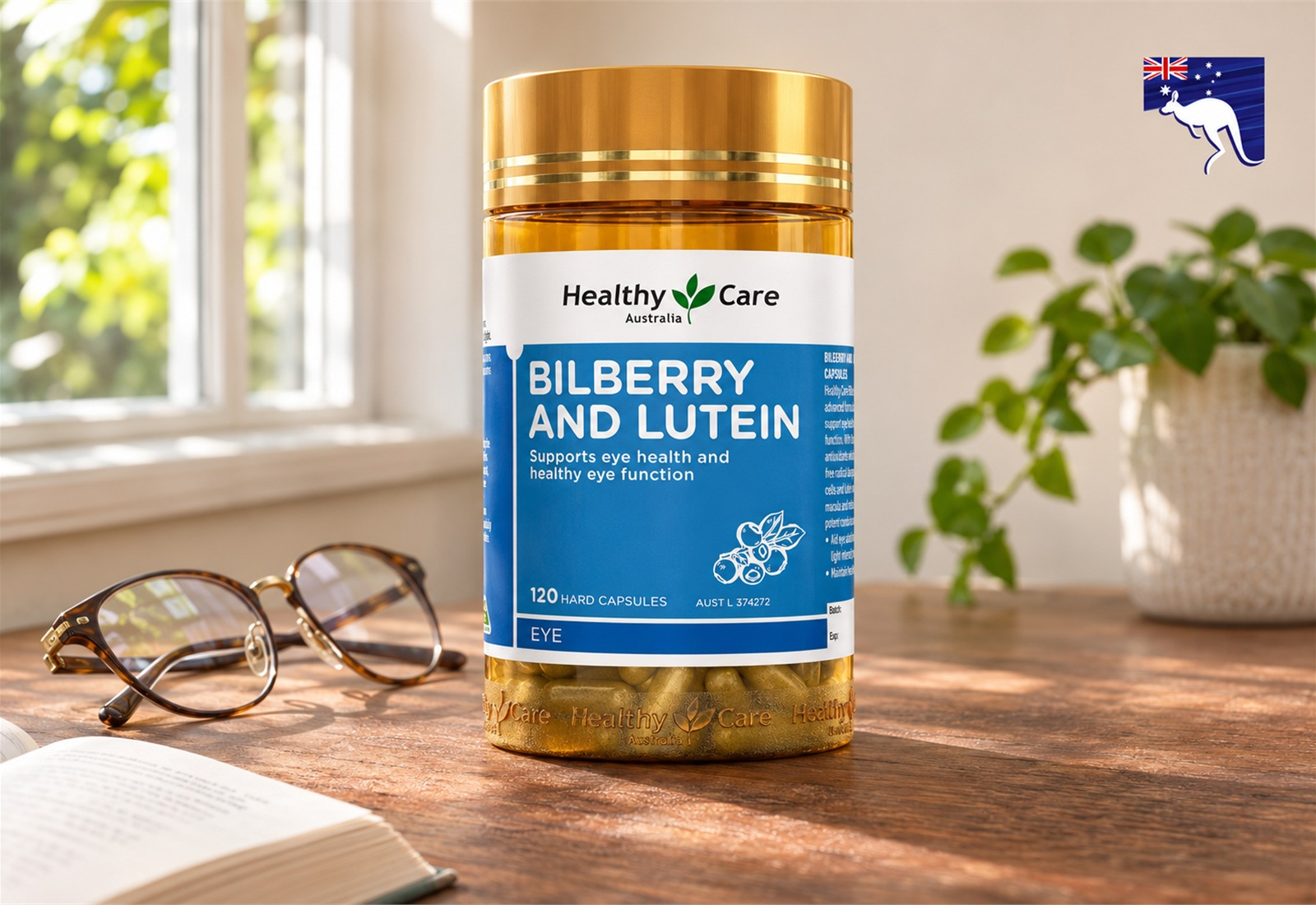
The bilberry-and-lutein example below makes that comparison concrete. Check the extract, added lutein and daily serving against the table above; a large fruit-equivalent number does not establish that it treats an eye condition.
Healthy Care Bilberry and Lutein
Healthy Care Bilberry and Lutein. Compare ingredients, daily serving, pack duration and current price in Bangladesh.
Keep screen comfort and eye examinations in the plan
Before spending on a supplement for screen discomfort, look at your work setup. Schedule breaks, adjust text size and notice whether air conditioning or contact lenses make symptoms worse. NHS guidance on dry eyes lists screen use, contact lenses and dry environments among possible contributors.
If symptoms persist, professional assessment may be more useful than adding a second supplement. A painful red eye or a sudden change in vision needs prompt care. Continue prescribed treatment for any established eye condition.
If you choose bilberry after that review, keep your expectations proportionate to the evidence. A suitable formula, a practical routine and an acceptable cost matter more than an impressive number on the pack; eye examinations and prescribed care still belong in the plan.