Vitamin K2 Food Sources: Practical Options for a Bangladeshi Diet
Vitamin K2 appears in some animal foods and fermented foods, but local amounts are not always known. Use familiar meal ideas to build dietary variety without relying on exaggerated rankings, expensive imports or the assumption that every fermented food is rich in K2.
Quick Answer
Practical vitamin K2 food sources include eggs, some cheeses and other dairy foods, and certain meats. Natto is a notable fermented source but is not essential for a Bangladeshi diet. K2 amounts vary with production and food type, so avoid assuming every local version has the same value. Leafy vegetables mainly supply K1 and remain valuable sources of vitamin K.
Key Takeaways
- Eggs, selected dairy foods and meat can contribute K2, but the amount varies.
- Fermented does not automatically mean rich in K2; ordinary doi is not equivalent to natto.
- Keep leafy vegetables for K1, and do not confuse total vitamin K intake guidance with a K2-only target.
Search for vitamin K2 foods and you may find a list led by natto, imported cheese and ingredients rarely seen in your kitchen. That can make a useful nutrition question feel unnecessarily expensive.
A practical approach to vitamin K2 food sources starts with familiar meals and honest limits on the data. Eggs, some dairy foods and certain meats can contribute K2. You do not need to buy every item on a global ranking, and you should not assume that every fermented Bangladeshi food contains a large amount.
K1 and K2 are parts of the same vitamin family
Vitamin K includes K1, also called phylloquinone, and K2, a group of menaquinones. Leafy vegetables are prominent K1 sources. K2 forms occur in some animal foods and foods produced with particular bacteria.
The European Food Safety Authority's review describes limited food-composition information for menaquinones. That matters because a precise-looking chart can conceal substantial variation. Total vitamin K guidance should not be read as a requirement to obtain the same amount entirely from K2.
Vitamin K2 foods that can fit a Bangladeshi plate
| Food | How it can fit a meal | What to keep in mind |
|---|---|---|
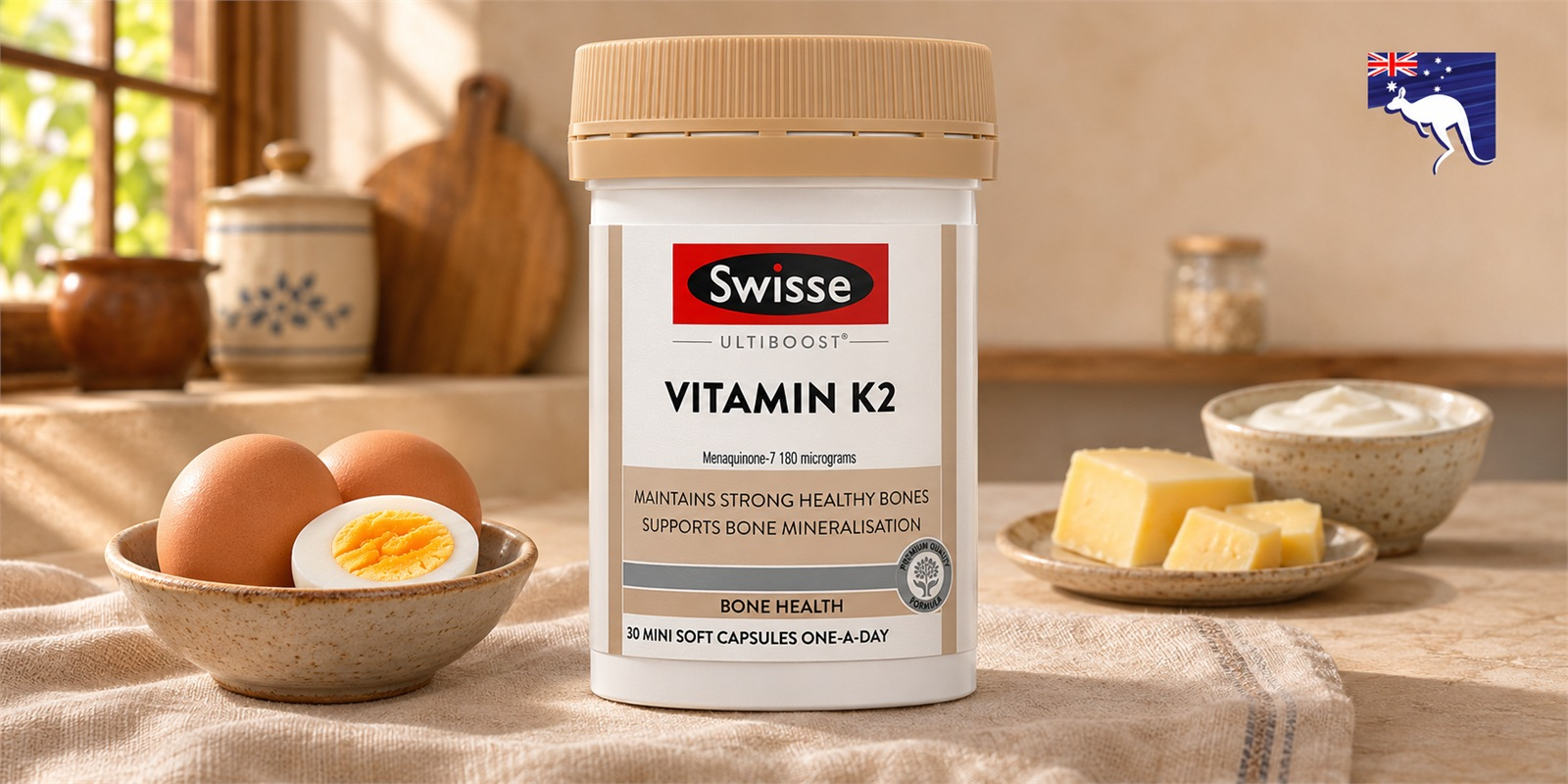
| Eggs, including the yolk | A boiled egg with breakfast or an egg curry with vegetables | Eggs contribute K2; local amounts depend on production and should not be treated as a fixed laboratory value. |
| Chicken and other suitable meats | A moderate portion with rice or roti, dal and vegetables | The cut and production conditions influence vitamin content. Choose the meal for overall nutrition. |
| Some cheeses | A small portion in a sandwich or alongside other foods | K2 varies by cheese and bacterial culture. More cheese also adds salt, energy and often saturated fat. |
| Milk and fermented dairy | Milk or plain doi, if suitable for your diet | They can contribute to dietary variety, but ordinary doi should not be advertised as a guaranteed high-K2 food. |
| Natto | An optional fermented soybean food for those who enjoy it | It is a notable K2 source, but availability, taste and cost may make it impractical. |
Research on menaquinones in the food supply describes differences between food types and regions. The table therefore gives practical categories rather than promising a particular microgram amount in every egg, chicken curry or bowl of doi sold in Bangladesh.
Why a precise K2 food chart may not fit your kitchen
Food-composition values come from samples. A number measured in one country may reflect particular animal feed, production methods, bacterial cultures and storage conditions. A local product with the same broad name may not match that sample.
Recipes add another layer. The amount in a whole dish depends on the ingredients, their proportions and the portion you eat. A published value per 100 grams of a food is not automatically the amount in one serving of a mixed curry.
For everyday planning, ask whether your pattern includes a reasonable variety of foods rather than trying to hit an invented K2 number. If a manufacturer supplies a tested value for a particular product, read the serving basis carefully. Without such evidence, an exact local ranking would imply more certainty than the data supports.
If you are pursuing a K2 target because of a bone- or heart-health claim, the next useful question is what benefit the evidence supports. This guide separates K2’s role in the body from supplement study results.
Does fermentation make doi or achar rich in K2?
No. Fermentation describes a process, not a guaranteed vitamin profile. Different microorganisms produce different compounds, and some foods described casually as fermented are prepared by quite different methods.
Natto cannot be used as a nutritional stand-in for every fermented soybean, dairy or vegetable food. Similarly, the word probiotic does not establish a K2 amount. Enjoy foods such as plain doi for their place in your diet without assigning them a medicinal dose that has not been measured.
There is also no need to attempt unfamiliar home fermentation solely to increase K2. Food safety, reliable preparation and storage still matter. Buying an expensive imported fermented food is optional, not the entry fee for a balanced diet.
Palong shak still belongs on the plate
Palong shak and other leafy vegetables remain useful even though they mainly provide K1. A focus on K2 should not make the rest of vitamin K nutrition disappear. The NHS recommends a varied, balanced diet as the usual way to obtain vitamin K.
For a household meal, that might mean rice or roti, dal, a vegetable preparation and a suitable protein food. If you enjoy eggs or dairy, they can fit naturally. If you avoid them, keep the plant foods you do eat varied rather than assuming that a K2 supplement is automatically required.
For vegans, vitamin B12 deserves separate planning through reliable fortified foods or an appropriate supplement. It is a different nutrient question. A food rich in one vitamin cannot be assumed to solve another nutritional gap.
Breakfast, lunch and doi: three ways to add variety
- A familiar breakfast: roti, an egg and a vegetable side. Use the egg as part of a complete meal rather than trying to maximise yolk intake.
- A balanced lunch: rice, dal, chicken or another suitable protein, and cooked shak. This combines different food groups without treating any one as a cure.
- A practical dairy option: plain doi with a meal or snack if you tolerate dairy. Choose it because it suits your routine, not because all doi has a proven high K2 level.
These are meal suggestions, not calculated K2 prescriptions. Portions should suit appetite, energy needs, other health conditions and the rest of the day's food. Families can adapt them for cost and preference without losing the basic principle of variety.
More butter or cheese is not a K2 strategy
Pursuing more K2 is not a good reason to load the diet with butter or cheese. A single nutrient does not cancel a food's salt, saturated fat or energy content. Cheese can be enjoyed in an appropriate portion, but larger quantities are not automatically a smarter nutrition choice.
The same reasoning applies to organ meats. You do not need to add them frequently to pursue K2, and they bring other nutrients that may matter in particular circumstances. Choose foods by the overall dietary pattern rather than chasing the highest place in a vitamin list.
When a food review needs professional advice
Discuss your needs if you have a highly restricted diet, a condition affecting absorption, or a clinician-led bone-health plan. A food diary and medication list can help identify the real question. Low exposure to a particular K2 food alone does not diagnose deficiency.
If a supplement is appropriate, compare its form, amount per daily serving and additional ingredients. A K2-only capsule and a calcium/D3/K2 combination serve different purposes. Avoid buying extra ingredients simply because they appear together on an attractive label.
Once a supplement has a defined purpose, the Healthy Care K2 label here provides a concrete serving to compare with that recommendation. The sidebar also includes other K2 formats. A capsule can sit alongside varied meals when appropriate; it does not turn this food list into a requirement to buy one.
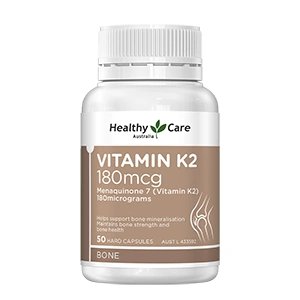
Healthy Care Vitamin K2 180 mcg
Healthy Care Vitamin K2 180 mcg in Bangladesh. Compare pack prices, MK-7 formula, directions and label cautions.
Keep vitamin K intake consistent if you take warfarin
If you take warfarin, do not suddenly overhaul vitamin K intake or add K2 supplements. Dorset County Hospital's dietary guidance explains why changes in vitamin K intake can alter warfarin's effect. Seek advice from the clinician managing your anticoagulation and aim for consistency, rather than avoiding all vegetables.