Vitamin B12 Tablets: Types, Strengths and How to Choose
Choosing vitamin B12 tablets starts with the reason you need them. This guide separates forms from strengths, explains why larger doses are not automatically better and offers a practical checklist for comparing products and following treatment advice.
Quick Answer
Choose vitamin B12 tablets according to your dietary needs or treatment plan, not the largest number on the label. Cyanocobalamin and methylcobalamin are common forms; an “activated” label does not establish that a product works better for everyone. Check B12 per daily dose, directions and other ingredients. Suspected deficiency or neurological symptoms need medical assessment before a shopping decision.
Key Takeaways
- Decide whether the aim is dietary support or treatment of a diagnosed deficiency.
- The form, strength and method of taking a tablet are three separate details.
- 1,000 mcg equals 1 mg; a high label number does not mean everyone needs that dose.
- Choose a product you can use correctly and consistently, and follow prescribed treatment when relevant.
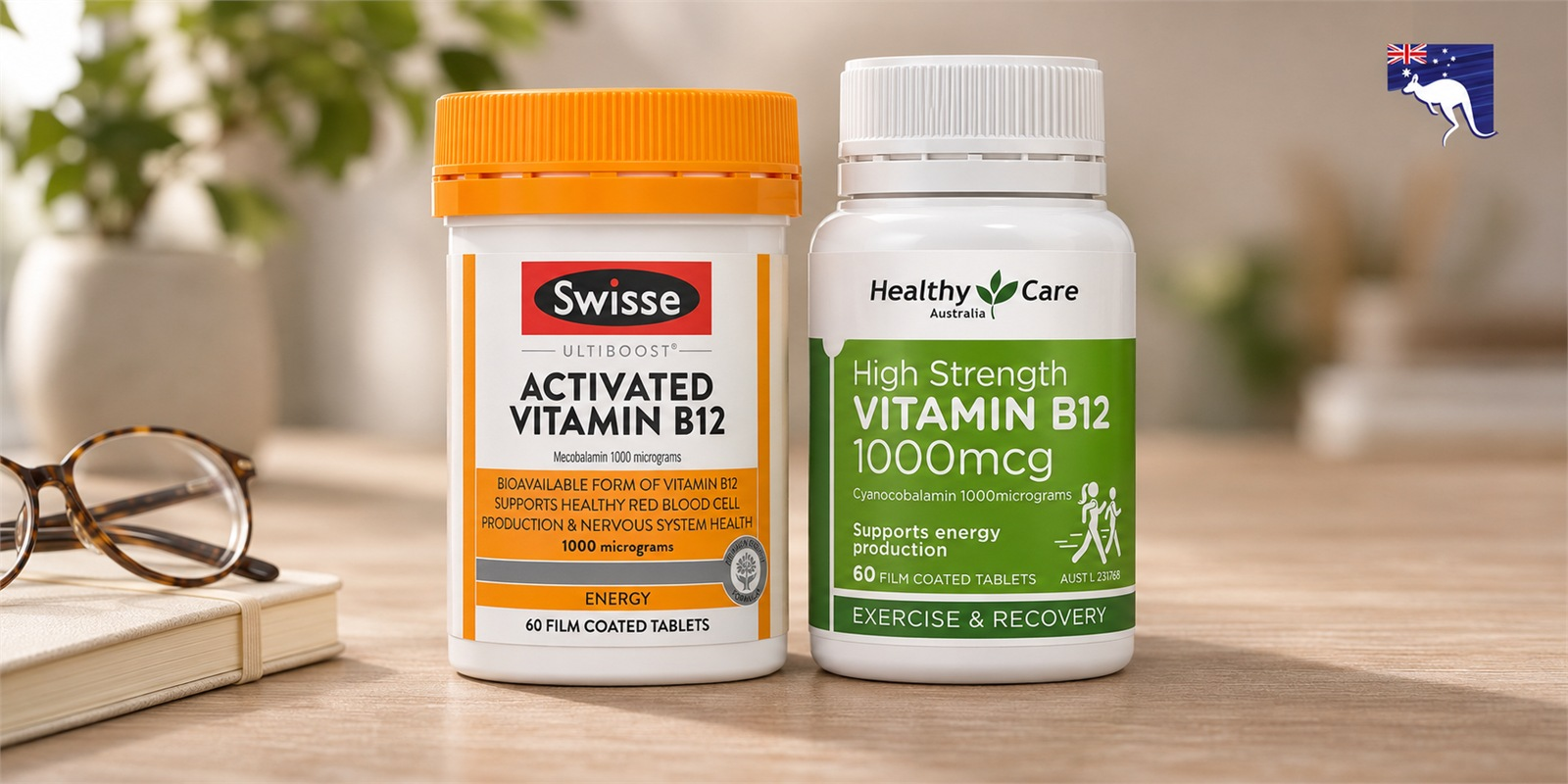
Two B12 bottles can look almost identical while their labels tell different stories: one says methylcobalamin, another cyanocobalamin; one offers 100 micrograms, another 1,000. Add “activated”, “high strength” and “sublingual”, and a simple purchase can become confusing.
The easiest way to choose vitamin B12 tablets is to separate three questions: why you need B12, which formulation suits that purpose, and how much you have been advised to take. Only then compare brands, pack sizes and prices.
Which B12 problem are you trying to solve?
A person planning a reliable B12 intake on a vegan diet is making a different decision from someone treating a confirmed deficiency. Someone with numbness or an absorption disorder needs another level of assessment. The same product may appear in all three conversations, but the directions and follow-up need not be the same.
Before shopping, complete this sentence: “I am considering B12 because…”. If the answer is unexplained tiredness, arrange an assessment instead of assuming a stronger tablet will solve it. If a clinician has already prescribed a regimen, bring that instruction to the pharmacist and choose a product that matches it.
Cyanocobalamin, methylcobalamin and the word “activated”
| Form | What the name tells you | What it does not establish |
|---|---|---|
| Cyanocobalamin | A commonly used B12 form that the body converts to active forms. | That it is unsuitable simply because it is described as synthetic. |
| Methylcobalamin | One of the metabolically active forms of B12, often marketed as activated. | That everyone will absorb it better or feel a greater benefit. |
| Hydroxocobalamin | A form also used in medical treatment, commonly as an injection in some healthcare systems. | That an injection is automatically needed for a dietary gap. |
The NIH B12 fact sheet reports no evidence that supplement absorption differs by B12 form. The practical choice should therefore account for the indication, dose, directions, tolerability and availability, rather than treating one label word as a universal quality ranking.
Reading 100 mcg, 1,000 mcg and 1 mg correctly
B12 amounts are commonly written in micrograms, shown as mcg or µg. 1,000 micrograms equals 1 milligram. A tablet labelled 1 mg therefore contains the same stated amount of B12 as one labelled 1,000 mcg, before considering any other differences between products.
Look for the B12 amount per tablet and per recommended daily serving. If two tablets make a serving, the front-label number may refer to the pair. Do not compare one product's per-tablet amount with another product's daily amount.
Supplement strengths can be much higher than ordinary dietary requirements because only a proportion of a dose is absorbed. That explains why high-dose products exist; it does not create a personal dose recommendation. A clinician may use a larger dose for a particular reason. Taking that amount without knowing the reason is a different decision.
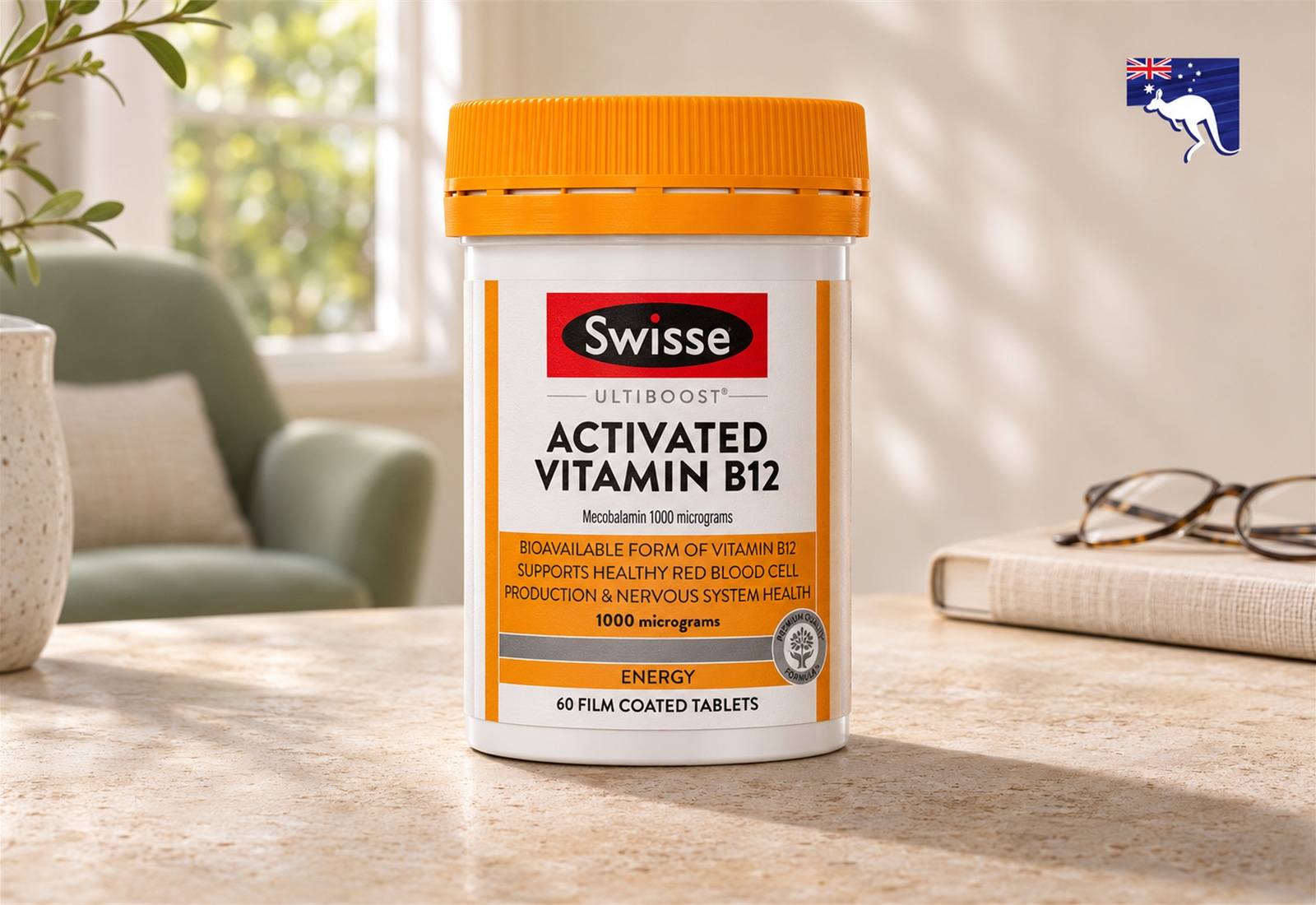
The activated B12 product below gives you a real label on which to practise this comparison. Read the B12 amount and recommended serving together; neither “activated” nor the largest printed number establishes the right choice for you.
Swisse Ultiboost Activated Vitamin B12
Swisse Ultiboost Activated Vitamin B12. B12 as mecobalamin 1,000 micrograms (1 mg) per tablet. Compare Bangladesh pack prices and label directions.
Under the tongue or swallowed: does the format matter?
Sublingual tablets or lozenges are intended to dissolve under the tongue. Other tablets are swallowed or chewed according to their directions. The NIH review does not find an established effectiveness advantage for sublingual over ordinary oral B12.
Convenience still matters. A format that is easy for you to take may help you follow the plan. Check whether the product must dissolve, be chewed or be swallowed, and do not assume all small tablets work in the same way. If swallowing is difficult, tell a pharmacist rather than changing the method on your own.
Six checks before ordering vitamin B12 tablets
- Identify the B12 form and amount. Read the active ingredient panel, including the equivalent vitamin amount where listed.
- Confirm the daily directions. Check how many tablets, how often and whether there are instructions about meals.
- Check for additional nutrients. A B-complex or multivitamin brings other ingredients into the decision. A B12-only product can make a B12-specific plan easier to follow.
- Read suitability information. Review age limits, pregnancy advice, allergens and any dietary certification you require.
- Check the pack. Look for intact packaging, a readable batch number, expiry date and storage instructions.
- Compare the cost of the actual regimen. A 60-tablet bottle is not necessarily a two-month supply. Use the directions that apply to you.
When comparing products online in Bangladesh, inspect a clear image of the back label as well as the description. Formulations and pack sizes can differ between markets. If the details disagree, ask the seller to confirm the label on the stock being supplied before ordering.
Keep a photograph of the label after purchase. It makes follow-up easier if a clinician asks what you have been taking, and it helps you compare a replacement when the same pack is temporarily unavailable.
A vegan diet, a diagnosis or a multivitamin: three buying decisions
For a vegan diet: make the B12 routine dependable
Make B12 a deliberate part of your routine rather than an occasional purchase when you feel tired. Ask a pharmacist or dietitian to help match a product and schedule to your intake from fortified foods. Check that the whole formulation meets your dietary preference, not just the vitamin itself.
For diagnosed deficiency: match the prescribed regimen
Follow the treatment instructions and follow-up plan. The NHS treatment guidance explains that treatment depends on the cause and may involve tablets or injections. Do not replace a prescribed injection schedule with a retail tablet because it appears to contain a large dose.
If you are still trying to understand a diagnosis or decide whether symptoms need checking, the B12 deficiency guide explains what to discuss at an assessment. It can help you separate a treatment question from a choice between bottles.
With a multivitamin: work out why extra B12 is needed
Check how much B12 it contains and why an additional product is being considered. Also note the other ingredients before adding a B-complex. Bringing both labels to a pharmacist avoids comparing products in isolation and makes it easier to keep your routine manageable.
After purchase: directions, storage and follow-up
Follow the instructions on your product or prescription. Directions can differ; for example, NHS guidance for cyanocobalamin includes advice about taking that medicine. A product-specific instruction is more useful than a universal online rule about the best time of day.
Keep supplements in their original packaging and follow the stated storage conditions. Choose a reminder that fits your routine, such as a calendar notification. If doses are often missed, tell the clinician or pharmacist so the plan can be made more practical. Do not double up automatically to compensate.
Tell your clinician about a cobalt allergy or previous reaction to B12. The MHRA warns about sensitivity reactions in people with cobalt allergy. Seek urgent care for breathing difficulty or swelling of the mouth or throat after a dose.
Most importantly, make room for follow-up. Buying a suitable tablet is one part of the plan; knowing why you take it, how to use it and when the need should be reviewed makes that purchase useful.