
Vaginal Probiotics: Benefits, Evidence and How to Choose
Vaginal probiotics are sold for microbiome support, but different strains and formulas cannot be treated as interchangeable. This guide explains the evidence limits, shows how to read an oral Swisse Women’s Flora label, and separates everyday supplement decisions from symptoms that need diagnosis.
Quick Answer
Vaginal probiotics may be marketed to support vaginal flora, but they are not established substitutes for treatment of bacterial vaginosis, thrush or a urinary tract infection. Choose by the exact strains, dose, route and storage instructions—not the largest CFU number. Swisse Women’s Flora contains GR-1 and RC-14 and is taken by mouth; it must not be inserted into the vagina.
Key Takeaways
- Match the exact probiotic strains and intended purpose; a higher CFU count does not automatically mean a better product.
- Swisse Women’s Flora is an oral capsule containing GR-1 and RC-14, not a vaginal insert or an infection treatment.
- Cranberry concerns urinary health; it does not replace vaginal probiotics or treat an existing UTI.
- New, persistent or recurrent vaginal symptoms deserve assessment before another supplement purchase.
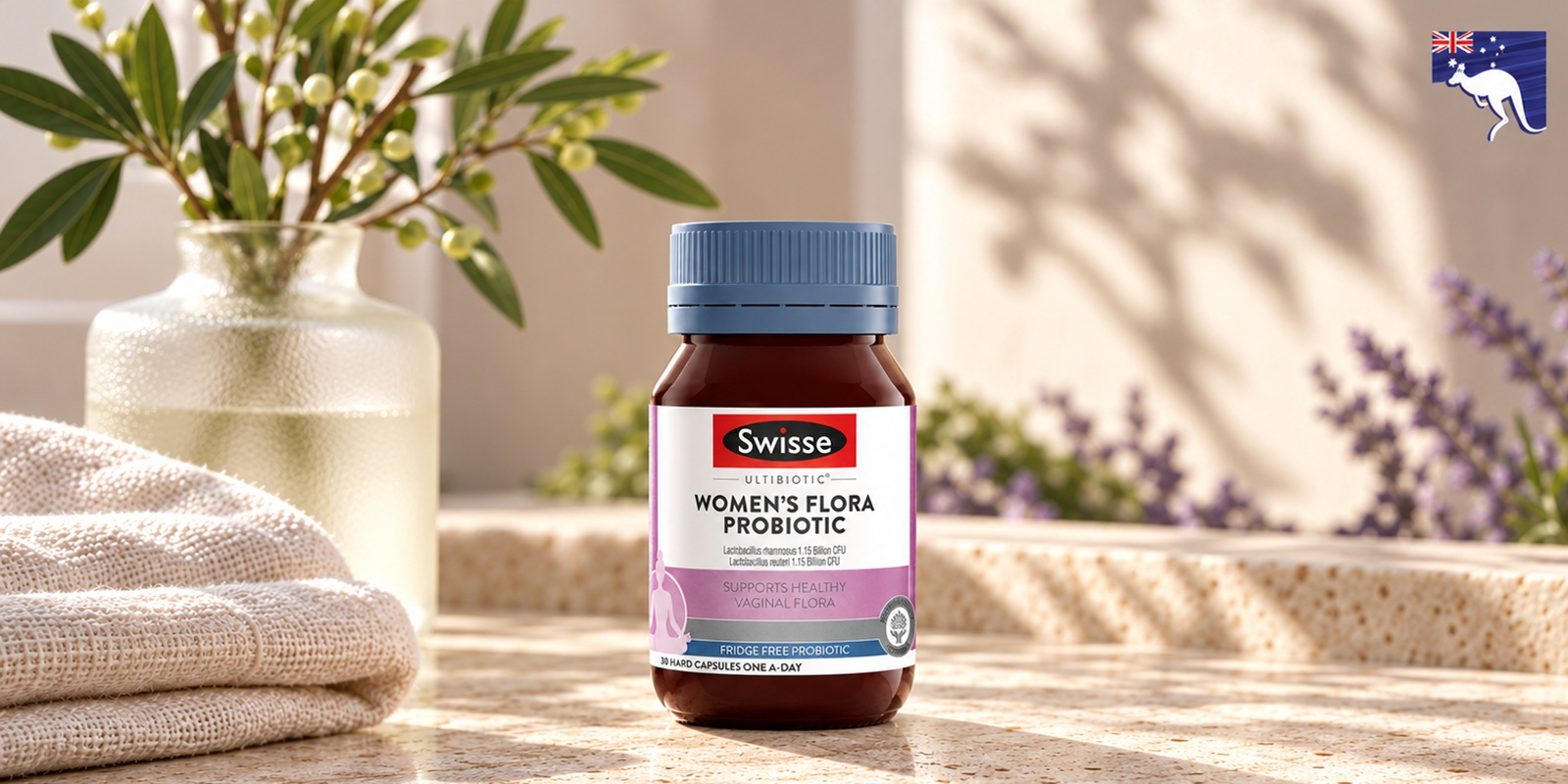
A bottle can promise “flora support” while leaving the most useful question unanswered: what does that mean for you? If you are comparing vaginal probiotics, start with the reason you are considering one. Everyday supplement shopping and treatment for itching, odour or burning are different decisions.
A vaginal-health probiotic may be an oral product intended to support the vaginal microbiome. The wording does not necessarily mean the capsule goes inside the vagina. Its exact strains, directions and evidence matter more than a pink label or an impressive number of billions.
What are vaginal probiotics?
Probiotics contain live microorganisms. Products marketed for vaginal health often contain particular Lactobacillus strains. A strain is a specific version of a microorganism, identified by letters or numbers after its name. “Lactobacillus” alone is not enough information to match a supplement to research.
The NIH Office of Dietary Supplements explains that effects depend on the microorganisms and amounts used. More colony-forming units, or CFU, do not automatically produce greater benefits. A digestive probiotic and a vaginal-health probiotic therefore cannot be assumed to do the same job simply because both contain beneficial bacteria.
Do vaginal probiotics work?
The fair answer is narrower than many advertisements suggest. Results depend on the strain, the people studied, whether the product was swallowed or inserted, and the outcome measured. A change in a laboratory measure of vaginal flora is not the same as a proven cure, fewer symptoms or prevention of future infections.
In a randomised trial of GR-1 and RC-14 as an addition to bacterial-vaginosis treatment, the probiotic did not improve cure rates in the studied Chinese cohort. That does not answer every possible question about those strains, but it prevents a confident promise that a retail capsule will clear BV.
| Your question | What the evidence means for your next step |
|---|---|
| Can probiotics treat bacterial vaginosis? | Do not replace prescribed care with a supplement. The CDC’s BV guideline does not support available probiotic products as replacement or additional treatment. |
| Can they cure thrush? | No established treatment benefit. Symptoms may have another cause, so repeated self-treatment can delay the right diagnosis. |
| Will they stop every future infection? | No product can reasonably promise this. An individual study cannot establish that all formulas prevent recurrence. |
| Are they compulsory for a healthy vagina? | A marketing claim is not a reason everyone needs a daily supplement. Decide whether there is a specific, realistic purpose for taking one. |
The relevant clinical guidance is available in the CDC’s pages on bacterial vaginosis and vulvovaginal candidiasis. Neither supports treating a current infection by simply buying a probiotic.
How to read a Swisse Women’s Flora label
Swisse Ultibiotic Women’s Flora Probiotic offers a useful local label example. The manufacturer’s current panel lists these amounts per capsule:
- Lactobacillus rhamnosus GR-1: 1.15 billion CFU.
- Lactobacillus reuteri RC-14: 1.15 billion CFU.
- Total: 2.3 billion CFU per capsule.
The adult direction is one capsule daily, or as directed by a healthcare professional. This is an oral supplement. Do not open it and insert the contents vaginally. Its stated purpose is vaginal-flora support; the label is not proof that it treats BV, thrush or urinary symptoms.
Swisse specifies storage below 25°C in a cool, dry place. “Fridge-free” does not mean heat-proof—a useful distinction when storing supplements in Bangladesh. Check the seal, expiry and supplied pack, and keep it away from direct sun or a hot vehicle.
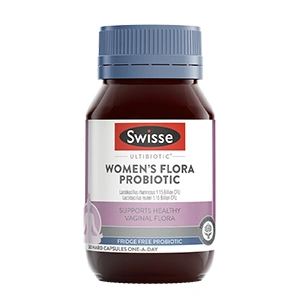
Swisse Ultibiotic Women's Flora Probiotic
Swisse Ultibiotic Women's Flora Probiotic is a daily probiotic supplement specially formulated to support women's vaginal health and maintain healthy vaginal microflora. It combine...
Cranberry vs vaginal probiotics: different questions
Cranberry and probiotics often appear together in women’s-health searches, but they are not interchangeable. Cranberry is studied mainly for urinary-tract concerns. Probiotics are discussed in relation to particular microorganisms and microbiomes. The urinary tract and vagina are different parts of the body.
NCCIH’s cranberry review finds that cranberry may help prevent recurrent symptomatic UTIs in some women, with inconsistent results across studies. It does not treat an existing UTI. Cranberry products also vary; the large fruit-equivalent number on a bottle is not a clinical guarantee.
For example, Swisse High Strength Cranberry and Healthy Care Cranberry 60000mg are urinary-health label comparisons, not alternatives for treating vaginal symptoms. Our cranberry supplement guide explains fruit equivalence and the information worth comparing before purchase.
Five checks before buying vaginal probiotics in Bangladesh
- Name the goal. Write down whether you are asking about a current symptom, recurrent diagnosed infections or general support. A product page cannot diagnose the first two.
- Read the complete strain names. Match the letters and numbers, not only the genus or species. Research on one strain does not automatically apply to another.
- Check the serving and route. Compare the amount per daily serving and follow the supplied directions. Oral capsules and purpose-made vaginal preparations are different products.
- Inspect the practical details. Look for a clear label, intact seal, expiry date and realistic storage arrangements. A cheaper bottle has little value if it has been stored incorrectly.
- Set a review point. Ask what benefit you expect and when to reassess. Reordering indefinitely because the bottle says “balance” is not a plan.
Side effects and when to ask first
Oral probiotics can cause gas or digestive discomfort. NCCIH’s safety guidance highlights greater risks in people who are seriously ill or have weakened immune systems; discuss use with your clinician in these circumstances. Ask before adding supplements during pregnancy or breastfeeding, or alongside treatment for a medical condition.
Keep a simple list of medicines and supplements to show your pharmacist or doctor. That includes products bought for gut health: taking two probiotic bottles is not necessarily more useful, and it makes it harder to tell which one agrees with you.
When symptoms matter more than the supplement
Seek assessment for a new or unusual discharge, persistent itching, painful urination, recurrent symptoms or discomfort after a new sexual partner. Pelvic pain, fever or feeling markedly unwell needs prompt medical attention. Symptoms during pregnancy should be discussed promptly with your maternity clinician.
As the NHS guidance on vaginitis explains, irritation, infection, skin conditions and hormonal changes can overlap. A change in smell is not a reliable home diagnosis. Avoid douching or putting yoghurt, oral capsules or improvised remedies inside the vagina.
If your main concern is dryness during intimacy, a probiotic is also not a substitute for addressing comfort. The distinction between a vaginal moisturiser and personal lubricant may be more useful. Start with the problem you actually have, then choose the next step that fits it.