Spirulina Benefits and Side Effects: What Should You Expect?
Spirulina provides nutrients and has been studied for several health outcomes, but small servings and limited research put popular claims into perspective. Explore its realistic place in a diet, possible side effects, quality checks and why it cannot replace vitamin B12.
Quick Answer
Spirulina may modestly improve some blood lipid or blood-pressure measures in certain studies, but it is not a treatment substitute or a complete food. Side effects can include digestive discomfort and allergic reactions, while poor-quality products may contain contaminants. It is not a reliable B12 source. Choose a traceable product and seek advice if you have a medical condition or take medicines.
Key Takeaways
- A nutrient-rich powder is still a small serving, so compare amounts rather than health slogans.
- Research benefits are usually measured in selected groups; they do not guarantee a noticeable personal result.
- Spirulina is not reliable vitamin B12, and quality control matters because contamination is possible.
A deep-green tablet can look like a shortcut to a better diet. Spirulina's appeal is understandable: it is compact, widely available and surrounded by claims about energy, immunity and general wellbeing. The challenge is deciding which of those claims are useful when you are choosing a supplement for yourself.
Spirulina benefits and side effects are best considered together. There is human research worth discussing, but the amount you actually take, the outcome you want and the quality of the product all matter. It belongs in a realistic food and health routine, not at the centre of every health promise.
Spirulina powder, tablets and greens blends: know the difference
Spirulina is the common name used for certain blue-green microorganisms grown for food and supplements. Products often identify them as Arthrospira. You will see dried powder, tablets and capsules, sometimes combined with other ingredients in a greens blend.
A simple spirulina product and a multi-ingredient greens formula should not be treated as identical. If a blend contains several plant extracts, vitamins or stimulants, its effects and precautions depend on those ingredients too. Start by reading what is actually in the daily serving.
Spirulina benefits: nutrients, blood tests and everyday claims
A small serving can only supply a small amount of protein
Spirulina contains protein and other nutrients, but a few tablets are not comparable with a normal portion of protein-rich food. Percentages can create the wrong impression when the portion is tiny. A powder that is rich in protein by weight may still provide only a small contribution at the suggested serving.
A useful example is purely arithmetic: if a serving weighs 3 grams, the entire serving cannot contain more than 3 grams of protein. That is why spirulina should not replace dal, eggs, fish, dairy, soy or another suitable main protein source. Look for the actual nutrition panel rather than a claim about the dried powder in isolation.
Cholesterol and blood-pressure research does not replace treatment
A systematic review of randomised trials on blood lipids reported improvements in cholesterol-related measures with spirulina. A separate review of blood-pressure trials also found average reductions, although results varied between studies.
These findings are reasons for further research, not reasons to replace prescribed medicine. Studies use particular preparations, doses and populations; a retail product may not reproduce the same conditions. A lower laboratory number in a trial also does not establish that taking spirulina prevents a heart attack.
If you are managing high cholesterol or hypertension, decide with your clinician whether any supplement trial is worthwhile. Continue the treatment and monitoring already agreed. An occasional home reading or a week of feeling better is not enough evidence to stop medication.
What does an “energy” or “immunity” promise mean for you?
These are attractive words, but they can mean different things to different shoppers. Feeling tired may reflect sleep, stress, an insufficient diet, anaemia or a medical condition. A general wellness claim cannot tell you which applies.
Before buying, define the change you hope to notice. For example, are you trying to correct a diagnosed nutrient deficiency, improve an otherwise limited diet or simply try a convenient food supplement? A clear reason makes it easier to recognise when a product is not answering the problem.
Persistent fatigue, breathlessness, unexplained weight change or new neurological symptoms deserve assessment. Adding green tablets while postponing that assessment can cost both time and money. There is no reliable rule that feeling temporarily more energetic proves spirulina has corrected a deficiency.
Keep meals, B12 and deficiency treatment separate
Spirulina is not dependable B12 provision
The French food-safety agency ANSES does not consider spirulina a reliable B12 source, because much of its apparent B12 is an inactive analogue. People eating a vegan diet, and vegetarians whose usual diet lacks dependable B12 sources, should plan for suitable fortified foods or a B12 supplement. Spirulina should not be counted as their B12 provision.
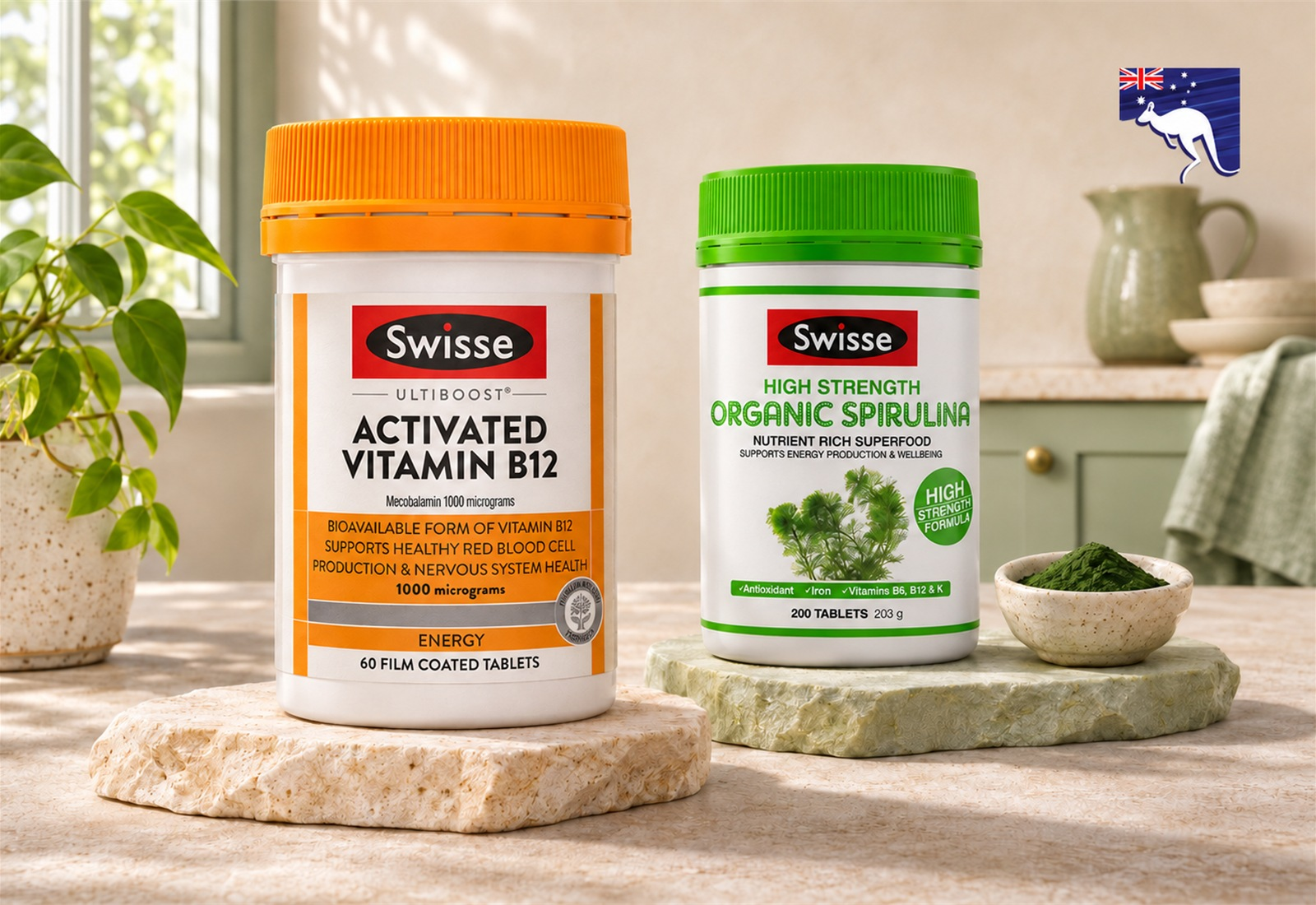
This distinction matters especially when you are replacing animal foods. The spirulina-and-B12 guide explains inactive analogues, separately added B12 and how to build a dependable vegetarian B12 plan.
Breakfast and prescribed treatment still have their own jobs
Spirulina is not a complete meal replacement. A busy morning in Dhaka still needs a workable breakfast, whether that is an egg and roti, oats with suitable dairy, or another meal that fits your household. Taking tablets does not supply the same variety, portion size or eating satisfaction.
Similarly, a diagnosis such as iron deficiency or B12 deficiency needs a specific treatment plan. The presence of a nutrient on a spirulina label does not establish that the product contains the required form or amount to treat that condition.
Spirulina side effects: which reactions need attention?
Digestive upset and allergic reactions have been reported with spirulina-containing supplements. ANSES also describes reports involving muscle or liver problems, while noting limitations in the available safety data. A report does not establish how commonly an event occurs or prove that every product caused it.
Stop using a new supplement and seek advice if you develop a concerning reaction. Swelling of the lips or tongue, breathing difficulty or a rapidly developing severe allergic reaction needs emergency care. Persistent vomiting, jaundice or severe abdominal pain also warrants prompt medical assessment.
Do not accept worsening symptoms as a necessary detox stage. Record the product name, serving, batch number, start date and any other products you took. That information is more useful to a clinician than the broad description that you tried a green supplement.
Microcystins, batch details and the limits of quality claims
The FDA explains that blue-green algae products can become contaminated with microcystins, toxins produced by some cyanobacteria. Contamination is a manufacturing and sourcing issue; you cannot judge it from how vividly green the powder looks.
Choose an identifiable manufacturer and a seller who can provide clear product information. A sealed package, readable batch details and sensible storage are basic checks. If a product claims independent testing, look for the laboratory, the batch covered and what was tested. A generic quality logo does not tell you whether relevant contaminants were assessed.
Organic certification, where genuine, addresses particular production standards. It should not be assumed to prove that every finished batch is free from all contaminants. Likewise, an imported product is not automatically superior simply because the country of origin sounds reassuring.
PKU, allergies, medicines and other reasons to ask first
ANSES advises against spirulina supplements for people with phenylketonuria and those with an allergic predisposition. Seek individual advice before use during pregnancy or breastfeeding, for a child, or when you have a significant medical condition. These situations need more than an adult label serving copied onto a different person.
If you take regular medicines, ask a pharmacist to review the complete product. This is particularly useful with blends, where added herbs or nutrients may be the main interaction concern. Tell the clinician if you are taking it alongside treatment for blood pressure, blood glucose or another monitored condition.
Put a spirulina label through five practical checks
- Identify the daily amount: a tablet marked 1,000 mg contains one gram, but the label may recommend more than one tablet.
- Check the ingredient list: decide whether you want spirulina alone or are intentionally choosing a blend.
- Check the pack calculation: divide tablet count by daily serving to estimate how long it lasts.
- Review claims: guaranteed detoxification, rapid fat loss or replacement of prescribed treatment should prompt scepticism.
- Review handling: follow the storage instructions and check the seal and expiry date.
There is no single research-backed dose that covers every marketed benefit. Follow the specific product instructions and any professional advice rather than increasing the serving to chase a stronger effect. If a capsule is difficult to swallow or a powder is unpleasant, another format may be more practical; it is not inherently more effective.
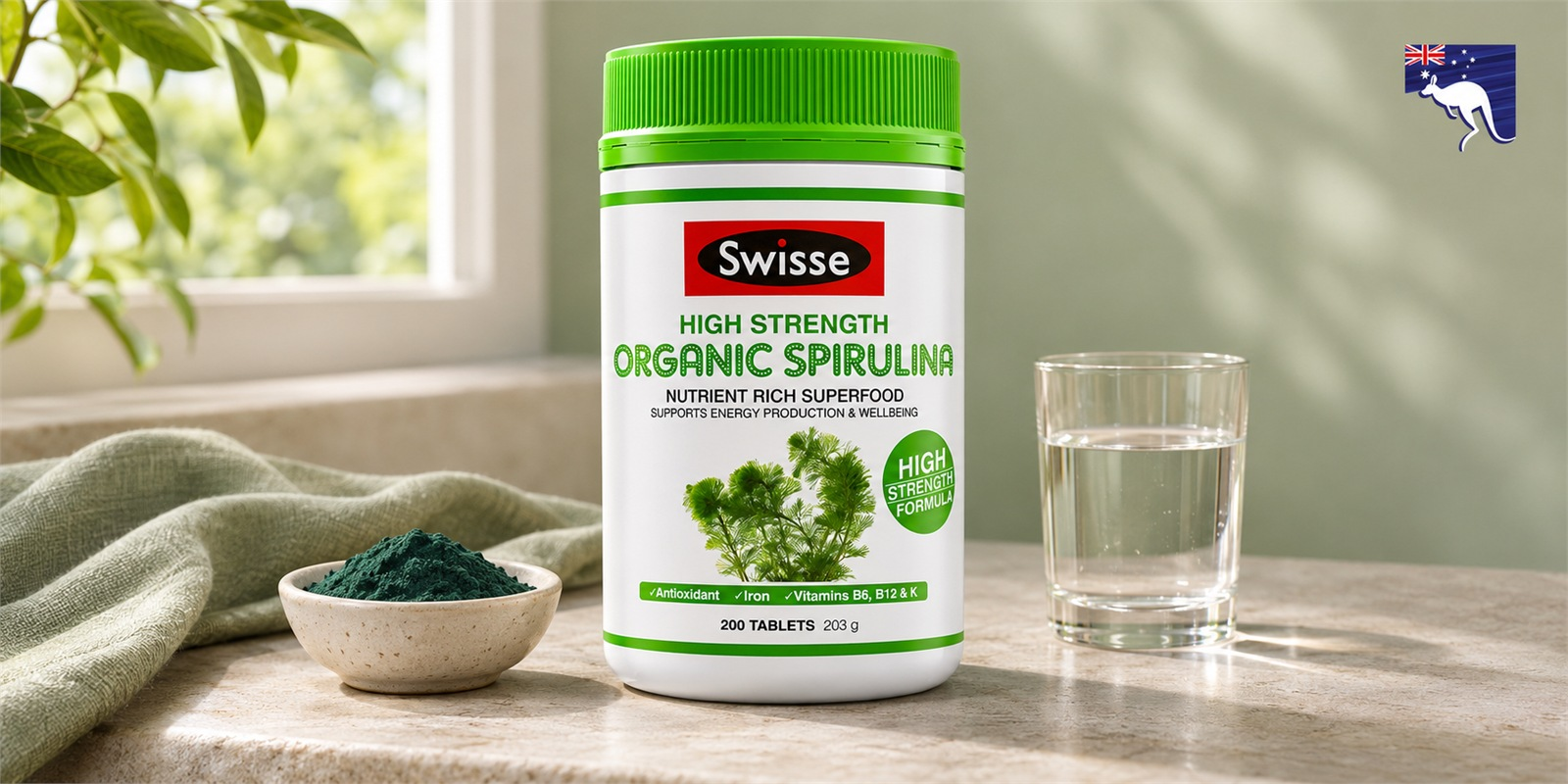
You can apply these checks to the Swisse spirulina label here, then compare its daily serving and pack details with the second spirulina option in the sidebar. The dedicated B12 listing addresses a separate nutritional need; it is not another spirulina formula.
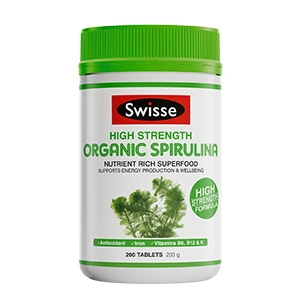
Swisse High Strength Organic Spirulina
Swisse High Strength Organic Spirulina. Compare the formula, selected pack, label serving and current Bangladesh price.
Decide what would make spirulina worth continuing
You may notice nothing obvious, and that does not mean you should keep increasing the dose. Studies often assess specific measurements over weeks or months; they do not promise a dramatic feeling after the first serving.
Agree on the purpose before deciding whether to continue. If the goal is general dietary improvement, spend at least as much attention on regular meals, affordable vegetables and suitable protein foods. If the goal is a clinical measurement, use the follow-up plan recommended by your healthcare professional.
For many shoppers, a useful decision is simply whether spirulina adds enough value to justify its cost and routine. It is reasonable to choose it as an optional supplement, and equally reasonable to put that money toward food or a more clearly identified nutritional need.