Premature Ejaculation: Causes, Treatment Options and When to Seek Help
Premature ejaculation is about control, a recurring pattern and distress—not a single disappointing experience. Learn how lifelong and acquired difficulties differ, what treatment options have evidence, where commercial delay products fit, and how to prepare for a private consultation in Bangladesh.
Quick Answer
Premature ejaculation is a recurring difficulty delaying ejaculation that causes distress. Timing alone does not diagnose it. A doctor can assess whether it is lifelong or a new change and discuss underlying causes, psychosexual support, prescription options or topical anaesthetics. Commercial delay gels and libido supplements should not be assumed to have the same evidence as those treatments.
Key Takeaways
- Control, frequency and distress matter alongside timing; occasional early ejaculation can be normal variation.
- New symptoms may need assessment for contributing erection difficulties or other health conditions.
- Evidence-based treatments have specific instructions, risks and follow-up needs; avoid self-prescribing.
- A non-numbing delay gel, a lubricant and a libido supplement serve different purposes.
When you are worried about ejaculating sooner than you want, it is easy to focus on the clock. The more useful questions are whether you feel able to delay it, how often it happens and how much it is troubling you. One unexpectedly quick experience does not define your sexual health.
Premature ejaculation can be addressed. The best next step depends on whether it has been present since your first sexual experiences or is a recent change, and whether erection difficulties, anxiety or another health concern are involved.
What is premature ejaculation?
The International Society for Sexual Medicine's patient guide explains premature ejaculation, or PE, through early ejaculation, limited perceived control and distress. Clinicians consider the pattern, context and impact together. Timing alone does not establish a diagnosis.
European Association of Urology guidance distinguishes lifelong and acquired PE, as well as variable early ejaculation. Occasional variation is common. If the concern is persistent and upsetting, an assessment is worthwhile even if you do not know how to describe it medically.
| Pattern | What it means for the discussion |
|---|---|
| Lifelong difficulty | Early ejaculation and limited control have been present from the first sexual experiences. |
| Acquired difficulty | Control or timing has changed after a period without the same problem; possible contributors need attention. |
| Occasional early ejaculation | Isolated or inconsistent episodes can be normal variation rather than a disorder requiring medicine. |
| Concern about lasting “long enough” | Expectations and distress matter. A comparison with pornography or somebody else's timing is not a medical test. |
Is there a normal time to last?
There is no single duration that makes sex satisfactory for every couple. NHS Sex Therapy London explains that preferences and timing vary, and that tiredness, stress and high arousal can affect how quickly ejaculation happens.
You do not need a stopwatch to start a conversation with a doctor. A rough description of your usual pattern is more helpful than repeatedly testing yourself. Tell the clinician if the difficulty occurs during some kinds of sexual activity but not others; a measure based on vaginal intercourse does not cover every person's experience.
The aim of care is a more comfortable sense of control and less distress. Turning each encounter into a pass-or-fail timing exercise can make the situation feel harder for both partners.
What can cause premature ejaculation?
There is often no single explanation. Physical and psychological factors can overlap, and a new problem deserves attention rather than an assumption that it is simply “weakness.”
The NHS overview of ejaculation problems identifies stress, depression, relationship difficulties and performance anxiety among possible contributors. Prostate or thyroid problems and recreational drug use can also be relevant. This list is a starting point for a consultation, not a way to diagnose yourself.
Erection difficulties can complicate the picture: some people rush because they fear losing an erection. A clinician may need to address that problem first. Conversely, an erection naturally subsiding after ejaculation does not by itself mean erectile dysfunction.
Bring a list of medicines, supplements and any products used during intimacy. Do not stop prescribed treatment on your own. A clear timeline—what changed, when it changed and what else was happening—can be more useful than buying another product.
Which treatment options have evidence?
Treatment is chosen around the cause, your preferences, other medicines and possible side effects. In Bangladesh, discuss suitable options with a registered doctor or urologist and obtain medicines through a licensed pharmacy. Availability or regulatory approval in another country does not establish local availability or suitability.
Address an underlying problem
For newly developed PE, assessment may identify a contributing erection problem, genitourinary condition, anxiety or another issue. Treating that contributor can be the priority. Not everyone needs hormone panels or extensive tests: investigations should follow the clinical history and examination.
Psychosexual support and practical techniques
A qualified therapist can help with performance pressure, communication and patterns that keep the worry going. Behavioural approaches, such as learning to pause stimulation before ejaculation, can be discussed in a clinical or therapeutic setting. They take practice and are not a guaranteed quick fix.
The AUA/SMSNA guideline supports considering referral to a mental-health professional with sexual-health expertise. Support can accompany medical treatment; needing it does not mean the difficulty is imaginary.
Prescription medicines and topical anaesthetics
Clinical guidelines include certain serotonin-affecting medicines and penile topical anaesthetics among established treatment options. These are specific medicines with particular instructions, not a recommendation to use any product labelled “delay.” A doctor must check suitability, interactions and the treatment plan.
Some oral treatments are prescribed off-label, meaning their authorised indication may differ. Dapoxetine is used on demand in countries where it is approved; other antidepressants may be used under medical supervision. Do not start, combine or adjust these medicines from an online dosage chart.
Topical anaesthetics such as lidocaine or prilocaine reduce sensitivity and can also transfer to a partner. The exact instructions about application, removal and condom compatibility matter. Allergies, irritation, unwanted numbness and conception plans should be discussed before use.
A 2026 international sexual-medicine consensus also emphasises counselling about the risks of antidepressant-based treatment. These include interactions and uncommon serious effects, as well as sexual side effects that may persist in some people. Shared decisions and follow-up are part of treatment, not optional extras.
Where do delay gels, lubricants and supplements fit?
It helps to separate three product purposes before shopping. The name on the front of a pack cannot show that it has the same evidence as a medicine used in a clinical guideline.
| Product example | Purpose and important limit |
|---|---|
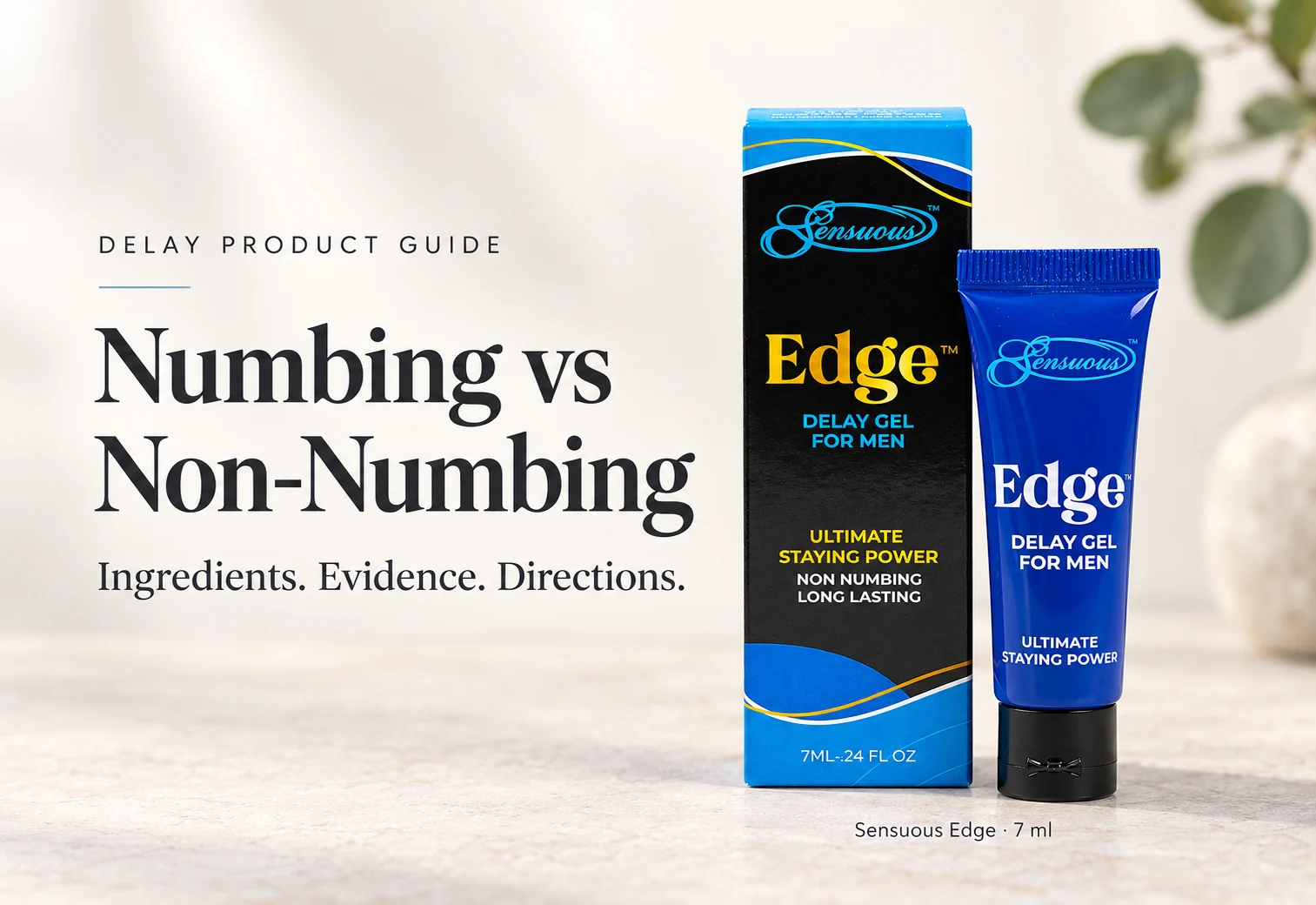
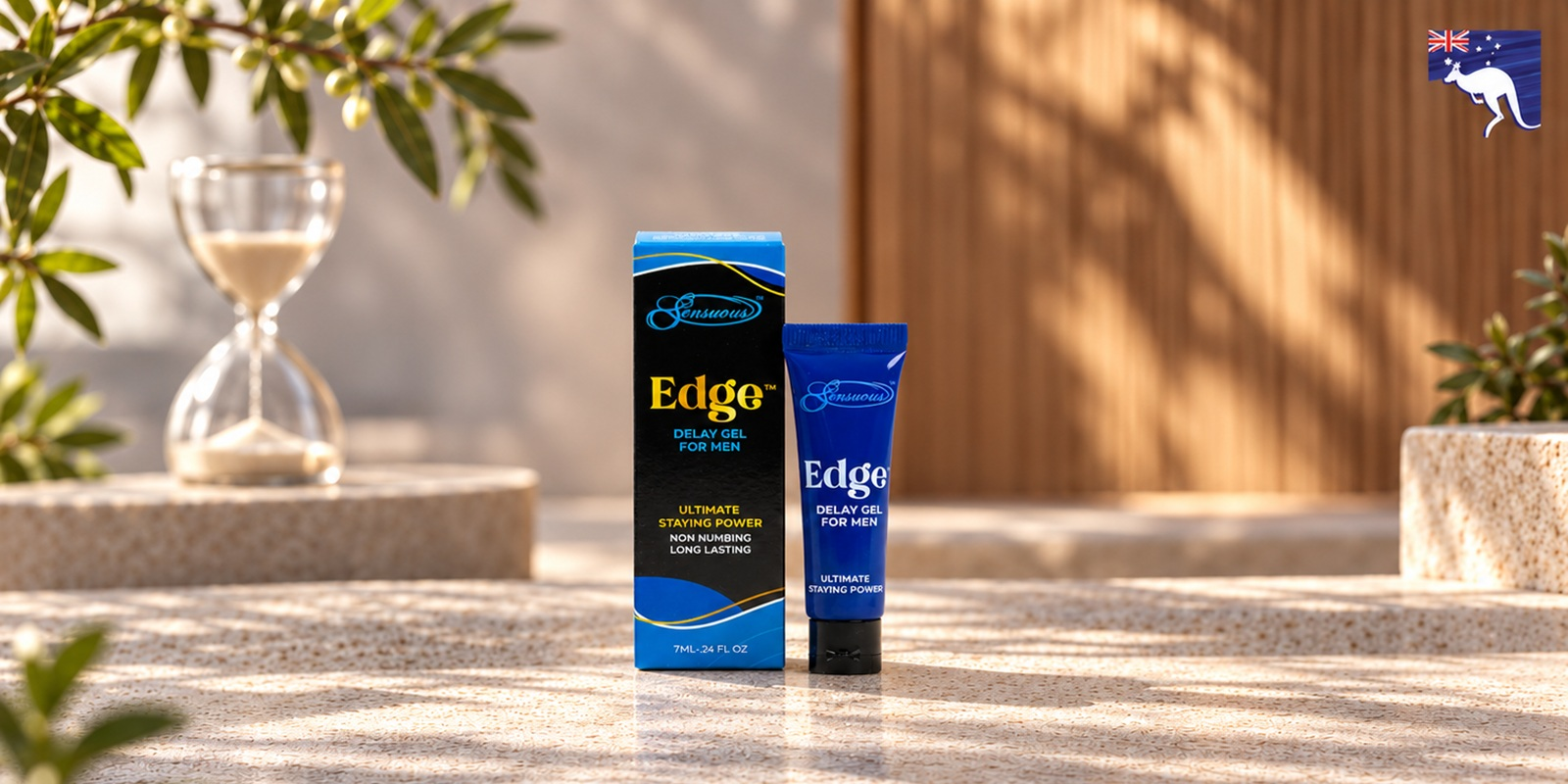
| Sensuous Edge Delay Gel | Marketed as a non-numbing topical delay product. It is not the lidocaine/prilocaine treatment discussed above, and the manufacturer description does not establish equivalent clinical evidence. |
| Sensuous Smooth Natural | A personal lubricant for friction-related comfort. Lubrication is a different purpose from treating PE. |
| Swisse Ultiboost High Strength Maca | A supplement marketed for healthy libido support. Desire and ejaculation control are separate outcomes; it is not an established PE treatment. |
Sensuous's Edge instructions state that it is not a lubricant, should not be used during pregnancy or when trying to conceive, and should be stopped if irritation or discomfort occurs. Follow the supplied leaflet rather than applying more in pursuit of a stronger effect. Check current availability on the product page.
If you are comparing product categories, our guide to numbing and non-numbing delay products explains why their ingredients and instructions cannot be treated as interchangeable.

Sensuous Edge™ Delay Gel for Men – 7 ml
Sensuous Edge™ Delay Gel is an Australian-made topical gel for adult men, designed to support ejaculation control and confidence during intimacy. Its concentrated, non-numbing form...
When should you see a doctor?
Book a consultation when early ejaculation keeps happening, causes distress, affects your relationship or has changed noticeably from your usual pattern. You do not have to wait until it feels severe. Seek assessment sooner if it comes with pain, urinary symptoms, erection difficulties or blood in semen; those symptoms deserve their own explanation.
For a first appointment, a short private note can help:
- When the difficulty started and whether it is lifelong or new.
- How often it happens, your sense of control and how much it bothers you.
- Whether erections, pain, urinary symptoms or desire have also changed.
- Your medicines, supplements, topical products and any conception plans.
- What you would most like help with: control, anxiety, comfort or communication.
You can begin simply: “I often ejaculate sooner than I want, and it is bothering me.” Ask for privacy if that helps you speak openly. A partner may join if you both want that, but the first conversation can also be yours alone.
There is no need to prove a minimum number of minutes before asking for help. A useful plan starts with understanding your experience and choosing an approach you can use safely and comfortably.