Numbing vs Non-Numbing Delay Products: What’s the Difference?
Compare numbing and non-numbing delay products by ingredients, evidence and practical label checks. This guide helps Bangladesh shoppers understand anaesthetic formulas, Sensuous Edge’s manufacturer description, partner-contact precautions and the questions to resolve before choosing a product.
Quick Answer
Numbing delay products use a local anaesthetic to reduce sensation. Non-numbing describes how a product is marketed or formulated; it does not prove equivalent effectiveness or freedom from side effects. Check the exact ingredients, product-specific evidence, directions and partner-contact precautions. Sensuous markets Edge as non-numbing, but its individual warnings and supplied leaflet still apply.
Key Takeaways
- A gel or spray format does not identify whether a delay product contains an anaesthetic.
- Evidence for a particular anaesthetic medicine cannot be transferred to a different non-numbing formula.
- Check partner-contact precautions and the exact condom materials permitted by each product.
- Persistent or distressing ejaculation problems deserve assessment rather than repeated product switching.
A delay product’s label should help you understand what it contains and how it is intended to be used. Start with those details before comparing promises about control or sensation. This guide separates the two common descriptions and shows which questions to resolve before buying in Bangladesh.
Numbing and non-numbing at a glance
| What to compare | Numbing products | Products marketed as non-numbing |
|---|---|---|
| Meaning | Use a local anaesthetic to reduce sensation | A product description; the formula needs its own assessment |
| Ingredients | Check the named anaesthetic and its strength | Read the complete ingredient list on the exact pack |
| Evidence | Look for studies of the specific treatment | Look for studies of that finished formula and claimed outcome |
| Directions | Amount, waiting time and removal depend on the product | Amount, waiting time and precautions also depend on the product |
| Partner and condom checks | Check transfer precautions and material compatibility | Check these explicitly; the description does not establish compatibility |
“Gel” and “spray” describe formats. They do not, by themselves, identify whether a product uses an anaesthetic. Compare the current labels rather than treating every gel or spray as the same option.
How numbing delay products work
Local anaesthetics temporarily reduce sensation where they are applied. The AUA/SMSNA guideline on ejaculation disorders discusses topical agents such as lidocaine and prilocaine in the management of premature ejaculation. Suitability involves the formulation, symptoms and directions, rather than a preference for a particular texture.
As a specific example, the EMA describes clinical studies of Fortacin, a lidocaine/prilocaine spray. That evidence belongs to the studied medicine. It does not establish equivalent results for another formula, a different concentration or a product with a similar name. An overseas authorisation also does not establish local availability in Bangladesh.
What a non-numbing label means for Edge
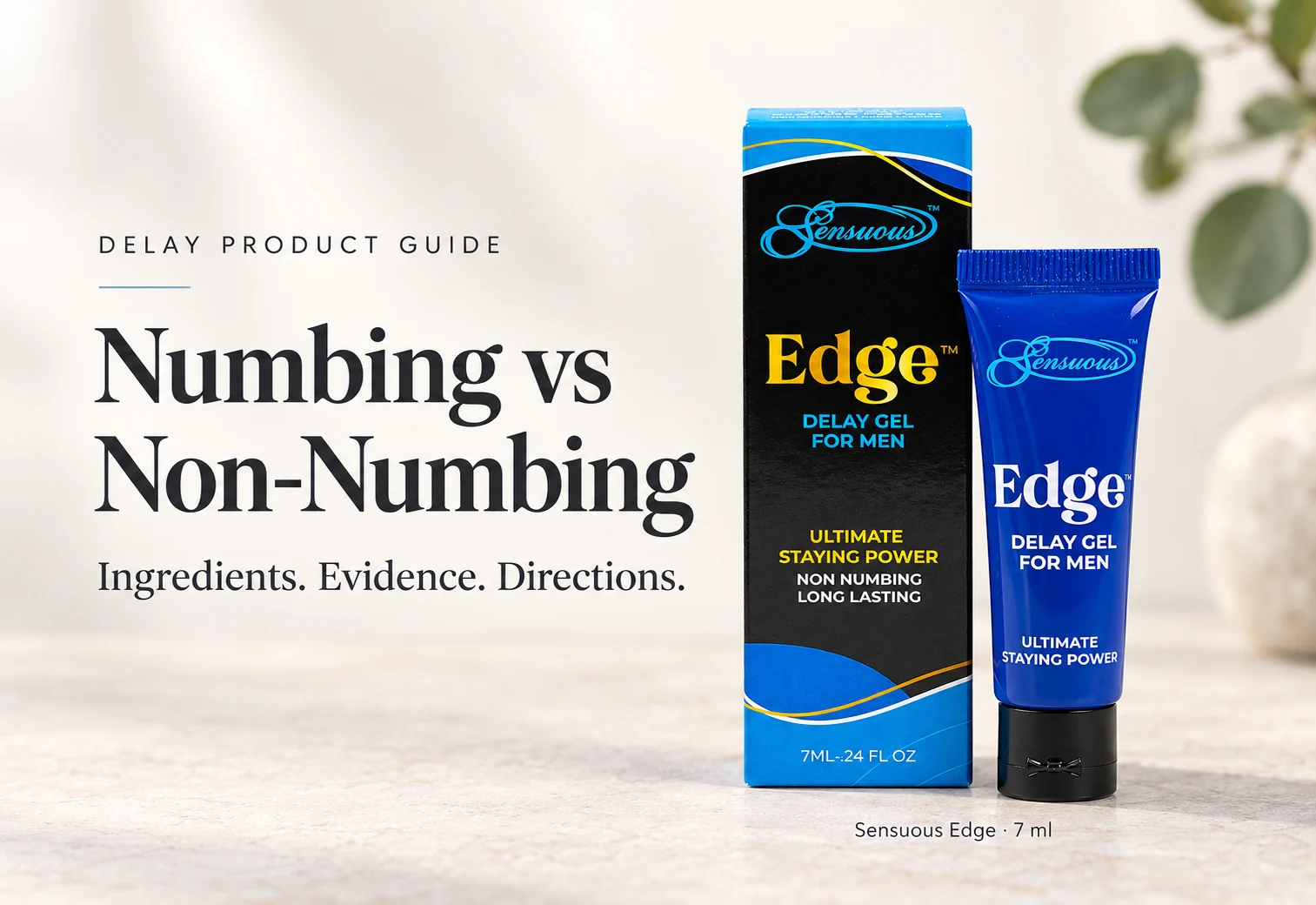
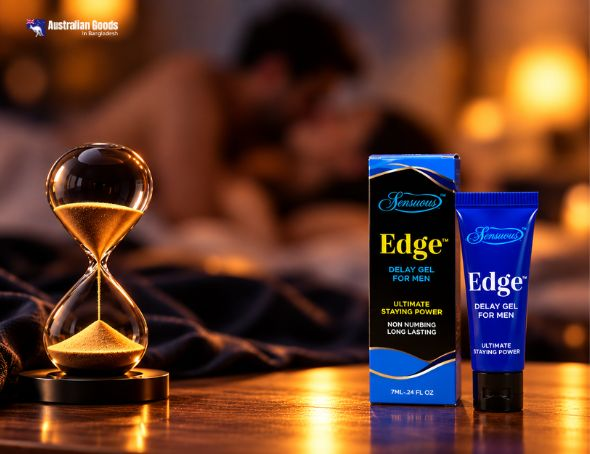
Sensuous describes Edge as a non-numbing topical gel in a 7 ml pack. This identifies the manufacturer’s positioning; it does not establish the same effect as an anaesthetic treatment or promise a particular result for an individual.
The manufacturer states that Edge is not a lubricant, must not be used during pregnancy or while trying to conceive, and should be stopped if irritation or discomfort occurs. Read the current pack and illustrated leaflet for the full directions. A non-numbing description does not remove these restrictions.
Sensuous Edge™ Delay Gel is an Australian-made topical gel for adult men, designed to support ejaculation control and confidence during intimacy. Its concentrated, non-numbing form...
Sensuous Edge™ Delay Gel for Men – 7 ml
Use the product listing for current ingredients, pack information, price and availability. Our application guide explains the separate drying and waiting stages without turning the timing into a guaranteed outcome.
Check partner contact and condom compatibility
NHS guidance notes that topical anaesthetics can transfer to a partner and reduce their sensation. Precautions must come from the exact product instructions. Do not copy a wash-off routine, waiting time or application amount from another brand.
The Fortacin product information, for example, distinguishes between compatible condom materials and polyurethane condoms, which it says must not be used with that medicine. This illustrates why a general claim of “condom safe” is insufficient. It is not a compatibility instruction for Edge or any other gel.
Check both partners’ relevant allergies and the product’s intended contact areas. If the supplied instructions do not answer a compatibility question, ask the manufacturer or a pharmacist before use. Stop if either person develops irritation, pain or an unwanted reaction.
Match the evidence to the claim
When a listing says “clinically proven”, look for the named finished product, the people studied and the outcome measured. An ingredient study or customer review cannot automatically establish the effect of a different finished formula. Stronger sensation, warmth or tingling is not a reliable way to rank products.
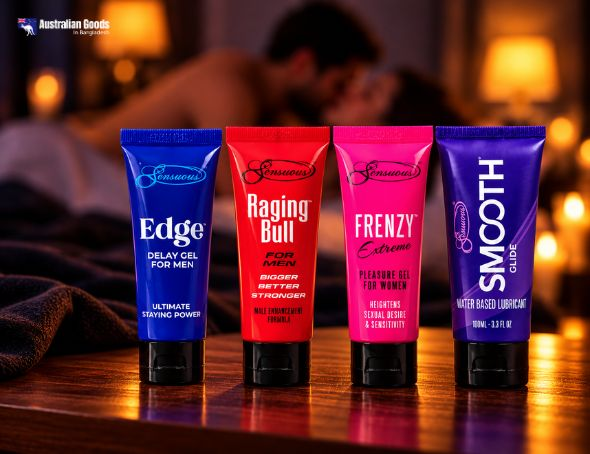
Keep the purpose clear: ejaculation timing, erections, desire and lubrication are different concerns. The wider Sensuous comparison can help you identify the correct product family before reading its individual directions.
Before buying or trying a delay product
- Confirm the exact item. Match the name, format, pack size and ingredient panel with the listing.
- Keep the instructions. Check the permitted amount, application area, timing and any removal or partner-contact directions.
- Inspect the supplied pack. Review the seal and expiry details; ask Customer Care for a current label photo if information is unclear.
- Choose the next step for the concern. A product comparison cannot identify why a persistent problem is happening.
The NHS advises medical assessment for persistent ejaculation problems. A qualified clinician can discuss possible causes and options, including counselling or behavioural approaches where appropriate. If the difficulty is recurring, newly changed or distressing, seek that advice before repeatedly changing products or increasing the amount used.