Memory & Focus Supplements: Ginkgo, B Vitamins & Nootropics
Memory and concentration difficulties have many possible causes. This guide compares ginkgo, B vitamins and nootropic blends, explains what supplement labels can and cannot tell you, and helps Bangladesh shoppers recognise when a product comparison should begin with medical advice.
Quick Answer
Benefits depend on the ingredient and the reason for use. Correcting a diagnosed nutrient deficiency can matter, but extra vitamins do not reliably improve everyone's memory. Ginkgo evidence in healthy people remains uncertain, and nootropic blends need assessment as complete formulas. Persistent or worsening symptoms deserve medical attention before supplement shopping.
Key Takeaways
- Ginkgo, vitamin B12 and nootropic blends are different product types; compare them according to their ingredients and purpose.
- Correcting B12 deficiency is a different task from trying to improve memory in someone with adequate B12.
- Review medicine interactions, caffeine and overlapping B6 before combining focus products.
- Sudden confusion, weakness or speech difficulty needs emergency medical help; persistent memory changes need assessment.
You read the same paragraph twice, lose your place in a task, or reach for another cup of tea to get through the afternoon. It is easy to see why a bottle labelled “memory and focus” catches your attention. The useful next question is what, exactly, you want it to help with.
Memory and focus supplements are a broad group of products with very different ingredients. Ginkgo, vitamin B12 and a multi-ingredient nootropic blend cannot be judged as if they do the same job. This guide helps you separate the evidence from the label, recognise when an assessment matters, and compare products available in Bangladesh without buying more than you need.
Do memory and focus supplements work?
There is no single answer for the whole category. Correcting a diagnosed nutrient deficiency can be important for health. That does not mean extra nutrients will sharpen everyone's memory. Evidence for ginkgo in healthy people remains uncertain, and a promising finding about one ingredient does not establish that every blend containing it works.
Start with a specific goal: staying attentive during work, dealing with persistent tiredness, or understanding a new memory problem. These are different questions. “Brain booster” is a marketing description, not a diagnosis or a reliable measure of effectiveness.
First, put the change in context
Consider when the problem began and what changed around that time. A demanding schedule, poor sleep, stress, low mood, a new medicine or a nutritional problem may need a different response. Keep a brief note of the symptoms and bring your medicine and supplement list to an appointment if the difficulty persists.
Occasional forgetfulness can happen at any age. Repeatedly getting lost in familiar places, asking the same question, or struggling with tasks you normally manage deserves medical attention. The National Institute on Aging's guide to memory changes explains why the effect on everyday life matters.
Seek emergency medical help for sudden confusion, facial drooping, new one-sided weakness or trouble speaking. These can be stroke warning signs, even if the symptoms improve. Do not wait to see whether a supplement helps.
Ginkgo: a familiar name with important limits
Ginkgo supplements usually contain a leaf extract. The NCCIH evidence review finds no conclusive evidence of benefit for a health condition. Ginkgo has not been shown to prevent dementia, and research on cognitive performance in healthy people is uncertain. Evidence for symptom improvement in people with dementia is inconsistent; it should not be treated as a reason to replace medical care.
Ginkgo can cause headache, dizziness or digestive symptoms. It may increase bleeding risk with anticoagulants such as warfarin and can interact with other medicines. Discuss it with a clinician before use if you take medication, have an operation planned, or are pregnant or breastfeeding.
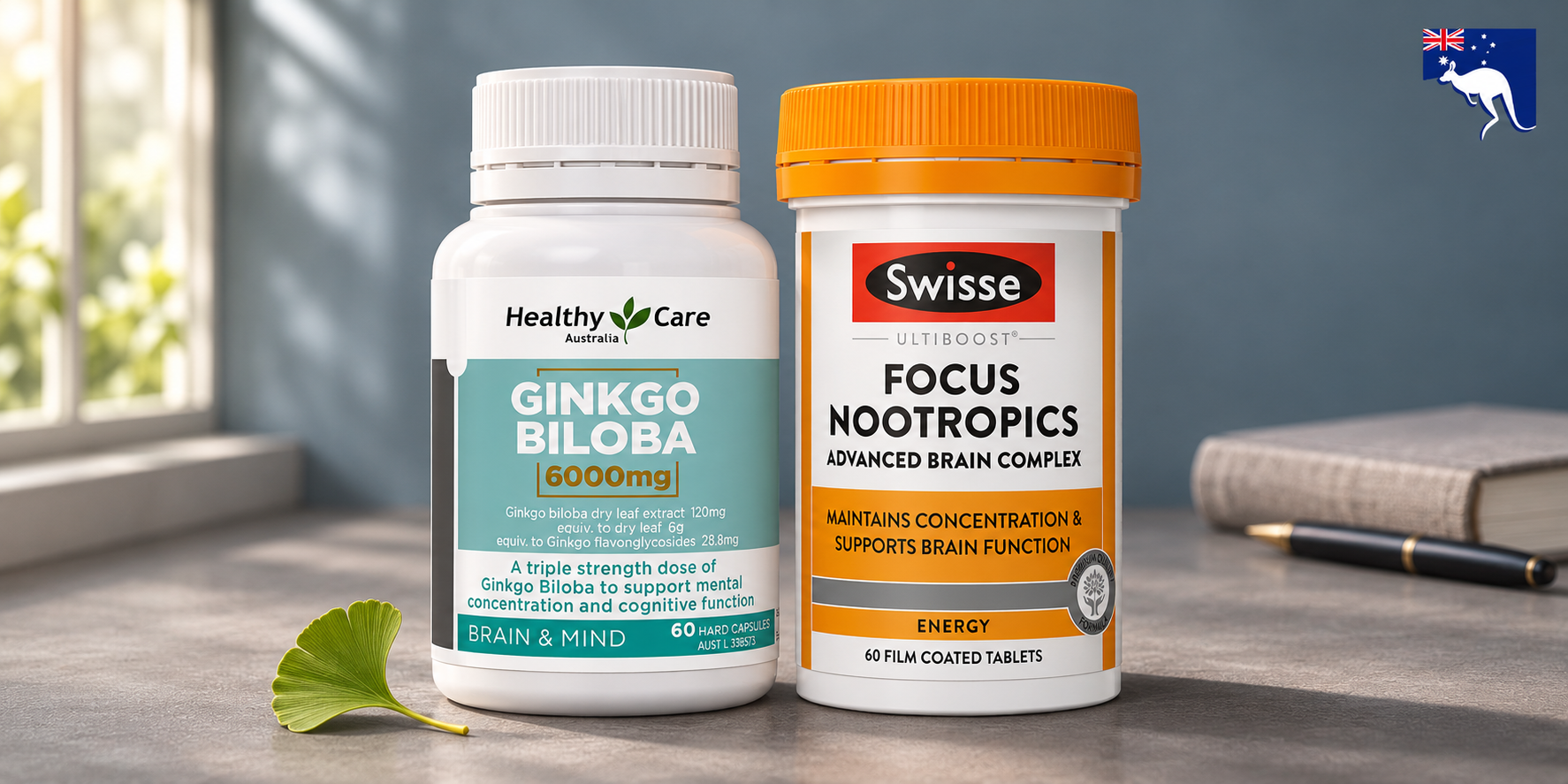
When comparing ginkgo products, identify the extract amount, the equivalent dry-leaf amount and any declared standardisation. A large number on the front of a bottle may describe the starting plant material. It is not automatically the weight of extract in each capsule. Our ginkgo label and safety guide explains the comparison in more detail.
B vitamins: when the reason for taking them matters
Vitamin B12 is needed for normal nerve function and red blood cell formation. A deficiency can have neurological consequences, so it deserves proper investigation and treatment. People eating a vegan diet, older adults and people with certain absorption problems may need particular attention to B12 intake or status. Metformin and acid-suppressing medicines can also affect B12. These points are covered in the NIH vitamin B12 fact sheet.
A high-strength B12 tablet is not a diagnostic test. If you have persistent tiredness, numbness or cognitive symptoms, ask whether testing is appropriate rather than assuming B12 is the cause. A clinician can decide how an identified deficiency should be treated.
For adults without a relevant deficiency, taking extra B vitamins has not consistently improved cognition. The NCCIH research summary on supplements and cognitive function describes the limitations of this evidence.
Check vitamin B6 across your products, too. It can appear in a B complex, multivitamin, magnesium supplement and focus blend at the same time. The TGA warns that supplemental B6 can cause peripheral neuropathy, including when several products are combined. Stop a B6-containing supplement and seek medical advice if you develop tingling, burning or numbness.
What does “nootropic” tell you?
Very little about the exact contents. In supplement shopping, the term can cover herbs, vitamins, amino acids and combinations. Read the full ingredient panel before deciding whether the product fits your goal.
For example, the Australian product register entry for Swisse Ultiboost Focus Nootropics lists American ginseng, several B vitamins, choline, tyrosine and a soy-derived phosphatidylserine ingredient. It is a blend, so it should be assessed as a complete formula. The entry helps identify the product; it does not establish that it treats ADHD, dementia or another medical condition.
When a seller refers to a study, look for the preparation tested, the amount, the participants and the outcome. A short attention test in healthy volunteers is different from better examination results, improved daily functioning or treatment of memory loss. A formula containing several researched ingredients also needs evidence for its own claims.
Compare three different product types
These listings illustrate the choices you may encounter. They are alternatives to evaluate, not a recommendation to take all three together.
| Product type | Example | What to check |
|---|---|---|
| Single-herb product | Healthy Care Ginkgo Biloba 6000mg | Extract details, medicine interactions and the reason for use |
| Targeted nutrient | Healthy Care High Strength Vitamin B12 1000mcg | Whether supplementation is appropriate for your diet, risk factors or clinical advice |
| Multi-ingredient blend | Swisse Ultiboost Focus Nootropics | Every active ingredient, overlapping vitamins, warnings and current availability |
Healthy Care's B12 product information identifies cyanocobalamin, 1000 micrograms per tablet. This is a label fact, not a promise of improved concentration. Use each product page to inspect the current pack, directions, price and stock status before ordering.
Healthy Care Ginkgo Biloba 6000mg 60 capsules in Bangladesh. Compare price, 120 mg extract and leaf equivalence, adult directions and storage.
Healthy Care Ginkgo Biloba 6000mg
Check caffeine before adding another focus product
Some focus products contain caffeine; others do not. Count coffee, tea, energy drinks and pre-workout products when checking your total intake. Do not infer caffeine content from the word “energy” on the front label.
The FDA's caffeine guidance notes that sensitivity varies with factors including medicines and medical conditions. Too much can cause sleep problems, anxiety and palpitations. The European Food Safety Authority also notes that caffeine close to bedtime can affect sleep. Feeling more awake today is not a good trade if the routine leaves you sleeping poorly tonight.
A practical buying checklist for Bangladesh
Before paying, match the product name, strength, dosage form and pack count to the item you actually want. Then check:
- Suitability: medicines, allergies, age restrictions and pregnancy or breastfeeding warnings.
- Daily serving: whether the amounts apply to one tablet or the full daily serving.
- Overlap: shared ingredients in your current multivitamin, energy or sleep products.
- Product condition: intact seal, readable batch and expiry details, and storage instructions.
- Value: the current price divided by the number of labelled daily servings, compared only with a suitable alternative.
If the label photograph and written description disagree, ask for clarification before buying. A clear answer is more useful than a bigger strength number. You can also review our guide to supplement choices after 50 when age-related medicine use and nutritional needs are part of the decision.