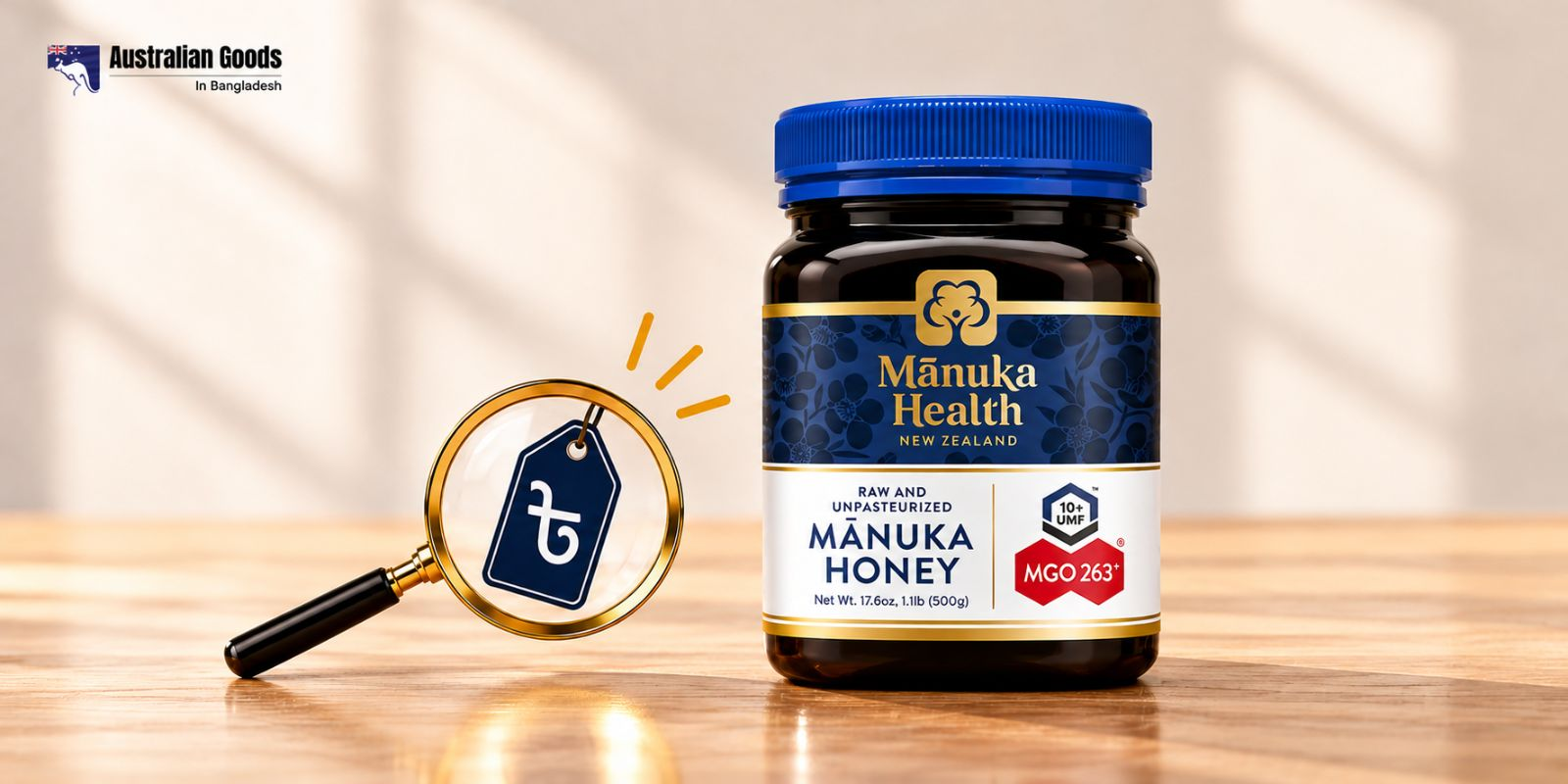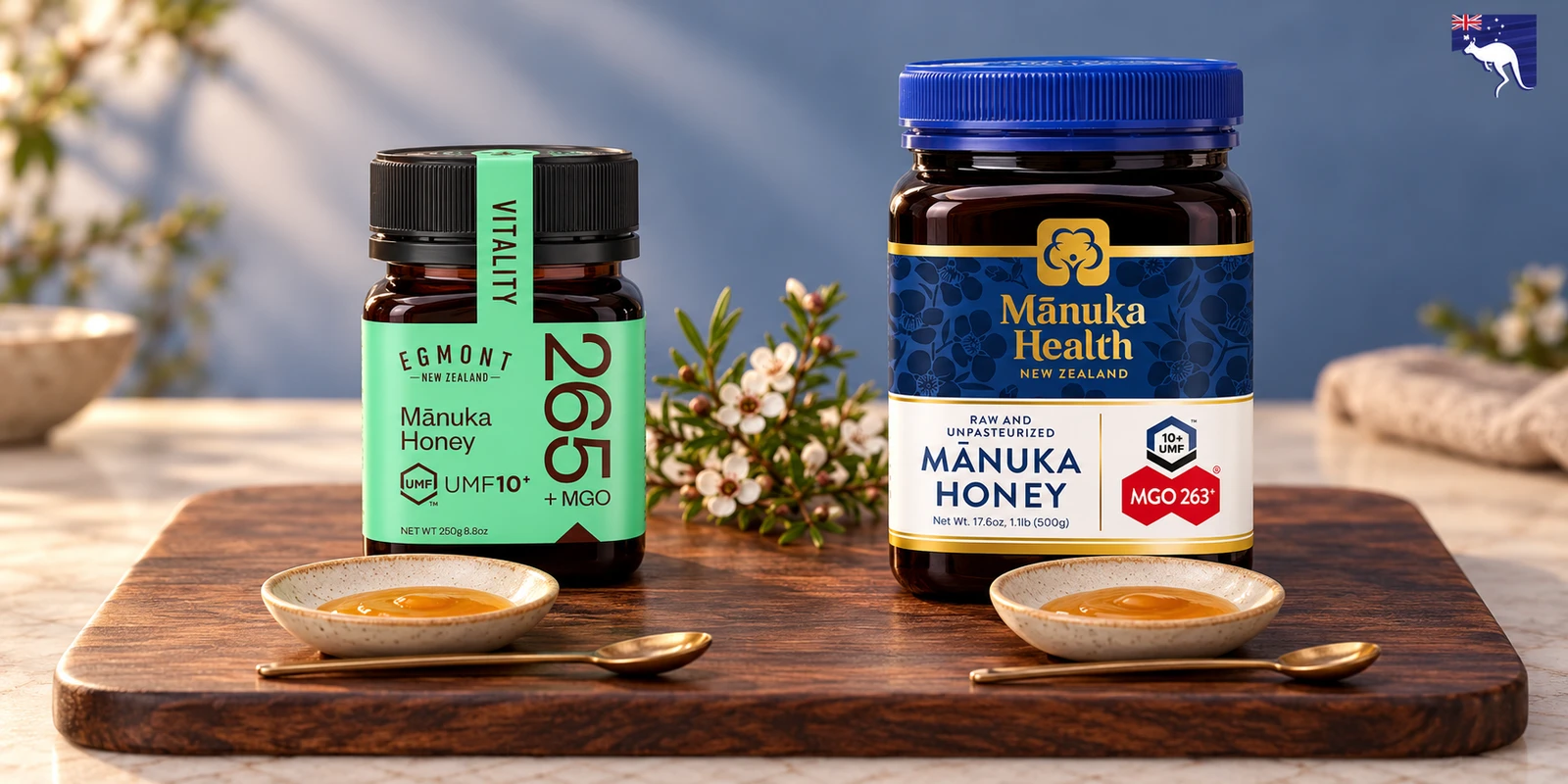
Manuka Health Manuka Honey Review: Which MGO Grade Should You Choose?
Which Manuka Health jar is worth choosing? This label-based review compares MGO 115+, 263+, 400+ and 573+ for Bangladesh shoppers, focusing on the trade-offs between grade, pack size and budget. Find a sensible starting point without assuming that the biggest number means the best purchase.
Quick Answer
Start with Manuka Health MGO 115+ if your priority is trying the brand at a lower labelled grade. Compare MGO 263+ if you specifically want a UMF 10+ catalogue option. MGO 400+ and 573+ suit buyers deliberately choosing a higher measured concentration. Check the selected pack and current price; no grade establishes a better treatment outcome or a required daily dose.
Key Takeaways
- Choose a grade for a clear buying preference, rather than treating MGO as a health target.
- MGO 263+ versus 400+ is a comparison of labelled concentration and cost, not proven clinical benefit.
- Compare net weight and price per 100 g before deciding which jar offers better value.
- Match the grade, seal, batch and best-before information to the actual jar you receive.
A familiar blue jar can still leave you with an unfamiliar decision. Manuka Health MGO 115+, 263+, 400+ and 573+ look like steps up a ladder, and it is tempting to climb as high as the budget allows. But buying well starts with a different question: what are you paying extra for?
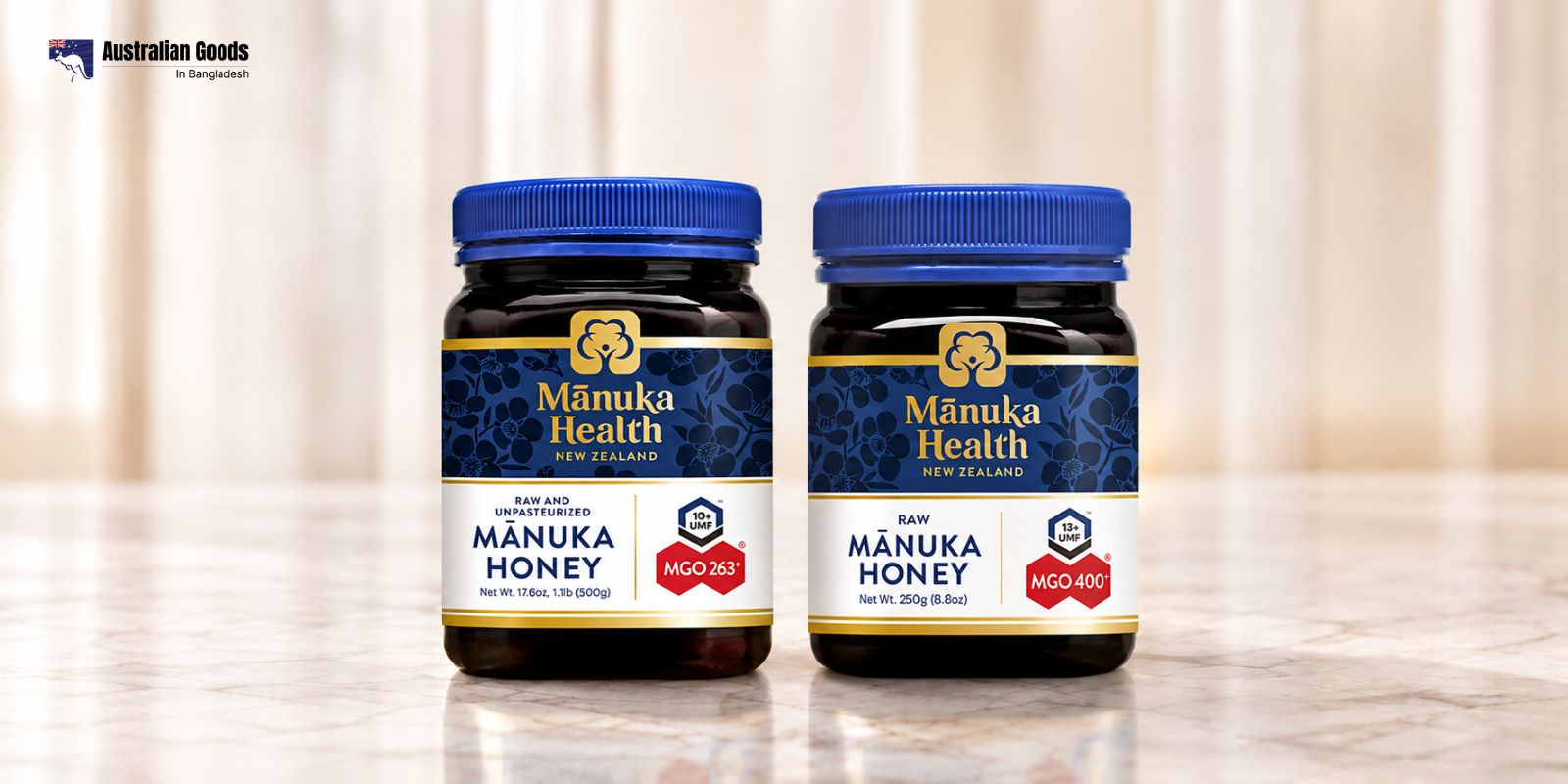
This Manuka Health Manuka honey review helps Bangladesh shoppers answer that question. We compare the labelled specifications and everyday purchasing trade-offs. The aim is a jar you understand and enjoy, at a price you can justify.
Our verdict: choose the specification you actually want
Manuka Health gives buyers a straightforward set of labelled MGO options. For a first purchase, shortlist MGO 115+ and 263+ before looking higher. They let you decide how much you value the grade without starting at the premium end. This is a purchasing approach, not a claim that either is the correct health dose.
MGO 400+ and 573+ become reasonable comparisons when a higher stated concentration is itself part of what you want. If you cannot explain why that detail matters to you, keep the extra money in your budget until you can. A more expensive jar should earn its place in your shopping basket.
What this review can tell you
Australian Goods sells Manuka Health. This review draws on our catalogue and the brand's published information; it is not an independent laboratory assessment or a tasting panel. We can compare labelled grades, buying options and traceability. We cannot promise which jar you will prefer or which will improve your health.
The products discussed are New Zealand honey. The retailer name does not make them Australian honey. Where a product offers several weights, select the exact option before comparing its price with another jar.
The four grades at a glance
| Manuka Health option | Catalogue label pairing | Useful reason to consider it |
|---|---|---|
| MGO 115+ | UMF 6+ | Trying the brand without choosing a higher concentration |
| MGO 263+ | UMF 10+ | Comparing a clearly labelled UMF 10+ option |
| MGO 400+ | UMF 13+ | Choosing a higher specification for a defined preference |
| MGO 573+ | UMF 16+ | A deliberate premium purchase within these four options |
These pairings describe catalogue examples, not a universal conversion calculator. Confirm the MGO number, any UMF trademark and the net weight on the supplied label. Packaging and selectable packs can differ across markets or product updates.
MGO refers to methylglyoxal concentration, expressed in milligrams per kilogram of honey. UMF is a broader certification framework covering MGO and other quality markers. The UMF Honey Association explains those markers. Neither number tells you how many spoonfuls you need.
MGO 115+: a sensible first shortlist
The appeal of Manuka Health MGO 115+ is easy to understand: it lets you consider the brand without making a higher MGO specification your starting requirement. Check its live price against the other grades before assuming it is the cheapest selected pack.
This is worth a look if you are curious about Manuka honey, already enjoy honey as food and want a manageable first purchase. A suitable smaller pack can reduce the amount committed to an unfamiliar taste, even when a larger jar has a better unit price.
There is no need to view 115+ as a temporary grade you must eventually outgrow. If you enjoy it and its price suits you, that is a complete reason to buy it again.
MGO 263+: a useful point of comparison
MGO 263+ sits between 115+ and the higher specifications in this selection. Its UMF 10+ catalogue pairing makes it a practical reference when comparing other labelled UMF 10+ products. It is a comparison point, rather than a universally optimal grade.
Consider it when you have decided that this particular label specification matters to you and the selected pack fits your budget. Then ask a straightforward question: would the same money buy a pack size you would use more comfortably at 115+, or do you prefer the 263+ option?
Open the product details below to check the current weight and price together. A 250 g jar and a 500 g jar are different offers even when the grade is identical.
Manuka Health MGO 263+ Manuka Honey (New Zealand)
Manuka Health MGO 263+ honey in Bangladesh: compare jar weight, UMF 10+ label, food-use guidance, expiry and current selected-pack price.
MGO 263+ vs 400+: is the upgrade worthwhile?
The most useful difference is the one printed on the label: MGO 400+ specifies a higher minimum concentration than 263+. What the label does not establish is a proportional improvement in your health, enjoyment or value.
Compare equal weights and note the actual extra cost. If a higher labelled concentration is your explicit preference and the premium feels comfortable, 400+ can suit that choice. If your main goal is sweetening breakfast or enjoying a spoonful occasionally, there is no demonstrated requirement in this review to pay for the jump.
For gifting, ask whether the recipient recognises and values Manuka grading. An appropriate size and clear product information may be more useful than a number they do not understand. Presentation alone should not decide a food purchase.
MGO 573+: for a deliberate premium choice
Manuka Health MGO 573+ has the highest labelled concentration among the four products covered here. That makes it a relevant option for someone specifically seeking that specification. It does not make it the automatic recommendation for every customer.
Before ordering, compare its selected weight and unit price with 400+. Be clear about what makes the difference worthwhile to you: a preferred grade, a requested gift or an existing product preference. Avoid buying it because a symptom has made a larger number feel reassuring. Symptoms call for appropriate advice, not an escalation through honey grades.
Judge value by the pack you will actually use
Price per 100 g = jar price ÷ net weight in grams × 100. Use this calculation after selecting the pack. Include delivery charges when deciding what the order will cost, and check the current delivery estimate for your location in Bangladesh.
Unit price is only one part of value. A large jar may look economical, but the smaller option can be a better first purchase when you are unsure about flavour or how often you will use it. Check the best-before information and storage instructions, too.
For live-price comparisons and pack choices, use the Manuka Health price guide. This review focuses on the decision behind the purchase rather than a price list that can become outdated.
Taste and texture: leave room for personal preference
We have not blind-tasted these four grades side by side, so assigning a flavour winner would be misleading. MGO is not a sweetness scale. A bigger number does not tell you whether you will enjoy that honey more on toast, in yoghurt or alongside a familiar breakfast.
If you are new to the brand, try it with a food you know well before changing grades. That gives you a useful reference for your next purchase. Reviews can offer impressions, but look for comments about the same product and separate delivery experiences from flavour opinions.
Check the evidence behind the jar
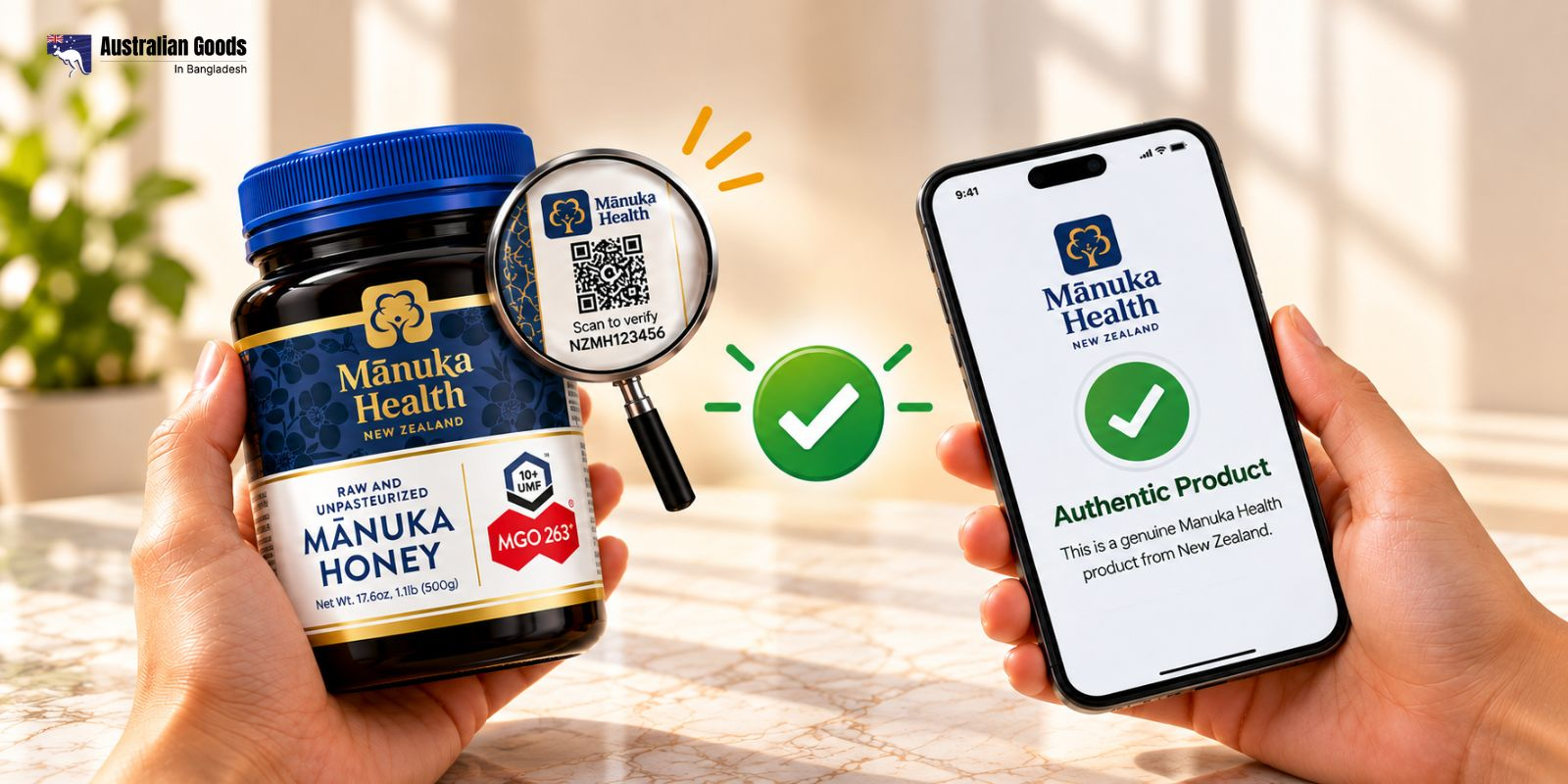
Manuka Health says it tests each batch and maintains traceability back to the beekeeper. Those are manufacturer statements. For your purchase, match the grade, weight, batch and best-before information to the delivered jar and keep the invoice.
An intact seal matters, but a seal or QR code alone is not conclusive proof. If something differs from the order, ask the seller for an explanation before opening it. The checklist below walks through the practical checks in more detail.
Keep health expectations separate from the grade
Manuka honey is food containing sugars. It should not replace treatment, and evidence about specialised wound products should not be applied to an ordinary food jar. Memorial Sloan Kettering explains the evidence limits and blood-glucose concerns. Never give honey to a baby under 12 months, as advised by the NHS.
Make your final choice
Already know which grade you want? Use the Manuka Health product directory to find the matching jar and listed sizes.
Choose your comfortable budget, shortlist a grade for a clear reason, then compare the pack. For many first purchases, inspecting 115+ and 263+ is enough to make progress. Move to 400+ or 573+ when you consciously value the higher specification. If another brand is on your shortlist, our Egmont versus Manuka Health comparison helps you compare equivalent jars before checkout.