Can You Use Lubricant When Trying to Conceive?
You do not have to accept painful sex while trying for a baby. This guide explains what sperm-compatible lubricant labels mean, separates laboratory findings from pregnancy outcomes, and shows why general-purpose lubricants and pleasure gels need a different safety check.
Quick Answer
Yes, you can use lubricant when trying to conceive if you need it. Choose an exact formula specifically labelled and tested for sperm or gamete compatibility, and follow its directions. “Water-based”, “natural”, “pH-balanced” and “condom-compatible” do not establish that suitability. Fertility-friendly lubricant supports lubrication; it has not been shown to guarantee or increase your chance of pregnancy.
Key Takeaways
- If you need lubricant while trying to conceive, look for specific sperm-compatibility evidence for the exact formula.
- Laboratory effects on sperm do not translate directly into a person’s chance of pregnancy.
- Condom-compatible, water-based and natural are not substitutes for a conception-suitability claim.
- The Smooth products discussed here are general-purpose comparisons, not verified fertility-friendly recommendations.
Trying for a baby can turn a simple purchase into a surprisingly complicated one. A lubricant says “gentle” or “natural”, but the question you need answered is more specific: can you use it while trying to conceive?
Yes, lubricant can be used when it is needed. The sensible choice is a product with clear sperm-compatibility information for its exact formula. You should not have to continue painful sex, and you should not have to rely on a vague fertility promise either.
Does lubricant affect sperm or your chance of pregnancy?
These are related questions, but they measure different things. Laboratory studies can put sperm in direct contact with a lubricant and measure movement or survival. Pregnancy studies follow couples over time. The conditions and outcomes are not interchangeable.
The American Society for Reproductive Medicine’s guidance notes that some common lubricants affect sperm movement in laboratory testing. It also reports that studies of couples trying to conceive did not find lower cycle conception rates with lubricant use overall. Hydroxyethylcellulose-based products have been studied, but an ingredient name alone does not validate every finished formula that contains it.
A prospective study of 6,467 pregnancy planners found no association between lubricant use and a reduced chance of conception per cycle. It also did not show that products described as fertility-friendly improved that chance. This was observational research, so it cannot prove every lubricant is equivalent or eliminate every source of uncertainty.
The practical message is reassuring without being absolute: needing lubricant does not mean you have harmed your fertility. For a new purchase, choose an appropriately labelled sperm-compatible product instead of assuming that all general-purpose formulas have been tested.
What does “fertility-friendly” lubricant mean?
The phrase should lead you to specific product evidence, not just attractive packaging. Look for an intended use that includes couples trying to conceive and information about compatibility with sperm or gametes. Gametes are reproductive cells—sperm and eggs.
For example, the US FDA has a distinct classification for personal lubricants compatible with gametes, fertilisation and embryos. That helps explain what a meaningful compatibility claim concerns. It does not mean every product sold using a fertility phrase has that status, or that US clearance alone establishes local regulatory status in Bangladesh.
Sperm compatibility is also not fertility treatment. A lubricant cannot correct blocked fallopian tubes, induce ovulation or resolve a sperm-production problem. Its role is to provide lubrication without the specified adverse effects established by the relevant testing.
Which label claims are easy to confuse?
| Claim on the pack | What it tells you | What it does not establish |
|---|---|---|
| Water-based | The general type of formula. | That the finished product is sperm-compatible. |
| Natural or aloe-based | A formulation or marketing description. | Conception suitability, freedom from irritation or greater effectiveness. |
| Condom-compatible | Compatibility with specified condom materials under the product’s instructions. | Compatibility with sperm or suitability for trying to conceive. |
| Non-spermicidal | It is not being sold as a sperm-killing contraceptive. | That it has passed sperm-compatibility testing. |
| Fertility-friendly or sperm-compatible | A claim that should be checked against the exact label and supporting information. | A guarantee of conception or proof of improved pregnancy rates. |
The distinction about condoms is especially easy to miss. A test of whether a lubricant damages a condom answers a different question from a test of its effect on sperm. Our lubricant-and-condom guide covers the first question in more detail.
Can you use Sensuous Smooth while trying to conceive?
We have not verified a sperm-compatibility or trying-to-conceive claim for the Smooth products linked below. They should therefore be treated as general-purpose product comparisons, not fertility-friendly recommendations. Their presence in the related-product section does not change that distinction.
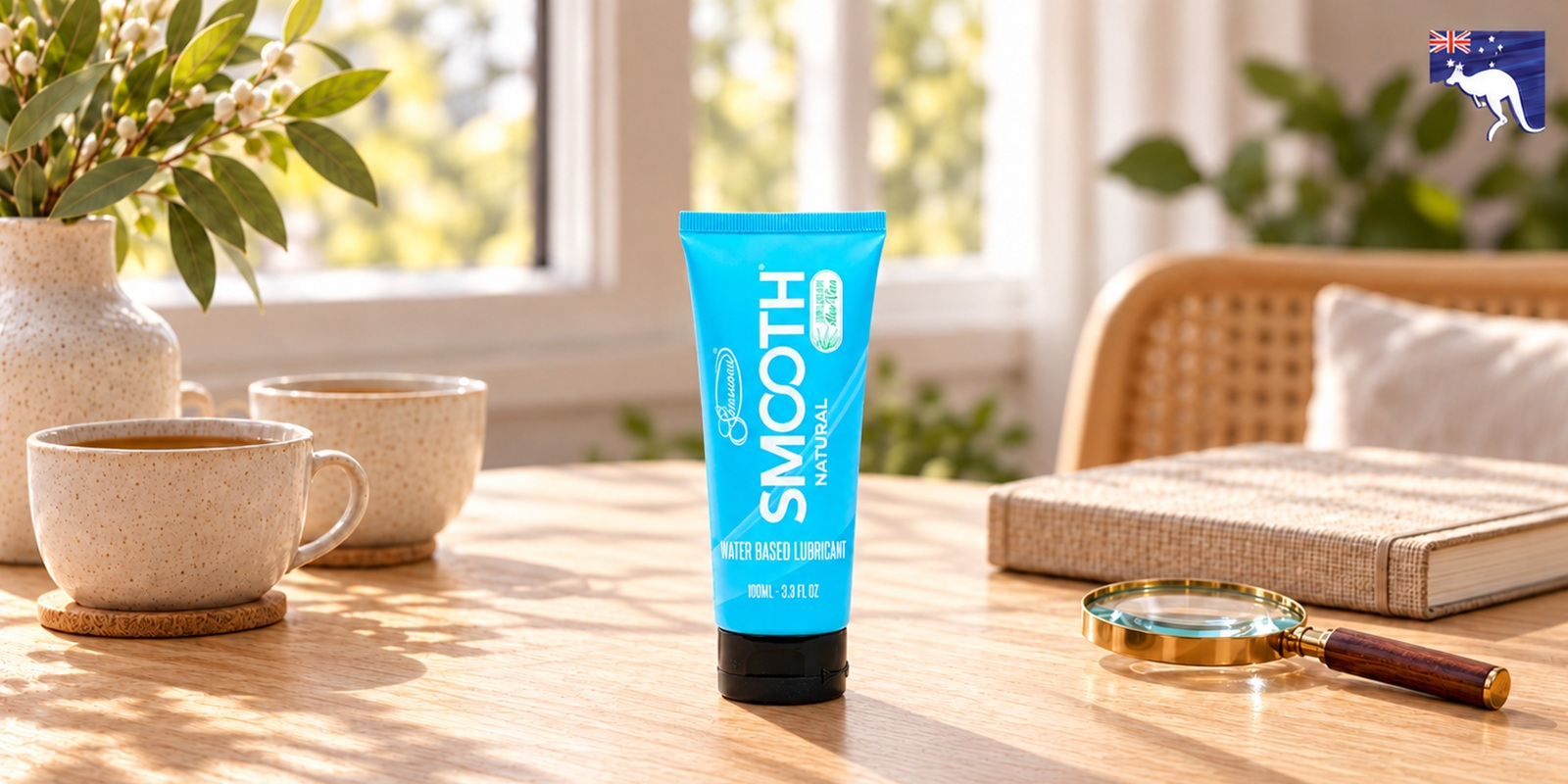
- Smooth Natural is water-based, contains aloe vera and is described as glycerin-free. Those features do not establish sperm compatibility.
- Smooth Glide is another water-based lubricant. Its full formula matters; the presence of hydroxyethylcellulose on a pack would not by itself prove conception suitability.
- Smooth Silicone is a silicone-based option. Long-lasting glide is a texture feature, not evidence about fertility.
If conception is your reason for buying, ask for product-specific evidence before choosing any of these. If none is available, select a product whose intended use clearly covers trying to conceive, with help from a pharmacist or fertility clinician if needed. We have not identified a verified fertility-compatible lubricant in the catalogue reviewed for this guide.
Do not substitute a pleasure gel for lubricant. Sensuous Frenzy’s manufacturer directions explicitly say not to use it during pregnancy or when trying to conceive, and that it is not intended as a lubricant. Follow that warning even if a product feels gentle.
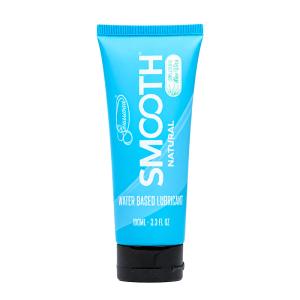
Smooth Natural™ Personal Lubricant – Water-Based with Aloe Vera 100ml
Smooth Natural™ is a water-based personal lubricant for adults who want a smooth, comfortable feel during intimacy. Its colourless formula combines aloe vera juice with a water bas...
A practical buying checklist for Bangladesh
- Confirm the exact name and version. A brand may sell ordinary and conception-labelled products. A review of one does not apply automatically to the other.
- Read the intended use and warnings. Look beyond the retailer’s headline. Ask to see the current pack if the details are missing.
- Check the evidence behind the claim. “Doctor recommended” without a named basis is less useful than clear sperm-compatibility information for the finished formula.
- Check expiry, seal and storage. Imported packaging and familiar branding do not remove the need to inspect the product you receive.
- Follow the product’s amount and application instructions. Using more does not increase fertility. Stop if it causes irritation.
For semen collection, insemination or another fertility procedure, follow your clinic’s instructions instead of substituting a retail lubricant. A product suitable for ordinary intimacy is not automatically approved for a laboratory sample or procedure.
What if sex is still uncomfortable?
Do not let a fertility calendar become a reason to push through pain. Dryness deserves attention, especially if it is frequent or accompanied by burning, unusual discharge or bleeding. A vaginal moisturiser serves a different purpose from lubricant; ask your clinician which approach fits your symptoms and conception plans.
Lubricant is also only one small part of planning pregnancy. Arrange a fertility assessment after 12 months of regular unprotected intercourse if the woman is under 35, or after six months at 35 or older; seek advice sooner for irregular or absent periods, known reproductive problems or other concerns. ASRM’s current evaluation guidance advises more immediate evaluation for women over 40.
If you have already used an ordinary lubricant, there is no basis to conclude from that alone that you have prevented pregnancy. Keep the next decision simple: check the exact label, choose a suitable formula if you need one, and get help for discomfort or fertility concerns that a product cannot answer.