Can You Use Coconut Oil or Vaseline as Lube? Risks and Safer Options
Reaching for coconut oil or Vaseline can seem like a simple fix when you do not have lube. Yet a smooth feel does not tell you how either product will behave with a condom or on sensitive skin. This guide compares the two, explains more suitable choices, and helps you decide what to do if you have already used one.
Quick Answer
If you use a latex condom, skip both coconut oil and Vaseline. Oils can weaken latex and increase the chance of breakage. Vaseline should not be used inside the vagina. Coconut oil is sometimes used without a latex barrier, but evidence on vaginal use remains limited. A personal lubricant labelled as compatible with your condom is the simpler choice.
Key Takeaways
- Check both the condom and lubricant labels before use.
- A food or skincare label does not confirm suitability for intimate use.
- If oil contacts a latex condom, replace it and consider whether exposure occurred.
- Repeated dryness or pain may need more than a different lubricant.
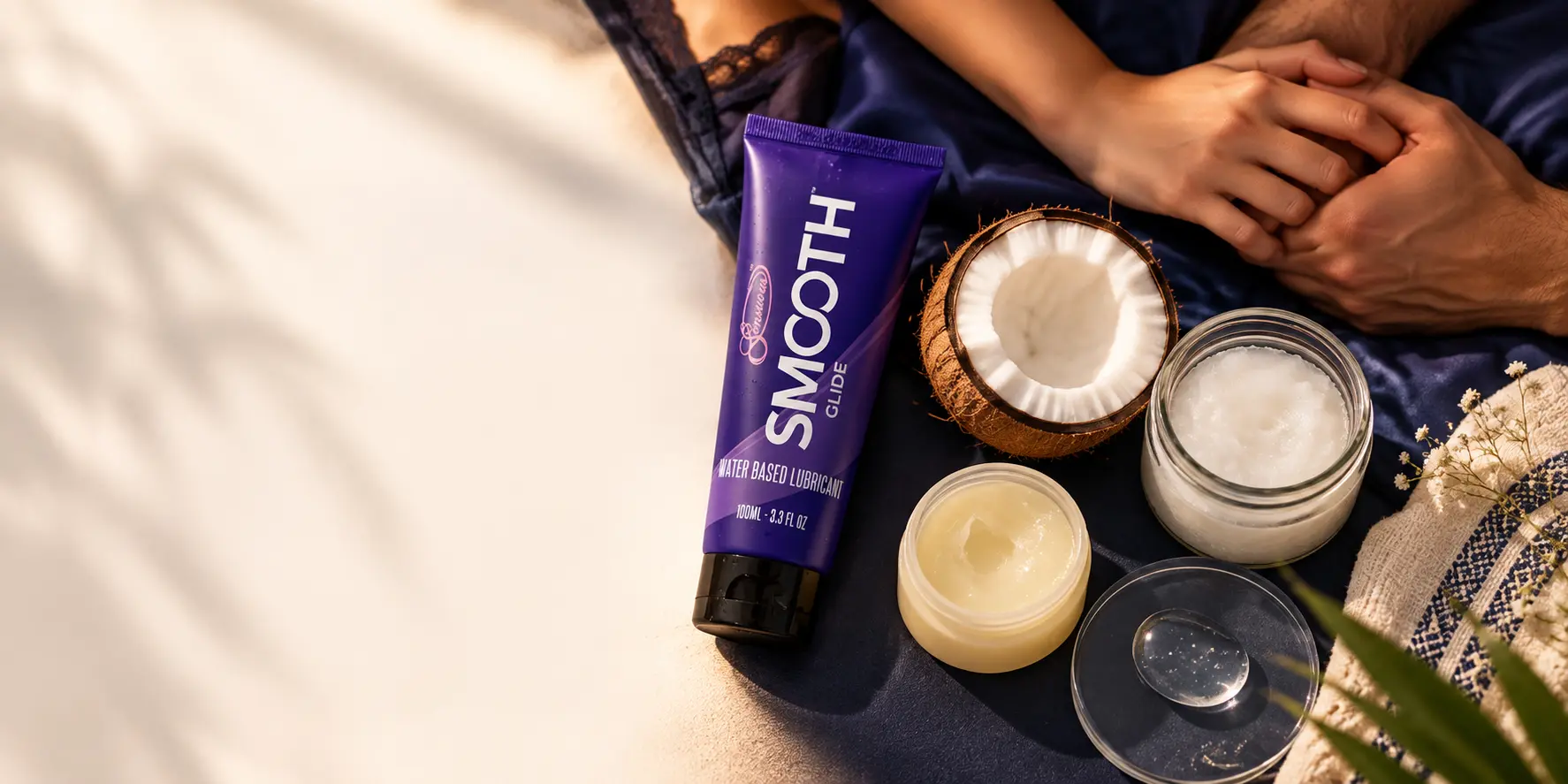
It is easy to think, “If it feels gentle on my skin, why not use it as lube?” That is a fair question. Intimate use adds two details that an ordinary skin product does not answer: what happens when it touches a condom, and whether it is suitable inside the vagina.
We will take coconut oil and Vaseline one at a time. You will see where the warning is clear, where research is still limited, and how to choose without worrying over every ingredient.
Why do coconut oil and Vaseline matter when you use a condom?
The key issue is latex. Coconut oil and Vaseline (petroleum jelly) are oil based. Oil can weaken a latex condom and make it more likely to break. The NHS advises using water based or silicone based lubricant with latex condoms instead.
Do not assume “latex free” means oil compatible. Read the exact condom and lubricant labels. If you cannot confirm compatibility, choose a water based lubricant labelled for use with condoms. For details, see our guide to using personal lubricant with condoms.
Oil on the skin can still come into contact with a condom. If you plan to use a latex condom, keep coconut oil and petroleum jelly away from the areas it will touch.
Can coconut oil be used as lube without a latex condom?
Some adults use coconut oil for external glide or massage without a latex barrier. That does not establish that it suits everyone or vaginal use. A food-grade label does not mean the oil was tested as a personal lubricant.
A small 2023 pilot study reported encouraging results with a particular virgin coconut oil paste for vaginal dryness. It surveyed 53 people without a randomised comparison group. That cannot establish that oil from a kitchen jar suits everyone. Nor does the evidence show that coconut oil inevitably causes infection.
If an oil causes burning, itching or a rash, stop using it. For existing irritation or repeated vaginal symptoms, choose a lubricant formulated for intimate use and seek advice if symptoms persist.
Is Vaseline safe to use as lube?
Vaseline is a poor choice for vaginal lubrication. Petroleum jelly has uses as a barrier on external skin, but that is different from putting it inside the vagina or using it for sex. The NHS advises against creams and moisturisers that are not intended for vaginal use because they may cause irritation or infection.
There is a reason for caution beyond condom compatibility. In a 2013 observational study, vaginal use of petroleum jelly was associated with a higher likelihood of bacterial vaginosis. The study does not prove that Vaseline caused the condition in every participant. It does support choosing a product intended for vaginal use instead.
What is the more suitable choice?
Use this table to compare the options. Skin responses vary.
| Option | With a latex condom? | Main consideration |
|---|---|---|
| Coconut oil | No | Oil weakens latex. Evidence on vaginal use is limited; some people may also react to it. |
| Vaseline or petroleum jelly | No | Avoid using it inside the vagina; it also weakens latex. |
| Water based personal lubricant | Usually yes; check the label | Made for intimate glide and generally easy to wash off. You may need to reapply it. |
| Silicone based personal lubricant | Usually yes; check the label | Often lasts longer. Check any sex toy's care instructions before combining them. |
Our water based versus silicone based lubricant guide explains the difference. Follow product directions and stop if it causes discomfort. Lubricant reduces friction; it does not prevent pregnancy or sexually transmitted infections (STIs).
One water based option to consider
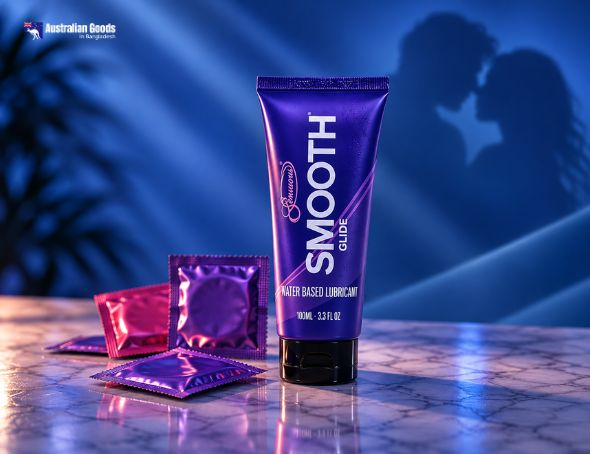
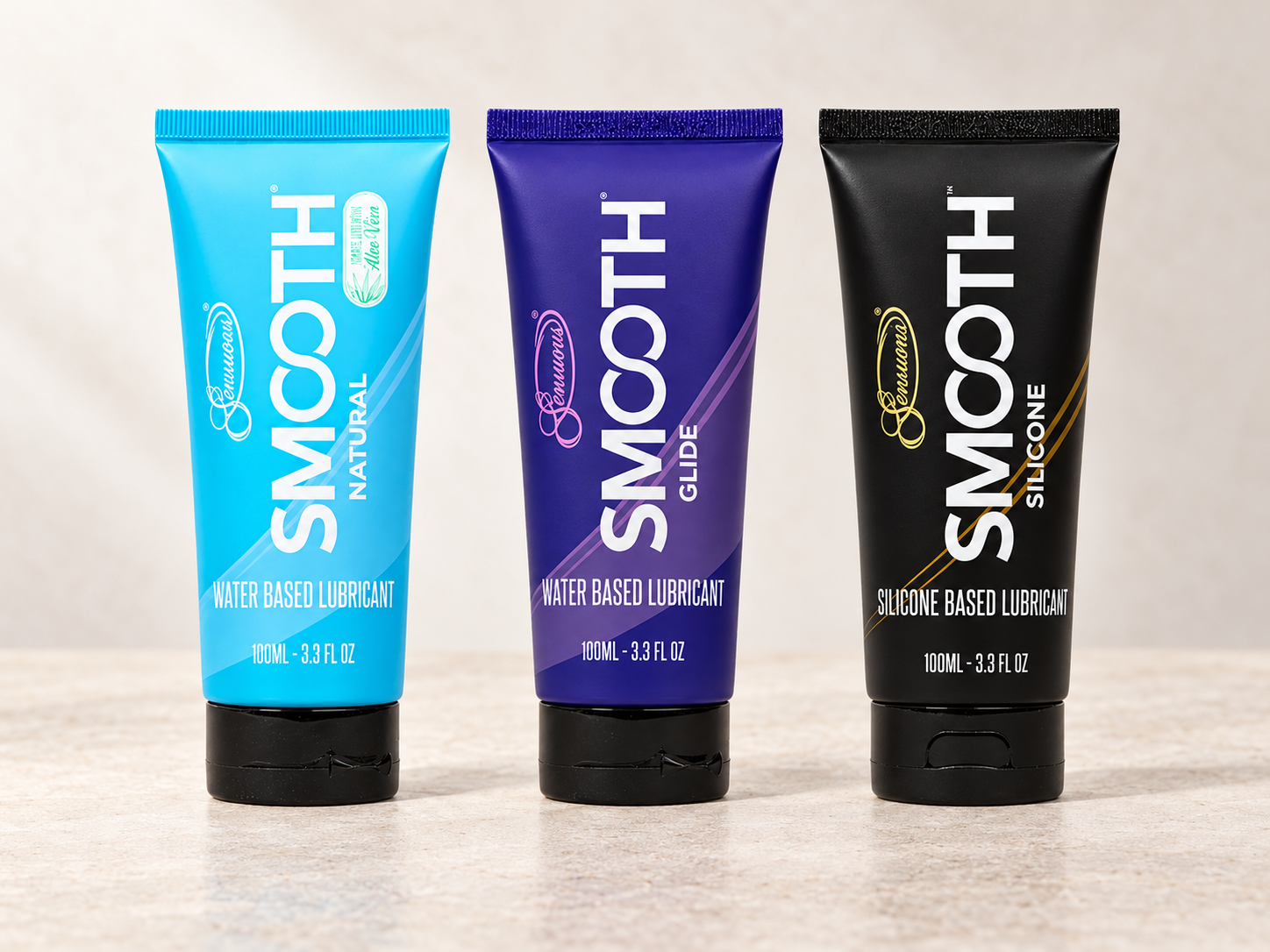
Sensuous Smooth Glide is a water-based personal lubricant. The manufacturer describes it as easy to apply and clean. These are product details, not a promise that it will suit every person. Check the current bottle label and your condom instructions to confirm compatibility before use.
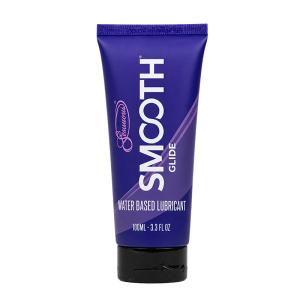
Smooth Glide™ Personal Lubricant – Water-Based Formula 100ml
Smooth Glide™ is a water-based personal lubricant for adults who want a smooth, comfortable glide during intimacy. Its lightweight formula combines water, propylene glycol and glyc...
What if you have already used an oil with a latex condom?
Stop using that condom. Remove the oil from skin that a new condom would touch, then use a new condom with a compatible lubricant. Do not rely on the first condom simply because you cannot see a tear.
If a condom broke, slipped, or there may have been exposure to pregnancy or an STI, seek prompt advice from a pharmacist or healthcare professional. Emergency contraception may be an option after condom failure. If HIV exposure is a concern, post-exposure prophylaxis (PEP) must be started within 72 hours, and sooner is better.
What if dryness or discomfort keeps happening?
More lubricant may help with friction during sex, but it may not address ongoing dryness. The NHS recommends seeking medical advice if dryness lasts several weeks despite self-care, affects daily life, or comes with unusual discharge or bleeding. Pain is a reason to pause rather than push through.
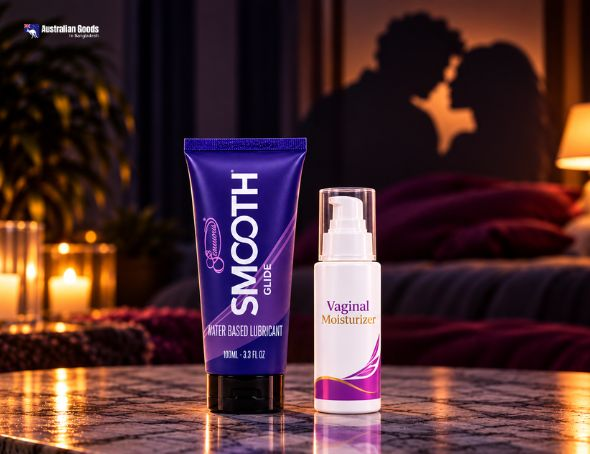
For dryness between sexual activity, read our guide to vaginal moisturiser versus personal lubricant. They serve different purposes.
Final Takeaway
With a latex condom, choose a compatible personal lubricant rather than coconut oil or Vaseline. Keep Vaseline out of the vagina; be cautious with coconut oil because evidence for vaginal use is limited. If dryness or pain keeps returning, ask a healthcare professional about the cause. A well-matched product is better than guessing.