
B-Complex Vitamins: Benefits, Side Effects and Who May Need Them
B-complex supplements combine several B vitamins, but more is not always better. Learn where they fit, when a single nutrient may be more appropriate, and which label details matter before you choose a product.
Quick Answer
B-complex vitamins help the body carry out normal functions, including using energy from food. Supplements can help when intake or absorption is inadequate, but tiredness alone does not prove a deficiency. Compare the amounts of individual vitamins, especially B6, and check other supplements before taking a combined formula regularly.
Key Takeaways
- A B-complex contains several B vitamins; the amounts vary widely between products.
- A specific deficiency may need a targeted nutrient and medical assessment rather than a general B-complex.
- Check total vitamin B6 across every supplement. Tingling, burning or numbness needs prompt attention.
- Tell your clinician and laboratory about biotin-containing supplements before blood tests.

A busy week, irregular meals and an afternoon energy dip can make a B-complex bottle look appealing. The harder question is whether it addresses what your body actually needs. A long ingredient list cannot tell you why you feel tired, and the word “high strength” does not tell you which product suits you.
B-complex vitamins can be useful in the right circumstances. Understanding the individual nutrients, the reason for taking them and the daily dose makes the decision much clearer. Start with your diet and health history; use the label to answer the remaining questions.
B-complex vitamins: what is actually in the bottle?
The B-vitamin family contains eight vitamins. They work in overlapping processes, but they are separate nutrients with different food sources and safety considerations. A B-complex supplement combines several or all of them. It may also include ingredients that are not B vitamins, so the front of the bottle is only the beginning of the comparison.
| Vitamin | Name you may see on the label | Main role in everyday terms |
|---|---|---|
| B1 | Thiamin or thiamine | Helps release energy from food and supports normal nerve function. |
| B2 | Riboflavin | Helps the body use energy and maintain healthy tissues. |
| B3 | Niacin, nicotinamide or niacinamide | Participates in energy metabolism and normal cell function. |
| B5 | Pantothenic acid | Helps the body process nutrients. |
| B6 | Pyridoxine or pyridoxal-5-phosphate | Supports protein metabolism and normal blood and nervous-system functions. |
| B7 | Biotin | Helps enzymes process fats, carbohydrates and amino acids. |
| B9 | Folate, folic acid or methylfolate | Supports cell division and blood formation. |
| B12 | Cyanocobalamin or methylcobalamin | Supports normal blood formation and nerve function. |
The NHS guide to B vitamins explains these basic functions and food sources. A product's inclusion of all eight does not establish that you need extra amounts of all eight.
What can B vitamins do for energy and nutrition?
A benefit starts with a nutritional gap
If your usual intake is insufficient, correcting that gap helps restore the normal functions that depend on the missing nutrient. The useful starting point is therefore a specific question: which gap are we trying to address? The answer might come from a dietary assessment, a diagnosis, a medicine review or a clinician's advice after an illness.
Someone who eats a narrow range of foods and someone who has trouble absorbing B12 may both consider supplements, yet their needs can be quite different. The same bottle should not automatically become the solution for both.
“Supports energy” does not mean a stimulant
B vitamins help the body use nutrients; they do not supply the calories in a meal. Treat “supports energy” as a description to examine, not a promise that a tablet will compensate for missed lunches, disrupted sleep or an excessive workload. If tiredness continues, the next step is to look for its cause rather than keep increasing a supplement dose.
It also helps to define what improvement would mean before you buy. “I want a plan for my restricted diet” is a clearer goal than “I want more energy”. A clear goal gives you something useful to discuss with a pharmacist and a reason to review whether you still need the product later.
Restricted diets, pregnancy and other reasons to review intake
- People with limited diets: an assessment can identify whether the issue is one nutrient or several. A list of foods you actually eat is more useful than describing your diet as generally healthy.
- People avoiding animal foods: B12 deserves particular attention. A dedicated B12 plan may be easier to match to the need than a combined product containing large amounts of unrelated vitamins.
- People with absorption problems or relevant medicines: the choice should be guided by the underlying condition. A general supplement label does not replace that advice.
- People planning pregnancy or already pregnant: folic acid has a specific role. Check the antenatal plan rather than substituting an ordinary B-complex for the recommended pregnancy supplement.
Folate is important before and during early pregnancy, but pregnancy advice is not simply “take more B vitamins”. The NIH folate fact sheet describes the evidence and explains why folate intake and B12 status need separate consideration. Ask your maternity clinician about your personal dose, particularly if you have a previous affected pregnancy or take relevant medicines.
Check your existing supplements before adding B-complex
A varied diet, no identified deficiency and no particular risk factor are good reasons to pause before starting a strong daily formula. Advertising can make routine supplementation feel like a basic requirement, but buying a product is only worthwhile when its purpose is clear.
Look at what is already in your routine. A multivitamin, an “energy” preparation and a magnesium product may each contain B vitamins. Buying a B-complex without checking those labels can turn one planned supplement into several overlapping doses. Taking them at different times of day does not remove the overlap in the daily total.
Be especially cautious about making a temporary purchase permanent. If you started a supplement during a period of poor appetite, review the reason once your usual meals return. If someone recommended it years ago, check whether that advice still applies to your current medicines and diet. You do not have to continue a product simply because it has become part of breakfast.
A useful review question is: “What would change if I stopped buying this?” If the answer is unclear, ask a pharmacist to help identify its purpose before replacing the bottle. Keep prescribed treatment separate from this review and discuss changes with the prescriber.
If you are choosing between a routine formula and a “high-potency” one, the comparison below explains why the amounts deserve more attention than the front-label wording.

B-complex side effects: the ingredients that deserve attention
B6: take tingling or numbness seriously
The Australian Therapeutic Goods Administration warns that supplemental B6 can cause peripheral neuropathy. Reports include people taking less than 50 mg a day and people combining multiple products. Watch for tingling, burning or numbness, particularly in the hands or feet.
If these symptoms develop while taking a B6-containing supplement, stop that supplement and seek medical advice promptly. Bring every supplement label, including products sold for sleep, stress or muscle support. Do not assume an “activated” form removes the need for the same safety check.
Niacin: flushing and high-dose risks
Nicotinic acid can cause flushing, warmth or itching. High doses can have more serious effects, including liver problems. Nicotinamide has a different side-effect profile, but that does not make unlimited dosing sensible. The NIH niacin fact sheet distinguishes the forms and their risks. Do not use a B-complex as a substitute for prescribed cholesterol treatment.
Folic acid can obscure part of a B12 problem
Large folic acid intakes can correct the anaemia of B12 deficiency without correcting the neurological problem. Persistent fatigue, altered sensation or balance problems therefore deserve assessment rather than an unsupervised high-dose folic acid trial. A combination label is not proof that the amounts are appropriate for treating a deficiency.
Biotin can distort blood-test results
Biotin can interfere with some laboratory tests, producing misleading results. This includes certain troponin tests used when a heart attack is suspected. Tell the clinician and laboratory exactly what you take, as the FDA advises. Let the testing team decide whether a pause is needed and for how long; do not delay urgent care.
Stomach upset and bright yellow urine
A new supplement may not agree with your stomach. Check its directions and ask a pharmacist about persistent nausea or discomfort. Bright yellow urine can occur with riboflavin; colour alone cannot tell you whether the product is working or whether you need it. A troublesome reaction deserves an individual review, especially when several ingredients are involved.
Compare B-complex labels nutrient by nutrient
- Check the serving size. “Per tablet” and “per daily dose” are different if the directions require two tablets.
- Compare individual nutrients. Write down B6, niacin, folate, biotin and B12 rather than comparing only the product names.
- Keep the units straight. One milligram equals 1,000 micrograms. A large printed number is not meaningful without its unit.
- Add overlapping products. Include your multivitamin and any specialised supplement in the daily calculation.
- Check suitability. Read the age restrictions, pregnancy advice, allergens, additional ingredients and directions.
- Decide on a review point. Ask when to reassess the need, especially if the initial reason was a temporary dietary problem.
Price per bottle can also mislead. Compare cost per recommended daily serving after checking that the formulation is suitable. A lower-cost bottle that requires more tablets may last less time, while an expensive “mega” formula may supply amounts you have no reason to take.
To put the checklist into practice, open the ingredient panel for Swisse Ultiboost Mega B+ below. Compare its B6, niacin, folate and daily serving with your current supplements before deciding whether it fits. Persistent fatigue still needs its own assessment.
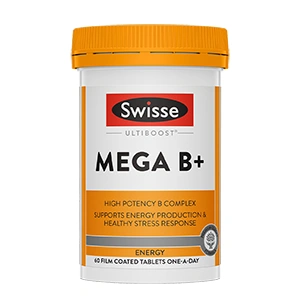
Swisse Ultiboost Mega B+
Swisse Mega B+ in Bangladesh: compare 60 and 120 tablets, B-vitamin formula, one-a-day directions, B6 warning and current pack price.
Put dal, eggs and everyday meals back in view
In Bangladesh, a practical food review can start with familiar meals: dal or chickpeas, vegetables, eggs, fish, milk or yoghurt where suitable, and a variety of grains. These foods contribute different nutrients; no single item has to do everything. Ask which groups have gradually disappeared from your weekly meals and why.
For someone living alone, the obstacle may be shopping and cooking. For another person it may be cost, appetite or a dietary restriction. Addressing that obstacle makes a supplement decision more useful. A tablet can be easy to buy while the reason for the gap remains unchanged.
Before choosing a product, take a photograph of its full ingredient panel and write down your existing medicines. A pharmacist can help you compare suitable options. If you have persistent unexplained symptoms, start with a clinician so the purchase follows a clearer understanding of the problem.